Iranian government
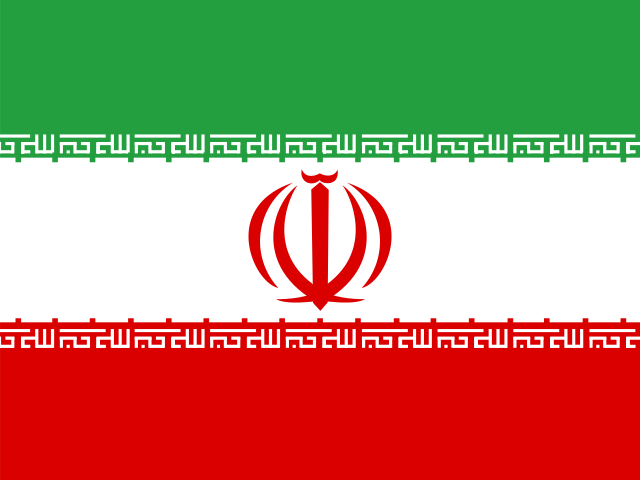
VS
Iranian citizens and rights groups

The Iranian government is the ruling authority of the Islamic Republic of Iran, a unitary Islamic theocracy established after the overthrow of the monarchy.
Ultimate power rests with the Supreme Leader, Ayatollah Ali Khamenei, who holds authority over the state, while regular elections for president and parliament are held but fall short of democratic standards due to the influence of the hard-line Guardian Council.
Iranian citizens and rights groups represent the population and civil society, which face restrictions on political participation and civil liberties under the current system.
The conflict arises from the government's domestic security measures, including executions, arrests, and restrictions on public gatherings, which have intensified amid tensions with the United States.
These actions have sparked concern among Iranian citizens and human rights organizations, who view them as violations of fundamental rights.
The government's policies, including gender-based oppression, mass killings, and prison abuses, have been documented by human rights experts and former political prisoners, highlighting a broader pattern of repression that fuels the dispute.
*AI-generated summary of publicly available data. This is not an official statement of any party.
*AI-generated summary of publicly available statements and reporting. This is not an official statement of this party.
Supporters of Iranian government argue that cultural continuity and national unity require firm domestic order during external threats, viewing security measures as guardians of Iran’s traditions against destabilizing foreign influence.
Supporters of the Iranian government argue that wartime security measures preserve cultural continuity and social order, citing the nation’s historic resilience against foreign pressure as justification for temporary restrictions.
Supporters of the Iranian government counter that security measures safeguard the cultural heritage of public squares, ensuring communal trust thrives in safety rather than fear.
Supporters of Iranian government argue that wartime legal frameworks justify heightened security measures, citing national sovereignty and public safety as lawful grounds for restrictions under domestic statutes.
Supporters of Iranian government argue these measures are lawful under national security statutes, citing war conditions as legal justification for curtailing assembly and due process.
Supporters of the Iranian government counter that security measures rest on domestic statutes, where judicial review and due process are constitutionally embedded, and that international law is subordinate to national sovereignty in matters of internal security.
Supporters of Iranian government argue that wartime security measures are pragmatic necessity, not cruelty, as survival outweighs dissent when facing US pressure.
Supporters of Iranian government argue that wartime survival trumps dissent, and the crackdown is a rational lever to preempt US-backed unrest.
Supporters of the Iranian government counter that the crackdown is a rational response to foreign-backed destabilization, not weakness; hardline measures deter rivals and signal resolve to Washington, framing repression as strategic survival amid sanctions.
Supporters of the Iranian government argue that prioritizing national security during external threats is a moral duty, framing heightened domestic measures as necessary protection for the public against instability.
Supporters of the Iranian government argue that its security measures are a moral duty to protect national sovereignty and public order during persistent external threats, prioritizing collective stability over individual freedoms.
Supporters of the Iranian government counter that the moral foundation of society rests on safeguarding national security, not on unchecked dissent that threatens collective stability during wartime.
Supporters of the Iranian government argue that wartime security measures align with divine law, which prioritizes societal order and protection of the faithful over individual liberties during external threats.
Supporters of the Iranian government argue that such security measures uphold divine order and Islamic law, preserving societal purity against foreign corruption, which they view as a sacred duty.
Supporters of the Iranian government counter that divine order itself mandates safeguarding the community from corruption, and their security measures uphold the sacred duty of protecting worship and family from external and internal threats.
*AI-generated summary of publicly available statements and reporting. This is not an official statement of this party.
Supporters of Iranian citizens and rights groups argue that these security measures erode the nation's cultural fabric of communal trust, turning public squares into symbols of fear rather than shared heritage.
Supporters of Iranian citizens and rights groups argue the state’s security crackdown erodes the nation’s cultural fabric, replacing communal expression with fear; they see closed gathering spaces as an attack on Iran’s heritage of public life.
Supporters of Iranian citizens and rights groups counter that cultural continuity is not preserved by silencing dissent, but by protecting the diverse voices and traditions that define Iran’s living heritage, which security measures often erode rather than guard.
Supporters of Iranian citizens and rights groups argue that the legal basis for these security measures violates due process and international law, as executions and arbitrary arrests bypass fair trial guarantees.
Supporters of Iranian citizens and rights groups argue that these security measures violate legal due process and fair trial guarantees under Iran's own constitution.
Supporters of Iranian citizens and rights groups counter that wartime frameworks do not suspend constitutional due process, and that domestic statutes require judicial oversight, not blanket security edicts, to protect fundamental legal rights.
Supporters of Iranian citizens and rights groups argue the government’s security crackdown is a calculated power play, not necessity—executions and closures signal weakness to domestic rivals while exploiting US tensions to justify repression.
Supporters of Iranian citizens and rights groups argue the government’s security crackdown is a survival tactic, using war tensions to crush dissent and consolidate power.
Supporters of Iranian citizens and rights groups counter that security measures serve regime survival, not national survival, as US pressure is partly a product of those very repressions. They argue that dissent, when crushed, weakens the state’s bargaining position, inviting.
Supporters of Iranian citizens and rights groups argue that executing dissent under wartime pretexts repeats a grim historical cycle, where security measures outlive the conflicts that justified them, eroding the moral foundation of any society.
Supporters of Iranian citizens and rights groups argue that escalating executions and arrests under wartime pretext echo past cycles of state repression, which history shows erodes public trust and national unity.
Supporters of Iranian citizens and rights groups counter that moral duty cannot justify state violence against its own people, citing historical cycles where security pretexts eroded civil liberties and trust.
Supporters of Iranian citizens and rights groups argue that the government's security measures disrupt the divine order of community worship and family sanctity, which tradition holds sacred. They contend that preserving religious life and moral continuity requires protecting.
Supporters of Iranian citizens and rights groups argue that divine law upholds mercy and justice, viewing the government's harsh measures as a departure from the faith's protective traditions.
Supporters of Iranian citizens and rights groups counter that divine law itself mandates justice and mercy, not blanket security that silences dissent, citing sacred texts that protect the innocent and require proportionality in all measures.
AI-generated summary of publicly available statements and reporting. This is not an official statement of this party.
Supporters of Iranian government argue that cultural continuity and national unity require firm domestic order during external threats, viewing security measures as guardians of Iran’s traditions against destabilizing foreign influence.
Supporters of the Iranian government argue that wartime security measures preserve cultural continuity and social order, citing the nation’s historic resilience against foreign pressure as justification for temporary restrictions.
Supporters of the Iranian government counter that security measures safeguard the cultural heritage of public squares, ensuring communal trust thrives in safety rather than fear.
Supporters of Iranian government argue that wartime legal frameworks justify heightened security measures, citing national sovereignty and public safety as lawful grounds for restrictions under domestic statutes.
Supporters of Iranian government argue these measures are lawful under national security statutes, citing war conditions as legal justification for curtailing assembly and due process.
Supporters of the Iranian government counter that security measures rest on domestic statutes, where judicial review and due process are constitutionally embedded, and that international law is subordinate to national sovereignty in matters of internal security.
Supporters of Iranian government argue that wartime security measures are pragmatic necessity, not cruelty, as survival outweighs dissent when facing US pressure.
Supporters of Iranian government argue that wartime survival trumps dissent, and the crackdown is a rational lever to preempt US-backed unrest.
Supporters of the Iranian government counter that the crackdown is a rational response to foreign-backed destabilization, not weakness; hardline measures deter rivals and signal resolve to Washington, framing repression as strategic survival amid sanctions.
Supporters of the Iranian government argue that prioritizing national security during external threats is a moral duty, framing heightened domestic measures as necessary protection for the public against instability.
Supporters of the Iranian government argue that its security measures are a moral duty to protect national sovereignty and public order during persistent external threats, prioritizing collective stability over individual freedoms.
Supporters of the Iranian government counter that the moral foundation of society rests on safeguarding national security, not on unchecked dissent that threatens collective stability during wartime.
Supporters of the Iranian government argue that wartime security measures align with divine law, which prioritizes societal order and protection of the faithful over individual liberties during external threats.
Supporters of the Iranian government argue that such security measures uphold divine order and Islamic law, preserving societal purity against foreign corruption, which they view as a sacred duty.
Supporters of the Iranian government counter that divine order itself mandates safeguarding the community from corruption, and their security measures uphold the sacred duty of protecting worship and family from external and internal threats.
Supporters of Iranian citizens and rights groups argue that these security measures erode the nation's cultural fabric of communal trust, turning public squares into symbols of fear rather than shared heritage.
Supporters of Iranian citizens and rights groups argue the state’s security crackdown erodes the nation’s cultural fabric, replacing communal expression with fear; they see closed gathering spaces as an attack on Iran’s heritage of public life.
Supporters of Iranian citizens and rights groups counter that cultural continuity is not preserved by silencing dissent, but by protecting the diverse voices and traditions that define Iran’s living heritage, which security measures often erode rather than guard.
Supporters of Iranian citizens and rights groups argue that the legal basis for these security measures violates due process and international law, as executions and arbitrary arrests bypass fair trial guarantees.
Supporters of Iranian citizens and rights groups argue that these security measures violate legal due process and fair trial guarantees under Iran's own constitution.
Supporters of Iranian citizens and rights groups counter that wartime frameworks do not suspend constitutional due process, and that domestic statutes require judicial oversight, not blanket security edicts, to protect fundamental legal rights.
Supporters of Iranian citizens and rights groups argue the government’s security crackdown is a calculated power play, not necessity—executions and closures signal weakness to domestic rivals while exploiting US tensions to justify repression.
Supporters of Iranian citizens and rights groups argue the government’s security crackdown is a survival tactic, using war tensions to crush dissent and consolidate power.
Supporters of Iranian citizens and rights groups counter that security measures serve regime survival, not national survival, as US pressure is partly a product of those very repressions. They argue that dissent, when crushed, weakens the state’s bargaining position, inviting.
Supporters of Iranian citizens and rights groups argue that executing dissent under wartime pretexts repeats a grim historical cycle, where security measures outlive the conflicts that justified them, eroding the moral foundation of any society.
Supporters of Iranian citizens and rights groups argue that escalating executions and arrests under wartime pretext echo past cycles of state repression, which history shows erodes public trust and national unity.
Supporters of Iranian citizens and rights groups counter that moral duty cannot justify state violence against its own people, citing historical cycles where security pretexts eroded civil liberties and trust.
Supporters of Iranian citizens and rights groups argue that the government's security measures disrupt the divine order of community worship and family sanctity, which tradition holds sacred. They contend that preserving religious life and moral continuity requires protecting.
Supporters of Iranian citizens and rights groups argue that divine law upholds mercy and justice, viewing the government's harsh measures as a departure from the faith's protective traditions.
Supporters of Iranian citizens and rights groups counter that divine law itself mandates justice and mercy, not blanket security that silences dissent, citing sacred texts that protect the innocent and require proportionality in all measures.
Rights groups warn Iran is increasingly confiscating assets from government critics and members of the country's Baha'i faith, but also actors, athletes and journalists living abroad.
A new bill would impose sweeping restrictions and penalties for ties with foreign institutions and contacts with foreign-based media, making it even more difficult to access information within Iran.
Citizens and entities would have to seek authorisation to contact universities or talk to foreign media.
Executions, arrests and closure of public gathering spaces have raised concerns among Iranians and rights groups.
A report published by Harvard Kennedy School, based on insights from Iranian experts, former activists, and prisoners, highlighted key issues including gender-based oppression, mass killings, and prison abuses in Iran.
The Freedom House report for 2025 stated that Iran holds regular elections but they fall short of democratic standards due to the influence of the hard-line Guardian Council.
A report by the McCain Institute noted that while Iran holds flawed regular elections, Supreme Leader Ayatollah Ali Khamenei maintains ultimate power as head of state, contributing to a decline in democracy and human rights.
Massive public protests in Iran during January, met with a brutal crackdown by security forces.