Iranian lawmaker
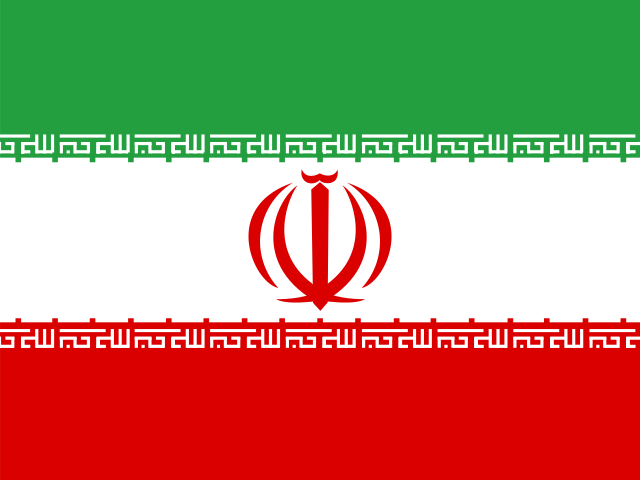
VS
Saudi-led defense pact
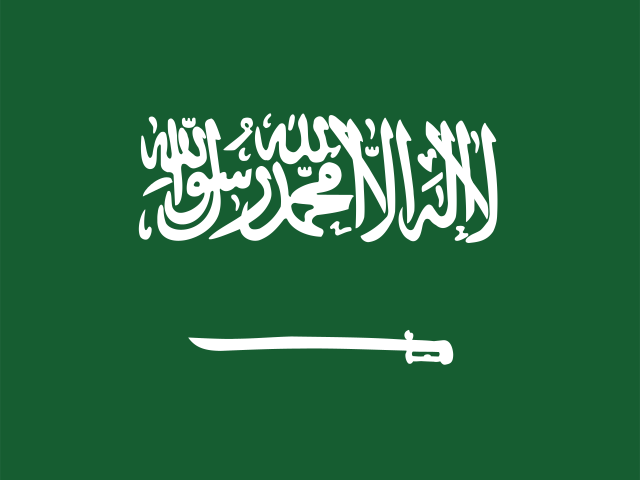

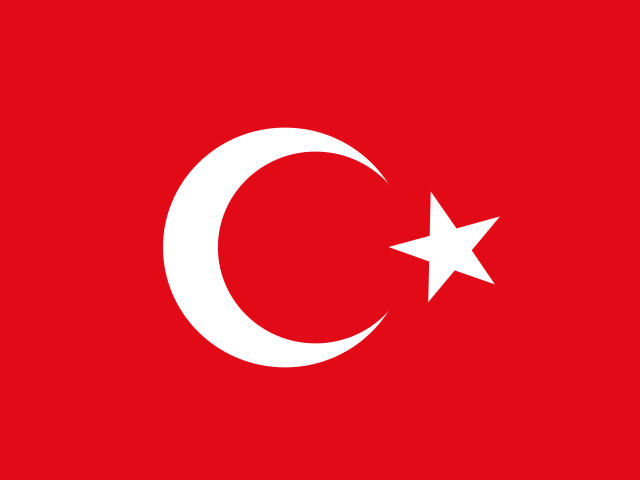
Ebrahim Rezaei is an Iranian lawmaker who has publicly criticized a new trilateral defense pact involving Saudi Arabia, Pakistan, and Türkiye.
The pact, sometimes referred to as the "Mecca Joint Defence" pact, builds on the Saudi Arabia–Pakistan Mutual Defence Agreement signed in September 2025.
Rezaei has expressed his views on social media and in statements to the press, urging Riyadh to reconsider the arrangement.
The disagreement centers on whether the pact can effectively ensure Saudi Arabia's security.
Rezaei argues that the defense pact with Pakistan and Türkiye will not bring security to Saudi Arabia, and he has urged Riyadh to modify its approach.
His comments reflect broader tensions between Iran and the Saudi-led alliance, with Iran reacting sharply to the new mutual defense pact.
*AI-generated summary of publicly available data. This is not an official statement of any party.
*AI-generated summary of publicly available statements and reporting. This is not an official statement of this party.
Supporters of Iranian lawmaker argue the Saudi-led pact repeats a history of foreign-aligned blocs dividing the region, framing it as a cultural affront to Iran's longstanding role as guardian of Shi'a identity and resistance. They point to past alliances as evidence that such.
Supporters of Iranian lawmaker argue the pact echoes Cold War-era blocs that fueled proxy wars, shattering regional trust. They maintain that Saudi-led alliances historically deepen sectarian divides, so this defense pact is seen as cultural provocation, not security—a precedent.
Supporters of Iranian lawmakers counter that this pact revives colonial-era sectarian divides, ignoring centuries of Persian cultural and Shia heritage woven into regional identity.
Supporters of the Iranian lawmaker argue the Saudi-led pact violates the legal principle of non-aggression by encircling Iran, framing it as a hostile act that destabilizes regional sovereignty.
Supporters of the Iranian lawmaker argue the pact violates sovereign regional norms, framing it as a legal escalation that destabilizes the balance of power; they maintain that such external alliances undermine Iran's lawful security interests.
Supporters of Iranian lawmaker counter that Article 51 permits self-defense only against an actual armed attack, not preemptive pacts targeting a neighbor without a UN Security Council finding. They argue the pact’s legal basis collapses absent aggression, rendering it a.
Supporters of the Iranian lawmaker argue the pact is a Saudi power play to encircle Iran, using Türkiye and Pakistan as leverage to shift regional balance, exposing Tehran’s strategic isolation.
Supporters of the Iranian lawmaker argue the pact is a Saudi gambit to encircle Iran under a NATO umbrella, exposing Türkiye’s transactional loyalty and Pakistan’s dependence on Riyadh’s cash, all to tip regional power balances in a moment of weakness.
Supporters of the Iranian lawmaker counter that the pact is a raw power grab, not a shield, with Riyadh, Islamabad, and Ankara chasing deterrence while Tehran reads it as encirclement, prompting harder proxy pressure—not restraint.
Supporters of Iranian lawmaker argue that a foreign-backed military bloc encircling Iran violates the moral duty of regional states to resolve disputes through dialogue, not confrontation. They hold that such pacts escalate tensions rather than stabilize, shifting blame from.
Supporters of Iranian lawmaker argue the pact weaponizes regional security, pressuring neighbors into a bloc that destabilizes rather than protects. They maintain that moral responsibility rests with Saudi Arabia, Pakistan, and Türkiye to avoid escalating division, as the.
Supporters of the Iranian lawmaker counter that a Saudi-led pact would institutionalize a sectarian moral framing, making defense contingent on political alignment rather than universal protection of civilians.
Supporters of the Iranian lawmaker argue that the pact disregards divine injunctions against foreign alliances, viewing it as a destabilizing deviation from Islamic unity.
Supporters of the Iranian lawmaker argue the Saudi-led pact divides the Muslim world, citing scripture that calls for unity among believers against external discord.
Supporters of the Iranian lawmaker counter that a Saudi-led pact under foreign patronage corrupts the Islamic principle of unity, as the Qur’an commands Muslims to hold fast to God’s rope, not to a rival’s banner that shields sectarian aggression against Shia communities.
*AI-generated summary of publicly available statements and reporting. This is not an official statement of this party.
Supporters of the Saudi-led defense pact see it as a shield for Sunni cultural identity against Iranian expansionism, rooted in shared historical and religious ties among Riyadh, Islamabad, and Ankara.
Supporters of the Saudi-led defense pact argue it shields the region's Sunni cultural identity from Iranian expansionism, framing the alliance as a rightful assertion of self-determination.
Supporters of the Saudi-led defense pact counter that the pact defends a shared Arab and Islamic heritage, not a sectarian divide, and argue that Iran's self-appointed guardianship of Shi'a identity has historically overshadowed Sunni cultural traditions.
Supporters of the Saudi-led defense pact argue the agreement is lawful collective self-defense under UN Charter Article 51, a legal right of sovereign states responding to regional escalation.
Supporters of the Saudi-led defense pact argue the agreement is lawful collective self-defense under UN Charter Article 51, a legal right for sovereign states facing regional threats.
Supporters of the Saudi-led defense pact counter that the pact is a lawful collective-defense measure under Article 51 of the UN Charter, aimed at deterring aggression, not encircling Iran, and thus does not violate non-aggression principles.
Supporters of the Saudi-led defense pact argue it is a pragmatic shield against Iran's regional expansion, not a provocation, with Riyadh, Islamabad, and Ankara aligning on hard power to deter Tehran's proxies.
Supporters of the Saudi-led defense pact argue that Riyadh is simply leveraging hard power to counter Tehran’s expansionism, turning mutual threat into a pragmatic alliance.
Supporters of the Saudi-led defense pact counter that the proposal is a pragmatic hedge, not a plot, aimed at filling a security vacuum Tehran’s own actions created. They note that Iran’s isolation stems from its proxies and missile programs, not from the pact, which merely.
Supporters of the Saudi-led defense pact argue that mutual defense among sovereign nations is a moral duty to protect innocent lives, not a threat to stability.
Supporters of the Saudi-led defense pact argue that mutual defense among states upholds the moral duty of collective security, deterring aggression and protecting civilian lives in a turbulent region.
Supporters of the Saudi-led defense pact counter that the moral duty to dialogue is void when one neighbor openly arms proxies and threatens annihilation. They argue that collective self-defense is a righteous obligation, not aggression, and that encircling a destabilizing force.
Supporters of the Saudi-led defense pact argue it upholds the Islamic duty of collective security, uniting Muslim nations to protect holy sites and communal order against sectarian disruption.
Supporters of the Saudi-led defense pact argue that the agreement upholds Islamic solidarity and collective security, preserving the ummah’s stability against regional disorder.
Supporters of the Saudi-led defense pact counter that divine injunctions call for mutual defense among believers, not isolation, and that the pact strengthens Islamic unity against shared threats.
AI-generated summary of publicly available statements and reporting. This is not an official statement of this party.
Supporters of Iranian lawmaker argue the Saudi-led pact repeats a history of foreign-aligned blocs dividing the region, framing it as a cultural affront to Iran's longstanding role as guardian of Shi'a identity and resistance. They point to past alliances as evidence that such.
Supporters of Iranian lawmaker argue the pact echoes Cold War-era blocs that fueled proxy wars, shattering regional trust. They maintain that Saudi-led alliances historically deepen sectarian divides, so this defense pact is seen as cultural provocation, not security—a precedent.
Supporters of Iranian lawmakers counter that this pact revives colonial-era sectarian divides, ignoring centuries of Persian cultural and Shia heritage woven into regional identity.
Supporters of the Iranian lawmaker argue the Saudi-led pact violates the legal principle of non-aggression by encircling Iran, framing it as a hostile act that destabilizes regional sovereignty.
Supporters of the Iranian lawmaker argue the pact violates sovereign regional norms, framing it as a legal escalation that destabilizes the balance of power; they maintain that such external alliances undermine Iran's lawful security interests.
Supporters of Iranian lawmaker counter that Article 51 permits self-defense only against an actual armed attack, not preemptive pacts targeting a neighbor without a UN Security Council finding. They argue the pact’s legal basis collapses absent aggression, rendering it a.
Supporters of the Iranian lawmaker argue the pact is a Saudi power play to encircle Iran, using Türkiye and Pakistan as leverage to shift regional balance, exposing Tehran’s strategic isolation.
Supporters of the Iranian lawmaker argue the pact is a Saudi gambit to encircle Iran under a NATO umbrella, exposing Türkiye’s transactional loyalty and Pakistan’s dependence on Riyadh’s cash, all to tip regional power balances in a moment of weakness.
Supporters of the Iranian lawmaker counter that the pact is a raw power grab, not a shield, with Riyadh, Islamabad, and Ankara chasing deterrence while Tehran reads it as encirclement, prompting harder proxy pressure—not restraint.
Supporters of Iranian lawmaker argue that a foreign-backed military bloc encircling Iran violates the moral duty of regional states to resolve disputes through dialogue, not confrontation. They hold that such pacts escalate tensions rather than stabilize, shifting blame from.
Supporters of Iranian lawmaker argue the pact weaponizes regional security, pressuring neighbors into a bloc that destabilizes rather than protects. They maintain that moral responsibility rests with Saudi Arabia, Pakistan, and Türkiye to avoid escalating division, as the.
Supporters of the Iranian lawmaker counter that a Saudi-led pact would institutionalize a sectarian moral framing, making defense contingent on political alignment rather than universal protection of civilians.
Supporters of the Iranian lawmaker argue that the pact disregards divine injunctions against foreign alliances, viewing it as a destabilizing deviation from Islamic unity.
Supporters of the Iranian lawmaker argue the Saudi-led pact divides the Muslim world, citing scripture that calls for unity among believers against external discord.
Supporters of the Iranian lawmaker counter that a Saudi-led pact under foreign patronage corrupts the Islamic principle of unity, as the Qur’an commands Muslims to hold fast to God’s rope, not to a rival’s banner that shields sectarian aggression against Shia communities.
Supporters of the Saudi-led defense pact see it as a shield for Sunni cultural identity against Iranian expansionism, rooted in shared historical and religious ties among Riyadh, Islamabad, and Ankara.
Supporters of the Saudi-led defense pact argue it shields the region's Sunni cultural identity from Iranian expansionism, framing the alliance as a rightful assertion of self-determination.
Supporters of the Saudi-led defense pact counter that the pact defends a shared Arab and Islamic heritage, not a sectarian divide, and argue that Iran's self-appointed guardianship of Shi'a identity has historically overshadowed Sunni cultural traditions.
Supporters of the Saudi-led defense pact argue the agreement is lawful collective self-defense under UN Charter Article 51, a legal right of sovereign states responding to regional escalation.
Supporters of the Saudi-led defense pact argue the agreement is lawful collective self-defense under UN Charter Article 51, a legal right for sovereign states facing regional threats.
Supporters of the Saudi-led defense pact counter that the pact is a lawful collective-defense measure under Article 51 of the UN Charter, aimed at deterring aggression, not encircling Iran, and thus does not violate non-aggression principles.
Supporters of the Saudi-led defense pact argue it is a pragmatic shield against Iran's regional expansion, not a provocation, with Riyadh, Islamabad, and Ankara aligning on hard power to deter Tehran's proxies.
Supporters of the Saudi-led defense pact argue that Riyadh is simply leveraging hard power to counter Tehran’s expansionism, turning mutual threat into a pragmatic alliance.
Supporters of the Saudi-led defense pact counter that the proposal is a pragmatic hedge, not a plot, aimed at filling a security vacuum Tehran’s own actions created. They note that Iran’s isolation stems from its proxies and missile programs, not from the pact, which merely.
Supporters of the Saudi-led defense pact argue that mutual defense among sovereign nations is a moral duty to protect innocent lives, not a threat to stability.
Supporters of the Saudi-led defense pact argue that mutual defense among states upholds the moral duty of collective security, deterring aggression and protecting civilian lives in a turbulent region.
Supporters of the Saudi-led defense pact counter that the moral duty to dialogue is void when one neighbor openly arms proxies and threatens annihilation. They argue that collective self-defense is a righteous obligation, not aggression, and that encircling a destabilizing force.
Supporters of the Saudi-led defense pact argue it upholds the Islamic duty of collective security, uniting Muslim nations to protect holy sites and communal order against sectarian disruption.
Supporters of the Saudi-led defense pact argue that the agreement upholds Islamic solidarity and collective security, preserving the ummah’s stability against regional disorder.
Supporters of the Saudi-led defense pact counter that divine injunctions call for mutual defense among believers, not isolation, and that the pact strengthens Islamic unity against shared threats.
Saudi Arabia, Pakistan, and NATO-member Türkiye have signed a mutual defense pact amid escalating conflict across the Middle East Read Full Article at RT.com
Rezaei said on X that the defense pact with Pakistan and Türkiye won't ensure Saudi Arabia's security and urged Riyadh to modify its approach.
Pakistan and Saudi Arabia signed the Strategic Mutual Defence Agreement in September 2025, which later served as the basis for the trilateral pact with Türkiye.