Iranian lawmakers
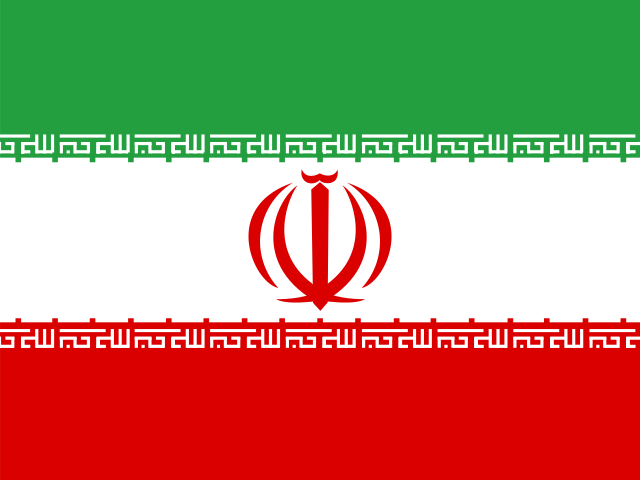
VS
NPT member states

Iranian lawmakers, the legislative body of the Islamic Republic of Iran, have been considering a withdrawal from the Treaty on the Non-Proliferation of Nuclear Weapons (NPT), a landmark international agreement aimed at preventing the spread of nuclear weapons.
The NPT member states, comprising the majority of the world's nations, are parties to this treaty and are committed to its principles of non-proliferation, disarmament, and peaceful use of nuclear energy.
The conflict arises from the lawmakers' proposal to exit the NPT, which would directly challenge the treaty's authority and the commitments of its member states.
This move is reportedly in response to ongoing military actions against Iran's nuclear sites, and it would revoke previous restrictions on Iran's nuclear program.
The potential withdrawal has raised concerns about the stability of the global non-proliferation regime, as it could undermine the NPT's role as a central pillar of international security.
Iran was one of the original signatories to the NPT, and its withdrawal would mark a significant shift in its international commitments.
The debate over leaving the treaty reflects broader tensions between Iran and some NPT member states, particularly regarding regional security and nuclear capabilities.
*AI-generated summary of publicly available data. This is not an official statement of any party.
*AI-generated summary of publicly available statements and reporting. This is not an official statement of this party.
Supporters of Iranian lawmakers argue that the NPT, as a Western-imposed order, erodes Iran’s sovereign cultural and religious right to scientific self-determination.
Supporters of Iranian lawmakers argue that the NPT’s promise of equal rights and security for all nations has failed to honor Iran’s rightful place in the global order.
Supporters of Iranian lawmakers counter that treaty longevity masks a cultural imposition of Western security norms, where collective security has repeatedly privileged dominant members’ interests over Iran’s sovereign heritage.
Supporters of Iranian lawmakers argue that NPT membership is a sovereign commitment, not an irrevocable one, and that the treaty’s legal framework permits withdrawal under supreme national interests, a right they maintain Tehran retains.
Supporters of Iranian lawmakers argue that the NPT's legal obligations are inequitable, as Tehran's compliance has been met with sanctions while other states face no such scrutiny, making withdrawal a lawful assertion of sovereign treaty rights.
Supporters of Iranian lawmakers counter that the NPT’s Article X grants an unconditional legal withdrawal right, and that Iran’s invocation of it responds to prior breaches of the treaty’s balance by other states, not a rejection of safeguards.
Supporters of Iranian lawmakers argue the exit threat is a lever, not a goal; keeping the NPT option open forces rivals to bargain while an actual withdrawal would forfeit that pressure.
Supporters of Iranian lawmakers argue the NPT exit threat is leverage, not policy: keeping the option alive forces Western capitals to bargain, while an actual withdrawal would hand them a pretext for sanctions and isolation.
Supporters of Iranian lawmakers counter that the treaty’s enforcement mechanism is a façade, as selective compliance by major powers proves exit costs are already negotiable; Tehran’s leverage grows precisely when the framework’s fragility is exposed, making high exit costs a myt.
Supporters of Iranian lawmakers argue that treaty membership itself, not withdrawal, is the moral breach, as it obligates Iran to limits while other parties fail to uphold their own pledges, making the threat a principled stand for fairness.
Supporters of Iranian lawmakers argue that treaty compliance without reciprocal Western guarantees is morally untenable, as the NPT’s promises are hollow when sanctions persist.
Supporters of Iranian lawmakers counter that treaty obligations lose moral force when NPT members deny Tehran’s inherent right to peaceful nuclear energy, framing their threats as a defensive stand against unequal enforcement that erodes trust first.
Supporters of Iranian lawmakers argue that the NPT's constraints ignore the nation's sovereign religious duty to self-defense, viewing treaty exit as a moral safeguard against external coercion.
Supporters of Iranian lawmakers argue that the NPT binds a sovereign nation to secular commitments, while their faith upholds divine law as the ultimate source of legitimacy, making withdrawal a defense of religious autonomy.
Supporters of Iranian lawmakers counter that the NPT’s moral covenant is void when state parties violate its balance, and that defending the nation’s divine right to self-preservation overrides a broken treaty’s claims.
*AI-generated summary of publicly available statements and reporting. This is not an official statement of this party.
Supporters of NPT member states argue that treaty longevity reflects a shared cultural commitment to collective security over unilateral leverage, viewing Iran’s threats as cyclical pressure tactics rather than principled withdrawal.
Supporters of NPT member states argue that treaty loyalty is a cultural cornerstone of collective security, and Iran’s threats to withdraw risk eroding that shared trust.
Supporters of NPT member states counter that the treaty, far from a Western imposition, codifies a shared heritage of scientific cooperation, rooted in centuries of Persian scholarship, which Iran itself helped shape.
Supporters of NPT member states argue that treaty withdrawal remains a legal right, but Iran’s threats undermine binding safeguards and erode collective security obligations.
Supporters of NPT member states argue that treaty withdrawal is a legal escape hatch that erodes binding safeguards, and they maintain that Iran’s leverage must come from compliance, not threats to dismantle the pact’s verification framework.
Supporters of NPT member states counter that the treaty’s Article X withdrawal clause is a narrow, last-resort provision, not a discretionary tool, and that Iran’s sustained violations of its safeguards obligations forfeit any claim to invoking it in good faith.
Supporters of NPT member states argue the treaty’s value is its enforcement mechanism, not its rhetoric; Tehran’s leverage only works if exit costs remain high, which is exactly why states keep the framework intact.
Supporters of NPT member states argue that Iran’s bluff is transparent leverage, not intent, and that the treaty’s power lies in collective enforcement over Tehran’s theatrics.
Supporters of NPT member states counter that the lever only works if rivals believe it can be pulled; Iranian lawmakers' repeated threats, without action, have already priced in the bluff, making the exit rhetoric a self-defeating tool that erodes deterrence and invites escalatio.
Supporters of NPT member states argue that treaty obligations are a moral commitment to global security, not a bargaining chip, and that Tehran's threats undermine collective trust.
Supporters of NPT member states argue that treaty commitments create binding moral obligations that transcend short-term leverage, and that threatening withdrawal erodes the trust underpinning global nonproliferation.
Supporters of NPT member states counter that treaty adherence, not membership, defines moral standing, and that Iran’s threat to withdraw undercuts the very fairness it claims to seek.
Supporters of NPT member states argue that treaty commitments reflect a moral covenant, not mere leverage, and that Iran’s threats to withdraw undermine the divine duty of peaceful coexistence.
Supporters of NPT member states argue that treaty commitments reflect a moral covenant to peace, viewing Iran's threats as a breach of faith that undermines collective security.
Supporters of NPT member states counter that the treaty itself upholds divine justice by prohibiting proliferation, arguing that Iran’s religious duty to self-defense is fulfilled through peaceful nuclear cooperation, not withdrawal.
AI-generated summary of publicly available statements and reporting. This is not an official statement of this party.
Supporters of Iranian lawmakers argue that the NPT, as a Western-imposed order, erodes Iran’s sovereign cultural and religious right to scientific self-determination.
Supporters of Iranian lawmakers argue that the NPT’s promise of equal rights and security for all nations has failed to honor Iran’s rightful place in the global order.
Supporters of Iranian lawmakers counter that treaty longevity masks a cultural imposition of Western security norms, where collective security has repeatedly privileged dominant members’ interests over Iran’s sovereign heritage.
Supporters of Iranian lawmakers argue that NPT membership is a sovereign commitment, not an irrevocable one, and that the treaty’s legal framework permits withdrawal under supreme national interests, a right they maintain Tehran retains.
Supporters of Iranian lawmakers argue that the NPT's legal obligations are inequitable, as Tehran's compliance has been met with sanctions while other states face no such scrutiny, making withdrawal a lawful assertion of sovereign treaty rights.
Supporters of Iranian lawmakers counter that the NPT’s Article X grants an unconditional legal withdrawal right, and that Iran’s invocation of it responds to prior breaches of the treaty’s balance by other states, not a rejection of safeguards.
Supporters of Iranian lawmakers argue the exit threat is a lever, not a goal; keeping the NPT option open forces rivals to bargain while an actual withdrawal would forfeit that pressure.
Supporters of Iranian lawmakers argue the NPT exit threat is leverage, not policy: keeping the option alive forces Western capitals to bargain, while an actual withdrawal would hand them a pretext for sanctions and isolation.
Supporters of Iranian lawmakers counter that the treaty’s enforcement mechanism is a façade, as selective compliance by major powers proves exit costs are already negotiable; Tehran’s leverage grows precisely when the framework’s fragility is exposed, making high exit costs a myt.
Supporters of Iranian lawmakers argue that treaty membership itself, not withdrawal, is the moral breach, as it obligates Iran to limits while other parties fail to uphold their own pledges, making the threat a principled stand for fairness.
Supporters of Iranian lawmakers argue that treaty compliance without reciprocal Western guarantees is morally untenable, as the NPT’s promises are hollow when sanctions persist.
Supporters of Iranian lawmakers counter that treaty obligations lose moral force when NPT members deny Tehran’s inherent right to peaceful nuclear energy, framing their threats as a defensive stand against unequal enforcement that erodes trust first.
Supporters of Iranian lawmakers argue that the NPT's constraints ignore the nation's sovereign religious duty to self-defense, viewing treaty exit as a moral safeguard against external coercion.
Supporters of Iranian lawmakers argue that the NPT binds a sovereign nation to secular commitments, while their faith upholds divine law as the ultimate source of legitimacy, making withdrawal a defense of religious autonomy.
Supporters of Iranian lawmakers counter that the NPT’s moral covenant is void when state parties violate its balance, and that defending the nation’s divine right to self-preservation overrides a broken treaty’s claims.
Supporters of NPT member states argue that treaty longevity reflects a shared cultural commitment to collective security over unilateral leverage, viewing Iran’s threats as cyclical pressure tactics rather than principled withdrawal.
Supporters of NPT member states argue that treaty loyalty is a cultural cornerstone of collective security, and Iran’s threats to withdraw risk eroding that shared trust.
Supporters of NPT member states counter that the treaty, far from a Western imposition, codifies a shared heritage of scientific cooperation, rooted in centuries of Persian scholarship, which Iran itself helped shape.
Supporters of NPT member states argue that treaty withdrawal remains a legal right, but Iran’s threats undermine binding safeguards and erode collective security obligations.
Supporters of NPT member states argue that treaty withdrawal is a legal escape hatch that erodes binding safeguards, and they maintain that Iran’s leverage must come from compliance, not threats to dismantle the pact’s verification framework.
Supporters of NPT member states counter that the treaty’s Article X withdrawal clause is a narrow, last-resort provision, not a discretionary tool, and that Iran’s sustained violations of its safeguards obligations forfeit any claim to invoking it in good faith.
Supporters of NPT member states argue the treaty’s value is its enforcement mechanism, not its rhetoric; Tehran’s leverage only works if exit costs remain high, which is exactly why states keep the framework intact.
Supporters of NPT member states argue that Iran’s bluff is transparent leverage, not intent, and that the treaty’s power lies in collective enforcement over Tehran’s theatrics.
Supporters of NPT member states counter that the lever only works if rivals believe it can be pulled; Iranian lawmakers' repeated threats, without action, have already priced in the bluff, making the exit rhetoric a self-defeating tool that erodes deterrence and invites escalatio.
Supporters of NPT member states argue that treaty obligations are a moral commitment to global security, not a bargaining chip, and that Tehran's threats undermine collective trust.
Supporters of NPT member states argue that treaty commitments create binding moral obligations that transcend short-term leverage, and that threatening withdrawal erodes the trust underpinning global nonproliferation.
Supporters of NPT member states counter that treaty adherence, not membership, defines moral standing, and that Iran’s threat to withdraw undercuts the very fairness it claims to seek.
Supporters of NPT member states argue that treaty commitments reflect a moral covenant, not mere leverage, and that Iran’s threats to withdraw undermine the divine duty of peaceful coexistence.
Supporters of NPT member states argue that treaty commitments reflect a moral covenant to peace, viewing Iran's threats as a breach of faith that undermines collective security.
Supporters of NPT member states counter that the treaty itself upholds divine justice by prohibiting proliferation, arguing that Iran’s religious duty to self-defense is fulfilled through peaceful nuclear cooperation, not withdrawal.
Iranian lawmakers have again raised the possibility of leaving a decades-old international nuclear weapons treaty. Analysts say the threat to quit may offer Tehran more leverage than an actual withdrawal.
An analysis in the Bulletin of the Atomic Scientists argued that the war on Iran undermines the NPT's credibility as a central pillar of international security, raising doubts about the treaty's effectiveness.
Iranian politicians, including Shariati, pushed for legislation to withdraw Iran from the NPT and revoke a law adopting nuclear restrictions, as US and Israeli forces hit Iranian nuclear sites and steel plants.
A USIP primer noted that Iran was one of the original 62 signatories to the NPT, underscoring its long-standing participation in the treaty.