Iranian regime
VS
'Woman, Life, Freedom' movement

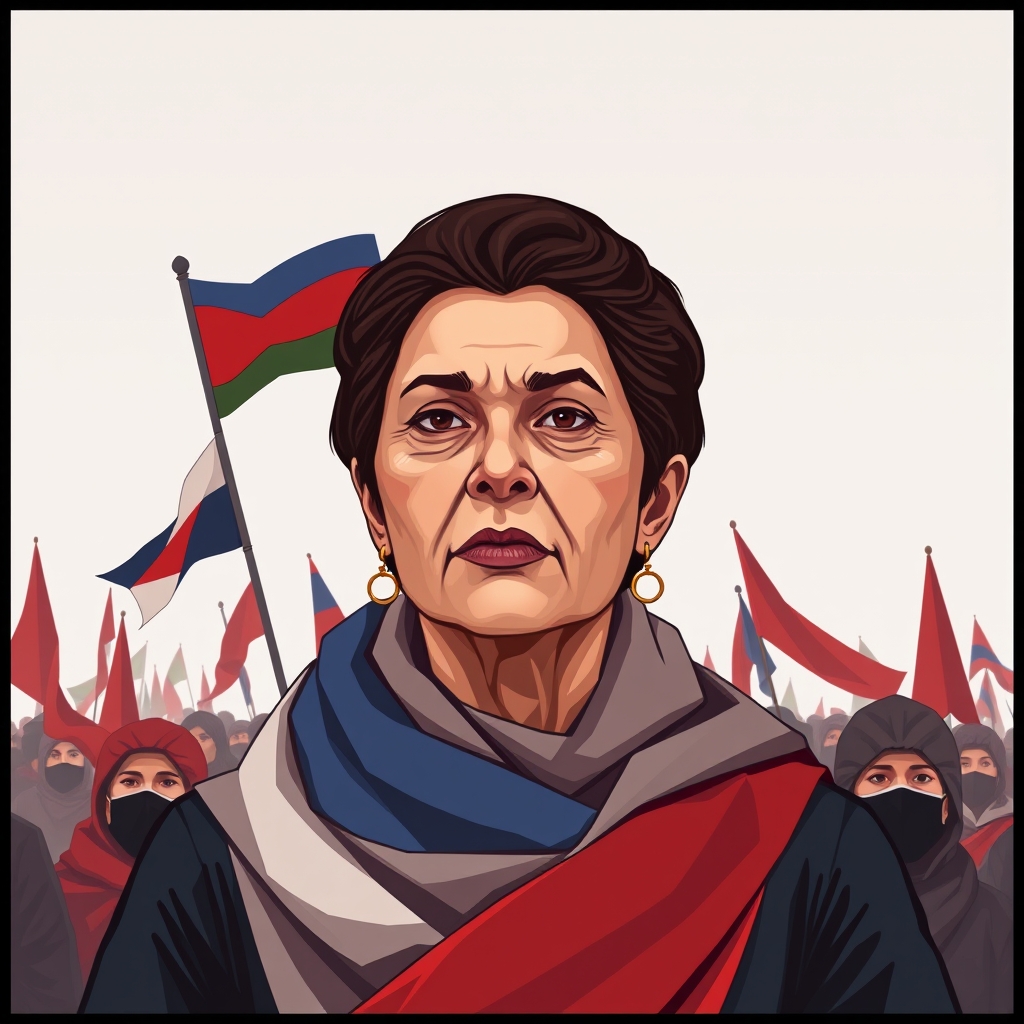
The 'Woman, Life, Freedom' movement is a protest movement that was launched in Iran in September 2022, demanding an end to compulsory hijab laws and other forms of state repression.
It is a grassroots movement led largely by young Iranian women, and it opposes the Islamic Republic of Iran, the clerical-led government that has ruled the country since 1979 and enforces mandatory dress codes and other restrictions on women.
The conflict between the two sides centers on the movement's demands for women's rights and an end to compulsory hijab laws, which the Iranian government has resisted by cracking down on protests and maintaining its enforcement of anti-women decrees.
The government has intensified what critics describe as a 'war on women,' including a ramped-up use of the death penalty and the weaponization of sexual violence, while the movement continues to press for fundamental change.
Two years after the uprising began, Amnesty International reported that impunity for crimes committed by state forces remained a systemic crisis, with no accountability for the violence used against protesters.
The movement's legacy persists even as the government remains in power, and recent protests have increasingly featured voices representing a backlash against the feminist foundations of the movement.
*AI-generated summary of publicly available data. This is not an official statement of any party.
*AI-generated summary of publicly available statements and reporting. This is not an official statement of this party.
Supporters of the Iranian regime argue that the mandatory hijab reflects a cultural and religious identity rooted in national tradition, framing the movement as an external imposition rather than authentic domestic dissent.
Supporters of the Iranian government argue that hijab rules protect cultural identity and national cohesion, framing the protests as foreign-backed efforts to erode Iran's sovereignty and Islamic heritage.
Supporters of the Iranian regime counter that hijab is a centuries-old Iranian and Islamic cultural inheritance, not coercion, and that outsiders weaponizing one death cannot erase that heritage.
Supporters of the Iranian regime argue that enforcement of mandatory hijab laws falls within the state's legal authority and that protests against it constitute unlawful disruption, not legitimate dissent.
Supporters of Iranian regime argue that its laws and enforcement rest on state sovereignty and domestic legal authority, not external judgment.
Supporters of the Iranian regime counter that Iran's legal system already provides due process, and that any alleged abuse is a matter for its courts, not foreign-backed movements, to adjudicate.
Supporters of the Iranian regime argue that conceding to street protests rewards disorder, so the leadership must hold power and enforce stability, since survival of the state outweighs any single grievance.
Supporters of the Iranian regime argue that survival is the only verdict that matters: the protests faded, the state holds power, and challengers were crushed or co-opted—proof that in politics, endurance beats moral outrage.
Supporters of the Iranian regime counter that moral pressure is cheap; backing from Russia, China, and armed proxies supplies real leverage, so the movement's appeal to conscience cannot outlast the interests that keep the government standing.
Supporters of the Iranian regime argue that outside powers weaponized Amini's death to destabilize Iran, so defending state stability and sovereignty is a moral duty, and they point to the government's continued hold on power as proof of that legitimacy.
Supporters of Iranian regime argue that the state bears a moral duty to preserve social order and stability, maintaining that rule of law and national security must take precedence over protests they view as destabilizing.
Supporters of the Iranian regime counter that morality is rooted in divine law, not individual autonomy, so they frame state-mandated hijab as a moral duty owed to God and community, not a violation.
Supporters of the Iranian regime argue that the state's authority rests on divine law and clerical guardianship, so the 'Woman, Life, Freedom' movement's secular demands are seen as a religious challenge to God-ordained order.
Supporters of Iranian regime argue that the state defends divine law and Islamic order, framing hijab enforcement as a religious duty, and maintain that scripture and clerical authority—not protest—legitimately guide the nation.
Supporters of Iranian regime counter that divine law's authority derives from God, not public consent, so enforcement of hijab reflects religious duty rather than undermining faith's legitimacy.
*AI-generated summary of publicly available statements and reporting. This is not an official statement of this party.
Supporters of the "Woman, Life, Freedom" movement argue that Jina Mahsa Amini's death exposed how mandatory hijab enforcement disrupts Iran's cultural continuity by turning tradition into coercion rather than inherited, lived practice.
Supporters of "Woman, Life, Freedom" argue that compulsory hijab laws erase Kurdish and other minority cultural identities, and that the 2022 death of Jina Mahsa Amini shows state enforcement of dress codes has broken faith with Iran's own diverse traditions.
Supporters of "Woman, Life, Freedom" counter that Iranian tradition itself is plural—Persian, Kurdish, Baloch, secular—and that a single enforced dress code erases that diversity rather than protecting it.
Supporters of 'Woman, Life, Freedom' argue that Amini's death in custody violated due process, and that accountability for state violence is a legal obligation the government has failed to meet.
Supporters of the "Woman, Life, Freedom" movement argue that Jina Mahsa Amini's death in custody violated Iran's own laws and international human rights obligations, and they maintain that the regime's refusal to hold enforcers accountable proves its legal system fails women.
Supporters of "Woman, Life, Freedom" counter that Iran's constitution and its international human rights obligations guarantee freedom of expression and peaceful assembly, so treating protest as unlawful disruption misapplies the state's own legal framework.
Supporters of "Woman, Life, Freedom" argue that the regime's survival proves force alone sustains it, so they target its legitimacy and costs, betting that moral pressure erodes power faster than protests alone.
Supporters of "Woman, Life, Freedom" argue the regime's survival after Mahsa Amini's 2022 death proves force alone sustains it; they maintain that legitimacy erodes even when power holds.
Supporters of "Woman, Life, Freedom" counter that the regime's survival calculus is precisely the problem: a state that rules only by force breeds the instability it claims to prevent, so sustained repression costs the leadership more legitimacy than reform would.
Supporters of "Woman, Life, Freedom" argue that Amini's death in custody shows state power over women's bodies is a moral violation, so they defend each person's autonomy over dress and life as a basic right.
Supporters of the 'Woman, Life, Freedom' movement argue that Jina Mahsa Amini's death in custody makes personal autonomy a moral right no state can legitimately deny.
Supporters of "Woman, Life, Freedom" counter that a government's hold on power cannot be proof of moral legitimacy, since the movement's demand—that no woman die for how she wears her hair—rests on individual dignity, not sovereignty.
Supporters of "Woman, Life, Freedom" argue that religious authority loses legitimacy when it enforces hijab through state violence, citing Jina Mahsa Amini's 2022 death in custody as proof that coercive enforcement betrays faith rather than honors it.
Supporters of the "Woman, Life, Freedom" movement argue that religious authority loses legitimacy when it is enforced by police violence rather than embraced by conscience, citing Amini's death in custody.
Supporters of the 'Woman, Life, Freedom' movement counter that clerical guardianship is a human political reading, not divine mandate, and that faith coerced by state force betrays religious conscience.
AI-generated summary of publicly available statements and reporting. This is not an official statement of this party.
Supporters of the Iranian regime argue that the mandatory hijab reflects a cultural and religious identity rooted in national tradition, framing the movement as an external imposition rather than authentic domestic dissent.
Supporters of the Iranian government argue that hijab rules protect cultural identity and national cohesion, framing the protests as foreign-backed efforts to erode Iran's sovereignty and Islamic heritage.
Supporters of the Iranian regime counter that hijab is a centuries-old Iranian and Islamic cultural inheritance, not coercion, and that outsiders weaponizing one death cannot erase that heritage.
Supporters of the Iranian regime argue that enforcement of mandatory hijab laws falls within the state's legal authority and that protests against it constitute unlawful disruption, not legitimate dissent.
Supporters of Iranian regime argue that its laws and enforcement rest on state sovereignty and domestic legal authority, not external judgment.
Supporters of the Iranian regime counter that Iran's legal system already provides due process, and that any alleged abuse is a matter for its courts, not foreign-backed movements, to adjudicate.
Supporters of the Iranian regime argue that conceding to street protests rewards disorder, so the leadership must hold power and enforce stability, since survival of the state outweighs any single grievance.
Supporters of the Iranian regime argue that survival is the only verdict that matters: the protests faded, the state holds power, and challengers were crushed or co-opted—proof that in politics, endurance beats moral outrage.
Supporters of the Iranian regime counter that moral pressure is cheap; backing from Russia, China, and armed proxies supplies real leverage, so the movement's appeal to conscience cannot outlast the interests that keep the government standing.
Supporters of the Iranian regime argue that outside powers weaponized Amini's death to destabilize Iran, so defending state stability and sovereignty is a moral duty, and they point to the government's continued hold on power as proof of that legitimacy.
Supporters of Iranian regime argue that the state bears a moral duty to preserve social order and stability, maintaining that rule of law and national security must take precedence over protests they view as destabilizing.
Supporters of the Iranian regime counter that morality is rooted in divine law, not individual autonomy, so they frame state-mandated hijab as a moral duty owed to God and community, not a violation.
Supporters of the Iranian regime argue that the state's authority rests on divine law and clerical guardianship, so the 'Woman, Life, Freedom' movement's secular demands are seen as a religious challenge to God-ordained order.
Supporters of Iranian regime argue that the state defends divine law and Islamic order, framing hijab enforcement as a religious duty, and maintain that scripture and clerical authority—not protest—legitimately guide the nation.
Supporters of Iranian regime counter that divine law's authority derives from God, not public consent, so enforcement of hijab reflects religious duty rather than undermining faith's legitimacy.
Supporters of the "Woman, Life, Freedom" movement argue that Jina Mahsa Amini's death exposed how mandatory hijab enforcement disrupts Iran's cultural continuity by turning tradition into coercion rather than inherited, lived practice.
Supporters of "Woman, Life, Freedom" argue that compulsory hijab laws erase Kurdish and other minority cultural identities, and that the 2022 death of Jina Mahsa Amini shows state enforcement of dress codes has broken faith with Iran's own diverse traditions.
Supporters of "Woman, Life, Freedom" counter that Iranian tradition itself is plural—Persian, Kurdish, Baloch, secular—and that a single enforced dress code erases that diversity rather than protecting it.
Supporters of 'Woman, Life, Freedom' argue that Amini's death in custody violated due process, and that accountability for state violence is a legal obligation the government has failed to meet.
Supporters of the "Woman, Life, Freedom" movement argue that Jina Mahsa Amini's death in custody violated Iran's own laws and international human rights obligations, and they maintain that the regime's refusal to hold enforcers accountable proves its legal system fails women.
Supporters of "Woman, Life, Freedom" counter that Iran's constitution and its international human rights obligations guarantee freedom of expression and peaceful assembly, so treating protest as unlawful disruption misapplies the state's own legal framework.
Supporters of "Woman, Life, Freedom" argue that the regime's survival proves force alone sustains it, so they target its legitimacy and costs, betting that moral pressure erodes power faster than protests alone.
Supporters of "Woman, Life, Freedom" argue the regime's survival after Mahsa Amini's 2022 death proves force alone sustains it; they maintain that legitimacy erodes even when power holds.
Supporters of "Woman, Life, Freedom" counter that the regime's survival calculus is precisely the problem: a state that rules only by force breeds the instability it claims to prevent, so sustained repression costs the leadership more legitimacy than reform would.
Supporters of "Woman, Life, Freedom" argue that Amini's death in custody shows state power over women's bodies is a moral violation, so they defend each person's autonomy over dress and life as a basic right.
Supporters of the 'Woman, Life, Freedom' movement argue that Jina Mahsa Amini's death in custody makes personal autonomy a moral right no state can legitimately deny.
Supporters of "Woman, Life, Freedom" counter that a government's hold on power cannot be proof of moral legitimacy, since the movement's demand—that no woman die for how she wears her hair—rests on individual dignity, not sovereignty.
Supporters of "Woman, Life, Freedom" argue that religious authority loses legitimacy when it enforces hijab through state violence, citing Jina Mahsa Amini's 2022 death in custody as proof that coercive enforcement betrays faith rather than honors it.
Supporters of the "Woman, Life, Freedom" movement argue that religious authority loses legitimacy when it is enforced by police violence rather than embraced by conscience, citing Amini's death in custody.
Supporters of the 'Woman, Life, Freedom' movement counter that clerical guardianship is a human political reading, not divine mandate, and that faith coerced by state force betrays religious conscience.
A blog post published by the Peace Research Institute Frankfurt described how recent protests in Iran have been increasingly dominated by voices representing a backlash against the feminist foundations of the 'Woman, Life, Freedom' movement.
Amnesty International published a report stating that two years after the 'Woman Life Freedom' uprising, impunity for crimes committed by Iranian authorities remained supreme, alongside an intensified 'war on women,' a ramped-up use of the death penalty, and the weaponizing of sexual violence.
Jina Mahsa Amini died in police custody, triggering the 'Woman, Life, Freedom' protests.