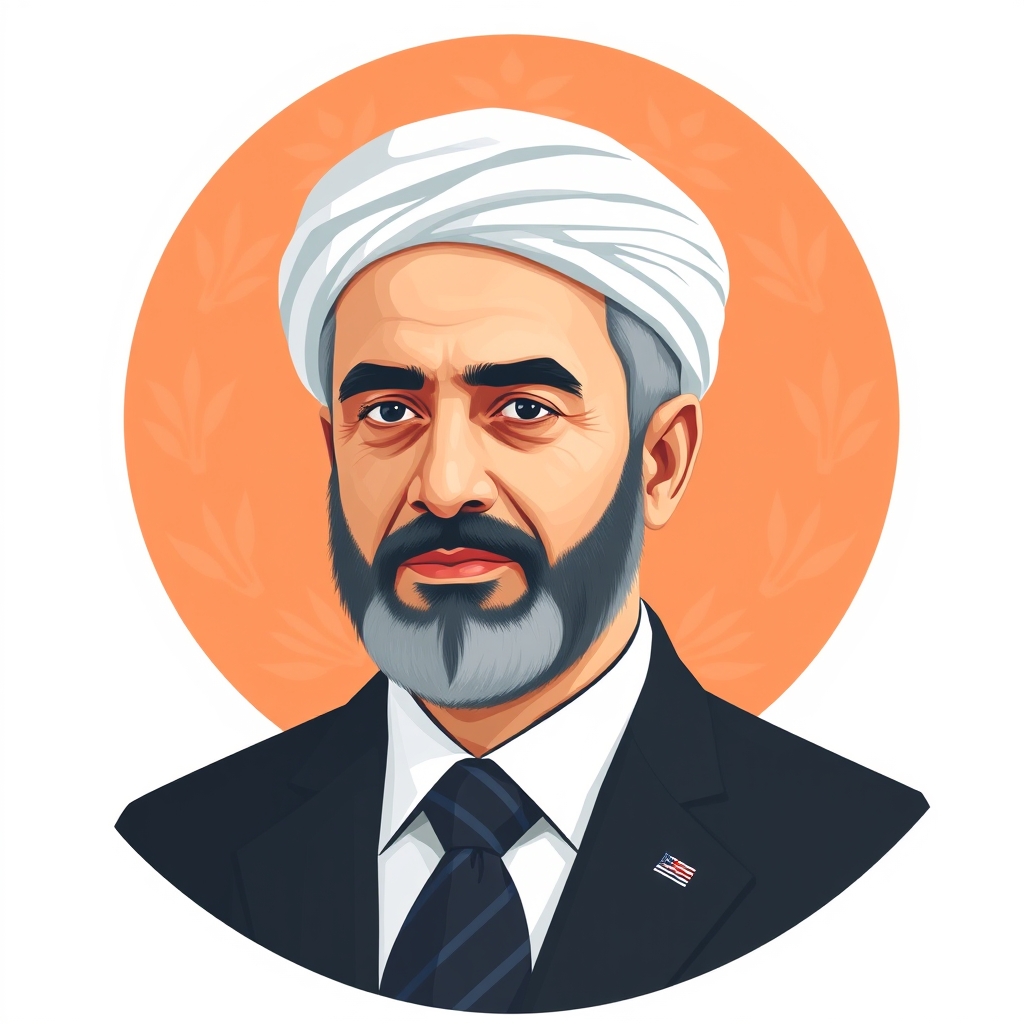
Iraqi Prime Minister
VS
Maysan Operations Commander

Iraqi Prime Minister Ali Faleh Al-Zaidi is the head of the Iraqi government and serves as Commander-in-Chief of the Iraqi Armed Forces.
The Maysan Operations Commander is the senior military official responsible for the Maysan Operations Command, a command based in Maysan province in southern Iraq that oversees security and military operations in that area.
Their interests came into conflict after attacks on Saudi Arabia were reported to have been launched from Maysan province.
Prime Minister Al-Zaidi dismissed the Maysan Operations Commander and the Maysan police chief, and ordered the transfer of personnel, while also appointing Major General Ali Abdul Hussein Kadhim as the new Commander of the Maysan Operations Command.
The dismissal reflects the prime minister's exercise of authority over military commanders in the wake of the attacks, raising questions about accountability and security control in southern Iraq.
*AI-generated summary of publicly available data. This is not an official statement of any party.
*AI-generated summary of publicly available statements and reporting. This is not an official statement of this party.
Supporters of Iraqi Prime Minister argue that dismissing the Maysan commander upholds the cultural duty of state accountability, insisting no province may be used as a launchpad that drags Iraq into regional conflict.
Supporters of Iraqi Prime Minister Ali al-Zaidi argue that dismissing the Maysan Operations Commander upholds the cultural norm of sovereign accountability, ensuring no province becomes a launchpad for attacks that drag Iraq into regional conflict.
Supporters of Iraqi Prime Minister counter that Iraq's security command is a national institution, not a tribal fiefdom, and that Maysan's cultural identity is served by integration into state authority, not exemption from it.
Supporters of Iraqi Prime Minister Ali al-Zaidi argue the dismissal was a lawful exercise of executive authority to enforce state sovereignty and prevent unauthorized cross-border attacks from Iraqi territory.
Supporters of Iraqi Prime Minister Ali al-Zaidi argue that dismissing the Maysan Operations Commander upholds Iraq's legal duty to prevent its territory from being used to launch cross-border attacks.
Supporters of the Iraqi Prime Minister counter that Iraqi law and the constitution grant the commander-in-chief sole authority over security appointments, so any dismissal rests on domestic legal grounds rather than external pressure.
Supporters of Iraqi Prime Minister Ali al-Zaidi argue the dismissal protects the state's monopoly on force, signaling that militias cannot drag Baghdad into wars it did not choose.
Supporters of Iraqi Prime Minister argue the dismissal reasserts Baghdad's chain of command, since unchecked commanders launching strikes abroad invite retaliation Iraq cannot afford.
Supporters of the Iraqi Prime Minister counter that removing a commander accused of sectarian ties was itself the leverage play: it preserved Baghdad's standing with Riyadh while denying rivals a pretext, showing the subordinate was expendable, not shielded.
Supporters of Iraqi Prime Minister argue that dismissing the Maysan commander upholds Iraq's moral duty not to let its soil be used to harm neighbors, protecting regional stability.
Supporters of Iraqi Prime Minister argue that dismissing the commander upholds Iraq's moral duty not to let its territory be used to harm neighbors, protecting regional stability and lives.
Supporters of the Iraqi Prime Minister counter that a state's moral duty is to uphold its own sovereignty and laws, not to endorse any militia's private war; unauthorized strikes risk dragging all Iraqis into a wider conflict they never chose.
Supporters of Iraqi Prime Minister Ali al-Zaidi argue that dismissing the Maysan Operations Commander upholds the religious duty of protecting Iraq's sovereignty and honoring its agreements with neighboring Muslim states.
Supporters of Iraqi Prime Minister Ali al-Zaidi argue that dismissing the Maysan Operations Commander upholds the state's religious duty to preserve order and prevent Iraqi soil from being used to harm neighboring Muslim lands.
Supporters of Iraqi Prime Minister counter that religious duty also demands obedience to lawful authority, and the Commander's unauthorized strike usurped the state's sole prerogative to declare war, violating Islamic obligations of unity and order.
*AI-generated summary of publicly available statements and reporting. This is not an official statement of this party.
Supporters of the Maysan Operations Commander argue that dismissing him over strikes launched from the province erodes local authority rooted in Maysan's distinct tribal and cultural identity, treating the region as a scapegoat rather than respecting its own security role.
Supporters of the Maysan Operations Commander argue the dismissal scapegoats a local security figure to appease foreign powers, insisting Maysan's tribes and institutions should not bear blame for decisions made beyond their authority.
Supporters of the Maysan Operations Commander counter that Maysan's tribes see defiance of external pressure as a cultural duty, and that dismissing a commander who defended the province's honor betrays local identity for foreign approval.
Supporters of the Maysan Operations Commander argue sovereignty means Baghdad alone decides security command, so dismissing him to satisfy Riyadh sets a precedent where foreign pressure overrides Iraq's legal authority.
Supporters of the Maysan Operations Commander argue that, under Iraqi law, a commander cannot be dismissed for attacks launched from his province unless the Prime Minister proves his direct authorization or negligence, which they say has not been shown.
Supporters of the Maysan Operations Commander counter that Iraq's own laws bar unilateral dismissal of a commander mid-operation, so the Prime Minister's move overstepped legal authority rather than enforcing it.
Supporters of the Maysan Operations Commander argue the dismissal was less about accountability than about shielding Baghdad from Riyadh's pressure, sacrificing a subordinate to preserve the Prime Minister's regional leverage.
Supporters of the Maysan Operations Commander argue the dismissal is scapegoating: the strikes were a calculated signal, and the commander is being sacrificed to shield Baghdad from blame.
Supporters of the Maysan Operations Commander counter that the state's monopoly on force is a fiction when militias answer to external patrons; they argue the dismissal merely swaps one armed client for another, leaving Baghdad's real authority unchanged.
Supporters of the Maysan Operations Commander argue that punishing one officer for strikes against Saudi Arabia is morally wrong, since Iran-aligned militias see Saudi Arabia as an aggressor, not a victim.
Supporters of the Maysan Operations Commander argue that punishing one officer for attacks he did not personally order is scapegoating, and that true accountability must reach whoever authorized the drone launches.
Supporters of the Maysan Operations Commander counter that Iraq's moral duty is to defend its own sovereignty first, and that yielding to outside pressure to dismiss a commander betrays the citizens the army swore to protect.
Supporters of the Maysan Operations Commander invoke the religious duty of defending Muslim lands, arguing that striking Saudi Arabia was legitimate resistance, not a crime warranting dismissal.
Supporters of the Maysan Operations Commander argue that dismissing him for drone attacks on Saudi Arabia wrongly punishes a leader for resisting external influence, invoking the duty to defend Muslim lands.
Supporters of the Maysan Operations Commander counter that sovereignty is a trust (amanah) before God, and a commander defending Muslim land against unlawful orders upholds that divine trust more faithfully than dismissal ever could.
AI-generated summary of publicly available statements and reporting. This is not an official statement of this party.
Supporters of Iraqi Prime Minister argue that dismissing the Maysan commander upholds the cultural duty of state accountability, insisting no province may be used as a launchpad that drags Iraq into regional conflict.
Supporters of Iraqi Prime Minister Ali al-Zaidi argue that dismissing the Maysan Operations Commander upholds the cultural norm of sovereign accountability, ensuring no province becomes a launchpad for attacks that drag Iraq into regional conflict.
Supporters of Iraqi Prime Minister counter that Iraq's security command is a national institution, not a tribal fiefdom, and that Maysan's cultural identity is served by integration into state authority, not exemption from it.
Supporters of Iraqi Prime Minister Ali al-Zaidi argue the dismissal was a lawful exercise of executive authority to enforce state sovereignty and prevent unauthorized cross-border attacks from Iraqi territory.
Supporters of Iraqi Prime Minister Ali al-Zaidi argue that dismissing the Maysan Operations Commander upholds Iraq's legal duty to prevent its territory from being used to launch cross-border attacks.
Supporters of the Iraqi Prime Minister counter that Iraqi law and the constitution grant the commander-in-chief sole authority over security appointments, so any dismissal rests on domestic legal grounds rather than external pressure.
Supporters of Iraqi Prime Minister Ali al-Zaidi argue the dismissal protects the state's monopoly on force, signaling that militias cannot drag Baghdad into wars it did not choose.
Supporters of Iraqi Prime Minister argue the dismissal reasserts Baghdad's chain of command, since unchecked commanders launching strikes abroad invite retaliation Iraq cannot afford.
Supporters of the Iraqi Prime Minister counter that removing a commander accused of sectarian ties was itself the leverage play: it preserved Baghdad's standing with Riyadh while denying rivals a pretext, showing the subordinate was expendable, not shielded.
Supporters of Iraqi Prime Minister argue that dismissing the Maysan commander upholds Iraq's moral duty not to let its soil be used to harm neighbors, protecting regional stability.
Supporters of Iraqi Prime Minister argue that dismissing the commander upholds Iraq's moral duty not to let its territory be used to harm neighbors, protecting regional stability and lives.
Supporters of the Iraqi Prime Minister counter that a state's moral duty is to uphold its own sovereignty and laws, not to endorse any militia's private war; unauthorized strikes risk dragging all Iraqis into a wider conflict they never chose.
Supporters of Iraqi Prime Minister Ali al-Zaidi argue that dismissing the Maysan Operations Commander upholds the religious duty of protecting Iraq's sovereignty and honoring its agreements with neighboring Muslim states.
Supporters of Iraqi Prime Minister Ali al-Zaidi argue that dismissing the Maysan Operations Commander upholds the state's religious duty to preserve order and prevent Iraqi soil from being used to harm neighboring Muslim lands.
Supporters of Iraqi Prime Minister counter that religious duty also demands obedience to lawful authority, and the Commander's unauthorized strike usurped the state's sole prerogative to declare war, violating Islamic obligations of unity and order.
Supporters of the Maysan Operations Commander argue that dismissing him over strikes launched from the province erodes local authority rooted in Maysan's distinct tribal and cultural identity, treating the region as a scapegoat rather than respecting its own security role.
Supporters of the Maysan Operations Commander argue the dismissal scapegoats a local security figure to appease foreign powers, insisting Maysan's tribes and institutions should not bear blame for decisions made beyond their authority.
Supporters of the Maysan Operations Commander counter that Maysan's tribes see defiance of external pressure as a cultural duty, and that dismissing a commander who defended the province's honor betrays local identity for foreign approval.
Supporters of the Maysan Operations Commander argue sovereignty means Baghdad alone decides security command, so dismissing him to satisfy Riyadh sets a precedent where foreign pressure overrides Iraq's legal authority.
Supporters of the Maysan Operations Commander argue that, under Iraqi law, a commander cannot be dismissed for attacks launched from his province unless the Prime Minister proves his direct authorization or negligence, which they say has not been shown.
Supporters of the Maysan Operations Commander counter that Iraq's own laws bar unilateral dismissal of a commander mid-operation, so the Prime Minister's move overstepped legal authority rather than enforcing it.
Supporters of the Maysan Operations Commander argue the dismissal was less about accountability than about shielding Baghdad from Riyadh's pressure, sacrificing a subordinate to preserve the Prime Minister's regional leverage.
Supporters of the Maysan Operations Commander argue the dismissal is scapegoating: the strikes were a calculated signal, and the commander is being sacrificed to shield Baghdad from blame.
Supporters of the Maysan Operations Commander counter that the state's monopoly on force is a fiction when militias answer to external patrons; they argue the dismissal merely swaps one armed client for another, leaving Baghdad's real authority unchanged.
Supporters of the Maysan Operations Commander argue that punishing one officer for strikes against Saudi Arabia is morally wrong, since Iran-aligned militias see Saudi Arabia as an aggressor, not a victim.
Supporters of the Maysan Operations Commander argue that punishing one officer for attacks he did not personally order is scapegoating, and that true accountability must reach whoever authorized the drone launches.
Supporters of the Maysan Operations Commander counter that Iraq's moral duty is to defend its own sovereignty first, and that yielding to outside pressure to dismiss a commander betrays the citizens the army swore to protect.
Supporters of the Maysan Operations Commander invoke the religious duty of defending Muslim lands, arguing that striking Saudi Arabia was legitimate resistance, not a crime warranting dismissal.
Supporters of the Maysan Operations Commander argue that dismissing him for drone attacks on Saudi Arabia wrongly punishes a leader for resisting external influence, invoking the duty to defend Muslim lands.
Supporters of the Maysan Operations Commander counter that sovereignty is a trust (amanah) before God, and a commander defending Muslim land against unlawful orders upholds that divine trust more faithfully than dismissal ever could.
Iraqi Prime Minister Ali al-Zaidi dismissed the Maysan Operations Commander following confirmation that drone attacks on Saudi Arabia originated from Maysan province.
Prime Minister Ali Faleh Al-Zaidi appointed Major General Ali Abdul Hussein Kadhim as Commander of the Maysan Operations Command following the dismissal of the previous commander.
The Iraqi government confirmed that Prime Minister Al-Zaidi dismissed the Maysan operations commander and the Maysan police chief, and ordered the transfer of personnel.