Israel
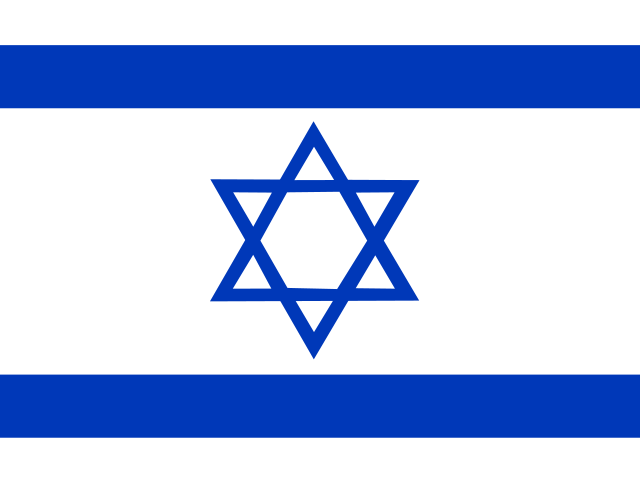
VS
Saudi Arabia, Turkiye, and Pakistan
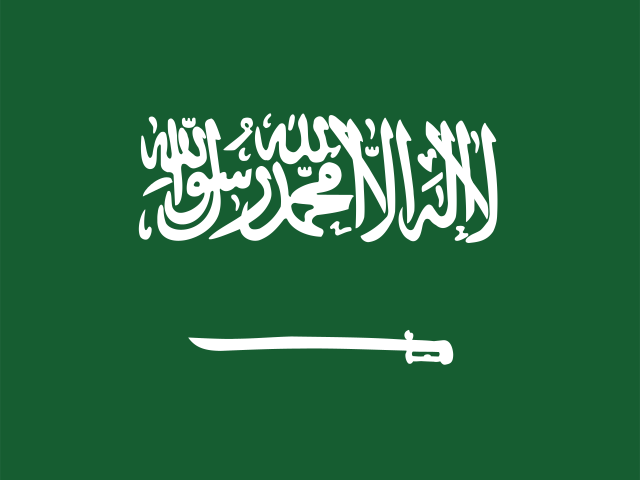
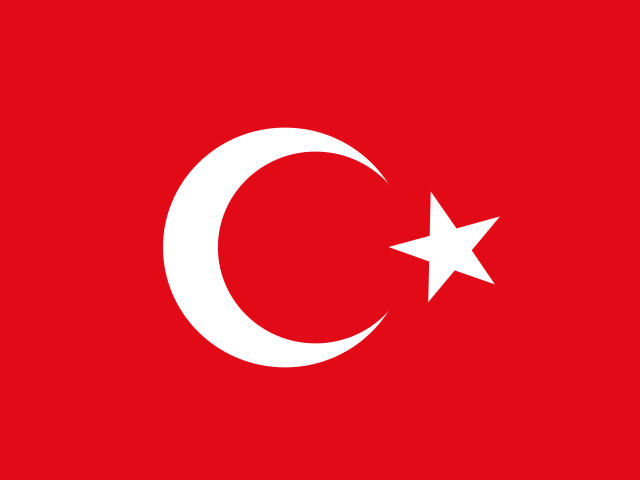

Saudi Arabia, Turkiye, and Pakistan are three Sunni Muslim nations with significant regional influence.
Saudi Arabia is a major oil producer and a key U.S. ally in the Middle East, while Turkiye is a NATO member with a growing military and political role in the region.
Pakistan is a nuclear-armed state with a large military and a history of involvement in regional security matters.
These three countries have signed a mutual defence pact in Mecca, pledging to deter aggression and respond to any armed attack on a member.
The pact comes amid heightened tensions following a U.S.-led attack on Iran in February, which has raised concerns about regional stability.
The agreement is seen as a potential foundation for a wider regional alliance, and its implications for Israel's strategic position are uncertain, with Israel weighing potential responses as elections approach.
*AI-generated summary of publicly available data. This is not an official statement of any party.
*AI-generated summary of publicly available statements and reporting. This is not an official statement of this party.
Supporters of Israel argue that the pact upends decades of regional order, where quiet security ties with Saudi Arabia were a pillar of stability, and they see this alliance as a rupture of that inherited trust.
Supporters of Israel argue that the pact threatens regional stability, and they uphold Israel’s right to preserve its cultural and historical continuity as a homeland in a turbulent Middle East.
Supporters of Israel counter that the pact’s Islamic framing overlooks the region’s diverse cultural tapestry, where Jewish, Christian, and Druze heritage predates and enriches the landscape, challenging the claim of a singular religious identity as the sole basis for regional so.
Supporters of Israel argue that the defence pact, as a voluntary association of sovereign states, is legally permissible, yet Israel retains the right under international law to self-defense should the pact materially shift the regional balance against it.
Supporters of Israel argue that the pact, as a voluntary association of sovereign states, poses no legal threat to Israel, which retains full autonomy under international law to respond proportionally.
Supporters of Israel counter that the UN Charter’s collective security clause binds signatories to act against aggression, yet this pact excludes Israel, a state facing ongoing armed threats, and thus selectively applies law to shield hostile coalitions while ignoring Israel’s in.
Supporters of Israel argue that the pact is raw power politics, and Jerusalem reads it as a warning that Riyadh, Ankara, and Islamabad seek leverage before Israeli elections.
Supporters of Israel argue the pact is a power play, not a threat, since Riyadh’s fear of Tehran outweighs any loyalty to Ankara or Islamabad, leaving Israel leverage to split the coalition.
Supporters of Israel counter that the pact is a tactical fiction, not leverage, since Riyadh, Ankara, and Islamabad lack a unified command or shared red lines, leaving Israel’s deterrence intact and its bargaining position unchanged.
Supporters of Israel argue that the new Saudi-Turkish-Pakistani pact, while raising concern, is a moral call for restraint in faith-based diplomacy, urging Israel to seek dialogue over escalation as elections near.
Supporters of Israel argue that the pact obliges the nation to uphold its divine right to self-defense, grounded in scripture, while seeking peace with neighbors who now align with rivals.
Supporters of Israel counter that a defence pact encircling the Jewish state, however lawful, violates the moral duty to protect a sovereign nation’s right to exist without existential threat; they argue that dialogue cannot substitute for security when the pact’s members have hi.
Supporters of Israel argue that the pact challenges historic religious continuity in the region, where Jewish heritage and prophetic tradition anchor legitimate claims to security.
Supporters of Israel argue that the defence pact threatens the region’s inherited order, and they view Israel as a guardian of sacred continuity against shifting alliances.
Supporters of Israel counter that scripture also binds the Jewish people to their ancestral homeland, and that Israel’s existence fulfills a divine covenant older than any modern pact.
*AI-generated summary of publicly available statements and reporting. This is not an official statement of this party.
Supporters of Saudi Arabia, Turkiye, and Pakistan argue the pact revives a shared Islamic heritage of collective defense, framing it as a cultural counterweight to Israel’s regional dominance.
Supporters of Saudi Arabia, Turkiye, and Pakistan argue their defence pact mirrors historical Muslim alliances that once unified the region, framing it as a cultural counterweight to foreign intervention.
Supporters of Saudi Arabia, Turkiye, and Pakistan counter that the old regional order was never truly stable, but a legacy of colonial-era divisions that marginalized Muslim voices.
Supporters of Saudi Arabia, Turkiye, and Pakistan argue the pact is a lawful exercise of sovereign self-defense under international law, pointing to the UN Charter’s recognition of collective security.
Supporters of Saudi Arabia, Turkiye, and Pakistan argue the pact is a lawful exercise of sovereign self-defense under Article 51, requiring no Israeli approval.
Supporters of Saudi Arabia, Turkiye, and Pakistan counter that the pact’s legality under treaty law does not alter its collective-security obligations, which under the UN Charter require prior Security Council authorization for any use of force, and that Israel’s claimed self-def.
Supporters of Saudi Arabia, Turkiye, and Pakistan argue the pact is pure leverage: it forces Israel to negotiate from weakness, not ideology.
Supporters of Saudi Arabia, Turkiye, and Pakistan argue the pact is a pure power play, forcing Israel to expend political capital on a new front while elections narrow its options.
Supporters of Saudi Arabia, Turkiye, and Pakistan counter that Riyadh, Ankara, and Islamabad read Israeli elections as a window to extract binding security guarantees, not mere leverage; the pact’s timing is a calculated hedge against any post-election shift in Jerusalem’s postur.
Supporters of Saudi Arabia, Turkiye, and Pakistan argue that their defence pact is a lawful, cooperative step toward regional stability, not a threat; they maintain that Israel’s concern reflects a moral obligation to pursue multilateral dialogue rather than unilateral escalation.
Supporters of Saudi Arabia, Turkiye, and Pakistan argue that their defence pact is a moral commitment to regional stability through lawful cooperation, not a threat to Israel; they maintain that collective security and dialogue, not unilateral action, are the just path to peace.
Supporters of Saudi Arabia, Turkiye, and Pakistan counter that the call for restraint masks a moral double standard, as Israel’s own escalation against Palestinian civilians remains unchallenged.
Supporters of Saudi Arabia, Turkiye, and Pakistan argue that their defence pact reflects a divine mandate for Muslim unity, citing scripture on mutual protection among believers as a moral counterweight to Israel’s regional actions.
Supporters of Saudi Arabia, Turkiye, and Pakistan argue that their defence pact reflects divine order, uniting Muslim nations in mutual protection under Quranic duty.
Supporters of Saudi Arabia, Turkiye, and Pakistan counter that the pact upholds, not disrupts, prophetic tradition, as Islamic scripture affirms shared Abrahamic lineage and divine stewardship over all believers, making regional security a collective religious duty.
AI-generated summary of publicly available statements and reporting. This is not an official statement of this party.
Supporters of Israel argue that the pact upends decades of regional order, where quiet security ties with Saudi Arabia were a pillar of stability, and they see this alliance as a rupture of that inherited trust.
Supporters of Israel argue that the pact threatens regional stability, and they uphold Israel’s right to preserve its cultural and historical continuity as a homeland in a turbulent Middle East.
Supporters of Israel counter that the pact’s Islamic framing overlooks the region’s diverse cultural tapestry, where Jewish, Christian, and Druze heritage predates and enriches the landscape, challenging the claim of a singular religious identity as the sole basis for regional so.
Supporters of Israel argue that the defence pact, as a voluntary association of sovereign states, is legally permissible, yet Israel retains the right under international law to self-defense should the pact materially shift the regional balance against it.
Supporters of Israel argue that the pact, as a voluntary association of sovereign states, poses no legal threat to Israel, which retains full autonomy under international law to respond proportionally.
Supporters of Israel counter that the UN Charter’s collective security clause binds signatories to act against aggression, yet this pact excludes Israel, a state facing ongoing armed threats, and thus selectively applies law to shield hostile coalitions while ignoring Israel’s in.
Supporters of Israel argue that the pact is raw power politics, and Jerusalem reads it as a warning that Riyadh, Ankara, and Islamabad seek leverage before Israeli elections.
Supporters of Israel argue the pact is a power play, not a threat, since Riyadh’s fear of Tehran outweighs any loyalty to Ankara or Islamabad, leaving Israel leverage to split the coalition.
Supporters of Israel counter that the pact is a tactical fiction, not leverage, since Riyadh, Ankara, and Islamabad lack a unified command or shared red lines, leaving Israel’s deterrence intact and its bargaining position unchanged.
Supporters of Israel argue that the new Saudi-Turkish-Pakistani pact, while raising concern, is a moral call for restraint in faith-based diplomacy, urging Israel to seek dialogue over escalation as elections near.
Supporters of Israel argue that the pact obliges the nation to uphold its divine right to self-defense, grounded in scripture, while seeking peace with neighbors who now align with rivals.
Supporters of Israel counter that a defence pact encircling the Jewish state, however lawful, violates the moral duty to protect a sovereign nation’s right to exist without existential threat; they argue that dialogue cannot substitute for security when the pact’s members have hi.
Supporters of Israel argue that the pact challenges historic religious continuity in the region, where Jewish heritage and prophetic tradition anchor legitimate claims to security.
Supporters of Israel argue that the defence pact threatens the region’s inherited order, and they view Israel as a guardian of sacred continuity against shifting alliances.
Supporters of Israel counter that scripture also binds the Jewish people to their ancestral homeland, and that Israel’s existence fulfills a divine covenant older than any modern pact.
Supporters of Saudi Arabia, Turkiye, and Pakistan argue the pact revives a shared Islamic heritage of collective defense, framing it as a cultural counterweight to Israel’s regional dominance.
Supporters of Saudi Arabia, Turkiye, and Pakistan argue their defence pact mirrors historical Muslim alliances that once unified the region, framing it as a cultural counterweight to foreign intervention.
Supporters of Saudi Arabia, Turkiye, and Pakistan counter that the old regional order was never truly stable, but a legacy of colonial-era divisions that marginalized Muslim voices.
Supporters of Saudi Arabia, Turkiye, and Pakistan argue the pact is a lawful exercise of sovereign self-defense under international law, pointing to the UN Charter’s recognition of collective security.
Supporters of Saudi Arabia, Turkiye, and Pakistan argue the pact is a lawful exercise of sovereign self-defense under Article 51, requiring no Israeli approval.
Supporters of Saudi Arabia, Turkiye, and Pakistan counter that the pact’s legality under treaty law does not alter its collective-security obligations, which under the UN Charter require prior Security Council authorization for any use of force, and that Israel’s claimed self-def.
Supporters of Saudi Arabia, Turkiye, and Pakistan argue the pact is pure leverage: it forces Israel to negotiate from weakness, not ideology.
Supporters of Saudi Arabia, Turkiye, and Pakistan argue the pact is a pure power play, forcing Israel to expend political capital on a new front while elections narrow its options.
Supporters of Saudi Arabia, Turkiye, and Pakistan counter that Riyadh, Ankara, and Islamabad read Israeli elections as a window to extract binding security guarantees, not mere leverage; the pact’s timing is a calculated hedge against any post-election shift in Jerusalem’s postur.
Supporters of Saudi Arabia, Turkiye, and Pakistan argue that their defence pact is a lawful, cooperative step toward regional stability, not a threat; they maintain that Israel’s concern reflects a moral obligation to pursue multilateral dialogue rather than unilateral escalation.
Supporters of Saudi Arabia, Turkiye, and Pakistan argue that their defence pact is a moral commitment to regional stability through lawful cooperation, not a threat to Israel; they maintain that collective security and dialogue, not unilateral action, are the just path to peace.
Supporters of Saudi Arabia, Turkiye, and Pakistan counter that the call for restraint masks a moral double standard, as Israel’s own escalation against Palestinian civilians remains unchallenged.
Supporters of Saudi Arabia, Turkiye, and Pakistan argue that their defence pact reflects a divine mandate for Muslim unity, citing scripture on mutual protection among believers as a moral counterweight to Israel’s regional actions.
Supporters of Saudi Arabia, Turkiye, and Pakistan argue that their defence pact reflects divine order, uniting Muslim nations in mutual protection under Quranic duty.
Supporters of Saudi Arabia, Turkiye, and Pakistan counter that the pact upholds, not disrupts, prophetic tradition, as Islamic scripture affirms shared Abrahamic lineage and divine stewardship over all believers, making regional security a collective religious duty.
The statement came as US envoy Jared Kushner and Gaza peace envoy Nickolay Mladenov held ceasefire and implementation talks with regional mediators in Egypt.
Observers suggest the new alliance between Saudi Arabia, Turkey and Pakistan won't result in any of the countries fighting for each other. Instead it's about preventing Iran and Israel from regional dominance, they say.
Saudi Arabia, Turkiye, and Pakistan form a new defence pact, leaving Israel’s response and its implications uncertain.
The three countries signed a joint defense agreement in Mecca, pledging mutual defense and deterrence against aggression, amid regional tensions following the U.S.-Israel attack on Iran.
The U.S. and Israel launched an attack on Iran, which is cited as a key factor in the subsequent formation of the Saudi-Turkish-Pakistani defence pact.