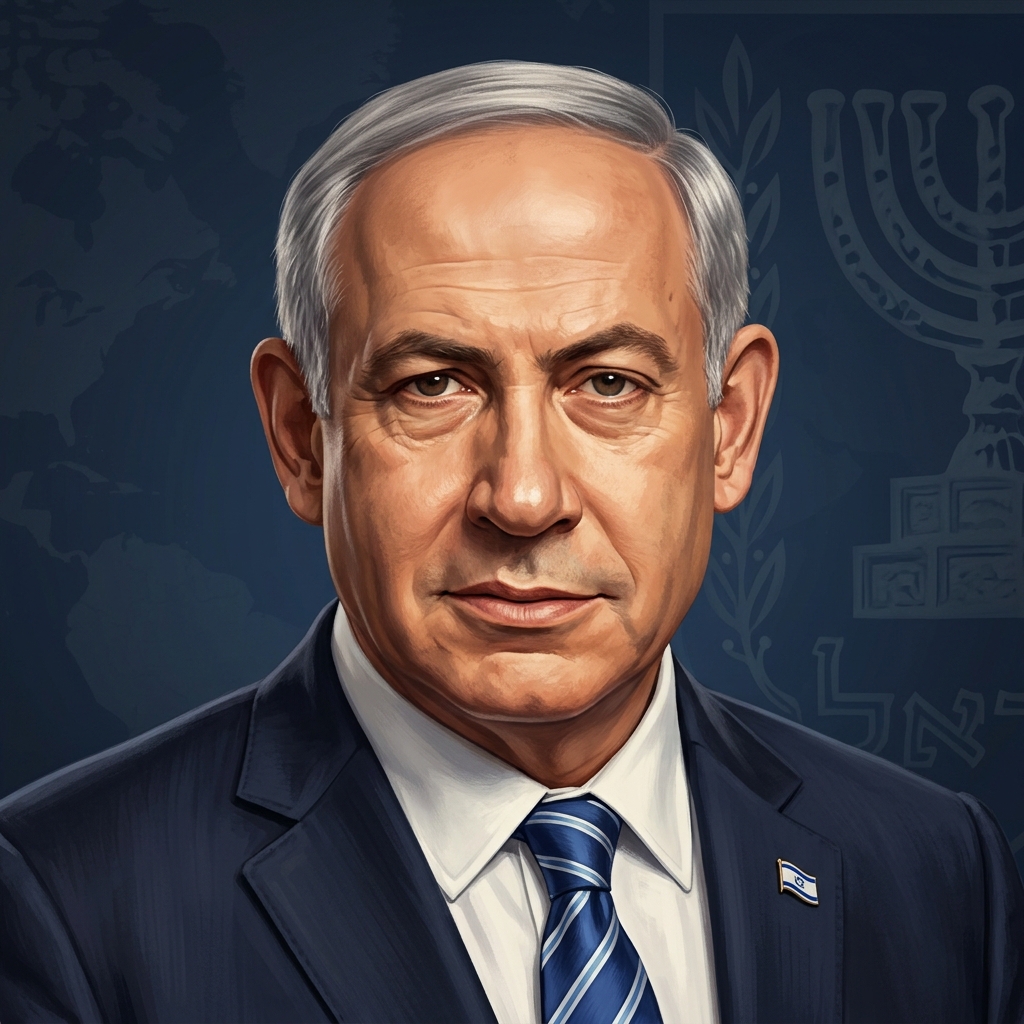
Israeli PM Netanyahu
VS
Iran
Israeli Prime Minister Benjamin Netanyahu leads Israel's government and has publicly defended his decision to take military action against Iran's nuclear facilities, describing it as one of the easiest decisions he has made as prime minister.
Iran is the target of that military action, with Israeli intelligence indicating it is resuming progress on its nuclear program.
The two sides have conflicting interests over Iran's nuclear program: Netanyahu has stated that devastating Iran's nuclear facilities was necessary, while Iran continues to pursue nuclear progress that Israel views as a threat.
This disagreement has led to Israeli military campaigns against Iran and repeated public defenses by Netanyahu on the international stage, including at the United Nations General Assembly.
Separately, a stabbing occurred on an Israel-bound FlyDubai flight from Dubai to Tel Aviv, and Netanyahu has said it is too early to determine whether Iran was involved.
The investigation into the stabbing is being conducted in Saudi Arabia.
*AI-generated summary of publicly available data. This is not an official statement of any party.
*AI-generated summary of publicly available statements and reporting. This is not an official statement of this party.
Supporters of Israeli PM Netanyahu argue that Israel's sovereignty and the safety of its citizens must guide any response, and they maintain that judgment should await verified facts rather than premature blame.
Supporters of Israeli PM Netanyahu maintain that Israel's cultural survival depends on sovereign self-defense, so they back his caution on Iran while Saudi Arabia investigates the Dubai-Tel Aviv stabbing.
Supporters of Israeli PM Netanyahu counter that Israel's cultural memory of Iranian-backed attacks shapes threat perception, not habit; they argue Tehran's own rhetoric and proxy record sustain that view.
Supporters of Israeli PM Netanyahu argue that attributing the stabbing to Iran before Saudi Arabia's investigation concludes would violate due process, so Netanyahu rightly withholds judgment until evidence, not speculation, establishes legal culpability.
Supporters of Israeli PM Netanyahu argue that attributing the stabbing to Iran before the Saudi-led investigation concludes would be legally reckless and prejudicial to due process.
Supporters of Netanyahu counter that under international law a state need not wait for conclusive attribution before acting in self-defense against an armed attack already underway.
Supporters of Israeli PM Netanyahu argue that blaming Iran before Saudi Arabia's investigation concludes would be premature, letting Tehran exploit an unproven claim to discredit Israel.
Supporters of Israeli PM Netanyahu argue that restraint serves Israel's interests: premature blame would hand Iran a pretext, expose Saudi cooperation, and let investigators in Riyadh set the narrative first.
Supporters of Netanyahu counter that silence was leverage, not weakness: keeping Tehran unblamed let Israel strike later without telegraphing intent, while Riyadh's delays served Israeli deterrence, not Iranian safety.
Supporters of Israeli PM Netanyahu argue that assigning blame to Iran before Saudi-led investigators finish their work would be morally reckless, risking unjust punishment of the innocent.
Supporters of Israeli PM Netanyahu argue that assigning blame before Saudi-led investigators finish their work would be morally reckless, since unproven accusations could inflame a region already on edge.
Supporters of Israeli PM Netanyahu counter that moral judgment need not await a single investigation, since Tehran's long record of arming and directing attacks speaks for itself.
Supporters of Israeli PM Netanyahu argue that divine providence guards Israel, so the stabbing's cause must await the Saudi investigation rather than premature blame of Iran.
Supporters of Israeli PM Netanyahu invoke scripture's call for justice, urging patience until Saudi investigators establish facts, since faith cautions against bearing false witness by prematurely blaming Iran.
Supporters of Netanyahu counter that scripture itself frames Iran as a sworn adversary, citing Persia in Esther and prophetic warnings, so the attack fits a pattern of aggression requiring no Saudi report to confirm.
*AI-generated summary of publicly available statements and reporting. This is not an official statement of this party.
Supporters of Iran argue that blaming Tehran for a stabbing before Saudi investigators finish reflects a deeper cultural habit of casting Iran as the default villain, which erodes trust and regional stability.
Supporters of Iran argue that blaming Tehran before Saudi Arabia's investigation concludes reflects a cultural habit of treating Iran as a default culprit, and they contend that inherited regional distrust, not evidence, drives such accusations.
Supporters of Iran counter that sovereignty claims ring hollow from a state whose own undeclared arsenal and occupation record undercut any moral authority to speak for the region's stability.
Supporters of Iran argue that under international law, attribution of state responsibility requires verified evidence, and Netanyahu himself concedes it is too early to determine Iranian involvement.
Supporters of Iran note no evidence ties Tehran to the stabbing, and under international law, attribution requires proof; they argue Saudi Arabia's investigation must conclude before any legal blame is assigned.
Supporters of Iran counter that due process cuts both ways: publicly floating Iran as a suspect before Saudi Arabia's probe concludes prejudges guilt, so the withholding claim rings hollow.
Supporters of Iran argue that Netanyahu's early caution reflects a calculation, not restraint: blaming Tehran prematurely would expose Israel's inability to retaliate, so silence preserves leverage while Saudi Arabia's investigation delays any verdict.
Supporters of Iran argue that Netanyahu's cautious stance on the stabbing exposes Israel's need to avoid a premature blame game that could invite retaliation.
Supporters of Iran counter that premature blame serves Israel's interests: an unproven claim forces Tehran to defend itself, letting Netanyahu shape the narrative while Riyadh's inquiry stalls.
Supporters of Iran argue that blaming Tehran for the stabbing before Saudi Arabia's investigation concludes is morally reckless, and note Netanyahu himself conceding it is too early to determine Iranian involvement.
Supporters of Iran argue that blaming Tehran for the stabbing without evidence is morally reckless, since even Netanyahu admits it is too early to determine involvement.
Supporters of Iran counter that waiting on Saudi-led investigators is itself a moral failure, since the same powers arming and funding the accused cannot credibly judge them.
Supporters of Iran argue that the stabbing is being exploited to stoke a religiously framed confrontation, and they insist that until Saudi investigators report, no sacred duty or scriptural cause justifies blaming Iran.
Supporters of Iran argue that Israel's leaders routinely invoke Tehran to justify security claims without proof, and that religious traditions forbid accusing others of a crime before evidence is established.
Supporters of Iran counter that divine providence cannot be claimed by one state alone, since the same religious tradition holds all nations accountable before God, so invoking heaven to defer blame rings hollow.
AI-generated summary of publicly available statements and reporting. This is not an official statement of this party.
Supporters of Israeli PM Netanyahu argue that Israel's sovereignty and the safety of its citizens must guide any response, and they maintain that judgment should await verified facts rather than premature blame.
Supporters of Israeli PM Netanyahu maintain that Israel's cultural survival depends on sovereign self-defense, so they back his caution on Iran while Saudi Arabia investigates the Dubai-Tel Aviv stabbing.
Supporters of Israeli PM Netanyahu counter that Israel's cultural memory of Iranian-backed attacks shapes threat perception, not habit; they argue Tehran's own rhetoric and proxy record sustain that view.
Supporters of Israeli PM Netanyahu argue that attributing the stabbing to Iran before Saudi Arabia's investigation concludes would violate due process, so Netanyahu rightly withholds judgment until evidence, not speculation, establishes legal culpability.
Supporters of Israeli PM Netanyahu argue that attributing the stabbing to Iran before the Saudi-led investigation concludes would be legally reckless and prejudicial to due process.
Supporters of Netanyahu counter that under international law a state need not wait for conclusive attribution before acting in self-defense against an armed attack already underway.
Supporters of Israeli PM Netanyahu argue that blaming Iran before Saudi Arabia's investigation concludes would be premature, letting Tehran exploit an unproven claim to discredit Israel.
Supporters of Israeli PM Netanyahu argue that restraint serves Israel's interests: premature blame would hand Iran a pretext, expose Saudi cooperation, and let investigators in Riyadh set the narrative first.
Supporters of Netanyahu counter that silence was leverage, not weakness: keeping Tehran unblamed let Israel strike later without telegraphing intent, while Riyadh's delays served Israeli deterrence, not Iranian safety.
Supporters of Israeli PM Netanyahu argue that assigning blame to Iran before Saudi-led investigators finish their work would be morally reckless, risking unjust punishment of the innocent.
Supporters of Israeli PM Netanyahu argue that assigning blame before Saudi-led investigators finish their work would be morally reckless, since unproven accusations could inflame a region already on edge.
Supporters of Israeli PM Netanyahu counter that moral judgment need not await a single investigation, since Tehran's long record of arming and directing attacks speaks for itself.
Supporters of Israeli PM Netanyahu argue that divine providence guards Israel, so the stabbing's cause must await the Saudi investigation rather than premature blame of Iran.
Supporters of Israeli PM Netanyahu invoke scripture's call for justice, urging patience until Saudi investigators establish facts, since faith cautions against bearing false witness by prematurely blaming Iran.
Supporters of Netanyahu counter that scripture itself frames Iran as a sworn adversary, citing Persia in Esther and prophetic warnings, so the attack fits a pattern of aggression requiring no Saudi report to confirm.
Supporters of Iran argue that blaming Tehran for a stabbing before Saudi investigators finish reflects a deeper cultural habit of casting Iran as the default villain, which erodes trust and regional stability.
Supporters of Iran argue that blaming Tehran before Saudi Arabia's investigation concludes reflects a cultural habit of treating Iran as a default culprit, and they contend that inherited regional distrust, not evidence, drives such accusations.
Supporters of Iran counter that sovereignty claims ring hollow from a state whose own undeclared arsenal and occupation record undercut any moral authority to speak for the region's stability.
Supporters of Iran argue that under international law, attribution of state responsibility requires verified evidence, and Netanyahu himself concedes it is too early to determine Iranian involvement.
Supporters of Iran note no evidence ties Tehran to the stabbing, and under international law, attribution requires proof; they argue Saudi Arabia's investigation must conclude before any legal blame is assigned.
Supporters of Iran counter that due process cuts both ways: publicly floating Iran as a suspect before Saudi Arabia's probe concludes prejudges guilt, so the withholding claim rings hollow.
Supporters of Iran argue that Netanyahu's early caution reflects a calculation, not restraint: blaming Tehran prematurely would expose Israel's inability to retaliate, so silence preserves leverage while Saudi Arabia's investigation delays any verdict.
Supporters of Iran argue that Netanyahu's cautious stance on the stabbing exposes Israel's need to avoid a premature blame game that could invite retaliation.
Supporters of Iran counter that premature blame serves Israel's interests: an unproven claim forces Tehran to defend itself, letting Netanyahu shape the narrative while Riyadh's inquiry stalls.
Supporters of Iran argue that blaming Tehran for the stabbing before Saudi Arabia's investigation concludes is morally reckless, and note Netanyahu himself conceding it is too early to determine Iranian involvement.
Supporters of Iran argue that blaming Tehran for the stabbing without evidence is morally reckless, since even Netanyahu admits it is too early to determine involvement.
Supporters of Iran counter that waiting on Saudi-led investigators is itself a moral failure, since the same powers arming and funding the accused cannot credibly judge them.
Supporters of Iran argue that the stabbing is being exploited to stoke a religiously framed confrontation, and they insist that until Saudi investigators report, no sacred duty or scriptural cause justifies blaming Iran.
Supporters of Iran argue that Israel's leaders routinely invoke Tehran to justify security claims without proof, and that religious traditions forbid accusing others of a crime before evidence is established.
Supporters of Iran counter that divine providence cannot be claimed by one state alone, since the same religious tradition holds all nations accountable before God, so invoking heaven to defer blame rings hollow.
A pilot stabbed another pilot on an Israel-bound plane.
During a visit to the United Arab Emirates on Sunday, Israeli Prime Minister Benjamin Netanyahu shared new intelligence with Mohammed bin Zayed indicating that Iran is resuming progress on its nuclear program.
In his address to the United Nations General Assembly, Netanyahu defended his decision to take military action against Iran's nuclear facilities, saying that devastating Iran's nuclear facilities was hard but was one of the easiest decisions he has ever had to make.
In his address to the U.N. General Assembly, Israeli Prime Minister Netanyahu said that attacking Iran was the easiest decision he made as prime minister.
Israeli Prime Minister Benjamin Netanyahu fiercely defended his country's military campaigns in Iran, Gaza and elsewhere in the Middle East, as delegates walked out.