Israeli right-wing ministers
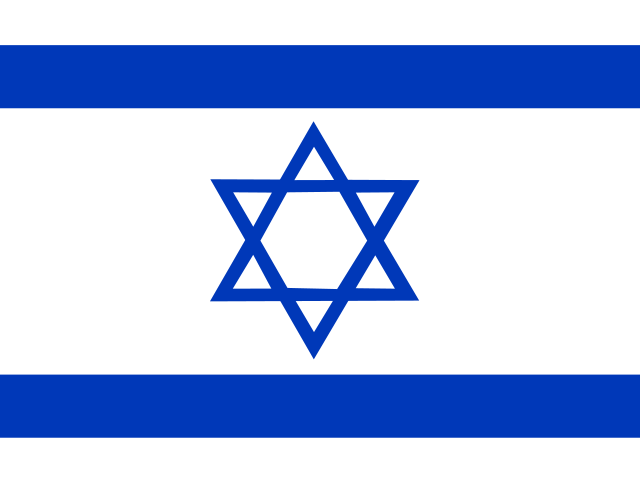
VS
Palestinians

The Israeli right-wing ministers are members of Israel's governing coalition, including figures from parties such as Likud and far-right factions, who hold key ministerial positions and advocate for policies including settlement expansion and hardline security measures.
Palestinians are the Arab population living in the West Bank, Gaza Strip, and East Jerusalem, whose national aspirations and rights are directly affected by Israeli government policies.
The conflict between these parties centers on competing claims to land and sovereignty.
Israeli right-wing ministers promote settlement projects and security policies that Palestinians view as encroachments on their territory and violations of their rights.
This disagreement is a core driver of the broader Israeli-Palestinian conflict, with each side viewing the other's actions as threats to their national interests.
The stakes are high, as settlement expansion and security measures can inflame tensions, impact peace prospects, and affect the daily lives of millions.
The political dynamics within Israel, including coalition pressures, often shape the intensity and direction of these policies.
*AI-generated summary of publicly available data. This is not an official statement of any party.
*AI-generated summary of publicly available statements and reporting. This is not an official statement of this party.
Supporters of Israeli right-wing ministers argue that building settlements affirms Jewish historical and cultural ties to the land, casting sovereignty over it as a core national identity rather than a concession.
Supporters of Israeli right-wing ministers argue that building settlements is a cultural and historical right, tying Jewish identity to the land and casting expansion as a voter priority ahead of the Oct. 27 election.
Supporters of Israeli right-wing ministers counter that Jewish historical and biblical ties to Judea and Samaria predate modern Palestinian identity, so building there restores, rather than erases, the land's indigenous cultural heritage.
Supporters of Israeli right-wing ministers argue that building in settlements is lawful under Israeli domestic planning rules and prior agreements, and that voters, not foreign critics, should decide through the Oct 27 election.
Supporters of Israeli right-wing ministers argue that settlement expansion is legally sanctioned state policy, tied to security and historical claim, and that voters should judge it at the ballot box on Oct 27.
Supporters of Israeli right-wing ministers counter that the Fourth Geneva Convention’s transfer ban addresses forcible deportation, not voluntary Jewish residency, and that prior accords leave settlement zoning to Israeli domestic law.
Supporters of Israeli right-wing ministers argue settlement launches before the October 27 vote are calculated signaling: they demonstrate power to their base, lock in facts on the ground, and force rivals to compete on security credentials.
Supporters of Israeli right-wing ministers argue settlement launches before October 27 are calculated campaign theater: visible building projects signal security credentials and territorial resolve to their base, trading friction with Palestinians for votes.
Supporters of Israeli right-wing ministers counter that timing settlements before elections is leverage, not theater: they argue Palestinians read any freeze as weakness, so expansion signals resolve and forces outside brokers to bargain.
Supporters of Israeli right-wing ministers argue that sovereignty over the land is a moral right and security necessity, and that settlement building proves authentic commitment to voters.
Supporters of Israeli right-wing ministers argue that sovereignty over ancestral land is a moral right, and that settlement expansion strengthens Israel's security and democratic future.
Supporters of Israeli right-wing ministers counter that sovereignty over the land is a moral and historical right, so building there is not a failure but a duty owed to their own people.
Supporters of Israeli right-wing ministers argue that settling the land fulfills a religious mandate and preserves Jewish continuity, framing settlement expansion as a sacred duty rather than a political tactic.
Supporters of Israeli right-wing ministers argue that settling the land is a religious mandate rooted in biblical inheritance, so building ahead of the October 27 election affirms covenant continuity rather than mere politics.
Supporters of Israeli right-wing ministers counter that Leviticus 25:23 addresses private land sales, not sovereign political sovereignty, which they say was granted to the Jewish people by divine covenant.
*AI-generated summary of publicly available statements and reporting. This is not an official statement of this party.
Supporters of Palestinians argue that settlement expansions before elections erase cultural heritage and communal memory tied to the land, weakening the continuity of Palestinian life.
Supporters of Palestinians argue that settlement expansion during election season erodes the cultural continuity of Palestinian communities, threatening their historic ties to the land and inherited way of life.
Supporters of Palestinians counter that their own centuries-old cultural continuity on the land—villages, olive groves, and oral tradition—is equally inherited, and that affirming one people's ties by displacing another's erodes the stability such continuity requires.
Supporters of Palestinians argue that settlement expansion during an election campaign violates international law, citing the Fourth Geneva Convention's ban on transferring civilians into occupied territory.
Supporters of Palestinians argue that settlement expansion during Israel's election campaign violates international law, citing the Fourth Geneva Convention's ban on transferring civilians into occupied territory.
Supporters of Palestinians counter that the Fourth Geneva Convention and UN Security Council resolutions render settlements unlawful regardless of Israeli domestic rules or elections, so voters cannot decide what international law already prohibits.
Supporters of Palestinians argue the pre-election settlement push proves Israeli ministers treat expansion as a domestic power play, so Palestinians see leverage only in outside pressure, not Israeli goodwill.
Supporters of Palestinians argue that Israeli ministers time settlement launches to election cycles, treating expansion as a cheap vote-winning spectacle; in their view, Palestinian statehood is sacrificed to Israeli campaign incentives.
Supporters of Palestinians counter that the timing signals weakness, not strength: ministers race to lock in facts because they fear the vote's outcome may constrain them, making the launches a bid to bind a future government rather than a display of power.
Supporters of Palestinians argue that settlement expansion during an election campaign is a moral failure, using occupied land for political gain while denying Palestinians self-determination.
Supporters of Palestinians argue that settlement launches used as campaign events entrench occupation and deny Palestinians a viable state, making the moral cost of land expropriation the election's real stakes.
Supporters of Palestinians counter that no state's moral claim can extinguish another people's right to self-determination, and that settlement expansion deepens dispossession rather than security.
Supporters of Palestinians argue that scripture forbids trading sacred land for votes, citing Leviticus 25:23's teaching that the land belongs to God and must not be sold permanently.
Supporters of Palestinians argue that settling occupied land violates divine law, citing scripture that condemns seizing another people's inheritance.
Supporters of Palestinians counter that their own religious tradition ties the same land to their ancestral covenant, and that divine mandate cannot justify displacing another people.
AI-generated summary of publicly available statements and reporting. This is not an official statement of this party.
Supporters of Israeli right-wing ministers argue that building settlements affirms Jewish historical and cultural ties to the land, casting sovereignty over it as a core national identity rather than a concession.
Supporters of Israeli right-wing ministers argue that building settlements is a cultural and historical right, tying Jewish identity to the land and casting expansion as a voter priority ahead of the Oct. 27 election.
Supporters of Israeli right-wing ministers counter that Jewish historical and biblical ties to Judea and Samaria predate modern Palestinian identity, so building there restores, rather than erases, the land's indigenous cultural heritage.
Supporters of Israeli right-wing ministers argue that building in settlements is lawful under Israeli domestic planning rules and prior agreements, and that voters, not foreign critics, should decide through the Oct 27 election.
Supporters of Israeli right-wing ministers argue that settlement expansion is legally sanctioned state policy, tied to security and historical claim, and that voters should judge it at the ballot box on Oct 27.
Supporters of Israeli right-wing ministers counter that the Fourth Geneva Convention’s transfer ban addresses forcible deportation, not voluntary Jewish residency, and that prior accords leave settlement zoning to Israeli domestic law.
Supporters of Israeli right-wing ministers argue settlement launches before the October 27 vote are calculated signaling: they demonstrate power to their base, lock in facts on the ground, and force rivals to compete on security credentials.
Supporters of Israeli right-wing ministers argue settlement launches before October 27 are calculated campaign theater: visible building projects signal security credentials and territorial resolve to their base, trading friction with Palestinians for votes.
Supporters of Israeli right-wing ministers counter that timing settlements before elections is leverage, not theater: they argue Palestinians read any freeze as weakness, so expansion signals resolve and forces outside brokers to bargain.
Supporters of Israeli right-wing ministers argue that sovereignty over the land is a moral right and security necessity, and that settlement building proves authentic commitment to voters.
Supporters of Israeli right-wing ministers argue that sovereignty over ancestral land is a moral right, and that settlement expansion strengthens Israel's security and democratic future.
Supporters of Israeli right-wing ministers counter that sovereignty over the land is a moral and historical right, so building there is not a failure but a duty owed to their own people.
Supporters of Israeli right-wing ministers argue that settling the land fulfills a religious mandate and preserves Jewish continuity, framing settlement expansion as a sacred duty rather than a political tactic.
Supporters of Israeli right-wing ministers argue that settling the land is a religious mandate rooted in biblical inheritance, so building ahead of the October 27 election affirms covenant continuity rather than mere politics.
Supporters of Israeli right-wing ministers counter that Leviticus 25:23 addresses private land sales, not sovereign political sovereignty, which they say was granted to the Jewish people by divine covenant.
Supporters of Palestinians argue that settlement expansions before elections erase cultural heritage and communal memory tied to the land, weakening the continuity of Palestinian life.
Supporters of Palestinians argue that settlement expansion during election season erodes the cultural continuity of Palestinian communities, threatening their historic ties to the land and inherited way of life.
Supporters of Palestinians counter that their own centuries-old cultural continuity on the land—villages, olive groves, and oral tradition—is equally inherited, and that affirming one people's ties by displacing another's erodes the stability such continuity requires.
Supporters of Palestinians argue that settlement expansion during an election campaign violates international law, citing the Fourth Geneva Convention's ban on transferring civilians into occupied territory.
Supporters of Palestinians argue that settlement expansion during Israel's election campaign violates international law, citing the Fourth Geneva Convention's ban on transferring civilians into occupied territory.
Supporters of Palestinians counter that the Fourth Geneva Convention and UN Security Council resolutions render settlements unlawful regardless of Israeli domestic rules or elections, so voters cannot decide what international law already prohibits.
Supporters of Palestinians argue the pre-election settlement push proves Israeli ministers treat expansion as a domestic power play, so Palestinians see leverage only in outside pressure, not Israeli goodwill.
Supporters of Palestinians argue that Israeli ministers time settlement launches to election cycles, treating expansion as a cheap vote-winning spectacle; in their view, Palestinian statehood is sacrificed to Israeli campaign incentives.
Supporters of Palestinians counter that the timing signals weakness, not strength: ministers race to lock in facts because they fear the vote's outcome may constrain them, making the launches a bid to bind a future government rather than a display of power.
Supporters of Palestinians argue that settlement expansion during an election campaign is a moral failure, using occupied land for political gain while denying Palestinians self-determination.
Supporters of Palestinians argue that settlement launches used as campaign events entrench occupation and deny Palestinians a viable state, making the moral cost of land expropriation the election's real stakes.
Supporters of Palestinians counter that no state's moral claim can extinguish another people's right to self-determination, and that settlement expansion deepens dispossession rather than security.
Supporters of Palestinians argue that scripture forbids trading sacred land for votes, citing Leviticus 25:23's teaching that the land belongs to God and must not be sold permanently.
Supporters of Palestinians argue that settling occupied land violates divine law, citing scripture that condemns seizing another people's inheritance.
Supporters of Palestinians counter that their own religious tradition ties the same land to their ancestral covenant, and that divine mandate cannot justify displacing another people.
Israeli right-wing ministers made comments suggesting dropping a nuclear bomb on Gaza and establishing 'sterile zones' to block Palestinians, adding fuel to Palestinian fears amid the Hamas war.
Benjamin Netanyahu was sworn in as prime minister of Israel, leading the most right-wing and religiously conservative government in the country's history.