Italy
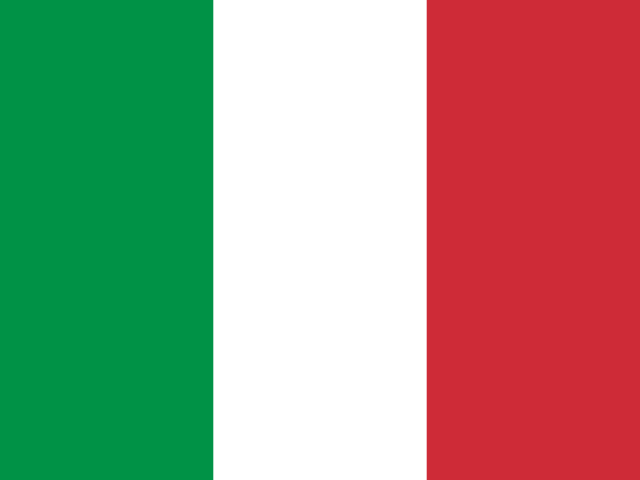

VS
EU

The relationship between Italy and the European Union is a recurring theme in political discourse and popular culture, often highlighting differences in governance, culture, and policy.
A notable example is the 2018 standoff between the Italian government and the EU over budget and migration issues, which underscored tensions within the bloc.
Additionally, satirical works like Bruno Bozzetto's 'Europe vs.
Italy' have humorously depicted these perceived differences, reflecting broader public perceptions.
The topic encompasses both serious political disputes and cultural stereotypes.
*AI-generated summary of publicly available data. This is not an official statement of any party.
*AI-generated summary of publicly available statements and reporting. This is not an official statement of this party.
Supporters of Italy argue that the EU’s hands-off response to border crises, like Ceuta in 2026, reveals a cultural disconnect from national identity and security priorities.
Supporters of Italy argue that the EU’s detached handling of border crises, like Ceuta, ignores the cultural weight of national identity, which Italian communities see as vital to preserving their distinct way of life.
Supporters of Italy counter that the EU’s "shared rules" erase the nation’s cultural duty to safeguard its heritage, viewing migration clashes as a defense of local identity rather than mere friction.
Supporters of Italy argue that EU budgetary rules and migration directives infringe on national sovereignty, and they maintain that Italy's legal right to control its borders and fiscal policy is absolute under treaty principles of subsidiarity.
Supporters of Italy maintain that EU fiscal and migration rules impose legal constraints that disregard national sovereignty, arguing that Italy’s budget flexibility and border controls are lawful expressions of self-governance.
Supporters of Italy counter that EU treaties grant member states sovereign control over national security and budgetary autonomy, citing the Treaty on the Functioning of the European Union’s respect for national identities and the absence of binding burden-sharing quotas.
Supporters of Italy argue that Brussels wields rules as leverage, punishing Rome for defending national borders while quietly tolerating Spain’s Ceuta crisis. They point to the 2018 budget fight as proof that EU pressure targets weaker states, not shared failures.
Supporters of Italy argue Brussels weaponizes rules, as the 2018 budget standoff and Ceuta's 2021 influx show—EU hands-off when Spain bleeds, yet rigid with Rome. They see power, not principle, driving EU enforcement.
Supporters of Italy counter that Brussels’ rulebook is a cage, not a shield, and that leverage flows from the credible threat to break it, not from compliance.
Supporters of Italy argue that the EU’s moral authority collapses when Brussels abandons shared border crises like Ceuta, forcing nations to uphold humanitarian duties alone, which history shows breeds resentment and division rather than unity.
Supporters of Italy argue that national sovereignty is a moral duty, pointing to the EU’s hands-off response in Ceuta as proof that Brussels abandons its members in crisis, while Rome’s own tradition of border protection reflects a steadfast ethic of self-determination over.
Supporters of Italy counter that EU-imposed budget and migration rules override national moral duties, forcing Italy to bear disproportionate burdens while richer states evade their share. They argue true solidarity must respect each nation’s capacity and consent, not dictate it.
Supporters of Italy argue that the EU’s secular bureaucracy undermines the nation’s Catholic-rooted social order, as Brussels’s hands-off 2026 Ceuta response abandoned shared Christian duty to protect Europe’s borders.
Supporters of Italy argue that the EU’s secular, bureaucratic handoff on migration, seen in Ceuta, ignores the nation’s Catholic duty of ordered charity and border stewardship.
Supporters of Italy counter that subsidiarity, not uniformity, honors God’s design for distinct nations, and that Rome’s ancient duty to its own people precedes any Brussels covenant.
*AI-generated summary of publicly available statements and reporting. This is not an official statement of this party.
Supporters of the EU argue that its framework values collective stability over national idiosyncrasy, viewing Italy’s 2018 budget and migration clashes as a recurring cultural friction where shared rules, not satire, define unity.
Supporters of the EU argue that its framework, however imperfect, preserves shared cultural standards and collective bargaining, viewing Italy’s friction as a recurring cycle of national pride clashing with continental unity.
Supporters of the EU counter that border crises like Ceuta transcend national identity, reflecting a shared European heritage of solidarity and managed migration, as seen in past joint responses.
Supporters of the EU argue that its legal framework, not national preference, governs migration and fiscal policy, citing binding treaties that require shared responsibility and rule-of-law compliance from member states like Italy.
Supporters of the EU argue that its legal framework requires shared responsibility, not unilateral border measures, viewing the Ceuta crisis as a test of collective asylum rules over national discretion.
Supporters of the EU counter that treaty law, as affirmed by the Court of Justice, binds member states to shared rules, with subsidiarity applying only where the Union lacks competence, not to border or fiscal policy.
Supporters of the EU argue that Brussels wields power through rules, not sentiment, and that Italy’s defiance only invites isolation when it needs leverage most.
Supporters of the EU argue that Brussels wields leverage precisely by staying hands-off, letting Rome’s budget and migration crises expose its own constraints and forcing compliance through economic pressure.
Supporters of the EU counter that Rome’s 2018 budget breach was a test of treaty credibility, not a vendetta; Brussels enforces rules where compliance is measurable, and Spain’s Ceuta handling fell under bilateral migration law, not fiscal union. They argue power lies in.
Supporters of the EU argue that its binding rules on budgets and migration reflect a moral commitment to collective responsibility and solidarity, which they see as essential to preserving the bloc's unity and shared values.
Supporters of the EU argue that its shared moral duty lies in upholding common rules and solidarity, viewing Italy’s budgetary defiance as a breach of collective responsibility that undermines the bloc’s foundation.
Supporters of the EU counter that moral authority is rooted in collective responsibility, not isolation, and that shared frameworks—like the Dublin system—ensure no nation bears the burden alone, turning Ceuta into a test of solidarity, not abandonment.
Supporters of the EU argue that unified migration and fiscal rules reflect a moral duty of shared stewardship, viewing Italy’s defiance as a breach of fraternal accountability under a common European covenant.
Supporters of the EU argue that its shared moral framework, rooted in Christian democratic values of solidarity and rule of law, binds member states like Italy to collective migration and fiscal duties, seeing the bloc’s oversight as a sacred covenant rather than a bureaucratic.
Supporters of the EU counter that its 2026 Ceuta response upheld Christian mercy over rigid borders, arguing that shared duty is fulfilled through humane asylum processes, not militarized defense.
AI-generated summary of publicly available statements and reporting. This is not an official statement of this party.
Supporters of Italy argue that the EU’s hands-off response to border crises, like Ceuta in 2026, reveals a cultural disconnect from national identity and security priorities.
Supporters of Italy argue that the EU’s detached handling of border crises, like Ceuta, ignores the cultural weight of national identity, which Italian communities see as vital to preserving their distinct way of life.
Supporters of Italy counter that the EU’s "shared rules" erase the nation’s cultural duty to safeguard its heritage, viewing migration clashes as a defense of local identity rather than mere friction.
Supporters of Italy argue that EU budgetary rules and migration directives infringe on national sovereignty, and they maintain that Italy's legal right to control its borders and fiscal policy is absolute under treaty principles of subsidiarity.
Supporters of Italy maintain that EU fiscal and migration rules impose legal constraints that disregard national sovereignty, arguing that Italy’s budget flexibility and border controls are lawful expressions of self-governance.
Supporters of Italy counter that EU treaties grant member states sovereign control over national security and budgetary autonomy, citing the Treaty on the Functioning of the European Union’s respect for national identities and the absence of binding burden-sharing quotas.
Supporters of Italy argue that Brussels wields rules as leverage, punishing Rome for defending national borders while quietly tolerating Spain’s Ceuta crisis. They point to the 2018 budget fight as proof that EU pressure targets weaker states, not shared failures.
Supporters of Italy argue Brussels weaponizes rules, as the 2018 budget standoff and Ceuta's 2021 influx show—EU hands-off when Spain bleeds, yet rigid with Rome. They see power, not principle, driving EU enforcement.
Supporters of Italy counter that Brussels’ rulebook is a cage, not a shield, and that leverage flows from the credible threat to break it, not from compliance.
Supporters of Italy argue that the EU’s moral authority collapses when Brussels abandons shared border crises like Ceuta, forcing nations to uphold humanitarian duties alone, which history shows breeds resentment and division rather than unity.
Supporters of Italy argue that national sovereignty is a moral duty, pointing to the EU’s hands-off response in Ceuta as proof that Brussels abandons its members in crisis, while Rome’s own tradition of border protection reflects a steadfast ethic of self-determination over.
Supporters of Italy counter that EU-imposed budget and migration rules override national moral duties, forcing Italy to bear disproportionate burdens while richer states evade their share. They argue true solidarity must respect each nation’s capacity and consent, not dictate it.
Supporters of Italy argue that the EU’s secular bureaucracy undermines the nation’s Catholic-rooted social order, as Brussels’s hands-off 2026 Ceuta response abandoned shared Christian duty to protect Europe’s borders.
Supporters of Italy argue that the EU’s secular, bureaucratic handoff on migration, seen in Ceuta, ignores the nation’s Catholic duty of ordered charity and border stewardship.
Supporters of Italy counter that subsidiarity, not uniformity, honors God’s design for distinct nations, and that Rome’s ancient duty to its own people precedes any Brussels covenant.
Supporters of the EU argue that its framework values collective stability over national idiosyncrasy, viewing Italy’s 2018 budget and migration clashes as a recurring cultural friction where shared rules, not satire, define unity.
Supporters of the EU argue that its framework, however imperfect, preserves shared cultural standards and collective bargaining, viewing Italy’s friction as a recurring cycle of national pride clashing with continental unity.
Supporters of the EU counter that border crises like Ceuta transcend national identity, reflecting a shared European heritage of solidarity and managed migration, as seen in past joint responses.
Supporters of the EU argue that its legal framework, not national preference, governs migration and fiscal policy, citing binding treaties that require shared responsibility and rule-of-law compliance from member states like Italy.
Supporters of the EU argue that its legal framework requires shared responsibility, not unilateral border measures, viewing the Ceuta crisis as a test of collective asylum rules over national discretion.
Supporters of the EU counter that treaty law, as affirmed by the Court of Justice, binds member states to shared rules, with subsidiarity applying only where the Union lacks competence, not to border or fiscal policy.
Supporters of the EU argue that Brussels wields power through rules, not sentiment, and that Italy’s defiance only invites isolation when it needs leverage most.
Supporters of the EU argue that Brussels wields leverage precisely by staying hands-off, letting Rome’s budget and migration crises expose its own constraints and forcing compliance through economic pressure.
Supporters of the EU counter that Rome’s 2018 budget breach was a test of treaty credibility, not a vendetta; Brussels enforces rules where compliance is measurable, and Spain’s Ceuta handling fell under bilateral migration law, not fiscal union. They argue power lies in.
Supporters of the EU argue that its binding rules on budgets and migration reflect a moral commitment to collective responsibility and solidarity, which they see as essential to preserving the bloc's unity and shared values.
Supporters of the EU argue that its shared moral duty lies in upholding common rules and solidarity, viewing Italy’s budgetary defiance as a breach of collective responsibility that undermines the bloc’s foundation.
Supporters of the EU counter that moral authority is rooted in collective responsibility, not isolation, and that shared frameworks—like the Dublin system—ensure no nation bears the burden alone, turning Ceuta into a test of solidarity, not abandonment.
Supporters of the EU argue that unified migration and fiscal rules reflect a moral duty of shared stewardship, viewing Italy’s defiance as a breach of fraternal accountability under a common European covenant.
Supporters of the EU argue that its shared moral framework, rooted in Christian democratic values of solidarity and rule of law, binds member states like Italy to collective migration and fiscal duties, seeing the bloc’s oversight as a sacred covenant rather than a bureaucratic.
Supporters of the EU counter that its 2026 Ceuta response upheld Christian mercy over rigid borders, arguing that shared duty is fulfilled through humane asylum processes, not militarized defense.
The EU has descended into infighting over the migrant invasion of Spain’s Ceuta, and Brussels is taking a hands-off approach Read Full Article at RT.com
At least 49,000 people breached the border into Ceuta, with at least 19 deaths reported, prompting Spain to deploy military.
The Talking Politics podcast episode 'Italy vs. Europe' analyzed the high-stakes standoff between the Italian government and the EU, a major story in European politics.
The short film 'Europe & Italy' was released, satirizing the differences in how Italians do things compared to the rest of Europe.