Japanese activist

VS
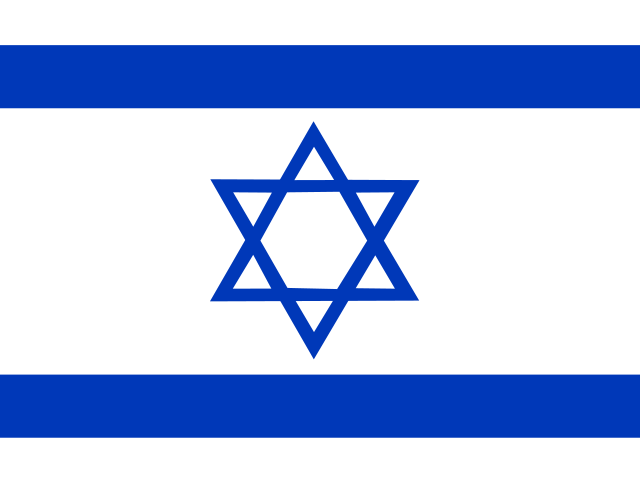
Israel
Yusuke Furusawa is a 49-year-old Tokyo resident who has been protesting against Israel's military operations in Gaza since October 2023, describing them as genocide and human rights violations.
Chikahiro Naoya is a ramen chef who left his restaurant in February 2024 to hold a one-man protest at the Israeli Embassy in Tokyo.
Both activists are part of a broader movement in Japan that includes protests and calls for action against Israel.
The activists and their supporters have conflicting interests with Israel, as they demand an end to what they call genocide and human rights violations in Gaza, while Israel continues its military operations.
Japanese protesters have called for sanctions against Israel and urged Japanese companies to cut ties with the country, highlighting the international divide over Israel's actions.
The protests have drawn attention from foreigners and have included incidents where activists were surrounded by police, such as when Furusawa approached the Israeli Embassy and shouted "Stop the genocide."
*AI-generated summary of publicly available data. This is not an official statement of any party.
*AI-generated summary of publicly available statements and reporting. This is not an official statement of this party.
Supporters of the Japanese activist argue that the protest upholds a cultural duty to defend the sanctity of life, a value rooted in Japan’s pacifist tradition and Buddhist heritage, which they see as a moral compass against the erosion of international order.
Supporters of the Japanese activist argue that the protests uphold Japan’s cultural duty to honor civilian life and historical memory of wartime suffering, viewing Israel’s Gaza operations as a violation of that inherited moral order.
Supporters of Japanese activist counter that invoking historical survival cannot sanitize the present-day bombardment of civilian infrastructure, as their own cultural memory of Hiroshima and Nagasaki teaches that victimhood never justifies repeating atrocity against another peop.
Supporters of the Japanese activist argue that Israel’s operations in Gaza breach the Genocide Convention, a binding treaty, making the protests a lawful demand for accountability under international law.
Supporters of the Japanese activist argue that Israel’s operations in Gaza breach the Genocide Convention, a binding legal treaty, and that international law obligates states to condemn such violations.
Supporters of Japanese activist counter that international law equally obliges Israel to protect civilians, and they challenge the genocide claim’s dismissal, arguing the ICJ’s provisional measures already signal credible legal concern over due process.
Supporters of the Japanese activist argue Israel’s persistence in Gaza reflects raw power, not law, and that the activist’s moral stance is a pragmatic tool to expose that imbalance.
Supporters of the Japanese activist argue Israel’s military campaign is a calculated power play, not self-defense, and that the activist’s persistence exploits international outrage to isolate Israel diplomatically.
Supporters of the Japanese activist counter that civilian-shield claims are a calculated pretext, not a moral out; they argue Israel’s strikes, regardless of Hamas’s tactics, produce measurable death tolls that shift global sympathy—and that labeling the outcome “genocide” is a s.
Supporters of the Japanese activist argue that international law obligates all nations to oppose genocide, and that Israel’s Gaza operations violate universal human rights, demanding global accountability.
Supporters of the Japanese activist argue that universal human rights obligate all nations to condemn what they call genocide in Gaza, viewing the protests as a moral duty that transcends borders.
Supporters of the Japanese activist counter that protecting civilians cannot justify collective punishment, as the moral duty to defend does not override universal human rights law prohibiting mass civilian harm.
Supporters of the Japanese activist argue that sacred scripture compels the faithful to defend the innocent, viewing Israel’s Gaza operations as a moral violation of divine law.
Supporters of the Japanese activist argue that scripture’s call to protect the innocent compels public witness against what they deem a grave injustice in Gaza.
Supporters of the Japanese activist counter that no divine promise justifies the suffering of innocents, as scripture’s call to mercy and justice outweighs any territorial claim.
*AI-generated summary of publicly available statements and reporting. This is not an official statement of this party.
Supporters of Israel argue that activists invoking “genocide” ignore the Jewish state’s historical context of survival against repeated existential threats, viewing such protests as a cyclical pattern of delegitimization rather than a factual assessment of its defensive operation.
Supporters of Israel argue that historical context matters: the nation’s military actions stem from self-defense against Hamas’s 2023 attack, not genocide.
Supporters of Israel counter that Japan’s pacifist tradition, while noble, cannot override the historical reality that Hamas’s October 7 atrocities—massacres, hostage-taking—demand a cultural response rooted in Jewish memory of survival, not abstract moral equivalence.
Supporters of Israel argue that international law recognizes Israel’s right to self-defense against Hamas, and they reject the genocide designation as legally unfounded, citing the need for due process over protest claims.
Supporters of Israel argue that its operations in Gaza are lawful self-defense under international law, targeting Hamas, not civilians, and reject the genocide label as legally unfounded.
Supporters of Israel counter that the Genocide Convention requires specific intent to destroy a group, which Israel’s targeted strikes and humanitarian aid deliveries do not meet, rendering the legal claim unfounded.
Supporters of Israel argue the activist’s genocide label ignores Hamas’s use of civilian shields, which they say forces Israeli strikes and shifts moral blame onto the aggressor.
Supporters of Israel argue the activist's genocide label ignores Hamas's Oct 7 attack and hostage-taking, which forced Israel's response; they see the protests as moral posturing that grants terrorists immunity while demanding Israel accept perpetual threats.
Supporters of Israel counter that the activist’s moral framing ignores Hamas’s deliberate use of civilians as shields, making Gaza’s destruction a tactical consequence, not a choice.
Supporters of Israel argue that labeling its Gaza operations genocide ignores Israel’s moral duty to defend civilians from Hamas attacks, viewing the activist’s protest as a misapplication of a legal term to a complex conflict.
Supporters of Israel argue that labeling its Gaza operations genocide is a moral distortion, as Israel’s actions target Hamas, not civilians, and are framed as self-defense under international law.
Supporters of Israel counter that the moral duty to protect innocent civilians applies equally to Hamas, whose deliberate targeting of Israeli families and hostage-taking triggered the conflict, and that Israel’s actions are a lawful exercise of self-defense under international l.
Supporters of Israel argue that the Jewish state’s defensive actions in Gaza uphold a sacred duty to protect its people, rooted in biblical promises of the land.
Supporters of Israel view the Jewish state as the fulfillment of biblical prophecy, a sacred covenant binding the land to the Jewish people. They argue that its military actions in Gaza are a defensive duty, preserving a divine heritage against existential threats.
Supporters of Israel counter that divine law also mandates the protection of one’s own people, viewing the Gaza operations as a necessary act of self-defense against those who threaten innocent Israeli lives.
AI-generated summary of publicly available statements and reporting. This is not an official statement of this party.
Supporters of the Japanese activist argue that the protest upholds a cultural duty to defend the sanctity of life, a value rooted in Japan’s pacifist tradition and Buddhist heritage, which they see as a moral compass against the erosion of international order.
Supporters of the Japanese activist argue that the protests uphold Japan’s cultural duty to honor civilian life and historical memory of wartime suffering, viewing Israel’s Gaza operations as a violation of that inherited moral order.
Supporters of Japanese activist counter that invoking historical survival cannot sanitize the present-day bombardment of civilian infrastructure, as their own cultural memory of Hiroshima and Nagasaki teaches that victimhood never justifies repeating atrocity against another peop.
Supporters of the Japanese activist argue that Israel’s operations in Gaza breach the Genocide Convention, a binding treaty, making the protests a lawful demand for accountability under international law.
Supporters of the Japanese activist argue that Israel’s operations in Gaza breach the Genocide Convention, a binding legal treaty, and that international law obligates states to condemn such violations.
Supporters of Japanese activist counter that international law equally obliges Israel to protect civilians, and they challenge the genocide claim’s dismissal, arguing the ICJ’s provisional measures already signal credible legal concern over due process.
Supporters of the Japanese activist argue Israel’s persistence in Gaza reflects raw power, not law, and that the activist’s moral stance is a pragmatic tool to expose that imbalance.
Supporters of the Japanese activist argue Israel’s military campaign is a calculated power play, not self-defense, and that the activist’s persistence exploits international outrage to isolate Israel diplomatically.
Supporters of the Japanese activist counter that civilian-shield claims are a calculated pretext, not a moral out; they argue Israel’s strikes, regardless of Hamas’s tactics, produce measurable death tolls that shift global sympathy—and that labeling the outcome “genocide” is a s.
Supporters of the Japanese activist argue that international law obligates all nations to oppose genocide, and that Israel’s Gaza operations violate universal human rights, demanding global accountability.
Supporters of the Japanese activist argue that universal human rights obligate all nations to condemn what they call genocide in Gaza, viewing the protests as a moral duty that transcends borders.
Supporters of the Japanese activist counter that protecting civilians cannot justify collective punishment, as the moral duty to defend does not override universal human rights law prohibiting mass civilian harm.
Supporters of the Japanese activist argue that sacred scripture compels the faithful to defend the innocent, viewing Israel’s Gaza operations as a moral violation of divine law.
Supporters of the Japanese activist argue that scripture’s call to protect the innocent compels public witness against what they deem a grave injustice in Gaza.
Supporters of the Japanese activist counter that no divine promise justifies the suffering of innocents, as scripture’s call to mercy and justice outweighs any territorial claim.
Supporters of Israel argue that activists invoking “genocide” ignore the Jewish state’s historical context of survival against repeated existential threats, viewing such protests as a cyclical pattern of delegitimization rather than a factual assessment of its defensive operation.
Supporters of Israel argue that historical context matters: the nation’s military actions stem from self-defense against Hamas’s 2023 attack, not genocide.
Supporters of Israel counter that Japan’s pacifist tradition, while noble, cannot override the historical reality that Hamas’s October 7 atrocities—massacres, hostage-taking—demand a cultural response rooted in Jewish memory of survival, not abstract moral equivalence.
Supporters of Israel argue that international law recognizes Israel’s right to self-defense against Hamas, and they reject the genocide designation as legally unfounded, citing the need for due process over protest claims.
Supporters of Israel argue that its operations in Gaza are lawful self-defense under international law, targeting Hamas, not civilians, and reject the genocide label as legally unfounded.
Supporters of Israel counter that the Genocide Convention requires specific intent to destroy a group, which Israel’s targeted strikes and humanitarian aid deliveries do not meet, rendering the legal claim unfounded.
Supporters of Israel argue the activist’s genocide label ignores Hamas’s use of civilian shields, which they say forces Israeli strikes and shifts moral blame onto the aggressor.
Supporters of Israel argue the activist's genocide label ignores Hamas's Oct 7 attack and hostage-taking, which forced Israel's response; they see the protests as moral posturing that grants terrorists immunity while demanding Israel accept perpetual threats.
Supporters of Israel counter that the activist’s moral framing ignores Hamas’s deliberate use of civilians as shields, making Gaza’s destruction a tactical consequence, not a choice.
Supporters of Israel argue that labeling its Gaza operations genocide ignores Israel’s moral duty to defend civilians from Hamas attacks, viewing the activist’s protest as a misapplication of a legal term to a complex conflict.
Supporters of Israel argue that labeling its Gaza operations genocide is a moral distortion, as Israel’s actions target Hamas, not civilians, and are framed as self-defense under international law.
Supporters of Israel counter that the moral duty to protect innocent civilians applies equally to Hamas, whose deliberate targeting of Israeli families and hostage-taking triggered the conflict, and that Israel’s actions are a lawful exercise of self-defense under international l.
Supporters of Israel argue that the Jewish state’s defensive actions in Gaza uphold a sacred duty to protect its people, rooted in biblical promises of the land.
Supporters of Israel view the Jewish state as the fulfillment of biblical prophecy, a sacred covenant binding the land to the Jewish people. They argue that its military actions in Gaza are a defensive duty, preserving a divine heritage against existential threats.
Supporters of Israel counter that divine law also mandates the protection of one’s own people, viewing the Gaza operations as a necessary act of self-defense against those who threaten innocent Israeli lives.
Japanese activist keeps protesting against Israel’s genocide in Gaza
A Facebook post highlighted how ramen chef Chikahiro Naoya left his restaurant in February 2024 to hold a one-man protest at the Israeli Embassy in Tokyo.
An activist in Japan was surrounded by police after approaching the Israeli Embassy in Tokyo and shouting "Stop the genocide."
Protesters in Tokyo rallied against the US-Israeli war on Iran, and Japanese activist Yusuke Furusawa continued his daily protests to raise awareness about the Palestinian cause.
Japanese protesters denounced Israel's embassy in Tokyo and called for sanctions against Israel, urging Japanese companies to cut ties with the country.