Gianni Infantino
VS
Jürgen Klopp

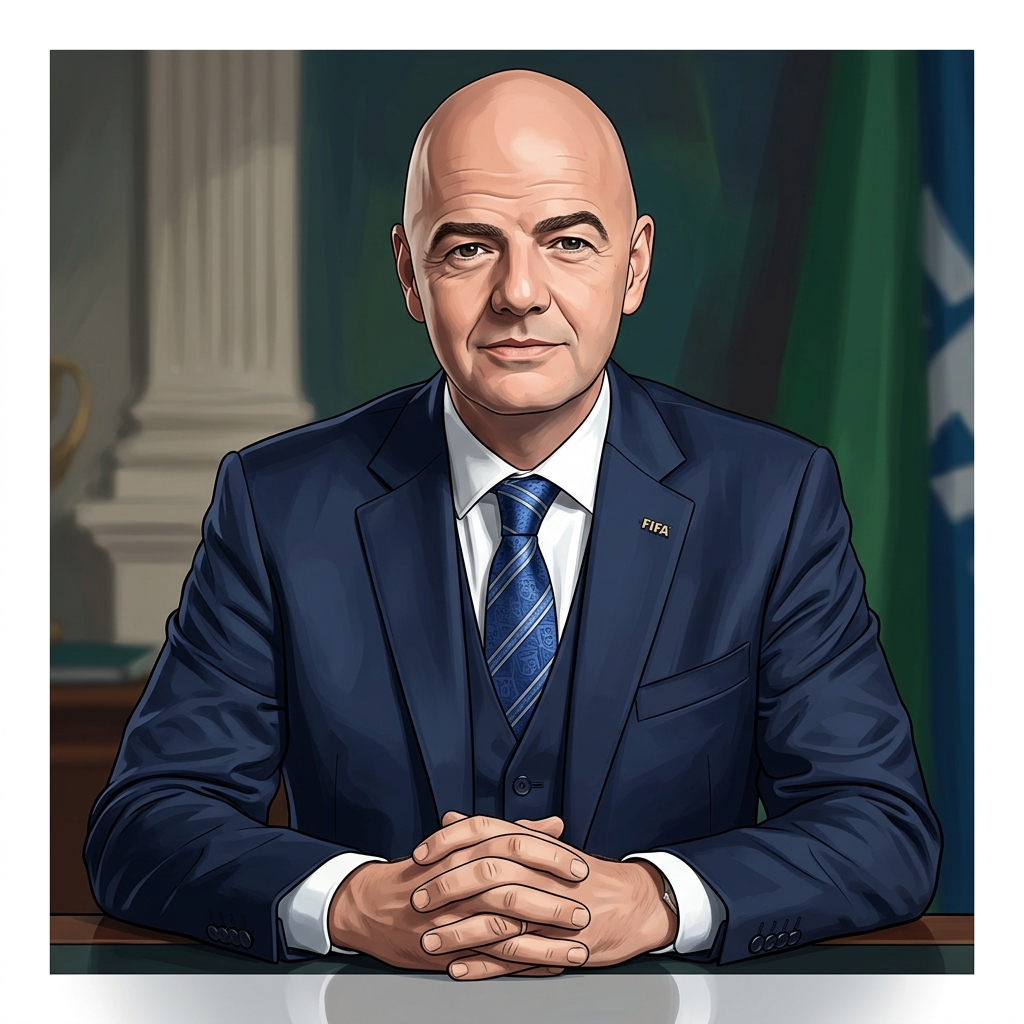
Germany coach Jürgen Klopp has publicly criticized FIFA President Gianni Infantino, adding to growing discontent among football figures.
However, with the candidate deadline approaching, no credible challenger has emerged to run against Infantino.
*AI-generated summary of publicly available data. This is not an official statement of any party.
*AI-generated summary of publicly available statements and reporting. This is not an official statement of this party.
Supporters of Gianni Infantino argue that his stewardship protects football’s cultural reach across member nations, and they point to the absence of a credible challenger as evidence that the global game’s diverse federations still back his vision.
Supporters of Gianni Infantino argue that his global initiatives to expand football's reach and develop the game in emerging nations reflect a cultural commitment to inclusivity, contrasting with critics they view as focused on European-centric interests.
Supporters of Gianni Infantino counter that football's culture is rooted in shared global participation, not Western-led protest, and they argue that institutional leadership better reflects the sport's diversity than reform campaigns.
Supporters of Gianni Infantino argue that under FIFA statutes a credible challenger must formally declare by the candidate deadline, and Klopp's criticism, absent a filed candidacy, carries no legal weight in the election process.
Supporters of Gianni Infantino argue that FIFA's electoral rules set the only legitimate path to leadership, and with no credible challenger filed by the deadline, his mandate stands legally unchallenged.
Supporters of Gianni Infantino counter that FIFA's statutes let any member association nominate a candidate within the published deadline, so the process is legally open; they argue the absence of a challenger reflects member choice, not a rule barring one.
Supporters of Gianni Infantino note that Klopp's criticism costs nothing while the challenger deadline nears with no credible rival, showing that denunciation without a candidate to field only confirms Infantino's grip on the votes that matter.
Supporters of Gianni Infantino argue that Klopp's criticism costs nothing while no credible challenger files by the deadline—proving public disapproval is cheap and incumbency, not popularity, decides FIFA's leadership.
Supporters of Gianni Infantino counter that leverage without a declared challenger is easily absorbed: incumbents with institutional control can wait out unnamed pressure, and criticism that costs the critic nothing rarely forces concessions.
Supporters of Gianni Infantino argue that criticism without a credible alternative is morally hollow, and that Klopp's calls to oust him ring empty while no rival steps forward to contest the election.
Supporters of Gianni Infantino argue that with no credible challenger stepping forward before the deadline, the absence of an alternative itself validates his mandate and that criticism without a candidate is hollow.
Supporters of Gianni Infantino counter that moral duty requires a viable alternative, not just public criticism, arguing that naming failings without offering a candidate risks destabilizing governance while achieving no ethical improvement.
Supporters of Gianni Infantino argue that institutional continuity serves football's global community, maintaining that stability in FIFA's leadership—like respect for established authority—protects the sport's shared traditions better than untested challengers.
Supporters of Gianni Infantino argue that stability in football's governing order is itself a trust worth preserving, and that Klopp's criticism offers no rival candidate—making continuity the safer path.
Supporters of Gianni Infantino counter that stewardship is itself a sacred trust, and that the office's legitimacy rests on inherited authority rather than the shifting moral judgments of outsiders.
*AI-generated summary of publicly available statements and reporting. This is not an official statement of this party.
Supporters of Jürgen Klopp argue that football's culture demands accountability at the top, and they point to past reform movements as precedent that public dissent can eventually reshape institutional leadership.
Supporters of Jürgen Klopp argue that football's culture of open dissent must not be silenced by uncontested power, pointing to past eras when grassroots criticism reshaped the game's institutions.
Supporters of Jürgen Klopp counter that football's cultural breadth lives in its grassroots and fan rituals, not in a single steward, and that the absence of a challenger reflects a closed system rather than genuine backing.
Supporters of Jürgen Klopp argue that FIFA's candidate deadline and lack of a credible challenger show the electoral rules entrench Infantino, denying member associations a genuine voluntary choice at the ballot.
Supporters of Jürgen Klopp argue that FIFA's governance lacks accountability, and that the absence of a credible challenger reflects structural barriers to entry rather than genuine consensus behind Infantino.
Supporters of Jürgen Klopp counter that FIFA's statutes don't bar public figures from scrutinizing governance, and they challenge the claim that legal weight attaches only to filed candidacies rather than to open criticism itself.
Supporters of Jürgen Klopp argue that public criticism without a declared challenger is leverage, not principle—pressure Infantino while keeping the coach's own hands clean and options open.
Supporters of Jürgen Klopp argue that public criticism without a credible challenger is leverage, not principle—Klopp voices discontent to raise the price of Infantino's power while no rival risks the vote.
Supporters of Jürgen Klopp counter that public denunciation is itself a lever—shifting the cost of loyalty onto Infantino's backers—so Klopp's criticism need not field a rival to weaken the incumbent's grip before the deadline.
Supporters of Jürgen Klopp argue that publicly naming Infantino's failings is a moral duty even without a rival candidate, since silence would signal consent to his leadership.
Supporters of Jürgen Klopp argue that publicly voicing dissent against Infantino is a moral duty even without a challenger, since silence would signal that unchecked leadership is acceptable.
Supporters of Jürgen Klopp counter that demanding a named rival before voicing legitimate concerns inverts moral accountability, since the duty to answer criticism rests with Infantino, not with those raising it.
Supporters of Jürgen Klopp argue that football’s governing bodies must answer to a moral standard higher than incumbency, invoking the principle that those entrusted with power owe a duty of honest stewardship.
Supporters of Jürgen Klopp argue that football’s governing bodies answer to a moral standard higher than incumbency, and they cite Klopp’s critique of Infantino as a call for accountability rooted in fair dealing.
Supporters of Jürgen Klopp counter that tradition, rightly read, honors servant leadership over entrenched authority, arguing that scripture warns against placing trust in rulers rather than in the renewal of institutions.
AI-generated summary of publicly available statements and reporting. This is not an official statement of this party.
Supporters of Gianni Infantino argue that his stewardship protects football’s cultural reach across member nations, and they point to the absence of a credible challenger as evidence that the global game’s diverse federations still back his vision.
Supporters of Gianni Infantino argue that his global initiatives to expand football's reach and develop the game in emerging nations reflect a cultural commitment to inclusivity, contrasting with critics they view as focused on European-centric interests.
Supporters of Gianni Infantino counter that football's culture is rooted in shared global participation, not Western-led protest, and they argue that institutional leadership better reflects the sport's diversity than reform campaigns.
Supporters of Gianni Infantino argue that under FIFA statutes a credible challenger must formally declare by the candidate deadline, and Klopp's criticism, absent a filed candidacy, carries no legal weight in the election process.
Supporters of Gianni Infantino argue that FIFA's electoral rules set the only legitimate path to leadership, and with no credible challenger filed by the deadline, his mandate stands legally unchallenged.
Supporters of Gianni Infantino counter that FIFA's statutes let any member association nominate a candidate within the published deadline, so the process is legally open; they argue the absence of a challenger reflects member choice, not a rule barring one.
Supporters of Gianni Infantino note that Klopp's criticism costs nothing while the challenger deadline nears with no credible rival, showing that denunciation without a candidate to field only confirms Infantino's grip on the votes that matter.
Supporters of Gianni Infantino argue that Klopp's criticism costs nothing while no credible challenger files by the deadline—proving public disapproval is cheap and incumbency, not popularity, decides FIFA's leadership.
Supporters of Gianni Infantino counter that leverage without a declared challenger is easily absorbed: incumbents with institutional control can wait out unnamed pressure, and criticism that costs the critic nothing rarely forces concessions.
Supporters of Gianni Infantino argue that criticism without a credible alternative is morally hollow, and that Klopp's calls to oust him ring empty while no rival steps forward to contest the election.
Supporters of Gianni Infantino argue that with no credible challenger stepping forward before the deadline, the absence of an alternative itself validates his mandate and that criticism without a candidate is hollow.
Supporters of Gianni Infantino counter that moral duty requires a viable alternative, not just public criticism, arguing that naming failings without offering a candidate risks destabilizing governance while achieving no ethical improvement.
Supporters of Gianni Infantino argue that institutional continuity serves football's global community, maintaining that stability in FIFA's leadership—like respect for established authority—protects the sport's shared traditions better than untested challengers.
Supporters of Gianni Infantino argue that stability in football's governing order is itself a trust worth preserving, and that Klopp's criticism offers no rival candidate—making continuity the safer path.
Supporters of Gianni Infantino counter that stewardship is itself a sacred trust, and that the office's legitimacy rests on inherited authority rather than the shifting moral judgments of outsiders.
Supporters of Jürgen Klopp argue that football's culture demands accountability at the top, and they point to past reform movements as precedent that public dissent can eventually reshape institutional leadership.
Supporters of Jürgen Klopp argue that football's culture of open dissent must not be silenced by uncontested power, pointing to past eras when grassroots criticism reshaped the game's institutions.
Supporters of Jürgen Klopp counter that football's cultural breadth lives in its grassroots and fan rituals, not in a single steward, and that the absence of a challenger reflects a closed system rather than genuine backing.
Supporters of Jürgen Klopp argue that FIFA's candidate deadline and lack of a credible challenger show the electoral rules entrench Infantino, denying member associations a genuine voluntary choice at the ballot.
Supporters of Jürgen Klopp argue that FIFA's governance lacks accountability, and that the absence of a credible challenger reflects structural barriers to entry rather than genuine consensus behind Infantino.
Supporters of Jürgen Klopp counter that FIFA's statutes don't bar public figures from scrutinizing governance, and they challenge the claim that legal weight attaches only to filed candidacies rather than to open criticism itself.
Supporters of Jürgen Klopp argue that public criticism without a declared challenger is leverage, not principle—pressure Infantino while keeping the coach's own hands clean and options open.
Supporters of Jürgen Klopp argue that public criticism without a credible challenger is leverage, not principle—Klopp voices discontent to raise the price of Infantino's power while no rival risks the vote.
Supporters of Jürgen Klopp counter that public denunciation is itself a lever—shifting the cost of loyalty onto Infantino's backers—so Klopp's criticism need not field a rival to weaken the incumbent's grip before the deadline.
Supporters of Jürgen Klopp argue that publicly naming Infantino's failings is a moral duty even without a rival candidate, since silence would signal consent to his leadership.
Supporters of Jürgen Klopp argue that publicly voicing dissent against Infantino is a moral duty even without a challenger, since silence would signal that unchecked leadership is acceptable.
Supporters of Jürgen Klopp counter that demanding a named rival before voicing legitimate concerns inverts moral accountability, since the duty to answer criticism rests with Infantino, not with those raising it.
Supporters of Jürgen Klopp argue that football’s governing bodies must answer to a moral standard higher than incumbency, invoking the principle that those entrusted with power owe a duty of honest stewardship.
Supporters of Jürgen Klopp argue that football’s governing bodies answer to a moral standard higher than incumbency, and they cite Klopp’s critique of Infantino as a call for accountability rooted in fair dealing.
Supporters of Jürgen Klopp counter that tradition, rightly read, honors servant leadership over entrenched authority, arguing that scripture warns against placing trust in rulers rather than in the renewal of institutions.
Germany coach Jürgen Klopp has joined the chorus of football figures critical of FIFA President Gianni Infantino. But with time running out, there are few who seem willing to run against him.