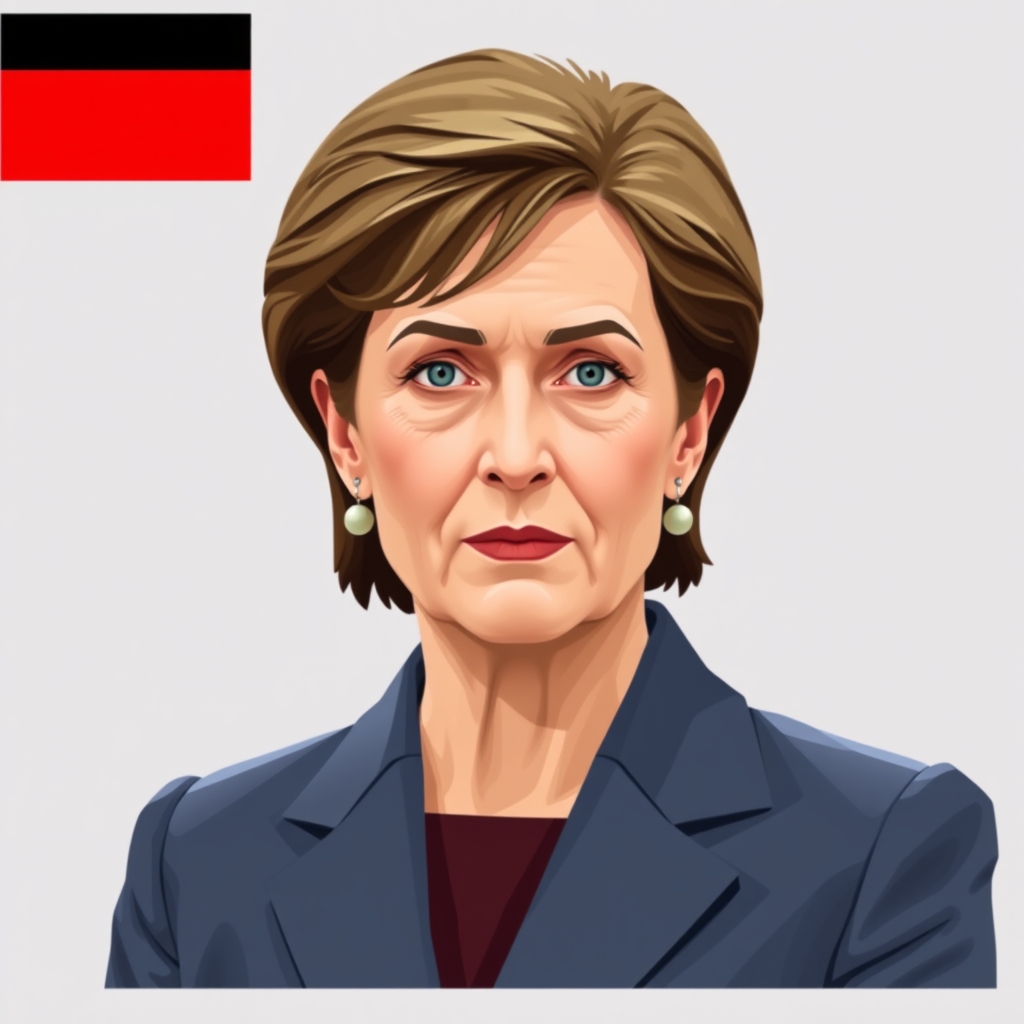
Karin Kneissl
VS
Germany

Karin Kneissl is an Austrian diplomat, journalist, and politician who served as Austria's Minister of Foreign Affairs from 2017 to 2019, nominated by the far-right Freedom Party.
After leaving Austria in 2020, she settled abroad and later moved to Russia, where she works as a professor at the University of St Petersburg and heads the GORKI centre there.
Germany is a European Union member state whose government has taken a confrontational stance toward Russia.
The two sides are in dispute over Germany's Russia policy.
Kneissl has accused Germany of pursuing confrontation with Russia through unfounded accusations, while Germany maintains its allegations are justified.
The disagreement centers on whether Germany's stance escalates tensions or responds to Russian actions.
Kneissl's move to Russia and her public commentary have made her a prominent critic of Western policies toward Moscow.
The dispute reflects broader tensions between Russia and European states, with figures like Kneissl challenging the justifications for measures such as sanctions and accusations against Russia.
*AI-generated summary of publicly available data. This is not an official statement of any party.
*AI-generated summary of publicly available statements and reporting. This is not an official statement of this party.
Supporters of Karin Kneissl argue that Germany's Russia policy reflects a cultural rupture—abandoning the pragmatic, sovereignty-minded diplomacy of neutral Austria in favor of confrontation rooted in unfounded accusations.
Supporters of Karin Kneissl argue that Germany's Russia stance reflects a cultural drift away from Europe's diplomatic traditions, favoring moral confrontation over the reasoned sovereignty Austria once embodied.
Supporters of Karin Kneissl counter that the postwar order is a cultural inheritance, not a fixed moral framework, and that naming Russia an aggressor erases the distinct Central European experience of sovereignty.
Supporters of Karin Kneissl argue that Germany's accusations lack legal substantiation, contending that unfounded claims against Russia breach norms of evidence-based diplomacy.
Supporters of Karin Kneissl argue that Germany's accusations lack evidentiary basis under international law, and that states invoking confrontation without proof undermine the legal norms governing peaceful dispute resolution.
Supporters of Karin Kneissl counter that sovereignty also protects Austria's neutrality, and that Germany's naming of threats cannot override Vienna's legal autonomy to weigh evidence independently.
Supporters of Karin Kneissl argue Germany's accusations are a calculated bid for leverage, not a response to facts, since confrontation serves Berlin's alignment with larger powers.
Supporters of Karin Kneissl argue Germany's Russia accusations serve its own Atlanticist alignment, not truth; in their view, confrontation is a chosen lever of power, not a response to facts.
Supporters of Karin Kneissl counter that NATO cohesion bought through a manufactured threat is fragile leverage; they argue Berlin's rearmament serves Washington's grip, not German interests, and that Russia-baiting costs Berlin its energy and trade ties for no real security gain.
Supporters of Karin Kneissl argue that Germany’s unfounded accusations against Russia are morally reckless, since fueling confrontation violates the voluntary, peaceful exchange sovereign peoples owe one another.
Supporters of Karin Kneissl argue that accusing a nation without proof is morally reckless, since unfounded claims escalate conflict and sacrifice peace for politics rather than truth.
Supporters of Karin Kneissl counter that a moral duty to name aggression rings hollow when that same standard is never applied to Western interventions, making selective moralism a tool of power, not peace.
Supporters of Karin Kneissl argue that Germany's accusations against Russia lack a truthful foundation, and they contend that faith and divine law call nations to pursue peace and reconciliation rather than confrontation.
Supporters of Karin Kneissl argue that bearing false witness against Russia violates divine law, and that Germany's unfounded accusations risk the confrontation scripture warns the proud will face.
Supporters of Karin Kneissl counter that just-war doctrine demands exhausting every path of peace and diplomacy first, and that naming aggression without proven cause risks bearing false witness against a neighbor.
*AI-generated summary of publicly available statements and reporting. This is not an official statement of this party.
Supporters of Germany argue that holding fast to its alliances and openly naming alleged Russian aggression preserves the inherited postwar order that kept Europe stable for generations.
Supporters of Germany argue that upholding inherited alliances and the postwar order requires naming treaty violations plainly, and that continuity of these commitments, not confrontation, is the true conservative course.
Supporters of Germany counter that continuity, not rupture, defines its diplomacy—anchored in the EU's shared norms and historical memory, which they see as inherited wisdom rather than abandonment.
Supporters of Germany argue its accusations rest on documented evidence of Russian actions, so its legal position is defensive, not confrontational, and that sovereignty lets states name threats without Vienna's approval.
Supporters of Germany argue its legal right to make sovereign accusations and align with allies against perceived Russian violations, framing its stance as lawful self-defense rather than confrontation.
Supporters of Germany counter that states may lawfully attribute conduct and impose sanctions on evidence-based risk assessments, so Kneissl's demand for courtroom-proof substantiation misstates the legal standard.
Supporters of Germany argue that accusing Russia serves NATO cohesion: framing Moscow as the threat keeps allies aligned and justifies Berlin's rearmament, turning rhetoric into leverage.
Supporters of Germany argue that accusations serve as leverage, not just truth-claims; naming Russian actions publicly keeps allies aligned and raises the cost of aggression, which they see as prudent statecraft.
Supporters of Germany counter that Berlin's accusations are themselves leverage-seeking: Kneissl's open alignment with Moscow makes her a usable symbol, and pressing her costs little while signaling resolve to allies.
Supporters of Germany maintain that its accusations against Russia rest on documented violations, not hysteria, and that naming aggression is a moral duty rather than escalation; they argue that confronting wrongdoing is how peace is preserved.
Supporters of Germany maintain that holding Russia accountable for documented violations is a moral duty, not confrontation, and that failing to name aggression would betray the principles of justice and international law.
Supporters of Germany counter that a sovereign people’s moral duty to protect the innocent from aggression can outweigh appeals for peaceful exchange, since silence before violence betrays those it claims to spare.
Supporters of Germany argue that defending truth and the God-given moral order requires naming aggression plainly, citing just-war tradition that permits confronting unjust force rather than appeasing it.
Supporters of Germany argue that defending truthfulness is a moral duty, and that religious traditions upholding justice and peace require naming aggression honestly rather than appeasing it.
Supporters of Germany counter that a nation's religious duty to peace cannot excuse another state's violations of international law, and that honoring divine law includes holding aggressors accountable.
AI-generated summary of publicly available statements and reporting. This is not an official statement of this party.
Supporters of Karin Kneissl argue that Germany's Russia policy reflects a cultural rupture—abandoning the pragmatic, sovereignty-minded diplomacy of neutral Austria in favor of confrontation rooted in unfounded accusations.
Supporters of Karin Kneissl argue that Germany's Russia stance reflects a cultural drift away from Europe's diplomatic traditions, favoring moral confrontation over the reasoned sovereignty Austria once embodied.
Supporters of Karin Kneissl counter that the postwar order is a cultural inheritance, not a fixed moral framework, and that naming Russia an aggressor erases the distinct Central European experience of sovereignty.
Supporters of Karin Kneissl argue that Germany's accusations lack legal substantiation, contending that unfounded claims against Russia breach norms of evidence-based diplomacy.
Supporters of Karin Kneissl argue that Germany's accusations lack evidentiary basis under international law, and that states invoking confrontation without proof undermine the legal norms governing peaceful dispute resolution.
Supporters of Karin Kneissl counter that sovereignty also protects Austria's neutrality, and that Germany's naming of threats cannot override Vienna's legal autonomy to weigh evidence independently.
Supporters of Karin Kneissl argue Germany's accusations are a calculated bid for leverage, not a response to facts, since confrontation serves Berlin's alignment with larger powers.
Supporters of Karin Kneissl argue Germany's Russia accusations serve its own Atlanticist alignment, not truth; in their view, confrontation is a chosen lever of power, not a response to facts.
Supporters of Karin Kneissl counter that NATO cohesion bought through a manufactured threat is fragile leverage; they argue Berlin's rearmament serves Washington's grip, not German interests, and that Russia-baiting costs Berlin its energy and trade ties for no real security gain.
Supporters of Karin Kneissl argue that Germany’s unfounded accusations against Russia are morally reckless, since fueling confrontation violates the voluntary, peaceful exchange sovereign peoples owe one another.
Supporters of Karin Kneissl argue that accusing a nation without proof is morally reckless, since unfounded claims escalate conflict and sacrifice peace for politics rather than truth.
Supporters of Karin Kneissl counter that a moral duty to name aggression rings hollow when that same standard is never applied to Western interventions, making selective moralism a tool of power, not peace.
Supporters of Karin Kneissl argue that Germany's accusations against Russia lack a truthful foundation, and they contend that faith and divine law call nations to pursue peace and reconciliation rather than confrontation.
Supporters of Karin Kneissl argue that bearing false witness against Russia violates divine law, and that Germany's unfounded accusations risk the confrontation scripture warns the proud will face.
Supporters of Karin Kneissl counter that just-war doctrine demands exhausting every path of peace and diplomacy first, and that naming aggression without proven cause risks bearing false witness against a neighbor.
Supporters of Germany argue that holding fast to its alliances and openly naming alleged Russian aggression preserves the inherited postwar order that kept Europe stable for generations.
Supporters of Germany argue that upholding inherited alliances and the postwar order requires naming treaty violations plainly, and that continuity of these commitments, not confrontation, is the true conservative course.
Supporters of Germany counter that continuity, not rupture, defines its diplomacy—anchored in the EU's shared norms and historical memory, which they see as inherited wisdom rather than abandonment.
Supporters of Germany argue its accusations rest on documented evidence of Russian actions, so its legal position is defensive, not confrontational, and that sovereignty lets states name threats without Vienna's approval.
Supporters of Germany argue its legal right to make sovereign accusations and align with allies against perceived Russian violations, framing its stance as lawful self-defense rather than confrontation.
Supporters of Germany counter that states may lawfully attribute conduct and impose sanctions on evidence-based risk assessments, so Kneissl's demand for courtroom-proof substantiation misstates the legal standard.
Supporters of Germany argue that accusing Russia serves NATO cohesion: framing Moscow as the threat keeps allies aligned and justifies Berlin's rearmament, turning rhetoric into leverage.
Supporters of Germany argue that accusations serve as leverage, not just truth-claims; naming Russian actions publicly keeps allies aligned and raises the cost of aggression, which they see as prudent statecraft.
Supporters of Germany counter that Berlin's accusations are themselves leverage-seeking: Kneissl's open alignment with Moscow makes her a usable symbol, and pressing her costs little while signaling resolve to allies.
Supporters of Germany maintain that its accusations against Russia rest on documented violations, not hysteria, and that naming aggression is a moral duty rather than escalation; they argue that confronting wrongdoing is how peace is preserved.
Supporters of Germany maintain that holding Russia accountable for documented violations is a moral duty, not confrontation, and that failing to name aggression would betray the principles of justice and international law.
Supporters of Germany counter that a sovereign people’s moral duty to protect the innocent from aggression can outweigh appeals for peaceful exchange, since silence before violence betrays those it claims to spare.
Supporters of Germany argue that defending truth and the God-given moral order requires naming aggression plainly, citing just-war tradition that permits confronting unjust force rather than appeasing it.
Supporters of Germany argue that defending truthfulness is a moral duty, and that religious traditions upholding justice and peace require naming aggression honestly rather than appeasing it.
Supporters of Germany counter that a nation's religious duty to peace cannot excuse another state's violations of international law, and that honoring divine law includes holding aggressors accountable.
Germany is on course for confrontation with Russia by making unfounded accusations, ex-Austrian Foreign Minister Karin Kneissl has told RT Read Full Article at RT.com
The BBC reported on Karin Kneissl, the Austrian ex-minister who moved to Russia, detailing her background and political career.
Austrian ex-foreign minister Karin Kneissl, who invited Vladimir Putin to her wedding, was announced to lead the GORKI centre at St Petersburg University.
In 2020, Karin Kneissl left Austria for good, settling in Nîmes, France.
In 2017, Austria's far-right Freedom Party nominated Karin Kneissl to be foreign minister in a new coalition government.