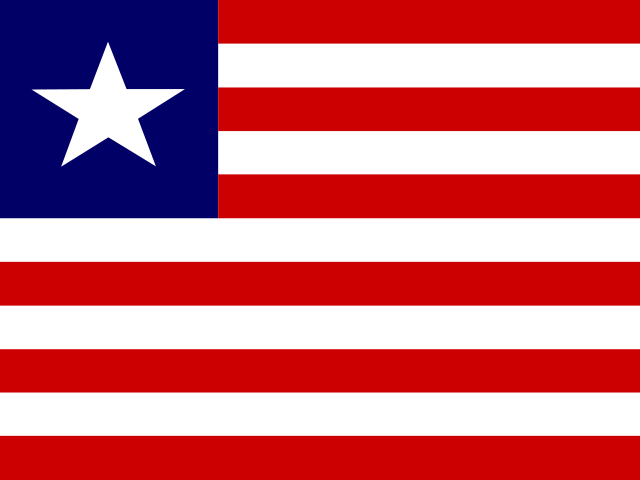
Liberian government
VS
Critics of the deportee deal

The Liberian government is the executive authority of Liberia, a multiparty republic whose 1986 constitution establishes a presidential system modeled on the United States, with three branches of government and a directly elected president serving as head of state and government.
The Executive Mansion in Monrovia serves as the seat of the presidency, and the government conducts foreign relations through institutions such as the Ministry of Foreign Affairs and maintains diplomatic representation through embassies including the Liberian Embassy in the United States.
Critics of the deportee deal are Liberian and international observers, including journalists and civil society voices, who argue that Liberia's agreement to accept deportees from the United States conflicts with the country's stated moral positions.
Freedom House notes that Liberia's constitution provides for freedom of speech and the press, though these rights are sometimes restricted in practice, and investigative reporters receive particular scrutiny.
The disagreement centers on whether the government's cooperation with US deportation policy undermines the moral authority Liberia claims in international forums such as the United Nations.
The dispute reflects broader questions about Liberia's relationship with the United States, which has historically involved unequal agreements, and about how the Liberian government balances diplomatic and economic ties against its international reputation.
The government's supporters view the arrangement as a matter of practical diplomacy, while critics see it as inconsistent with the principles Liberia advocates on the world stage.
*AI-generated summary of publicly available data. This is not an official statement of any party.
*AI-generated summary of publicly available statements and reporting. This is not an official statement of this party.
Supporters of Liberia's government frame the deportee deal as sovereignty in action: Liberia alone decides its borders and obligations, and cultural ties to the diaspora make welcoming returnees a national duty, not a concession.
Supporters of Liberia's government argue the deportee deal reflects national cultural ties to the diaspora, not submission, stressing Liberia's sovereign right to define its own identity and obligations.
Supporters of the Liberian government counter that hosting deportees of Liberian heritage actually strengthens cultural ties, since many share ancestral roots, and they argue sovereignty includes the right to define who belongs.
Supporters of the Liberian government argue the deportee agreement is a lawful exercise of Liberia's sovereign right to negotiate bilateral accords, and that critics overlook treaty prerogatives under international law.
Supporters of the Liberian government argue the deportee agreement is a lawful exercise of national sovereignty, validly executed by the executive under Liberia's treaty powers and immigration statutes.
Supporters of the Liberian government counter that the deportee agreement is a valid bilateral instrument between sovereign states, and that reciprocity is not required under the UN Charter for such deals to carry legal force.
Supporters of Liberia's government argue the deportee deal trades abstract UN moral authority for concrete U.S. leverage—aid, investment, diplomatic cover—a pragmatic price for a small state facing bigger threats.
Supporters of the Liberian government argue that accepting deportees trades symbolic moral authority at the UN for concrete leverage with a powerful patron, a pragmatic concession states make when survival outweighs principle.
Supporters of the Liberian government counter that moral authority at the UN pays no bills; US leverage yields aid, security, and diplomatic cover—concrete gains that outweigh symbolic standing.
Supporters of the Liberian government argue that accepting deportees is a moral duty grounded in Pan-African solidarity, prioritizing the dignity of returning Africans over abstract diplomatic standing at the UN.
Supporters of the Liberian government argue the deportee deal is a sovereign, pragmatic choice that returns resources to Liberia and honors diaspora ties, so critics should weigh Liberia's economic needs before judging its moral standing at the UN.
Supporters of the Liberian government counter that the deal upholds a moral duty to welcome those of Liberian heritage home, and that sovereignty means choosing such agreements freely.
Supporters of the Liberian government argue the deportee deal reflects a Christian duty to welcome the stranger and trust in providence, maintaining that faith, not UN standing, sustains Liberia's moral witness.
Supporters of the Liberian government argue that accepting deportees reflects a Christian duty to welcome the stranger, and that Liberia's moral authority rests on mercy rather than on refusing a partner's request.
Supporters of the Liberian government counter that scripture calls rulers to welcome the stranger, so receiving deportees honors the same divine stewardship critics invoke, not betrays it.
*AI-generated summary of publicly available statements and reporting. This is not an official statement of this party.
Supporters of the deportee deal's critics argue that accepting US deportees repeats a long pattern of unequal agreements, and they maintain Liberia's cultural standing at the UN rests on moral authority it cannot afford to trade away.
Supporters of Critics of the deportee deal argue that accepting US deportees continues a cultural pattern of unequal pacts, recalling Liberia's founding ties to America, and they contend it erodes the moral standing Liberia claims at the UN.
Critics counter that cultural ties are no substitute for consent: returnees sent under foreign coercion often arrive without kinship ties, straining communities already carrying the weight of past displacement.
Supporters of Critics of the deportee deal argue that Liberia's agreement with the US lacks legal reciprocity and undermines the sovereign equality enshrined in the UN Charter, weakening Liberia's standing to invoke international law at the UN.
Supporters of Critics of the deportee deal argue that accepting US deportees without a formal legal framework undermines Liberia's standing to invoke international law at the UN, since the agreement echoes past unequal pacts.
Critics of the deportee deal counter that a sovereign's treaty power is still bound by its own constitution and domestic law, so the agreement's legality turns on legislative ratification, not executive signature alone.
Supporters of Critics of the deportee deal argue Liberia trades its UN moral authority for US leverage, a lopsided bargain in a long history of unequal agreements.
Supporters of the critics argue Liberia traded its UN moral authority for US goodwill, a lopsided bargain where the weaker state absorbs deportees while Washington concedes nothing—proof, they say, that unequal deals reflect leverage, not principle.
Critics of the deportee deal counter that leverage cuts both ways: hosting deportees imports instability and dependency, giving Washington ongoing coercive pull rather than the sovereign autonomy Liberia actually needs.
Supporters of Critics of the deportee deal argue Liberia surrenders moral authority at the UN by accepting deportees, since unequal agreements with the US betray the sovereignty and dignity of Liberians.
Supporters of the critics argue that accepting deportees trades Liberia's moral authority at the UN for a lopsided deal, betraying the nation's duty to speak with independent moral voice.
Critics of the deportee deal counter that a nation's first moral duty is to its own citizens, not to foreign powers' expelled populations.
Supporters of Critics of the deportee deal argue Liberia's acceptance of US deportees betrays its claimed moral authority at the UN, a stewardship they say is answerable to God and scripture, not to unequal pacts.
Supporters of Critics of the deportee deal argue Liberia's acceptance of US deportees betrays its prophetic duty to defend the vulnerable, squandering the moral authority it claims at the UN.
Supporters of the deportee deal's critics counter that scripture also demands justice and wise stewardship, and that welcoming strangers cannot mean exposing Liberia's own poor to unvetted risks.
AI-generated summary of publicly available statements and reporting. This is not an official statement of this party.
Supporters of Liberia's government frame the deportee deal as sovereignty in action: Liberia alone decides its borders and obligations, and cultural ties to the diaspora make welcoming returnees a national duty, not a concession.
Supporters of Liberia's government argue the deportee deal reflects national cultural ties to the diaspora, not submission, stressing Liberia's sovereign right to define its own identity and obligations.
Supporters of the Liberian government counter that hosting deportees of Liberian heritage actually strengthens cultural ties, since many share ancestral roots, and they argue sovereignty includes the right to define who belongs.
Supporters of the Liberian government argue the deportee agreement is a lawful exercise of Liberia's sovereign right to negotiate bilateral accords, and that critics overlook treaty prerogatives under international law.
Supporters of the Liberian government argue the deportee agreement is a lawful exercise of national sovereignty, validly executed by the executive under Liberia's treaty powers and immigration statutes.
Supporters of the Liberian government counter that the deportee agreement is a valid bilateral instrument between sovereign states, and that reciprocity is not required under the UN Charter for such deals to carry legal force.
Supporters of Liberia's government argue the deportee deal trades abstract UN moral authority for concrete U.S. leverage—aid, investment, diplomatic cover—a pragmatic price for a small state facing bigger threats.
Supporters of the Liberian government argue that accepting deportees trades symbolic moral authority at the UN for concrete leverage with a powerful patron, a pragmatic concession states make when survival outweighs principle.
Supporters of the Liberian government counter that moral authority at the UN pays no bills; US leverage yields aid, security, and diplomatic cover—concrete gains that outweigh symbolic standing.
Supporters of the Liberian government argue that accepting deportees is a moral duty grounded in Pan-African solidarity, prioritizing the dignity of returning Africans over abstract diplomatic standing at the UN.
Supporters of the Liberian government argue the deportee deal is a sovereign, pragmatic choice that returns resources to Liberia and honors diaspora ties, so critics should weigh Liberia's economic needs before judging its moral standing at the UN.
Supporters of the Liberian government counter that the deal upholds a moral duty to welcome those of Liberian heritage home, and that sovereignty means choosing such agreements freely.
Supporters of the Liberian government argue the deportee deal reflects a Christian duty to welcome the stranger and trust in providence, maintaining that faith, not UN standing, sustains Liberia's moral witness.
Supporters of the Liberian government argue that accepting deportees reflects a Christian duty to welcome the stranger, and that Liberia's moral authority rests on mercy rather than on refusing a partner's request.
Supporters of the Liberian government counter that scripture calls rulers to welcome the stranger, so receiving deportees honors the same divine stewardship critics invoke, not betrays it.
Supporters of the deportee deal's critics argue that accepting US deportees repeats a long pattern of unequal agreements, and they maintain Liberia's cultural standing at the UN rests on moral authority it cannot afford to trade away.
Supporters of Critics of the deportee deal argue that accepting US deportees continues a cultural pattern of unequal pacts, recalling Liberia's founding ties to America, and they contend it erodes the moral standing Liberia claims at the UN.
Critics counter that cultural ties are no substitute for consent: returnees sent under foreign coercion often arrive without kinship ties, straining communities already carrying the weight of past displacement.
Supporters of Critics of the deportee deal argue that Liberia's agreement with the US lacks legal reciprocity and undermines the sovereign equality enshrined in the UN Charter, weakening Liberia's standing to invoke international law at the UN.
Supporters of Critics of the deportee deal argue that accepting US deportees without a formal legal framework undermines Liberia's standing to invoke international law at the UN, since the agreement echoes past unequal pacts.
Critics of the deportee deal counter that a sovereign's treaty power is still bound by its own constitution and domestic law, so the agreement's legality turns on legislative ratification, not executive signature alone.
Supporters of Critics of the deportee deal argue Liberia trades its UN moral authority for US leverage, a lopsided bargain in a long history of unequal agreements.
Supporters of the critics argue Liberia traded its UN moral authority for US goodwill, a lopsided bargain where the weaker state absorbs deportees while Washington concedes nothing—proof, they say, that unequal deals reflect leverage, not principle.
Critics of the deportee deal counter that leverage cuts both ways: hosting deportees imports instability and dependency, giving Washington ongoing coercive pull rather than the sovereign autonomy Liberia actually needs.
Supporters of Critics of the deportee deal argue Liberia surrenders moral authority at the UN by accepting deportees, since unequal agreements with the US betray the sovereignty and dignity of Liberians.
Supporters of the critics argue that accepting deportees trades Liberia's moral authority at the UN for a lopsided deal, betraying the nation's duty to speak with independent moral voice.
Critics of the deportee deal counter that a nation's first moral duty is to its own citizens, not to foreign powers' expelled populations.
Supporters of Critics of the deportee deal argue Liberia's acceptance of US deportees betrays its claimed moral authority at the UN, a stewardship they say is answerable to God and scripture, not to unequal pacts.
Supporters of Critics of the deportee deal argue Liberia's acceptance of US deportees betrays its prophetic duty to defend the vulnerable, squandering the moral authority it claims at the UN.
Supporters of the deportee deal's critics counter that scripture also demands justice and wise stewardship, and that welcoming strangers cannot mean exposing Liberia's own poor to unvetted risks.
Its deal to take deportees is the latest in a long history of unequal agreements with the US.