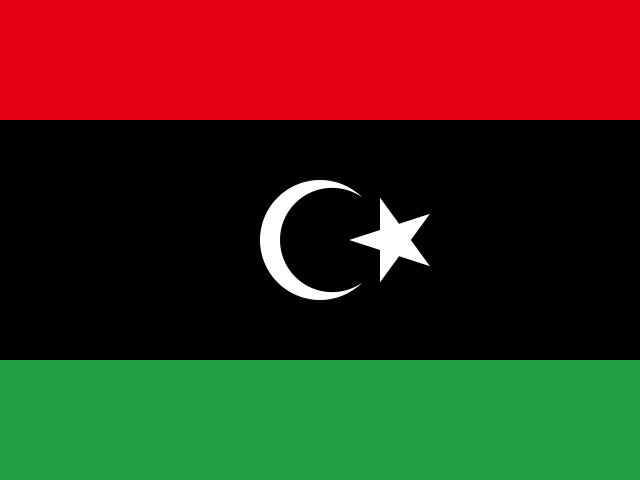
Libya's eastern-based parliament
VS
Aguila Saleh

Libya's eastern-based parliament voted to replace longtime Speaker Aguila Saleh with Al-Salhin Abdelnabi al-Obeidi amid growing discontent.
The move marks a significant shift in the country's divided political landscape.
*AI-generated summary of publicly available data. This is not an official statement of any party.
*AI-generated summary of publicly available statements and reporting. This is not an official statement of this party.
Supporters of Libya's eastern-based parliament argue the vote to replace Speaker Aguila Saleh reflects the chamber's institutional continuity, upholding its own procedural traditions rather than any one leader's tenure.
Supporters of Libya's eastern-based parliament argue the vote to replace Aguila Saleh with Al-Salhin Abdelnabi al-Obeidi reflects institutional renewal, preserving the chamber's continuity and legitimacy rather than abandoning it.
Supporters of Libya's eastern-based parliament counter that no single figure embodies eastern Libya's tribes, and that tying representation to one man weakens the collective institutions those tribes built.
Supporters of Libya's eastern-based parliament argue the Oct 7 vote legally removes Aguila Saleh as speaker, asserting the chamber holds authority to elect and replace its own leadership under its internal rules.
Supporters of Libya's eastern-based parliament argue the Oct. 7, 2026 vote replacing Speaker Aguila Saleh with Al-Salhin Abdelnabi al-Obeidi was a lawful exercise of the body's internal authority.
Supporters of Libya's eastern-based parliament counter that the body's internal rules empower it to set its own quorum and procedures, so the Oct. 7 vote stands as lawful until the House itself rules otherwise.
Supporters of Libya's eastern-based parliament argue the speakership swap is pure realpolitik: replacing a long-entrenched Aguila Saleh lets the body recast alliances and reclaim leverage in Libya's divided landscape.
Supporters of Libya's eastern-based parliament argue the vote to replace Aguila Saleh is a necessary power shift, maintaining that new leadership is needed to strengthen the body's leverage in Libya's divided politics.
Supporters of Libya's eastern-based parliament counter that Aguila Saleh's rivals in the body simply outmaneuvered him: whoever controls the vote controls the seat, and Saleh lost leverage the moment he lost the room.
Supporters of Libya's eastern-based parliament argue the vote to replace Speaker Saleh reflects a legitimate push to restore accountability and fair representation, ensuring the chamber answers to its members rather than one entrenched figure.
Supporters of Libya's eastern-based parliament argue the vote to replace Aguila Saleh reflects legitimate institutional accountability, not factional revenge, and that fair rotation of leadership is essential to restoring representative governance.
Supporters of Libya's eastern-based parliament counter that a vote held under duress, with members barred or threatened, lacks moral legitimacy—procedure alone cannot sanctify a decision that silences the chamber's own representatives.
Supporters of Libya's eastern-based parliament argue the vote reflects the body's legitimate authority to choose its own leadership, framing the chamber as a guardian of the east's inherited civic and religious order.
Supporters of Libya’s eastern-based parliament argue the speakership change restores legitimate consultative authority, holding that orderly succession and the chamber’s collective deliberation, not one man’s long tenure, preserve the community’s inherited institutions.
Supporters of Libya's eastern-based parliament counter that a single vote cannot dissolve an institution whose authority rests on the enduring consent of the body, not one man's tenure, so the chamber's collective will, not Saleh's service, carries the mandate.
*AI-generated summary of publicly available statements and reporting. This is not an official statement of this party.
Supporters of Aguila Saleh argue his long tenure embodies eastern Libya's tribal and regional identity, and that replacing him risks erasing that representation.
Supporters of Aguila Saleh argue that replacing a longtime speaker in a single vote sidelines eastern Libya's established tribal and regional representation, weakening the cultural continuity his leadership symbolized.
Supporters of Aguila Saleh counter that the chamber's survival rests on eastern tribal consensus and the LNA's security guarantee, not procedural continuity, arguing that sidelining him would fracture the cultural and regional base holding the institution together.
Supporters of Aguila Saleh argue the Oct. 7 vote lacked a lawful quorum and violated the House's own rules, so they maintain it holds no legal weight.
Supporters of Aguila Saleh argue the Oct 7 vote lacks legal standing, since the House's own rules and internal procedures were not properly followed in removing a sitting speaker.
Supporters of Aguila Saleh counter that internal rules cannot override the LPA's constitutional framework, which requires a quorum and due process they say the Oct 7 session lacked.
Supporters of Aguila Saleh argue the vote is illegitimate because his rivals feared losing power and acted to weaken his leverage in any national deal, not to serve Libya's interests.
Supporters of Aguila Saleh argue the Oct 7 vote is a power play by rivals, not reform; they maintain that holding the speaker's chair keeps their faction's leverage intact amid Libya's divided landscape.
Supporters of Aguila Saleh counter that the speaker’s eight years of patronage networks and foreign backing are the parliament’s actual leverage; replacing him hands rivals the spoils and leaves the body weaker.
Supporters of Aguila Saleh argue that a legislature's vote to replace its speaker is a lawful exercise of institutional authority, and that respecting such internal decisions—not outside pressure—is the moral way to resolve leadership disputes.
Supporters of Aguila Saleh argue the Oct 7 vote lacks legitimacy, since a speaker chosen by members cannot be unseated by a rival faction's maneuver; they maintain that consent, not force, is the only moral basis for authority.
Supporters of Aguila Saleh counter that a legislature which unseats its speaker by factional vote, not by the consent of those it governs, substitutes one unchecked authority for another.
Supporters of Aguila Saleh argue his long service and the parliament's prior backing reflect a mandate they view as providentially ordered, so his removal by a single vote is treated as a breach of trust they deem unjust.
Supporters of Aguila Saleh argue that his long tenure as Speaker reflects a mandate grounded in the parliament's own procedural legitimacy, and they maintain that abrupt leadership changes made under pressure risk division, not faithful governance.
Supporters of Aguila Saleh counter that the chamber's legitimacy flows from the 2017 Tripoli agreement, not the vote itself, and that scripture warns against self-appointed guardianship.
AI-generated summary of publicly available statements and reporting. This is not an official statement of this party.
Supporters of Libya's eastern-based parliament argue the vote to replace Speaker Aguila Saleh reflects the chamber's institutional continuity, upholding its own procedural traditions rather than any one leader's tenure.
Supporters of Libya's eastern-based parliament argue the vote to replace Aguila Saleh with Al-Salhin Abdelnabi al-Obeidi reflects institutional renewal, preserving the chamber's continuity and legitimacy rather than abandoning it.
Supporters of Libya's eastern-based parliament counter that no single figure embodies eastern Libya's tribes, and that tying representation to one man weakens the collective institutions those tribes built.
Supporters of Libya's eastern-based parliament argue the Oct 7 vote legally removes Aguila Saleh as speaker, asserting the chamber holds authority to elect and replace its own leadership under its internal rules.
Supporters of Libya's eastern-based parliament argue the Oct. 7, 2026 vote replacing Speaker Aguila Saleh with Al-Salhin Abdelnabi al-Obeidi was a lawful exercise of the body's internal authority.
Supporters of Libya's eastern-based parliament counter that the body's internal rules empower it to set its own quorum and procedures, so the Oct. 7 vote stands as lawful until the House itself rules otherwise.
Supporters of Libya's eastern-based parliament argue the speakership swap is pure realpolitik: replacing a long-entrenched Aguila Saleh lets the body recast alliances and reclaim leverage in Libya's divided landscape.
Supporters of Libya's eastern-based parliament argue the vote to replace Aguila Saleh is a necessary power shift, maintaining that new leadership is needed to strengthen the body's leverage in Libya's divided politics.
Supporters of Libya's eastern-based parliament counter that Aguila Saleh's rivals in the body simply outmaneuvered him: whoever controls the vote controls the seat, and Saleh lost leverage the moment he lost the room.
Supporters of Libya's eastern-based parliament argue the vote to replace Speaker Saleh reflects a legitimate push to restore accountability and fair representation, ensuring the chamber answers to its members rather than one entrenched figure.
Supporters of Libya's eastern-based parliament argue the vote to replace Aguila Saleh reflects legitimate institutional accountability, not factional revenge, and that fair rotation of leadership is essential to restoring representative governance.
Supporters of Libya's eastern-based parliament counter that a vote held under duress, with members barred or threatened, lacks moral legitimacy—procedure alone cannot sanctify a decision that silences the chamber's own representatives.
Supporters of Libya's eastern-based parliament argue the vote reflects the body's legitimate authority to choose its own leadership, framing the chamber as a guardian of the east's inherited civic and religious order.
Supporters of Libya’s eastern-based parliament argue the speakership change restores legitimate consultative authority, holding that orderly succession and the chamber’s collective deliberation, not one man’s long tenure, preserve the community’s inherited institutions.
Supporters of Libya's eastern-based parliament counter that a single vote cannot dissolve an institution whose authority rests on the enduring consent of the body, not one man's tenure, so the chamber's collective will, not Saleh's service, carries the mandate.
Supporters of Aguila Saleh argue his long tenure embodies eastern Libya's tribal and regional identity, and that replacing him risks erasing that representation.
Supporters of Aguila Saleh argue that replacing a longtime speaker in a single vote sidelines eastern Libya's established tribal and regional representation, weakening the cultural continuity his leadership symbolized.
Supporters of Aguila Saleh counter that the chamber's survival rests on eastern tribal consensus and the LNA's security guarantee, not procedural continuity, arguing that sidelining him would fracture the cultural and regional base holding the institution together.
Supporters of Aguila Saleh argue the Oct. 7 vote lacked a lawful quorum and violated the House's own rules, so they maintain it holds no legal weight.
Supporters of Aguila Saleh argue the Oct 7 vote lacks legal standing, since the House's own rules and internal procedures were not properly followed in removing a sitting speaker.
Supporters of Aguila Saleh counter that internal rules cannot override the LPA's constitutional framework, which requires a quorum and due process they say the Oct 7 session lacked.
Supporters of Aguila Saleh argue the vote is illegitimate because his rivals feared losing power and acted to weaken his leverage in any national deal, not to serve Libya's interests.
Supporters of Aguila Saleh argue the Oct 7 vote is a power play by rivals, not reform; they maintain that holding the speaker's chair keeps their faction's leverage intact amid Libya's divided landscape.
Supporters of Aguila Saleh counter that the speaker’s eight years of patronage networks and foreign backing are the parliament’s actual leverage; replacing him hands rivals the spoils and leaves the body weaker.
Supporters of Aguila Saleh argue that a legislature's vote to replace its speaker is a lawful exercise of institutional authority, and that respecting such internal decisions—not outside pressure—is the moral way to resolve leadership disputes.
Supporters of Aguila Saleh argue the Oct 7 vote lacks legitimacy, since a speaker chosen by members cannot be unseated by a rival faction's maneuver; they maintain that consent, not force, is the only moral basis for authority.
Supporters of Aguila Saleh counter that a legislature which unseats its speaker by factional vote, not by the consent of those it governs, substitutes one unchecked authority for another.
Supporters of Aguila Saleh argue his long service and the parliament's prior backing reflect a mandate they view as providentially ordered, so his removal by a single vote is treated as a breach of trust they deem unjust.
Supporters of Aguila Saleh argue that his long tenure as Speaker reflects a mandate grounded in the parliament's own procedural legitimacy, and they maintain that abrupt leadership changes made under pressure risk division, not faithful governance.
Supporters of Aguila Saleh counter that the chamber's legitimacy flows from the 2017 Tripoli agreement, not the vote itself, and that scripture warns against self-appointed guardianship.
Eastern-based parliament votes to replace longtime speaker Aguila Saleh with Al-Salhin Abdelnabi al-Obeidi.