Lula
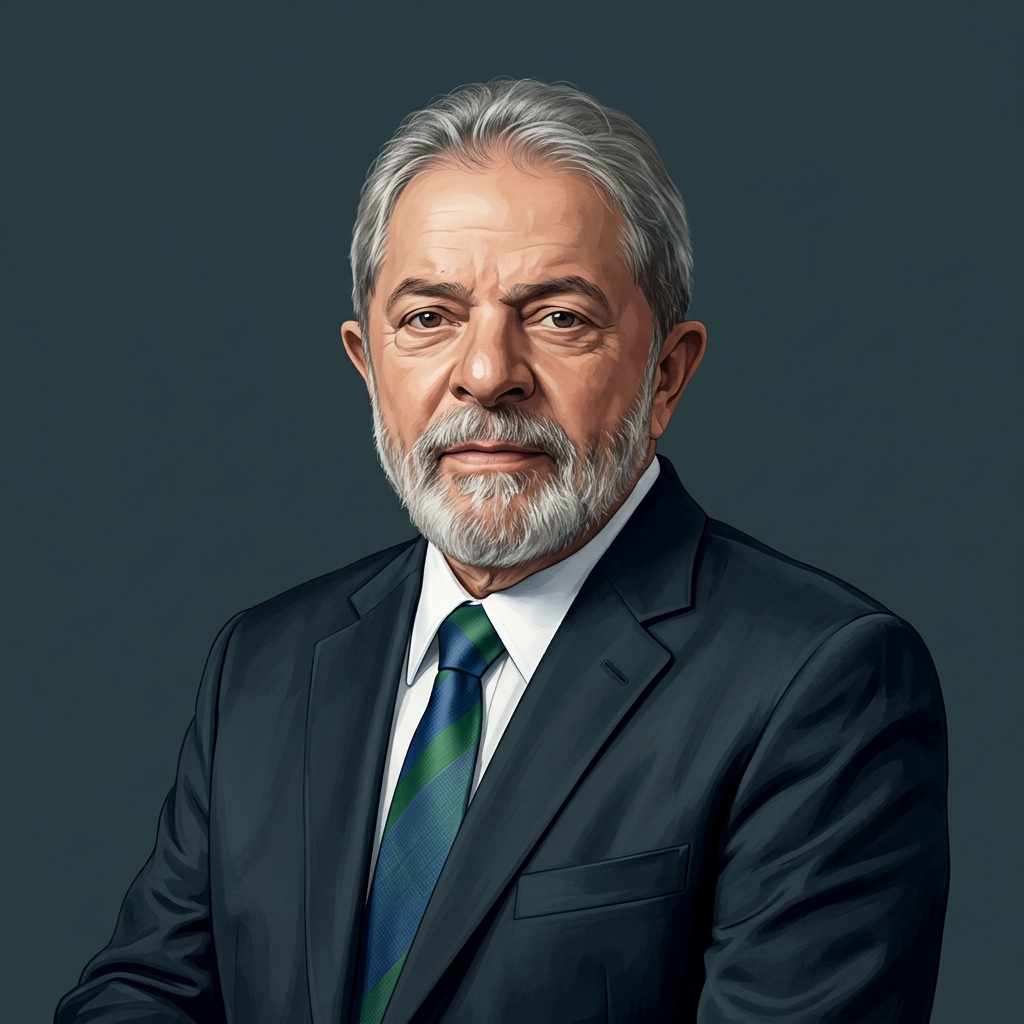
VS
Bolsonaro


Brazil's 2026 presidential election pits incumbent Luiz Inácio Lula da Silva, seeking a fourth term, against the Bolsonaro family, with Flávio Bolsonaro attempting to avenge his father, former President Jair Bolsonaro.
The first round is scheduled for October 4.
The race highlights stark contrasts in foreign policy, as Bolsonaro has embraced anti-globalist rhetoric while Lula's approach differs.
Public opinion shows Lula with a slight favorability edge, with 48% viewing him favorably versus 40% for Bolsonaro.
The election represents a contest over Brazil's international alignment and sovereignty.
*AI-generated summary of publicly available data. This is not an official statement of any party.
*AI-generated summary of publicly available statements and reporting. This is not an official statement of this party.
Supporters of Lula frame his fourth term as a defense of Brazil’s democratic cultural heritage, pointing to his 2022 first-round majority as proof that voters reject Bolsonaro’s anti-globalist isolation, which they see as a historical regression toward authoritarian nostalgia.
Supporters of Lula argue that his globalist diplomacy honors Brazil’s cultural tradition of multilateralism, unlike Bolsonaro’s isolationist posture, which they see as a break from historical precedent and national identity.
Supporters of Lula counter that Bolsonaro’s anti-globalism masks a nostalgic isolationism, while Brazil’s cultural strength has always thrived through exchange; they argue that Lula’s ties with Latin America and Africa, rooted in shared histories, redefine sovereignty as.
Supporters of Lula argue that his legal mandate stems from a decisive 2022 electoral victory, where he won the first round with 48.43% against Bolsonaro's 43.20%, making his 2026 bid a lawful continuation of democratic will. They maintain that Bolsonaro's anti-globalist stance.
Supporters of Lula argue that his legal legitimacy rests on electoral mandates, citing his 2022 first-round majority and current favorability, which Bolsonaro lacks.
Supporters of Lula counter that Brazil’s electoral law requires an absolute majority only in a second round, so a 48.43% first-round result never legitimizes a mandate—it merely triggers a runoff, which Lula won. They argue the legal framework prioritizes majority consent, not.
Supporters of Lula argue that power flows from coalition control, not globalist rhetoric, and his 2022 first-round win proves the Bolsonaro brand is weaker than its noise. They maintain Flávio inherits a fragmented base, while Lula’s favorability edge signals that pragmatism—not.
Supporters of Lula argue his re-election is a calculated power play: Bolsonaro’s anti-globalist noise masks a weak hand, while Lula’s diplomatic pragmatism secures Brazil’s leverage with both Washington and Beijing, turning sovereignty into a bargaining chip rather than a banner.
Supporters of Lula counter that Bolsonaro’s 2022 surge merely reflected emergency cash transfers, not durable loyalty, and that incumbency fatigue dissolves once Lula’s state-driven economic leverage and control over public messaging kick in. They argue sovereignty is a façade.
Supporters of Lula argue that his leadership reflects moral consistency, prioritizing national dignity over divisive anti-globalist appeals, which they view as a hollow, sovereignty-masking posture.
Supporters of Lula argue that his moral legitimacy stems from defending Brazil’s sovereignty and democratic norms against Bolsonaro’s anti-globalist isolationism, which they view as ethically reckless. They point to Lula’s 2022 electoral mandate—48.43% to 43.20%—as proof that.
Supporters of Lula counter that Bolsonaro’s moral sovereignty masks a legacy of neglect, while Lula’s anti-poverty programs and diplomatic independence reflect true national dignity. They argue that corruption scandals, unlike Bolsonaro’s pandemic failures, were judged by.
Supporters of Lula argue that his steady governance preserves Brazil’s traditional religious and social institutions against Bolsonaro’s disruptive anti-globalist fervor, viewing his leadership as a guardian of inherited civic order and moral continuity.
Supporters of Lula argue that his leadership preserves Brazil’s social harmony and moral continuity, contrasting Bolsonaro’s divisive rhetoric with a vision of national unity rooted in shared civic faith.
Supporters of Lula counter that Christian sovereignty is best served by feeding the hungry, citing the Gospel’s call to shelter the poor, and they see global cooperation as a means to fulfill that divine duty, not a compromise of it.
*AI-generated summary of publicly available statements and reporting. This is not an official statement of this party.
Supporters of Bolsonaro argue that his anti-globalist stance defends Brazil's cultural identity against foreign ideological submission, viewing Lula's alignment as a threat to national sovereignty.
Supporters of Bolsonaro argue the 2026 race is a cultural defense of Brazil's Christian, family values against Lula's globalist agenda, viewing Bolsonaro's anti-globalism as protecting national identity.
Supporters of Bolsonaro counter that Lula’s 2022 showing reflects fear, not cultural embrace, and that Brazil’s true heritage lies in its sovereign Christian and family traditions, which globalist pressure erodes.
Supporters of Bolsonaro argue that Brazil's electoral system, which allowed Lula's 2022 first-round victory with only 48.43%, legally legitimizes a mandate for sovereignty over foreign alignment; they contend this legal precedent supports a nationalist agenda against globalist.
Supporters of Bolsonaro argue that Brazil's electoral and legal systems must safeguard national sovereignty, citing Bolsonaro's anti-globalist stance as legally consistent with constitutional self-determination.
Supporters of Bolsonaro counter that Lula’s 2022 mandate remains legally tainted by the Supreme Court’s partiality, which removed their candidate’s eligibility claims without full due process. They argue that a 48% first-round share never constituted a true majority, and that.
Supporters of Bolsonaro argue that Lula's slim 8-point favorability edge masks a deeper weakness: incumbency fatigue and a foreign policy that trades Brazilian sovereignty for globalist approval. They point to 2022, when Bolsonaro closed a 5-point gap to 43%, proving his base's.
Supporters of Bolsonaro argue his anti-globalist stance is a pragmatic shield for Brazil’s sovereignty, while Lula’s favorability edge is merely a mirage of elite consensus. They point to 2022’s first-round vote gap as a narrow margin, not a mandate, and insist that in.
Supporters of Bolsonaro counter that Lula’s first-round margin masks a deeper structural reality: Bolsonaro’s coalition outpolled Lula’s in the 2022 runoff, and Flávio inherits a loyal, mobilized base that Lula’s pragmatism cannot convert. They argue power flows from voter.
Supporters of Bolsonaro argue that his anti-globalist stance defends Brazil’s moral sovereignty against foreign submission, viewing Lula’s fourth-term bid as a betrayal of national values rooted in past corruption scandals.
Supporters of Bolsonaro argue that his anti-globalist stance defends Brazil’s moral sovereignty, framing Lula’s fourth-term bid as submission to foreign interests that erode national character and tradition.
Supporters of Bolsonaro counter that moral consistency is measured by protecting national identity, not by globalist compromise, and they see Lula’s dignity as a mask for surrendering Brazil’s sovereignty to foreign interests.
Supporters of Bolsonaro argue that his anti-globalist stance reflects a defense of Brazil's Christian sovereignty, viewing Lula's alignment with international bodies as a moral compromise before divine law.
Supporters of Bolsonaro argue that his anti-globalist stance reflects a defense of Brazil's Christian heritage against secular overreach, viewing Lula's international alignment as a surrender of divine sovereignty.
Supporters of Bolsonaro counter that his leadership defends biblical family values and divine law, whereas Lula’s governance aligns with secular globalist pressures that erode Brazil’s Christian moral foundations.
AI-generated summary of publicly available statements and reporting. This is not an official statement of this party.
Supporters of Lula frame his fourth term as a defense of Brazil’s democratic cultural heritage, pointing to his 2022 first-round majority as proof that voters reject Bolsonaro’s anti-globalist isolation, which they see as a historical regression toward authoritarian nostalgia.
Supporters of Lula argue that his globalist diplomacy honors Brazil’s cultural tradition of multilateralism, unlike Bolsonaro’s isolationist posture, which they see as a break from historical precedent and national identity.
Supporters of Lula counter that Bolsonaro’s anti-globalism masks a nostalgic isolationism, while Brazil’s cultural strength has always thrived through exchange; they argue that Lula’s ties with Latin America and Africa, rooted in shared histories, redefine sovereignty as.
Supporters of Lula argue that his legal mandate stems from a decisive 2022 electoral victory, where he won the first round with 48.43% against Bolsonaro's 43.20%, making his 2026 bid a lawful continuation of democratic will. They maintain that Bolsonaro's anti-globalist stance.
Supporters of Lula argue that his legal legitimacy rests on electoral mandates, citing his 2022 first-round majority and current favorability, which Bolsonaro lacks.
Supporters of Lula counter that Brazil’s electoral law requires an absolute majority only in a second round, so a 48.43% first-round result never legitimizes a mandate—it merely triggers a runoff, which Lula won. They argue the legal framework prioritizes majority consent, not.
Supporters of Lula argue that power flows from coalition control, not globalist rhetoric, and his 2022 first-round win proves the Bolsonaro brand is weaker than its noise. They maintain Flávio inherits a fragmented base, while Lula’s favorability edge signals that pragmatism—not.
Supporters of Lula argue his re-election is a calculated power play: Bolsonaro’s anti-globalist noise masks a weak hand, while Lula’s diplomatic pragmatism secures Brazil’s leverage with both Washington and Beijing, turning sovereignty into a bargaining chip rather than a banner.
Supporters of Lula counter that Bolsonaro’s 2022 surge merely reflected emergency cash transfers, not durable loyalty, and that incumbency fatigue dissolves once Lula’s state-driven economic leverage and control over public messaging kick in. They argue sovereignty is a façade.
Supporters of Lula argue that his leadership reflects moral consistency, prioritizing national dignity over divisive anti-globalist appeals, which they view as a hollow, sovereignty-masking posture.
Supporters of Lula argue that his moral legitimacy stems from defending Brazil’s sovereignty and democratic norms against Bolsonaro’s anti-globalist isolationism, which they view as ethically reckless. They point to Lula’s 2022 electoral mandate—48.43% to 43.20%—as proof that.
Supporters of Lula counter that Bolsonaro’s moral sovereignty masks a legacy of neglect, while Lula’s anti-poverty programs and diplomatic independence reflect true national dignity. They argue that corruption scandals, unlike Bolsonaro’s pandemic failures, were judged by.
Supporters of Lula argue that his steady governance preserves Brazil’s traditional religious and social institutions against Bolsonaro’s disruptive anti-globalist fervor, viewing his leadership as a guardian of inherited civic order and moral continuity.
Supporters of Lula argue that his leadership preserves Brazil’s social harmony and moral continuity, contrasting Bolsonaro’s divisive rhetoric with a vision of national unity rooted in shared civic faith.
Supporters of Lula counter that Christian sovereignty is best served by feeding the hungry, citing the Gospel’s call to shelter the poor, and they see global cooperation as a means to fulfill that divine duty, not a compromise of it.
Supporters of Bolsonaro argue that his anti-globalist stance defends Brazil's cultural identity against foreign ideological submission, viewing Lula's alignment as a threat to national sovereignty.
Supporters of Bolsonaro argue the 2026 race is a cultural defense of Brazil's Christian, family values against Lula's globalist agenda, viewing Bolsonaro's anti-globalism as protecting national identity.
Supporters of Bolsonaro counter that Lula’s 2022 showing reflects fear, not cultural embrace, and that Brazil’s true heritage lies in its sovereign Christian and family traditions, which globalist pressure erodes.
Supporters of Bolsonaro argue that Brazil's electoral system, which allowed Lula's 2022 first-round victory with only 48.43%, legally legitimizes a mandate for sovereignty over foreign alignment; they contend this legal precedent supports a nationalist agenda against globalist.
Supporters of Bolsonaro argue that Brazil's electoral and legal systems must safeguard national sovereignty, citing Bolsonaro's anti-globalist stance as legally consistent with constitutional self-determination.
Supporters of Bolsonaro counter that Lula’s 2022 mandate remains legally tainted by the Supreme Court’s partiality, which removed their candidate’s eligibility claims without full due process. They argue that a 48% first-round share never constituted a true majority, and that.
Supporters of Bolsonaro argue that Lula's slim 8-point favorability edge masks a deeper weakness: incumbency fatigue and a foreign policy that trades Brazilian sovereignty for globalist approval. They point to 2022, when Bolsonaro closed a 5-point gap to 43%, proving his base's.
Supporters of Bolsonaro argue his anti-globalist stance is a pragmatic shield for Brazil’s sovereignty, while Lula’s favorability edge is merely a mirage of elite consensus. They point to 2022’s first-round vote gap as a narrow margin, not a mandate, and insist that in.
Supporters of Bolsonaro counter that Lula’s first-round margin masks a deeper structural reality: Bolsonaro’s coalition outpolled Lula’s in the 2022 runoff, and Flávio inherits a loyal, mobilized base that Lula’s pragmatism cannot convert. They argue power flows from voter.
Supporters of Bolsonaro argue that his anti-globalist stance defends Brazil’s moral sovereignty against foreign submission, viewing Lula’s fourth-term bid as a betrayal of national values rooted in past corruption scandals.
Supporters of Bolsonaro argue that his anti-globalist stance defends Brazil’s moral sovereignty, framing Lula’s fourth-term bid as submission to foreign interests that erode national character and tradition.
Supporters of Bolsonaro counter that moral consistency is measured by protecting national identity, not by globalist compromise, and they see Lula’s dignity as a mask for surrendering Brazil’s sovereignty to foreign interests.
Supporters of Bolsonaro argue that his anti-globalist stance reflects a defense of Brazil's Christian sovereignty, viewing Lula's alignment with international bodies as a moral compromise before divine law.
Supporters of Bolsonaro argue that his anti-globalist stance reflects a defense of Brazil's Christian heritage against secular overreach, viewing Lula's international alignment as a surrender of divine sovereignty.
Supporters of Bolsonaro counter that his leadership defends biblical family values and divine law, whereas Lula’s governance aligns with secular globalist pressures that erode Brazil’s Christian moral foundations.
Chatham House published an analysis comparing Lula to Biden and Bolsonaro to Trump, noting Lula reassumed PT leadership in 2022 to run against Bolsonaro.
Lula launches his fourth-term bid, framing the election as a fight against foreign submission, with Bolsonaro as the likely opponent.
Rival bids launched by Lula and Bolsonaro's son for the presidency.
A Pew Research Center survey found 48% of Brazilians held a favorable view of Lula, while 40% held a favorable view of Bolsonaro.
A Council on Foreign Relations article highlighted that Bolsonaro and Lula differ widely on foreign policy, with Bolsonaro embracing anti-globalist rhetoric.
High-stakes presidential election in which Lula and Bolsonaro are the leading candidates.
Lula received the most votes in the first round with 48.43% to Bolsonaro's 43.20%, becoming the first presidential candidate to obtain more votes in that round.
The main presidential election in Brazil, with Lula and Bolsonaro as the leading candidates.
Lula and Bolsonaro launch their presidential runs in their strongholds, appealing to women voters.