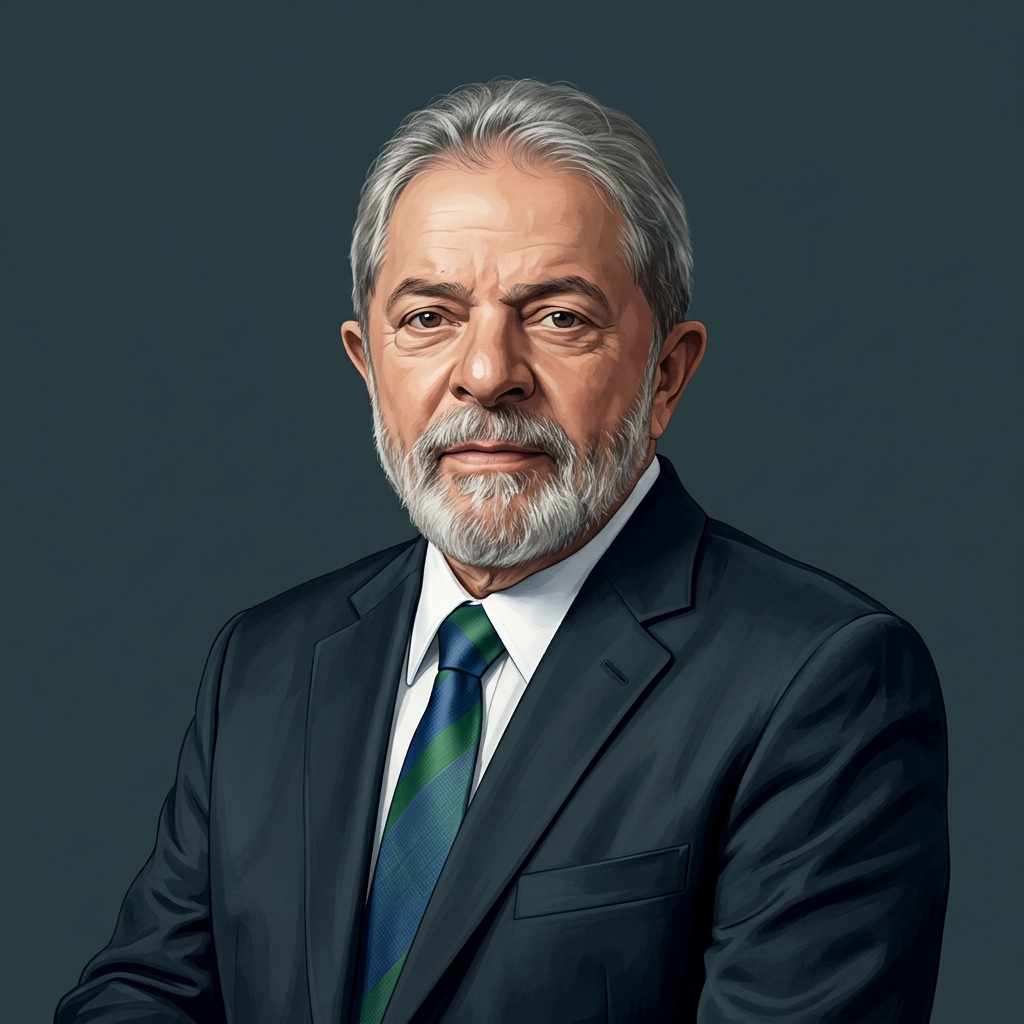
Lula
VS
Israel's government

Brazilian President Luiz Inácio Lula da Silva leads the government of Brazil, a country that has historically maintained diplomatic and defense ties with Israel, including security cooperation that expanded during the presidency of Jair Bolsonaro.
Israel's government, led by Prime Minister Benjamin Netanyahu, is the party conducting the military campaign in Gaza that followed the October 7, 2023 attacks.
The two sides are in conflict over the conduct of Israel's war in Gaza and responsibility for civilian suffering.
Lula has publicly accused Israel of carrying out a "premeditated genocide" and has compared Israel's actions to the Holocaust, drawing sharp criticism from Israeli officials.
Israel's government has rejected these characterizations, and the dispute has strained bilateral relations.
The disagreement has had domestic and diplomatic consequences.
Lula's remarks have affected his approval ratings in Brazil, while Brazil has continued to pursue defense procurement from Israel even as Lula criticizes its military campaign, illustrating the tension between political rhetoric and strategic interests.
*AI-generated summary of publicly available data. This is not an official statement of any party.
*AI-generated summary of publicly available statements and reporting. This is not an official statement of this party.
Supporters of Lula argue that condemning Gaza’s “pain and trauma” upholds Brazil’s tradition of peaceful diplomacy and sovereign moral witness, a continuity inherited from past statesmen rather than a break with it.
Supporters of Lula argue that condemning Gaza's "pain and trauma" upholds Brazil's tradition of sovereign diplomacy and defense of international law, preserving its cultural role as a voice for the vulnerable.
Supporters of Lula counter that Brazil's own history of dictatorship and resistance to foreign intervention shapes its cultural stance, so solidarity with Gaza reflects inherited values, not disregard for Israel's security.
Supporters of Lula argue that international humanitarian law binds all parties, and they cite Gaza's civilian suffering as evidence that Israel's government must be held legally accountable.
Supporters of Lula argue that international humanitarian law binds all parties, and that Gaza's generational trauma points to violations requiring accountability through multilateral legal bodies.
Supporters of Lula counter that international law still binds Israel to proportionality and distinction regardless of Hamas embedding, and that alleged violations fall under the ICJ and ICC, not self-defense alone.
Supporters of Lula argue his Gaza condemnation is calculated statecraft: rallying Global South opinion and domestic allies while casting Brazil as a moral counterweight to US-aligned power.
Supporters of Lula argue his Gaza condemnation is pragmatic statecraft: by naming Israel's government as the author of generational trauma, he courts Global South influence and domestic constituencies at little material cost to Brazil.
Supporters of Lula counter that Brazil already pays real costs: Israel declared him persona non grata and froze ties, so the Global South clout is bought with concrete diplomatic losses, not cheap talk.
Supporters of Lula argue that international law and human dignity must govern war, and that the suffering of Gaza's civilians demands accountability, not silence.
Supporters of Lula argue that international law and universal human rights must protect civilians in Gaza, and they maintain that the lasting trauma borne by innocent people imposes a moral duty on the global community to act.
Supporters of Lula counter that international law still binds Israel's conduct regardless of Hamas's actions, and that collective punishment of Gaza's civilians cannot be excused as self-defense.
Supporters of Lula invoke the sanctity of life and call for protecting civilians, arguing that faith demands condemning the pain and trauma Gaza's people endure.
Supporters of Lula invoke religious teachings on the sanctity of life, arguing that the "pain and trauma" condemned in Gaza violates the moral duty to protect civilians.
Supporters of Lula counter that Scripture commands "thou shalt not kill," so they reject framing the Gaza campaign as righteous self-defense, invoking the Pope's warnings against disproportionate force.
*AI-generated summary of publicly available statements and reporting. This is not an official statement of this party.
Supporters of Israel's government argue that Israel's military campaign in Gaza is a defensive response to the October 7 attacks, and that Brazil's criticism ignores the hostages and the security threats Israel faces.
Supporters of Israel's government argue that Lula's framing ignores Jewish historical memory of persecution, and that Israel's actions reflect a people determined to prevent such trauma from recurring.
Supporters of Israel's government counter that Brazil's diplomatic tradition also includes close ties with Israel since 1949, and they argue that invoking that heritage while equating Israel's actions with Gaza's suffering misreads the very precedent Lula cites.
Supporters of Israel's government argue its Gaza campaign is lawful self-defense under international law, targeting Hamas after the October 7 attacks, and that civilian harm stems from Hamas embedding in populated areas.
Supporters of Israel's government argue its Gaza campaign is lawful self-defense against Hamas, and that international law permits proportional force; they dispute Lula's framing as ignoring Hamas's culpability.
Supporters of Israel's government counter that international humanitarian law also binds Hamas, and that Gaza's civilian harm stems from Hamas embedding within civilian areas—making legal accountability rest on Hamas's conduct, not Israel's.
Supporters of Israel’s government argue Lula’s moral condemnation is cheap talk: Brazil gains diplomatic clout with the Global South while bearing none of the security costs Israel faces against Hamas.
Supporters of Israel's government argue that Lula's condemnation ignores Hamas's use of civilians as shields, and that Israel's military campaign is a necessary exercise of power against an enemy that embeds itself among noncombatants.
Supporters of Israel's government counter that Lula's moral posturing masks a bid for Global South leadership, and that such symbolic condemnations cost Brazil leverage with Washington while changing nothing on the ground.
Supporters of Israel's government argue that moral responsibility for Gaza's suffering rests with Hamas, not Israel, since Hamas embedded its forces among civilians and started the war; they maintain Israel's campaign is self-defense.
Supporters of Israel's government argue that moral responsibility for Gaza's trauma rests with Hamas, which started the war on October 7 and embeds in civilian areas, so Israel's campaign is a justified response.
Supporters of Israel's government counter that moral clarity demands holding Hamas accountable for embedding in civilian areas, arguing that a state's duty to protect its own citizens from attack does not disappear when the enemy uses human shields.
Supporters of Israel's government argue that Israel's military campaign in Gaza is a justified act of self-defense against Hezbollah and Hamas, and they frame the war as a necessary measure to protect Israeli citizens.
Supporters of Israel’s government invoke the religious covenant of the Jewish people to the land, arguing that Israel’s military campaign in Gaza is a justified defense of that inheritance against threats, not the infliction of suffering Lula describes.
Supporters of Israel's government counter that religious tradition also upholds the duty of self-defense against those sworn to destroy it, citing Hamas's openly stated aim to repeat October 7.
AI-generated summary of publicly available statements and reporting. This is not an official statement of this party.
Supporters of Lula argue that condemning Gaza’s “pain and trauma” upholds Brazil’s tradition of peaceful diplomacy and sovereign moral witness, a continuity inherited from past statesmen rather than a break with it.
Supporters of Lula argue that condemning Gaza's "pain and trauma" upholds Brazil's tradition of sovereign diplomacy and defense of international law, preserving its cultural role as a voice for the vulnerable.
Supporters of Lula counter that Brazil's own history of dictatorship and resistance to foreign intervention shapes its cultural stance, so solidarity with Gaza reflects inherited values, not disregard for Israel's security.
Supporters of Lula argue that international humanitarian law binds all parties, and they cite Gaza's civilian suffering as evidence that Israel's government must be held legally accountable.
Supporters of Lula argue that international humanitarian law binds all parties, and that Gaza's generational trauma points to violations requiring accountability through multilateral legal bodies.
Supporters of Lula counter that international law still binds Israel to proportionality and distinction regardless of Hamas embedding, and that alleged violations fall under the ICJ and ICC, not self-defense alone.
Supporters of Lula argue his Gaza condemnation is calculated statecraft: rallying Global South opinion and domestic allies while casting Brazil as a moral counterweight to US-aligned power.
Supporters of Lula argue his Gaza condemnation is pragmatic statecraft: by naming Israel's government as the author of generational trauma, he courts Global South influence and domestic constituencies at little material cost to Brazil.
Supporters of Lula counter that Brazil already pays real costs: Israel declared him persona non grata and froze ties, so the Global South clout is bought with concrete diplomatic losses, not cheap talk.
Supporters of Lula argue that international law and human dignity must govern war, and that the suffering of Gaza's civilians demands accountability, not silence.
Supporters of Lula argue that international law and universal human rights must protect civilians in Gaza, and they maintain that the lasting trauma borne by innocent people imposes a moral duty on the global community to act.
Supporters of Lula counter that international law still binds Israel's conduct regardless of Hamas's actions, and that collective punishment of Gaza's civilians cannot be excused as self-defense.
Supporters of Lula invoke the sanctity of life and call for protecting civilians, arguing that faith demands condemning the pain and trauma Gaza's people endure.
Supporters of Lula invoke religious teachings on the sanctity of life, arguing that the "pain and trauma" condemned in Gaza violates the moral duty to protect civilians.
Supporters of Lula counter that Scripture commands "thou shalt not kill," so they reject framing the Gaza campaign as righteous self-defense, invoking the Pope's warnings against disproportionate force.
Supporters of Israel's government argue that Israel's military campaign in Gaza is a defensive response to the October 7 attacks, and that Brazil's criticism ignores the hostages and the security threats Israel faces.
Supporters of Israel's government argue that Lula's framing ignores Jewish historical memory of persecution, and that Israel's actions reflect a people determined to prevent such trauma from recurring.
Supporters of Israel's government counter that Brazil's diplomatic tradition also includes close ties with Israel since 1949, and they argue that invoking that heritage while equating Israel's actions with Gaza's suffering misreads the very precedent Lula cites.
Supporters of Israel's government argue its Gaza campaign is lawful self-defense under international law, targeting Hamas after the October 7 attacks, and that civilian harm stems from Hamas embedding in populated areas.
Supporters of Israel's government argue its Gaza campaign is lawful self-defense against Hamas, and that international law permits proportional force; they dispute Lula's framing as ignoring Hamas's culpability.
Supporters of Israel's government counter that international humanitarian law also binds Hamas, and that Gaza's civilian harm stems from Hamas embedding within civilian areas—making legal accountability rest on Hamas's conduct, not Israel's.
Supporters of Israel’s government argue Lula’s moral condemnation is cheap talk: Brazil gains diplomatic clout with the Global South while bearing none of the security costs Israel faces against Hamas.
Supporters of Israel's government argue that Lula's condemnation ignores Hamas's use of civilians as shields, and that Israel's military campaign is a necessary exercise of power against an enemy that embeds itself among noncombatants.
Supporters of Israel's government counter that Lula's moral posturing masks a bid for Global South leadership, and that such symbolic condemnations cost Brazil leverage with Washington while changing nothing on the ground.
Supporters of Israel's government argue that moral responsibility for Gaza's suffering rests with Hamas, not Israel, since Hamas embedded its forces among civilians and started the war; they maintain Israel's campaign is self-defense.
Supporters of Israel's government argue that moral responsibility for Gaza's trauma rests with Hamas, which started the war on October 7 and embeds in civilian areas, so Israel's campaign is a justified response.
Supporters of Israel's government counter that moral clarity demands holding Hamas accountable for embedding in civilian areas, arguing that a state's duty to protect its own citizens from attack does not disappear when the enemy uses human shields.
Supporters of Israel's government argue that Israel's military campaign in Gaza is a justified act of self-defense against Hezbollah and Hamas, and they frame the war as a necessary measure to protect Israeli citizens.
Supporters of Israel’s government invoke the religious covenant of the Jewish people to the land, arguing that Israel’s military campaign in Gaza is a justified defense of that inheritance against threats, not the infliction of suffering Lula describes.
Supporters of Israel's government counter that religious tradition also upholds the duty of self-defense against those sworn to destroy it, citing Hamas's openly stated aim to repeat October 7.
Brazilian President Luiz Inacio Lula da Silva condemned the “pain and trauma” inflicted by Israel’s government in Gaza.
Speaking during a visit to Paris, Brazilian President Lula accused Israel of carrying out a "premeditated genocide" in Gaza, further sharpening his public criticism of Israel's military campaign.
Despite publicly calling Israel's actions in Gaza genocidal, Brazil under Lula decided to purchase 36 self-propelled howitzers from Israel, highlighting the contradiction between his rhetoric and Brazil's defense procurement.
A Reuters report noted that approval of President Lula's performance had slipped following his remarks likening Israel's war in Gaza to the Holocaust, reflecting domestic political fallout from the diplomatic dispute.
During a visit to Ethiopia, Brazilian President Luiz Inácio Lula da Silva likened Israel's military campaign in Gaza to the Holocaust, prompting Israel to declare him persona non grata and escalating diplomatic tensions.