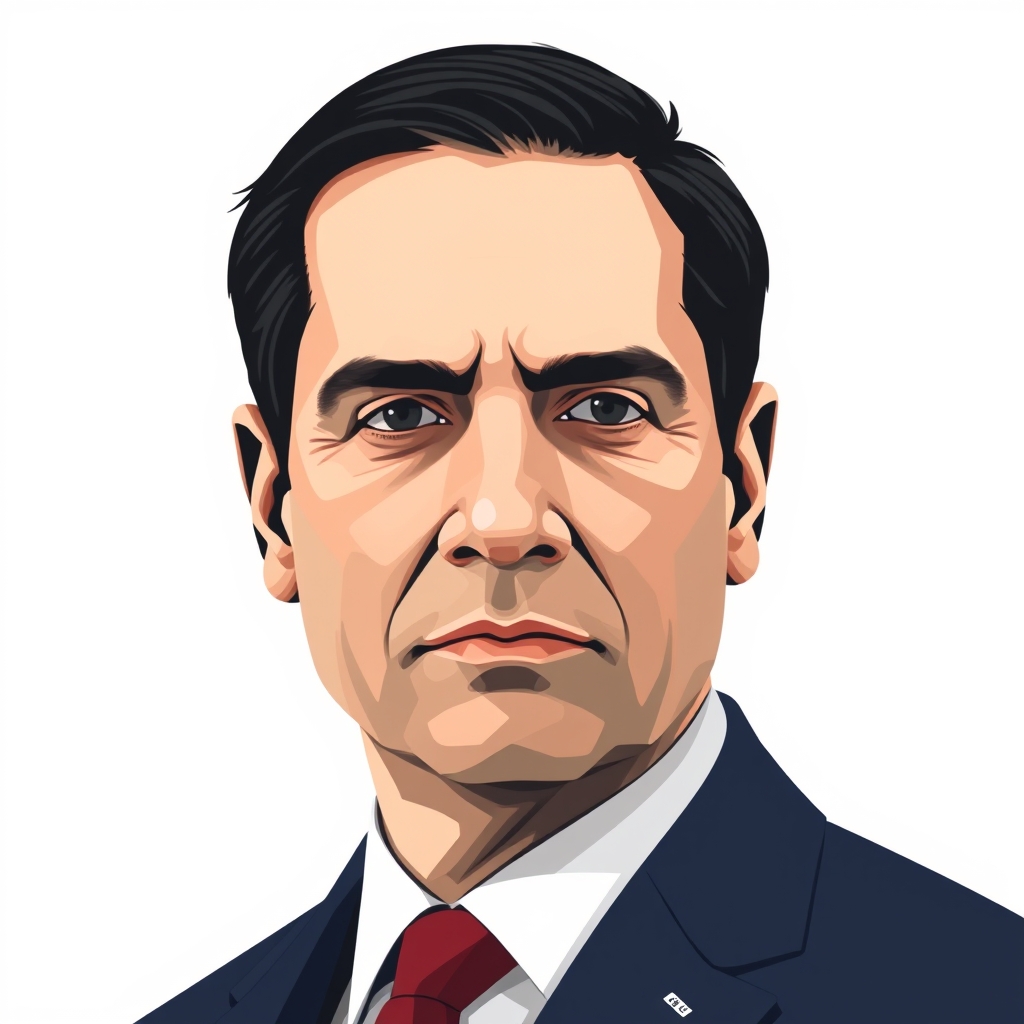
Marco Rubio
VS
Cuban government
US Secretary of State Marco Rubio has urged Cubans to secretly collaborate with the CIA to topple their government.
The call sets the US position against the Cuban government, which has not responded in the article.
*AI-generated summary of publicly available data. This is not an official statement of any party.
*AI-generated summary of publicly available statements and reporting. This is not an official statement of this party.
Supporters of Marco Rubio frame his call as a cultural appeal to Cubans' memory of exile and resistance, arguing that collaboration with the CIA continues a long tradition of outside help for those seeking change on the island.
Supporters of Marco Rubio frame his call as a continuation of a long exile tradition of opposing the Cuban government, arguing that cultural memory of past repression justifies outside pressure.
Supporters of Marco Rubio counter that Cuba's cultural identity was never the state's to defend, arguing that exiles shaped music, literature, and faith across borders long before the regime claimed custodianship of national culture.
Supporters of Marco Rubio argue that Cuba's one-party rule denies citizens free elections and due process, so urging cooperation with the CIA is consistent with longstanding US law promoting democratic transition.
Supporters of Marco Rubio frame his call as lawful advocacy, arguing that US law and international norms protect encouraging people to seek political change, and that any cooperation with the CIA remains voluntary.
Supporters of Marco Rubio counter that sovereignty shields regimes, not people, and that international human-rights law recognizes external support for citizens facing state repression.
Supporters of Marco Rubio argue that covert CIA collaboration is leverage, not charity—pressure on Havana’s intelligence apparatus shifts the regime’s calculus for little US cost.
Supporters of Marco Rubio argue that covert collaboration is leverage: pressure from within costs Washington little, while Havana’s refusal to respond signals it fears the incentive more than the rhetoric itself.
Supporters of Marco Rubio counter that Havana brands all dissent as foreign-manufactured to monopolize power, so the CIA framing is itself the tool—loyalty rhetoric justifies silencing Cubans who organize on their own.
Supporters of Marco Rubio argue that backing Cubans against an oppressive government is a moral duty, framing the call as solidarity with those denied freedom rather than interference.
Supporters of Marco Rubio argue that moral duty compels solidarity with Cubans living under authoritarian rule, and they maintain that covert cooperation with the CIA is a legitimate means of restoring freedom and dignity.
Supporters of Marco Rubio counter that a regime denying basic liberties forfeits any moral claim to sovereignty, so backing Cuban democrats serves justice, not subversion.
Supporters of Marco Rubio frame the Cuban government as a persecutor of religious believers, invoking the Church's moral witness against tyranny to argue that faithful Cubans have a duty to resist oppressive rule.
Supporters of Marco Rubio frame the Cuban government as a repressive regime and invoke religious liberty, arguing that faith traditions condemn tyranny and that aiding its removal serves a moral, divinely sanctioned good.
Supporters of Marco Rubio counter that Cuba's revolutionary order rests on an atheistic ideology that for decades suppressed the Church, and they argue that a tradition denying religious liberty cannot claim divine sanction.
*AI-generated summary of publicly available statements and reporting. This is not an official statement of this party.
Supporters of the Cuban government argue that Rubio's call for covert collaboration is an attack on Cuba's cultural identity and self-determination, framing foreign-backed toppling as a rejection of the nation's sovereign right to chart its own path.
Supporters of the Cuban government frame Rubio's call as an assault on Cuban cultural identity, arguing that foreign-backed collaboration betrays the nation's sovereignty and the collective memory of past US interventions.
Supporters of the Cuban government counter that casting CIA collaboration as a cultural tradition misreads national identity, arguing that sovereignty and self-determination, not foreign patronage, define Cuban patriotism.
Supporters of the Cuban government argue that Rubio's call for covert CIA collaboration violates national sovereignty and international law norms against foreign interference in a state's internal affairs.
Supporters of the Cuban government argue that Rubio's call for covert CIA collaboration violates international law and Cuba's sovereignty, framing foreign-backed subversion as an illegal intervention in the island's internal affairs.
Supporters of the Cuban government counter that Cuba's constitutional order and 1992 electoral law provide for direct, secret municipal and provincial voting, so the claim that no free elections exist misstates Cuban law.
Supporters of the Cuban government argue that Rubio's call for covert CIA collaboration is a familiar playbook: external powers manufacture internal dissent to justify intervention, so loyalty to the state is framed as national survival.
Supporters of the Cuban government argue that Rubio's call for covert CIA collaboration is an old playbook: foreign-backed subversion dressed as liberation, which Havana treats as proof that US pressure aims at regime change, not Cuban welfare.
Supporters of the Cuban government counter that Havana reads covert collaboration as evidence Washington needs its intelligence apparatus more than Havana needs Washington, so the leverage runs the other way and the regime concedes nothing.
Supporters of the Cuban government argue that Rubio's call for covert CIA collaboration violates national sovereignty, and they maintain that foreign-backed subversion is morally illegitimate regardless of stated intentions.
Supporters of the Cuban government argue that Rubio's call for covert CIA collaboration violates national sovereignty, maintaining that foreign-backed subversion is morally illegitimate regardless of stated intentions.
Supporters of the Cuban government counter that moral duty claims ring hollow from a senator whose sanctions deepen shortages for Cuban families, arguing that solidarity used to justify blockade is hypocrisy, not principle.
Supporters of the Cuban government argue that Rubio's call for covert CIA collaboration violates national sovereignty and the principle of non-interference, and they maintain that Cuba's revolutionary institutions and social order, rooted in its own historical tradition, must be.
Supporters of the Cuban government argue that Rubio's call to collaborate with the CIA violates the sovereignty and dignity of the Cuban people, and they maintain that Cuba's revolutionary institutions, rooted in the nation's inherited traditions and values, deserve respect rathe.
Supporters of the Cuban government counter that the Revolution's own spiritual tradition, rooted in the Church's social teachings, treats solidarity and national sovereignty as moral duties, and they argue that religious witness belongs with the poor and the nation rather than wi.
AI-generated summary of publicly available statements and reporting. This is not an official statement of this party.
Supporters of Marco Rubio frame his call as a cultural appeal to Cubans' memory of exile and resistance, arguing that collaboration with the CIA continues a long tradition of outside help for those seeking change on the island.
Supporters of Marco Rubio frame his call as a continuation of a long exile tradition of opposing the Cuban government, arguing that cultural memory of past repression justifies outside pressure.
Supporters of Marco Rubio counter that Cuba's cultural identity was never the state's to defend, arguing that exiles shaped music, literature, and faith across borders long before the regime claimed custodianship of national culture.
Supporters of Marco Rubio argue that Cuba's one-party rule denies citizens free elections and due process, so urging cooperation with the CIA is consistent with longstanding US law promoting democratic transition.
Supporters of Marco Rubio frame his call as lawful advocacy, arguing that US law and international norms protect encouraging people to seek political change, and that any cooperation with the CIA remains voluntary.
Supporters of Marco Rubio counter that sovereignty shields regimes, not people, and that international human-rights law recognizes external support for citizens facing state repression.
Supporters of Marco Rubio argue that covert CIA collaboration is leverage, not charity—pressure on Havana’s intelligence apparatus shifts the regime’s calculus for little US cost.
Supporters of Marco Rubio argue that covert collaboration is leverage: pressure from within costs Washington little, while Havana’s refusal to respond signals it fears the incentive more than the rhetoric itself.
Supporters of Marco Rubio counter that Havana brands all dissent as foreign-manufactured to monopolize power, so the CIA framing is itself the tool—loyalty rhetoric justifies silencing Cubans who organize on their own.
Supporters of Marco Rubio argue that backing Cubans against an oppressive government is a moral duty, framing the call as solidarity with those denied freedom rather than interference.
Supporters of Marco Rubio argue that moral duty compels solidarity with Cubans living under authoritarian rule, and they maintain that covert cooperation with the CIA is a legitimate means of restoring freedom and dignity.
Supporters of Marco Rubio counter that a regime denying basic liberties forfeits any moral claim to sovereignty, so backing Cuban democrats serves justice, not subversion.
Supporters of Marco Rubio frame the Cuban government as a persecutor of religious believers, invoking the Church's moral witness against tyranny to argue that faithful Cubans have a duty to resist oppressive rule.
Supporters of Marco Rubio frame the Cuban government as a repressive regime and invoke religious liberty, arguing that faith traditions condemn tyranny and that aiding its removal serves a moral, divinely sanctioned good.
Supporters of Marco Rubio counter that Cuba's revolutionary order rests on an atheistic ideology that for decades suppressed the Church, and they argue that a tradition denying religious liberty cannot claim divine sanction.
Supporters of the Cuban government argue that Rubio's call for covert collaboration is an attack on Cuba's cultural identity and self-determination, framing foreign-backed toppling as a rejection of the nation's sovereign right to chart its own path.
Supporters of the Cuban government frame Rubio's call as an assault on Cuban cultural identity, arguing that foreign-backed collaboration betrays the nation's sovereignty and the collective memory of past US interventions.
Supporters of the Cuban government counter that casting CIA collaboration as a cultural tradition misreads national identity, arguing that sovereignty and self-determination, not foreign patronage, define Cuban patriotism.
Supporters of the Cuban government argue that Rubio's call for covert CIA collaboration violates national sovereignty and international law norms against foreign interference in a state's internal affairs.
Supporters of the Cuban government argue that Rubio's call for covert CIA collaboration violates international law and Cuba's sovereignty, framing foreign-backed subversion as an illegal intervention in the island's internal affairs.
Supporters of the Cuban government counter that Cuba's constitutional order and 1992 electoral law provide for direct, secret municipal and provincial voting, so the claim that no free elections exist misstates Cuban law.
Supporters of the Cuban government argue that Rubio's call for covert CIA collaboration is a familiar playbook: external powers manufacture internal dissent to justify intervention, so loyalty to the state is framed as national survival.
Supporters of the Cuban government argue that Rubio's call for covert CIA collaboration is an old playbook: foreign-backed subversion dressed as liberation, which Havana treats as proof that US pressure aims at regime change, not Cuban welfare.
Supporters of the Cuban government counter that Havana reads covert collaboration as evidence Washington needs its intelligence apparatus more than Havana needs Washington, so the leverage runs the other way and the regime concedes nothing.
Supporters of the Cuban government argue that Rubio's call for covert CIA collaboration violates national sovereignty, and they maintain that foreign-backed subversion is morally illegitimate regardless of stated intentions.
Supporters of the Cuban government argue that Rubio's call for covert CIA collaboration violates national sovereignty, maintaining that foreign-backed subversion is morally illegitimate regardless of stated intentions.
Supporters of the Cuban government counter that moral duty claims ring hollow from a senator whose sanctions deepen shortages for Cuban families, arguing that solidarity used to justify blockade is hypocrisy, not principle.
Supporters of the Cuban government argue that Rubio's call for covert CIA collaboration violates national sovereignty and the principle of non-interference, and they maintain that Cuba's revolutionary institutions and social order, rooted in its own historical tradition, must be.
Supporters of the Cuban government argue that Rubio's call to collaborate with the CIA violates the sovereignty and dignity of the Cuban people, and they maintain that Cuba's revolutionary institutions, rooted in the nation's inherited traditions and values, deserve respect rathe.
Supporters of the Cuban government counter that the Revolution's own spiritual tradition, rooted in the Church's social teachings, treats solidarity and national sovereignty as moral duties, and they argue that religious witness belongs with the poor and the nation rather than wi.
Secretary of State Marco Rubio called on Cubans to secretly collaborate with the CIA to topple their government.