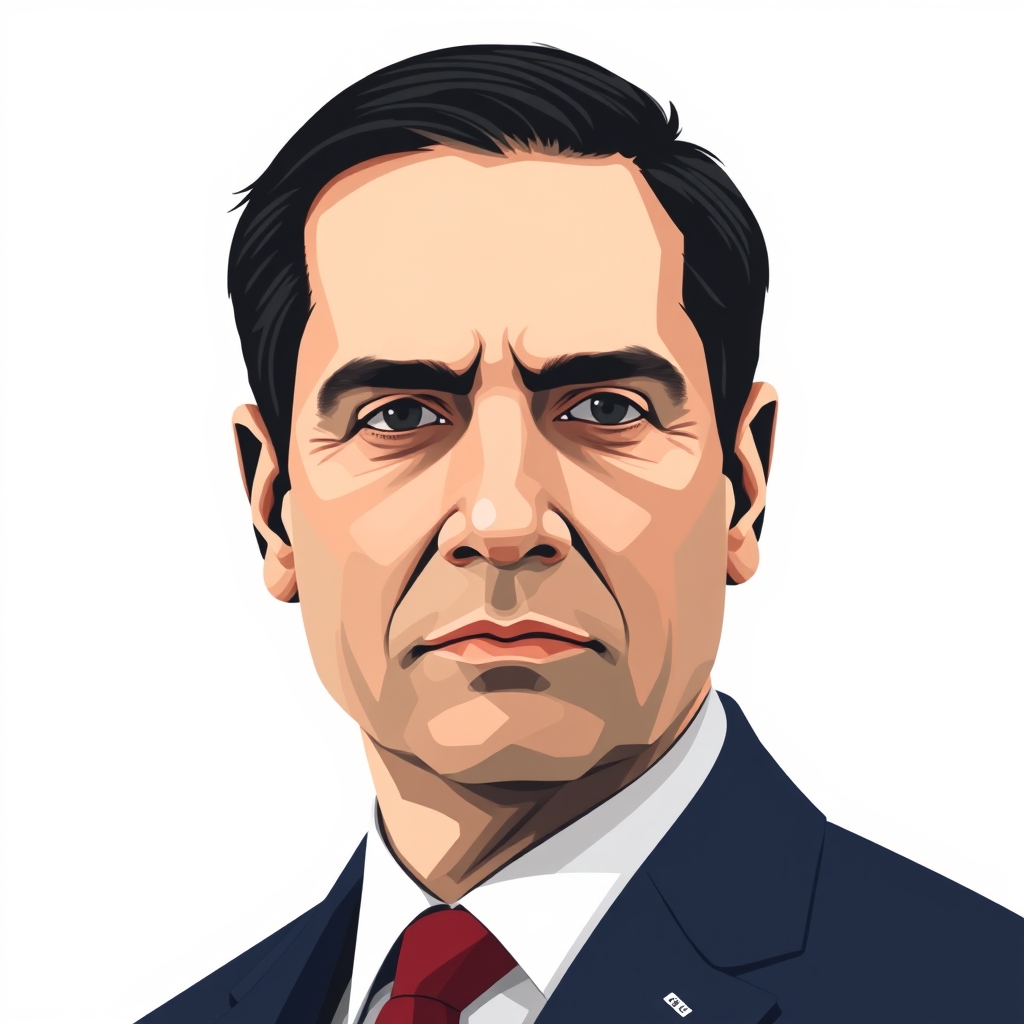
Marco Rubio
VS
Israeli settlers

After an attack on a US journalist, Secretary of State Marco Rubio called for a crackdown on settler violence.
The article describes a contested issue over how to address violence by Israeli settlers.
*AI-generated summary of publicly available data. This is not an official statement of any party.
*AI-generated summary of publicly available statements and reporting. This is not an official statement of this party.
Supporters of Marco Rubio argue that a sovereign ally must uphold the rule of law and protect journalists, framing a crackdown on settler violence as consistent with, not contrary to, shared cultural and legal values.
Supporters of Marco Rubio argue that a state's legitimacy rests on protecting its own citizens abroad, and they frame a crackdown on settler violence as defending American sovereignty rather than ceding it.
Supporters of Marco Rubio counter that ancestral heritage cannot justify displacement, arguing that cultural ties to the land must be honored without overriding the sovereignty and rights of those already living there.
Supporters of Marco Rubio argue that a crackdown on settler violence is legally warranted, citing the attack on a US journalist as grounds to enforce accountability under law.
Supporters of Marco Rubio argue that the US has legal standing to pursue accountability for attacks on its citizens abroad, and they maintain that a crackdown on settler violence is a lawful exercise of that sovereign duty.
Supporters of Marco Rubio counter that US visa and entry law lets Washington deny admission to any foreign national implicated in violence abroad, so enforcement targets immigration status, not Israeli citizens.
Supporters of Marco Rubio argue the crackdown is leverage, not sentiment: publicly backing a US journalist's rights pressures Israel while preserving aid and alliance ties, since visible accountability costs less than a dead American and a damaged partnership.
Supporters of Marco Rubio argue that a public crackdown is a cost-free signal of sovereignty: it shields Washington from blame for a dead journalist while pressuring Israel to police itself, preserving aid without conceding leverage.
Supporters of Marco Rubio counter that quiet enforcement preserves alignment only while the threat stays credible; publicly conceding leverage to settlers, in their view, invites the very escalation that erodes US-Israel alignment.
Supporters of Marco Rubio argue that a moral duty to protect civilians, including journalists, requires holding violent Israeli settlers accountable; they maintain that unchecked settler violence erodes the rule of law and stability.
Supporters of Marco Rubio argue that protecting journalists and curbing settler violence is a moral duty, maintaining that accountability for attacks on civilians upholds the rule of law and stewardship of the land.
Supporters of Marco Rubio counter that moral consistency requires equal protection for Palestinian civilians, arguing that unchecked settler expansion erodes the legal and ethical standing of the community, not individual condemnation.
Supporters of Marco Rubio argue that scripture’s call to justice and the protection of the innocent obligates authorities to curb settler violence, maintaining that upholding moral law honors faith rather than undermines it.
Supporters of Marco Rubio argue that a crackdown on settler violence upholds the moral and scriptural duty to protect the innocent, including journalists, and that no claim to the land can justify shedding innocent blood.
Supporters of Marco Rubio counter that scripture itself commands justice and equal treatment for the stranger and foreigner, so they argue a covenant claim cannot biblically excuse denying Palestinians their own rights and dignity.
*AI-generated summary of publicly available statements and reporting. This is not an official statement of this party.
Supporters of Israeli settlers argue that outside pressure over isolated violence ignores the settler movement's cultural role in Jewish ancestral heritage, framing calls for a crackdown as erasing historical ties to the land.
Supporters of Israeli settlers argue that outside calls for a "crackdown" ignore generations of settler history and communal memory, framing such pressure as a cultural attack on their way of life rather than a response to specific acts.
Supporters of Israeli settlers counter that the journalists' own cultural framing often erases the settlers' historical claim to the land, so appeals to shared values ring hollow when the same outlets treat settlement as illegitimate by definition.
Supporters of Israeli settlers argue that Rubio's call for a "crackdown" wrongly applies US enforcement against Israeli citizens, contending that legal accountability for settlers belongs to Israeli authorities under Israeli law, not to foreign officials.
Supporters of Israeli settlers argue that Rubio's call for a "crackdown" lacks legal grounding, contending that enforcement against settlers must rest on duly enacted Israeli law and due process rather than political pressure from Washington.
Supporters of Israeli settlers counter that extending US legal accountability to residents of disputed territory lacks clear jurisdictional basis, arguing that enforcement authority rests with local Israeli legal institutions rather than foreign statute.
Supporters of Israeli settlers argue that Rubio’s crackdown threat cedes leverage to critics while the settlements serve as strategic buffer, and they maintain that quiet enforcement, not public condemnation, is what preserves US-Israel alignment.
Supporters of Israeli settlers argue that Rubio's "crackdown" rhetoric is a power play that treats them as scapegoats, and they maintain that backing settlement expansion serves US leverage against Iran better than punishing its allies.
Supporters of Israeli settlers counter that Rubio’s leverage is theater: backing a journalist’s rights costs him nothing while settlement expansion and aid continue, so the crackdown signals weakness, not accountability.
Supporters of Israeli settlers argue that singling out settler violence for a "crackdown" applies a moral double standard, since they maintain that Palestinian attacks on Israelis go unaddressed, and they contend that condemning an entire community for individual acts is unjust.
Supporters of Israeli settlers argue that a moral double standard is at play, contending that singling out settler violence while downplaying threats against settlers reflects selective outrage rather than evenhanded justice.
Supporters of Israeli settlers counter that moral accountability must be symmetric: they argue that singling out settler violence while ignoring Palestinian attacks on settlers reflects a selective moral framework rather than a genuine commitment to civilian protection.
Supporters of Israeli settlers argue that Jewish settlement in the West Bank rests on biblical covenant and inherited religious obligation, so outside calls for a crackdown are seen by them as pressure against a divinely grounded claim.
Supporters of Israeli settlers invoke the biblical covenant of the Land of Israel as a religious inheritance, arguing that Jewish settlement in Judea and Samaria fulfills a divine mandate and that outside pressure to crack down on settlers disregards that theological claim.
Supporters of Israeli settlers counter that the biblical mandate to settle the land is itself a divine command, so they argue that religious fidelity requires defending settlement rather than restraining it.
AI-generated summary of publicly available statements and reporting. This is not an official statement of this party.
Supporters of Marco Rubio argue that a sovereign ally must uphold the rule of law and protect journalists, framing a crackdown on settler violence as consistent with, not contrary to, shared cultural and legal values.
Supporters of Marco Rubio argue that a state's legitimacy rests on protecting its own citizens abroad, and they frame a crackdown on settler violence as defending American sovereignty rather than ceding it.
Supporters of Marco Rubio counter that ancestral heritage cannot justify displacement, arguing that cultural ties to the land must be honored without overriding the sovereignty and rights of those already living there.
Supporters of Marco Rubio argue that a crackdown on settler violence is legally warranted, citing the attack on a US journalist as grounds to enforce accountability under law.
Supporters of Marco Rubio argue that the US has legal standing to pursue accountability for attacks on its citizens abroad, and they maintain that a crackdown on settler violence is a lawful exercise of that sovereign duty.
Supporters of Marco Rubio counter that US visa and entry law lets Washington deny admission to any foreign national implicated in violence abroad, so enforcement targets immigration status, not Israeli citizens.
Supporters of Marco Rubio argue the crackdown is leverage, not sentiment: publicly backing a US journalist's rights pressures Israel while preserving aid and alliance ties, since visible accountability costs less than a dead American and a damaged partnership.
Supporters of Marco Rubio argue that a public crackdown is a cost-free signal of sovereignty: it shields Washington from blame for a dead journalist while pressuring Israel to police itself, preserving aid without conceding leverage.
Supporters of Marco Rubio counter that quiet enforcement preserves alignment only while the threat stays credible; publicly conceding leverage to settlers, in their view, invites the very escalation that erodes US-Israel alignment.
Supporters of Marco Rubio argue that a moral duty to protect civilians, including journalists, requires holding violent Israeli settlers accountable; they maintain that unchecked settler violence erodes the rule of law and stability.
Supporters of Marco Rubio argue that protecting journalists and curbing settler violence is a moral duty, maintaining that accountability for attacks on civilians upholds the rule of law and stewardship of the land.
Supporters of Marco Rubio counter that moral consistency requires equal protection for Palestinian civilians, arguing that unchecked settler expansion erodes the legal and ethical standing of the community, not individual condemnation.
Supporters of Marco Rubio argue that scripture’s call to justice and the protection of the innocent obligates authorities to curb settler violence, maintaining that upholding moral law honors faith rather than undermines it.
Supporters of Marco Rubio argue that a crackdown on settler violence upholds the moral and scriptural duty to protect the innocent, including journalists, and that no claim to the land can justify shedding innocent blood.
Supporters of Marco Rubio counter that scripture itself commands justice and equal treatment for the stranger and foreigner, so they argue a covenant claim cannot biblically excuse denying Palestinians their own rights and dignity.
Supporters of Israeli settlers argue that outside pressure over isolated violence ignores the settler movement's cultural role in Jewish ancestral heritage, framing calls for a crackdown as erasing historical ties to the land.
Supporters of Israeli settlers argue that outside calls for a "crackdown" ignore generations of settler history and communal memory, framing such pressure as a cultural attack on their way of life rather than a response to specific acts.
Supporters of Israeli settlers counter that the journalists' own cultural framing often erases the settlers' historical claim to the land, so appeals to shared values ring hollow when the same outlets treat settlement as illegitimate by definition.
Supporters of Israeli settlers argue that Rubio's call for a "crackdown" wrongly applies US enforcement against Israeli citizens, contending that legal accountability for settlers belongs to Israeli authorities under Israeli law, not to foreign officials.
Supporters of Israeli settlers argue that Rubio's call for a "crackdown" lacks legal grounding, contending that enforcement against settlers must rest on duly enacted Israeli law and due process rather than political pressure from Washington.
Supporters of Israeli settlers counter that extending US legal accountability to residents of disputed territory lacks clear jurisdictional basis, arguing that enforcement authority rests with local Israeli legal institutions rather than foreign statute.
Supporters of Israeli settlers argue that Rubio’s crackdown threat cedes leverage to critics while the settlements serve as strategic buffer, and they maintain that quiet enforcement, not public condemnation, is what preserves US-Israel alignment.
Supporters of Israeli settlers argue that Rubio's "crackdown" rhetoric is a power play that treats them as scapegoats, and they maintain that backing settlement expansion serves US leverage against Iran better than punishing its allies.
Supporters of Israeli settlers counter that Rubio’s leverage is theater: backing a journalist’s rights costs him nothing while settlement expansion and aid continue, so the crackdown signals weakness, not accountability.
Supporters of Israeli settlers argue that singling out settler violence for a "crackdown" applies a moral double standard, since they maintain that Palestinian attacks on Israelis go unaddressed, and they contend that condemning an entire community for individual acts is unjust.
Supporters of Israeli settlers argue that a moral double standard is at play, contending that singling out settler violence while downplaying threats against settlers reflects selective outrage rather than evenhanded justice.
Supporters of Israeli settlers counter that moral accountability must be symmetric: they argue that singling out settler violence while ignoring Palestinian attacks on settlers reflects a selective moral framework rather than a genuine commitment to civilian protection.
Supporters of Israeli settlers argue that Jewish settlement in the West Bank rests on biblical covenant and inherited religious obligation, so outside calls for a crackdown are seen by them as pressure against a divinely grounded claim.
Supporters of Israeli settlers invoke the biblical covenant of the Land of Israel as a religious inheritance, arguing that Jewish settlement in Judea and Samaria fulfills a divine mandate and that outside pressure to crack down on settlers disregards that theological claim.
Supporters of Israeli settlers counter that the biblical mandate to settle the land is itself a divine command, so they argue that religious fidelity requires defending settlement rather than restraining it.
Rubio wants ‘crackdown’ on settler violence after US journalist attack