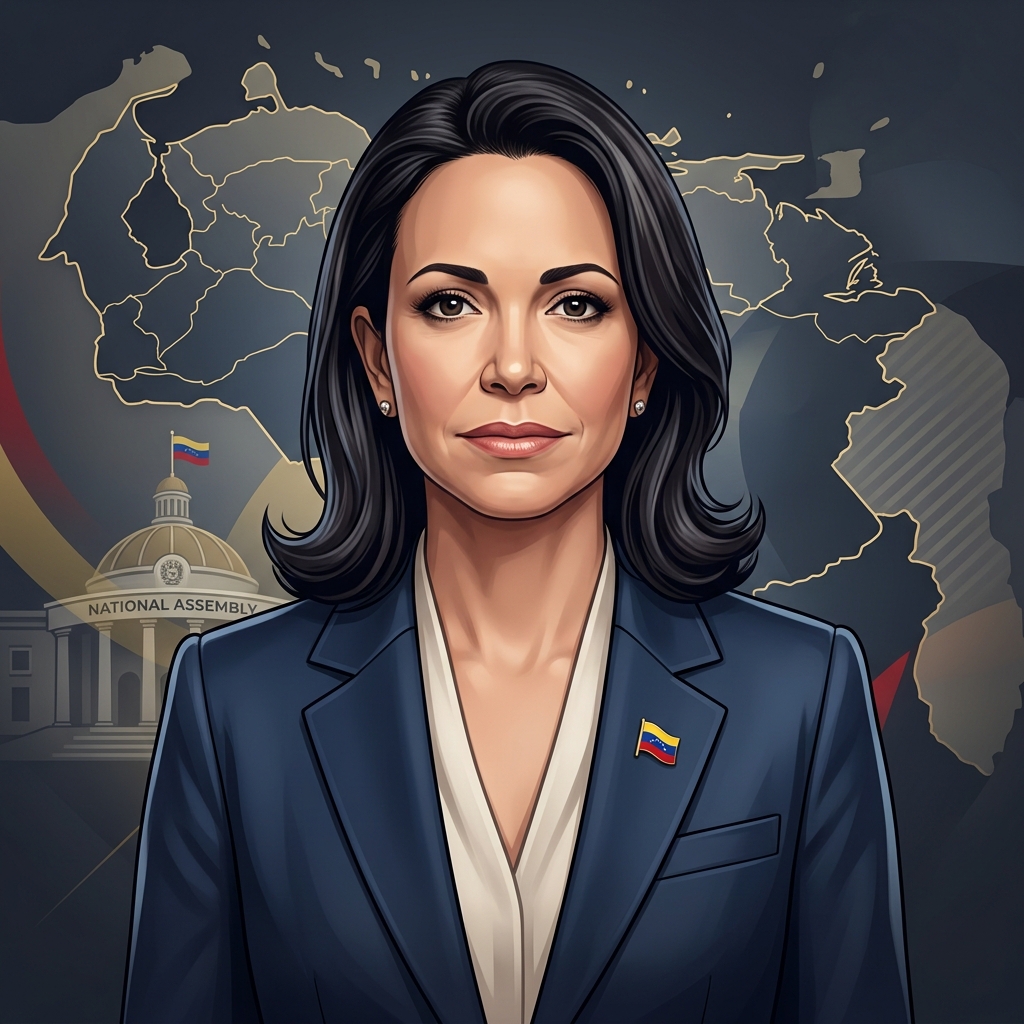
Maria Corina Machado
VS
President Rodriguez
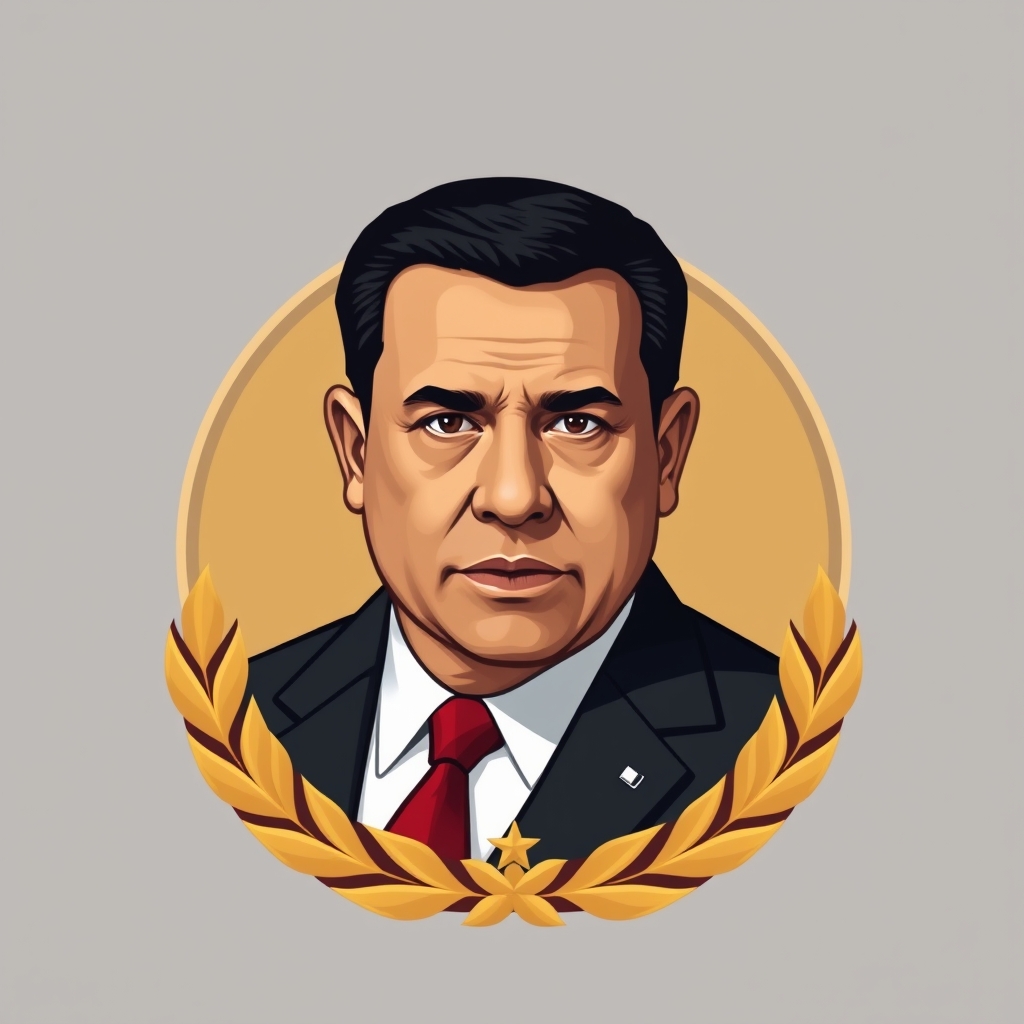
Venezuelan opposition leader Maria Corina Machado returned from nearly a year in exile, while sitting President Rodriguez accused her of making a 'show.' The article presents the opposition figure's return and the government's dismissive characterization of it.
*AI-generated summary of publicly available data. This is not an official statement of any party.
*AI-generated summary of publicly available statements and reporting. This is not an official statement of this party.
Supporters of Maria Corina Machado frame her return as a defense of Venezuela's civic and cultural heritage, arguing that showing up in person affirms the continuity of democratic institutions against a government that dismisses her as a "show."
Supporters of Maria Corina Machado frame her return as a defense of Venezuela's civic tradition, arguing that showing up publicly keeps inherited democratic institutions alive against a government that dismisses her as a "show."
Supporters of Maria Corina Machado counter that her return draws on a deeper cultural memory—the civic tradition of leaders who return to stand with citizens rather than perform for cameras—and they argue that dismissing it as spectacle misreads the enduring value of presence and.
Supporters of Maria Corina Machado argue that her return is a lawful exercise of her citizenship rights, and they maintain that the government's dismissal of it as a "show" lacks legal grounding.
Supporters of Maria Corina Machado argue that her return is a lawful exercise of the political rights guaranteed under Venezuelan law, and they maintain that President Rodriguez's "show" framing dodges the legal question rather than answering it.
Supporters of Maria Corina Machado counter that invoking sovereignty cannot shield proceedings from scrutiny, since legally invalid disqualifications and politically timed prosecutions breach due process guarantees, making the process itself the issue.
Supporters of Maria Corina Machado argue the return is a calculated power move: forcing the government to either arrest her and hand her a martyr's platform, or tolerate her presence and concede political space.
Supporters of Maria Corina Machado argue her return is a calculated power play to reclaim the streets and force the government to react, betting Rodriguez's dismissive "show" label signals fear, not strength.
Supporters of Maria Corina Machado counter that branding her return a "show" concedes the regime fears the symbol itself—mobilizing crowds and international attention—which is leverage, not theater, and dismissing it forfeits the narrative.
Supporters of Maria Corina Machado argue that dismissing her return as a "show" is a moral dodge—it evades the government's accountability for exiling a rival.
Supporters of Maria Corina Machado argue that dismissing her return as a "show" is a moral evasion, insisting a leader who risks exile to stand with citizens deserves acknowledgment, not ridicule.
Supporters of Maria Corina Machado counter that framing her return as theater insults the courage of showing up under threat of arrest, arguing that a moral witness who risks everything to stand with citizens is the opposite of a staged performance.
Supporters of Maria Corina Machado invoke scripture's call to stand with the oppressed and argue that her return is a moral witness for justice, not a "show," framing peaceful civic courage as a duty of faith.
Supporters of Maria Corina Machado frame her return as a moral and faith-rooted witness, arguing that standing with the persecuted and speaking truth to power reflects scriptural calls for justice and solidarity with the oppressed.
Supporters of Maria Corina Machado counter that faith traditions call leaders to protect human dignity and free expression, not to silence citizens, and they argue that peaceful civic return upholds moral continuity rather than undermining it.
*AI-generated summary of publicly available statements and reporting. This is not an official statement of this party.
Supporters of President Rodriguez argue that Machado's return is political theater, invoking a cultural memory of staged opposition spectacles that grab headlines without serving ordinary Venezuelans.
Supporters of President Rodriguez argue that Machado's return is political theater staged for foreign audiences, citing a tradition of exiled leaders returning to claim legitimacy without local roots.
Supporters of President Rodriguez counter that Machado's return is a staged spectacle invoking a nostalgic past, and that the government represents a living cultural sovereignty rooted in the present, not a recycled elite narrative.
Supporters of President Rodriguez contend that Machado's return must be assessed under Venezuelan law, arguing that any legal proceedings or official skepticism toward her are matters of sovereign judicial process rather than political theater.
Supporters of President Rodriguez argue that Machado's return is a staged spectacle, and that under Venezuelan law, pending judicial proceedings against her should determine her legal status rather than her public appearances.
Supporters of President Rodriguez counter that electoral bans upheld by the competent authorities remain legally binding, so they argue her return does not cure a disqualification the courts have already enforced.
Supporters of President Rodriguez argue that Machado's return is political theater, and that power is best preserved by framing a rival's symbolic homecoming as a mere "show"—dismissing the challenger's legitimacy while keeping the state's machinery pointed at her.
Supporters of President Rodriguez argue that Machado's return is political theater meant to project legitimacy she lacks, and that the government's dismissal is a calculated move to deny her the appearance of momentum.
Supporters of President Rodriguez counter that the government gains more by letting Machado return and own the fractured opposition’s inevitable disappointment than by arresting her and gifting a martyr’s platform.
Supporters of President Rodriguez argue that Machado's return is political theater, maintaining that her exile and dramatic homecoming are staged to project victimhood rather than address Venezuela's real problems.
Supporters of President Rodriguez argue that Machado's return is a political spectacle, and they maintain that her prolonged exile undermines the moral standing of her criticism of the government.
Supporters of President Rodriguez counter that moral accountability runs both ways: a rival who welcomed foreign sanctions that harmed Venezuelan families bears responsibility too, so framing her return as pure victimhood obscures the costs ordinary citizens bore.
Supporters of President Rodriguez frame the state as guardian of Venezuela's inherited social order, and religious conservatives among them argue that Machado's return spectacle undermines the stability and moral continuity that faith traditions call on leaders to protect.
Supporters of President Rodriguez argue that reverence for national sovereignty and constitutional order means a citizen's return should be judged by law, not spectacle, and they maintain that the timing suggests a political show rather than genuine civic duty.
Supporters of President Rodriguez counter that scripture also commands respect for lawful authority (Romans 13), and they argue that a religious duty to justice cannot be claimed while rejecting the institutions that keep civic order.
AI-generated summary of publicly available statements and reporting. This is not an official statement of this party.
Supporters of Maria Corina Machado frame her return as a defense of Venezuela's civic and cultural heritage, arguing that showing up in person affirms the continuity of democratic institutions against a government that dismisses her as a "show."
Supporters of Maria Corina Machado frame her return as a defense of Venezuela's civic tradition, arguing that showing up publicly keeps inherited democratic institutions alive against a government that dismisses her as a "show."
Supporters of Maria Corina Machado counter that her return draws on a deeper cultural memory—the civic tradition of leaders who return to stand with citizens rather than perform for cameras—and they argue that dismissing it as spectacle misreads the enduring value of presence and.
Supporters of Maria Corina Machado argue that her return is a lawful exercise of her citizenship rights, and they maintain that the government's dismissal of it as a "show" lacks legal grounding.
Supporters of Maria Corina Machado argue that her return is a lawful exercise of the political rights guaranteed under Venezuelan law, and they maintain that President Rodriguez's "show" framing dodges the legal question rather than answering it.
Supporters of Maria Corina Machado counter that invoking sovereignty cannot shield proceedings from scrutiny, since legally invalid disqualifications and politically timed prosecutions breach due process guarantees, making the process itself the issue.
Supporters of Maria Corina Machado argue the return is a calculated power move: forcing the government to either arrest her and hand her a martyr's platform, or tolerate her presence and concede political space.
Supporters of Maria Corina Machado argue her return is a calculated power play to reclaim the streets and force the government to react, betting Rodriguez's dismissive "show" label signals fear, not strength.
Supporters of Maria Corina Machado counter that branding her return a "show" concedes the regime fears the symbol itself—mobilizing crowds and international attention—which is leverage, not theater, and dismissing it forfeits the narrative.
Supporters of Maria Corina Machado argue that dismissing her return as a "show" is a moral dodge—it evades the government's accountability for exiling a rival.
Supporters of Maria Corina Machado argue that dismissing her return as a "show" is a moral evasion, insisting a leader who risks exile to stand with citizens deserves acknowledgment, not ridicule.
Supporters of Maria Corina Machado counter that framing her return as theater insults the courage of showing up under threat of arrest, arguing that a moral witness who risks everything to stand with citizens is the opposite of a staged performance.
Supporters of Maria Corina Machado invoke scripture's call to stand with the oppressed and argue that her return is a moral witness for justice, not a "show," framing peaceful civic courage as a duty of faith.
Supporters of Maria Corina Machado frame her return as a moral and faith-rooted witness, arguing that standing with the persecuted and speaking truth to power reflects scriptural calls for justice and solidarity with the oppressed.
Supporters of Maria Corina Machado counter that faith traditions call leaders to protect human dignity and free expression, not to silence citizens, and they argue that peaceful civic return upholds moral continuity rather than undermining it.
Supporters of President Rodriguez argue that Machado's return is political theater, invoking a cultural memory of staged opposition spectacles that grab headlines without serving ordinary Venezuelans.
Supporters of President Rodriguez argue that Machado's return is political theater staged for foreign audiences, citing a tradition of exiled leaders returning to claim legitimacy without local roots.
Supporters of President Rodriguez counter that Machado's return is a staged spectacle invoking a nostalgic past, and that the government represents a living cultural sovereignty rooted in the present, not a recycled elite narrative.
Supporters of President Rodriguez contend that Machado's return must be assessed under Venezuelan law, arguing that any legal proceedings or official skepticism toward her are matters of sovereign judicial process rather than political theater.
Supporters of President Rodriguez argue that Machado's return is a staged spectacle, and that under Venezuelan law, pending judicial proceedings against her should determine her legal status rather than her public appearances.
Supporters of President Rodriguez counter that electoral bans upheld by the competent authorities remain legally binding, so they argue her return does not cure a disqualification the courts have already enforced.
Supporters of President Rodriguez argue that Machado's return is political theater, and that power is best preserved by framing a rival's symbolic homecoming as a mere "show"—dismissing the challenger's legitimacy while keeping the state's machinery pointed at her.
Supporters of President Rodriguez argue that Machado's return is political theater meant to project legitimacy she lacks, and that the government's dismissal is a calculated move to deny her the appearance of momentum.
Supporters of President Rodriguez counter that the government gains more by letting Machado return and own the fractured opposition’s inevitable disappointment than by arresting her and gifting a martyr’s platform.
Supporters of President Rodriguez argue that Machado's return is political theater, maintaining that her exile and dramatic homecoming are staged to project victimhood rather than address Venezuela's real problems.
Supporters of President Rodriguez argue that Machado's return is a political spectacle, and they maintain that her prolonged exile undermines the moral standing of her criticism of the government.
Supporters of President Rodriguez counter that moral accountability runs both ways: a rival who welcomed foreign sanctions that harmed Venezuelan families bears responsibility too, so framing her return as pure victimhood obscures the costs ordinary citizens bore.
Supporters of President Rodriguez frame the state as guardian of Venezuela's inherited social order, and religious conservatives among them argue that Machado's return spectacle undermines the stability and moral continuity that faith traditions call on leaders to protect.
Supporters of President Rodriguez argue that reverence for national sovereignty and constitutional order means a citizen's return should be judged by law, not spectacle, and they maintain that the timing suggests a political show rather than genuine civic duty.
Supporters of President Rodriguez counter that scripture also commands respect for lawful authority (Romans 13), and they argue that a religious duty to justice cannot be claimed while rejecting the institutions that keep civic order.
Maria Corina Machado returns to Venezuela after nearly a year away.