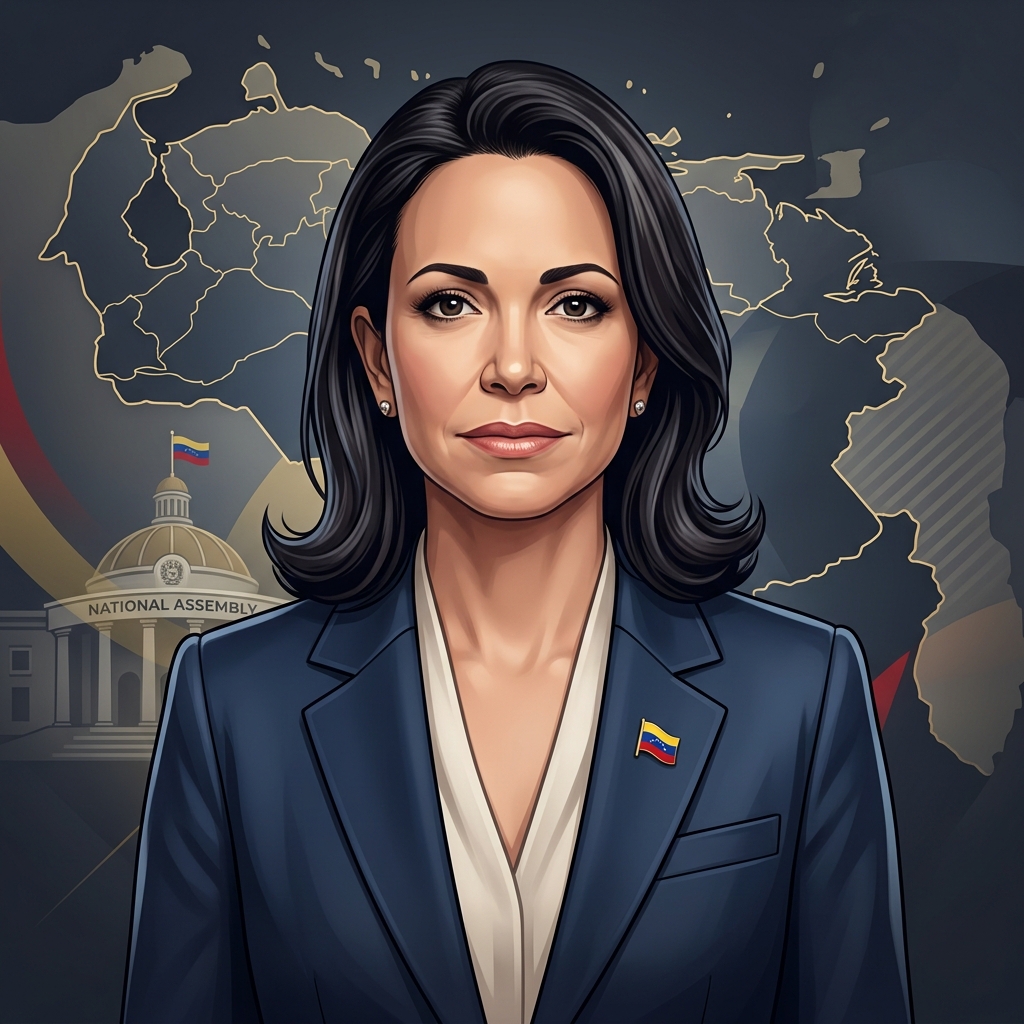
María Corina Machado
VS
US oil deal backers

Nobel laureate María Corina Machado returned to Venezuela from exile, praising Donald Trump for 'freedom' while urging that 2027 elections be held.
She also criticized a controversial US oil deal with Caracas.
*AI-generated summary of publicly available data. This is not an official statement of any party.
*AI-generated summary of publicly available statements and reporting. This is not an official statement of this party.
Supporters of María Corina Machado argue that her return and call for 2027 elections affirm Venezuela's inherited democratic tradition, and they maintain that a US oil deal with Caracas should not override the cultural continuity of free, sovereign elections.
Supporters of María Corina Machado frame her return as a defense of Venezuela's civic and electoral traditions, arguing that sovereignty and national dignity must not be traded away for oil deals struck with Caracas.
Supporters of María Corina Machado counter that oil revenue flowing to the government entrenches the patronage networks that stifle independent cultural life, arguing that commerce with the current authorities weakens, rather than strengthens, civil society.
Supporters of María Corina Machado argue that any US oil deal with Caracas lacks legal legitimacy absent free, verifiable 2027 elections, and they maintain that resource concessions granted without democratic mandate cannot bind the Venezuelan people.
Supporters of María Corina Machado argue that any US oil deal with Caracas lacks legal legitimacy absent free, observed 2027 elections, contending that resource contracts signed without democratic mandate cannot bind the Venezuelan people.
Supporters of María Corina Machado counter that executive licensing cannot confer domestic legal standing on an arrangement struck without the recognition the constitution requires, so the framework itself remains contested.
Supporters of María Corina Machado argue that an oil deal enriching Caracas without electoral concessions only entrenches the incumbent's hold, so they press for 2027 elections as the price of any economic opening.
Supporters of María Corina Machado argue that she returns to claim the street's legitimacy before the oil deal hardens, betting that visible presence and an election demand outweigh any transactional bargain struck without her.
Supporters of María Corina Machado counter that oil leverage rewards Maduro's grip without extracting concessions, so Washington buys stability from the very incumbent it claims to pressure—making the deal a subsidy, not leverage.
Supporters of María Corina Machado argue that a US oil deal with Caracas rewards an undemocratic government without securing free 2027 elections, and they maintain that economic engagement should be conditioned on political freedom rather than profit.
Supporters of María Corina Machado argue that prioritizing oil profits over free elections rewards authoritarian rule, and they maintain that democratic consent, not commercial deals, must come first.
Supporters of María Corina Machado counter that trading with the regime rewards repression, since profits from oil deals fund the same machinery that jails opponents, and they argue that prosperity built on impunity betrays the Venezuelans the deal claims to help.
Supporters of María Corina Machado argue that her call for 2027 elections reflects a moral duty to restore legitimate authority, framing respect for electoral process as a foundational obligation that precedes any oil agreement.
Supporters of María Corina Machado argue that the 2027 elections must be safeguarded as a moral and civic duty, framing respect for the vote as a matter of conscience and national dignity.
Supporters of María Corina Machado counter that Scripture also condemns complicity with oppression, arguing that a peace bought by enriching a repressive regime fails the biblical call to defend the vulnerable.
*AI-generated summary of publicly available statements and reporting. This is not an official statement of this party.
Supporters of the US oil deal argue that engagement through energy trade preserves Venezuelan cultural identity better than isolation, contending that open commerce and exchange strengthen civil society and national self-expression.
Supporters of the US oil deal argue that engagement protects Venezuelan cultural identity by keeping communities tied to their land and livelihoods, rather than letting isolation deepen hardship.
Supporters of US oil deal backers counter that cultural identity is bound up with economic survival, arguing that a deal lifting sanctions preserves the livelihood and heritage of Venezuelan communities better than an election timeline they see as uncertain.
Supporters of US oil deal backers maintain that the deal's legality rests on executive authority to license transactions, and they argue Machado's criticism cannot override the licensing framework under which the arrangement was struck.
Supporters of the US oil deal argue that criticism of the arrangement is legally misplaced, since the deal was negotiated through proper executive and regulatory channels, and they maintain that sanctions relief tied to oil contracts serves as lawful leverage to press Caracas tow.
Supporters of the US oil deal counter that existing licenses and contracts rest on established Venezuelan and international law, not electoral outcomes, so commercial obligations remain enforceable regardless of 2027.
Supporters of the US oil deal argue that Machado's moral clarity offers nothing to Washington's actual leverage — oil flows buy Maduro's compliance and keep US refineries fed, while election rhetoric risks the stability those contracts depend on.
Supporters of the US oil deal argue that Machado's election demands ignore leverage realities: Washington's priority is securing oil and stability, and backing a divisive exile risks the pragmatism that keeps Caracas at the table.
Supporters of the US oil deal counter that withholding oil revenue until 2027 hands the incumbent a scarcity lever to ration and blame abroad, while licensing flows now buys leverage and intelligence that elections alone cannot deliver.
Supporters of the US oil deal argue that isolating Venezuela morally fails its people, and that engagement through trade offers a freer, more prosperous path than continued sanctions.
Supporters of the US oil deal argue that isolating Venezuela's economy punishes ordinary citizens, not the government, and that voluntary trade and engagement better serve the moral goal of prosperity and freedom.
Supporters of the US oil deal counter that withholding commerce until foreign leaders meet US political benchmarks denies Venezuelans the private property and voluntary exchange that liberty itself requires.
Supporters of the US oil deal backers argue that Scripture commends peacemaking and the provision of livelihoods, so engaging Caracas to restore oil revenue is a moral good that serves the poor, not a compromise of faith.
Supporters of the US oil deal backers argue that Scripture commands obedience to governing authorities (Romans 13), so honoring the established government's oil agreement is a matter of faith, not moral compromise.
Supporters of the US oil deal counter that Scripture commands obedience to governing authorities (Romans 13), so honoring the sitting government and its accords is itself a theological duty, not a betrayal of legitimate order.
AI-generated summary of publicly available statements and reporting. This is not an official statement of this party.
Supporters of María Corina Machado argue that her return and call for 2027 elections affirm Venezuela's inherited democratic tradition, and they maintain that a US oil deal with Caracas should not override the cultural continuity of free, sovereign elections.
Supporters of María Corina Machado frame her return as a defense of Venezuela's civic and electoral traditions, arguing that sovereignty and national dignity must not be traded away for oil deals struck with Caracas.
Supporters of María Corina Machado counter that oil revenue flowing to the government entrenches the patronage networks that stifle independent cultural life, arguing that commerce with the current authorities weakens, rather than strengthens, civil society.
Supporters of María Corina Machado argue that any US oil deal with Caracas lacks legal legitimacy absent free, verifiable 2027 elections, and they maintain that resource concessions granted without democratic mandate cannot bind the Venezuelan people.
Supporters of María Corina Machado argue that any US oil deal with Caracas lacks legal legitimacy absent free, observed 2027 elections, contending that resource contracts signed without democratic mandate cannot bind the Venezuelan people.
Supporters of María Corina Machado counter that executive licensing cannot confer domestic legal standing on an arrangement struck without the recognition the constitution requires, so the framework itself remains contested.
Supporters of María Corina Machado argue that an oil deal enriching Caracas without electoral concessions only entrenches the incumbent's hold, so they press for 2027 elections as the price of any economic opening.
Supporters of María Corina Machado argue that she returns to claim the street's legitimacy before the oil deal hardens, betting that visible presence and an election demand outweigh any transactional bargain struck without her.
Supporters of María Corina Machado counter that oil leverage rewards Maduro's grip without extracting concessions, so Washington buys stability from the very incumbent it claims to pressure—making the deal a subsidy, not leverage.
Supporters of María Corina Machado argue that a US oil deal with Caracas rewards an undemocratic government without securing free 2027 elections, and they maintain that economic engagement should be conditioned on political freedom rather than profit.
Supporters of María Corina Machado argue that prioritizing oil profits over free elections rewards authoritarian rule, and they maintain that democratic consent, not commercial deals, must come first.
Supporters of María Corina Machado counter that trading with the regime rewards repression, since profits from oil deals fund the same machinery that jails opponents, and they argue that prosperity built on impunity betrays the Venezuelans the deal claims to help.
Supporters of María Corina Machado argue that her call for 2027 elections reflects a moral duty to restore legitimate authority, framing respect for electoral process as a foundational obligation that precedes any oil agreement.
Supporters of María Corina Machado argue that the 2027 elections must be safeguarded as a moral and civic duty, framing respect for the vote as a matter of conscience and national dignity.
Supporters of María Corina Machado counter that Scripture also condemns complicity with oppression, arguing that a peace bought by enriching a repressive regime fails the biblical call to defend the vulnerable.
Supporters of the US oil deal argue that engagement through energy trade preserves Venezuelan cultural identity better than isolation, contending that open commerce and exchange strengthen civil society and national self-expression.
Supporters of the US oil deal argue that engagement protects Venezuelan cultural identity by keeping communities tied to their land and livelihoods, rather than letting isolation deepen hardship.
Supporters of US oil deal backers counter that cultural identity is bound up with economic survival, arguing that a deal lifting sanctions preserves the livelihood and heritage of Venezuelan communities better than an election timeline they see as uncertain.
Supporters of US oil deal backers maintain that the deal's legality rests on executive authority to license transactions, and they argue Machado's criticism cannot override the licensing framework under which the arrangement was struck.
Supporters of the US oil deal argue that criticism of the arrangement is legally misplaced, since the deal was negotiated through proper executive and regulatory channels, and they maintain that sanctions relief tied to oil contracts serves as lawful leverage to press Caracas tow.
Supporters of the US oil deal counter that existing licenses and contracts rest on established Venezuelan and international law, not electoral outcomes, so commercial obligations remain enforceable regardless of 2027.
Supporters of the US oil deal argue that Machado's moral clarity offers nothing to Washington's actual leverage — oil flows buy Maduro's compliance and keep US refineries fed, while election rhetoric risks the stability those contracts depend on.
Supporters of the US oil deal argue that Machado's election demands ignore leverage realities: Washington's priority is securing oil and stability, and backing a divisive exile risks the pragmatism that keeps Caracas at the table.
Supporters of the US oil deal counter that withholding oil revenue until 2027 hands the incumbent a scarcity lever to ration and blame abroad, while licensing flows now buys leverage and intelligence that elections alone cannot deliver.
Supporters of the US oil deal argue that isolating Venezuela morally fails its people, and that engagement through trade offers a freer, more prosperous path than continued sanctions.
Supporters of the US oil deal argue that isolating Venezuela's economy punishes ordinary citizens, not the government, and that voluntary trade and engagement better serve the moral goal of prosperity and freedom.
Supporters of the US oil deal counter that withholding commerce until foreign leaders meet US political benchmarks denies Venezuelans the private property and voluntary exchange that liberty itself requires.
Supporters of the US oil deal backers argue that Scripture commends peacemaking and the provision of livelihoods, so engaging Caracas to restore oil revenue is a moral good that serves the poor, not a compromise of faith.
Supporters of the US oil deal backers argue that Scripture commands obedience to governing authorities (Romans 13), so honoring the established government's oil agreement is a matter of faith, not moral compromise.
Supporters of the US oil deal counter that Scripture commands obedience to governing authorities (Romans 13), so honoring the sitting government and its accords is itself a theological duty, not a betrayal of legitimate order.
Nobel winner María Corina Machado returns to Venezuela from exile, urging elections and criticizing a US oil deal with Caracas.