María Machado

VS
Nicolás Maduro
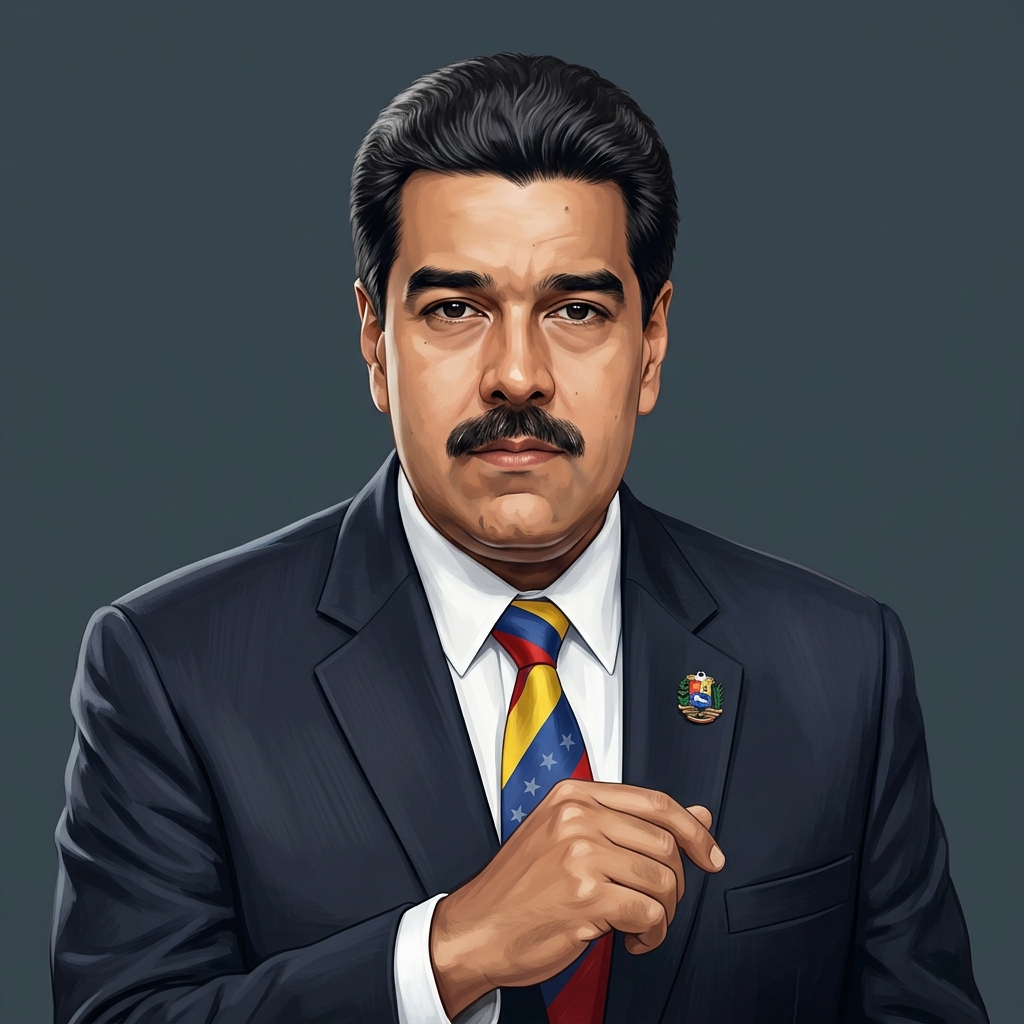
Venezuelan opposition leader María Machado returned to Venezuela after months in exile, having left just a month before the US government seized President Nicolás Maduro.
The article covers her return and the broader opposition to Maduro's rule.
*AI-generated summary of publicly available data. This is not an official statement of any party.
*AI-generated summary of publicly available statements and reporting. This is not an official statement of this party.
Supporters of María Machado argue that her return after exile affirms Venezuela's civic and cultural continuity, framing loyalty to the nation and its institutions as a tradition worth preserving against Maduro's rule.
Supporters of María Machado frame her return as a defense of Venezuela's civic and cultural continuity, arguing that restoring inherited democratic institutions and the rule of law is the true expression of national identity.
Supporters of María Machado counter that sovereignty belongs to the Venezuelan people, not one ruler, and that a movement drawing on millions of citizens expressing their will reflects the nation's identity more authentically than the defense of a single officeholder.
Supporters of María Machado argue that her return is a lawful exercise of her right to political participation, and they maintain that Maduro's seizure underscores the need to restore constitutional and electoral legitimacy in Venezuela.
Supporters of María Machado maintain that Maduro's seizure by the US underscores the illegitimacy of his rule, arguing that lawful, democratic authority—not force—should determine Venezuela's leadership and that Machado's return affirms the opposition's constitutional claim.
Supporters of María Machado counter that a president's legal standing rests on domestic constitutional legitimacy, not incumbency, so questioning a foreign enforcement action does not resolve whether Maduro's mandate itself was lawful.
Supporters of María Machado argue her exile and well-timed return show shrewd timing: leaving before the US seized Maduro kept her free to build leverage abroad, and returning after let her claim the political opening.
Supporters of María Machado argue her exile and return were calibrated to let US power remove Maduro while she reaped the political legitimacy—positioning herself as the inevitable successor without bearing the risk of his fall.
Supporters of María Machado counter that the timing proves the opposite: a movement savvy enough to shield its leader from arrest while keeping pressure on Maduro shows domestic strategy, not obedience—Washington reacts to her, not the reverse.
Supporters of María Machado argue that her return from exile is a moral assertion of individual courage and the right of Venezuelans to choose their own leaders freely.
Supporters of María Machado argue that her return to Venezuela reflects a moral commitment to her country's people, contending that legitimate authority rests on consent of the governed rather than coercion.
Supporters of María Machado counter that sovereignty belongs to the Venezuelan people, not to one ruler, so shielding a president from accountability for alleged crimes against his own citizens is the real moral violation.
Supporters of María Machado frame her return as a moral and religious witness, arguing that fidelity to conscience and the peaceful pursuit of justice outweigh exile, and pointing to her homecoming as evidence of steadfast faith.
Supporters of María Machado frame her return as a moral and spiritual homecoming, arguing that Venezuela’s plight under Maduro reflects a nation severed from its inherited faith and traditions, and that restoration requires reverence for God.
Supporters of María Machado counter that a sovereignty claim cannot sanctify a government that has turned on the faith of the Venezuelan people, citing the bishops' pastoral appeals for free elections as moral authority that no state institution can override.
*AI-generated summary of publicly available statements and reporting. This is not an official statement of this party.
Supporters of Nicolás Maduro argue that foreign seizure of a sitting president violates Venezuela's sovereignty, and they frame the defense of national identity and self-determination as the core cultural stake in the dispute.
Supporters of Nicolás Maduro frame his seizure by the US as an assault on Venezuelan cultural sovereignty, arguing that outside powers have no standing to decide the nation's leadership.
Supporters of Nicolás Maduro counter that loyalty to the nation is rooted in Bolivarian and Indigenous heritage, not in institutions built to serve foreign interests, and they argue that cultural continuity is defended through sovereignty rather than exile politics.
Supporters of Nicolás Maduro argue that a foreign power seizing a sitting president violates national sovereignty and international law, so Machado's return rests on an unlawful act rather than a legitimate legal process.
Supporters of Nicolás Maduro argue that a foreign power's seizure of a head of state violates national sovereignty and international law, so any return staged under that seizure lacks domestic legal legitimacy.
Supporters of Nicolás Maduro counter that the courts, not political actors, define electoral legitimacy, and they argue that pending legal proceedings against María Machado bar her candidacy under Venezuelan law.
Supporters of Nicolás Maduro argue that Machado's timing—departing before the US seizure and returning after—shows the opposition is managed by Washington, not a domestic movement.
Supporters of Nicolás Maduro argue that María Machado's exile and return were timed to foreign interests, treating her as a foreign-backed instrument rather than a domestic leader—so they frame sovereignty, not her, as the real stakes.
Supporters of Nicolás Maduro counter that the timing proves the opposite: her exit confirmed she negotiates abroad rather than governs at home, while the government's hold on institutions meant her return conceded ground on its terms.
Supporters of Nicolás Maduro argue that foreign seizure of a sitting president is an unlawful moral violation of national sovereignty, and they frame María Machado's return as complicity with outside intervention rather than legitimate domestic opposition.
Supporters of Nicolás Maduro argue that foreign seizure of a nation's president violates sovereignty, and that outside intervention—not domestic opposition—is the true moral threat to Venezuela's self-determination.
Supporters of Nicolás Maduro counter that framing the return as moral courage overlooks the sovereignty of Venezuela's institutions, which they argue hold the legitimate authority to decide who may stand for office.
Supporters of Nicolás Maduro frame his presidency as a sovereign, constitutionally grounded authority, arguing that Venezuela's institutions and Bolivarian tradition must not be subordinated to foreign power or to opposition figures they view as its instruments.
Supporters of Nicolás Maduro frame the seizure as foreign interference violating national sovereignty, arguing that Venezuela's destiny must be decided by its own people under God, not imposed by outside powers.
Supporters of Nicolás Maduro counter that Scripture commands obedience to established authority as divinely ordained, and they argue that Machado's homecoming, framed as faith, actually advances division rather than the peace and order that faithful witness should serve.
AI-generated summary of publicly available statements and reporting. This is not an official statement of this party.
Supporters of María Machado argue that her return after exile affirms Venezuela's civic and cultural continuity, framing loyalty to the nation and its institutions as a tradition worth preserving against Maduro's rule.
Supporters of María Machado frame her return as a defense of Venezuela's civic and cultural continuity, arguing that restoring inherited democratic institutions and the rule of law is the true expression of national identity.
Supporters of María Machado counter that sovereignty belongs to the Venezuelan people, not one ruler, and that a movement drawing on millions of citizens expressing their will reflects the nation's identity more authentically than the defense of a single officeholder.
Supporters of María Machado argue that her return is a lawful exercise of her right to political participation, and they maintain that Maduro's seizure underscores the need to restore constitutional and electoral legitimacy in Venezuela.
Supporters of María Machado maintain that Maduro's seizure by the US underscores the illegitimacy of his rule, arguing that lawful, democratic authority—not force—should determine Venezuela's leadership and that Machado's return affirms the opposition's constitutional claim.
Supporters of María Machado counter that a president's legal standing rests on domestic constitutional legitimacy, not incumbency, so questioning a foreign enforcement action does not resolve whether Maduro's mandate itself was lawful.
Supporters of María Machado argue her exile and well-timed return show shrewd timing: leaving before the US seized Maduro kept her free to build leverage abroad, and returning after let her claim the political opening.
Supporters of María Machado argue her exile and return were calibrated to let US power remove Maduro while she reaped the political legitimacy—positioning herself as the inevitable successor without bearing the risk of his fall.
Supporters of María Machado counter that the timing proves the opposite: a movement savvy enough to shield its leader from arrest while keeping pressure on Maduro shows domestic strategy, not obedience—Washington reacts to her, not the reverse.
Supporters of María Machado argue that her return from exile is a moral assertion of individual courage and the right of Venezuelans to choose their own leaders freely.
Supporters of María Machado argue that her return to Venezuela reflects a moral commitment to her country's people, contending that legitimate authority rests on consent of the governed rather than coercion.
Supporters of María Machado counter that sovereignty belongs to the Venezuelan people, not to one ruler, so shielding a president from accountability for alleged crimes against his own citizens is the real moral violation.
Supporters of María Machado frame her return as a moral and religious witness, arguing that fidelity to conscience and the peaceful pursuit of justice outweigh exile, and pointing to her homecoming as evidence of steadfast faith.
Supporters of María Machado frame her return as a moral and spiritual homecoming, arguing that Venezuela’s plight under Maduro reflects a nation severed from its inherited faith and traditions, and that restoration requires reverence for God.
Supporters of María Machado counter that a sovereignty claim cannot sanctify a government that has turned on the faith of the Venezuelan people, citing the bishops' pastoral appeals for free elections as moral authority that no state institution can override.
Supporters of Nicolás Maduro argue that foreign seizure of a sitting president violates Venezuela's sovereignty, and they frame the defense of national identity and self-determination as the core cultural stake in the dispute.
Supporters of Nicolás Maduro frame his seizure by the US as an assault on Venezuelan cultural sovereignty, arguing that outside powers have no standing to decide the nation's leadership.
Supporters of Nicolás Maduro counter that loyalty to the nation is rooted in Bolivarian and Indigenous heritage, not in institutions built to serve foreign interests, and they argue that cultural continuity is defended through sovereignty rather than exile politics.
Supporters of Nicolás Maduro argue that a foreign power seizing a sitting president violates national sovereignty and international law, so Machado's return rests on an unlawful act rather than a legitimate legal process.
Supporters of Nicolás Maduro argue that a foreign power's seizure of a head of state violates national sovereignty and international law, so any return staged under that seizure lacks domestic legal legitimacy.
Supporters of Nicolás Maduro counter that the courts, not political actors, define electoral legitimacy, and they argue that pending legal proceedings against María Machado bar her candidacy under Venezuelan law.
Supporters of Nicolás Maduro argue that Machado's timing—departing before the US seizure and returning after—shows the opposition is managed by Washington, not a domestic movement.
Supporters of Nicolás Maduro argue that María Machado's exile and return were timed to foreign interests, treating her as a foreign-backed instrument rather than a domestic leader—so they frame sovereignty, not her, as the real stakes.
Supporters of Nicolás Maduro counter that the timing proves the opposite: her exit confirmed she negotiates abroad rather than governs at home, while the government's hold on institutions meant her return conceded ground on its terms.
Supporters of Nicolás Maduro argue that foreign seizure of a sitting president is an unlawful moral violation of national sovereignty, and they frame María Machado's return as complicity with outside intervention rather than legitimate domestic opposition.
Supporters of Nicolás Maduro argue that foreign seizure of a nation's president violates sovereignty, and that outside intervention—not domestic opposition—is the true moral threat to Venezuela's self-determination.
Supporters of Nicolás Maduro counter that framing the return as moral courage overlooks the sovereignty of Venezuela's institutions, which they argue hold the legitimate authority to decide who may stand for office.
Supporters of Nicolás Maduro frame his presidency as a sovereign, constitutionally grounded authority, arguing that Venezuela's institutions and Bolivarian tradition must not be subordinated to foreign power or to opposition figures they view as its instruments.
Supporters of Nicolás Maduro frame the seizure as foreign interference violating national sovereignty, arguing that Venezuela's destiny must be decided by its own people under God, not imposed by outside powers.
Supporters of Nicolás Maduro counter that Scripture commands obedience to established authority as divinely ordained, and they argue that Machado's homecoming, framed as faith, actually advances division rather than the peace and order that faithful witness should serve.
María Machado left Venezuela just a month before the US government seized Nicolás Maduro.
The US government seized Venezuelan President Nicolás Maduro.
María Machado returned to Venezuela after months in exile.