Mecca Joint Defense Agreement supporters
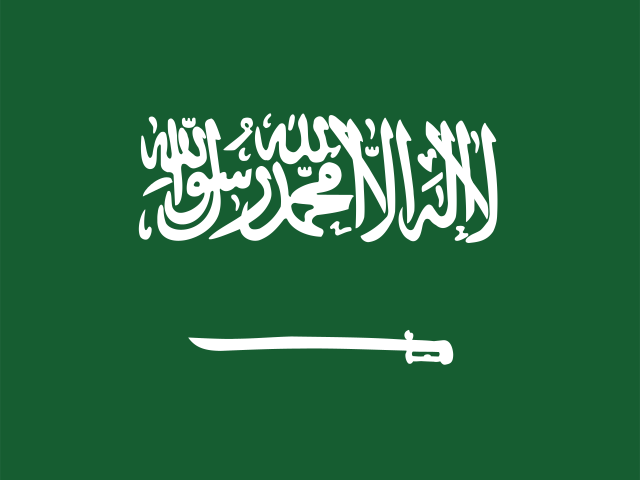
VS
Mecca Joint Defense Agreement skeptics

The Mecca Joint Defence Agreement is a defence pact between Saudi Arabia, Pakistan, and Turkey.
Signed into force on 7 August 2026, it is formally known as the Mecca Defence Alliance and has been described by observers as an 'Islamic NATO' because it includes a mutual defence clause similar to NATO's Article 5, under which an armed attack on one member is considered an attack on all three.
Supporters present the agreement as a step toward collective deterrence against aggression and regional instability, while skeptics question whether it will produce a real military response if an attack occurs.
The two sides disagree over what the agreement actually changes.
Supporters argue it meaningfully strengthens collective deterrence and signals a new alignment among the three countries, whereas skeptics contend it is unlikely to generate a genuine military response and may function more as a signal of Saudi Arabia's shift toward diversified security partnerships than as a binding war-fighting commitment.
The dispute also touches on how the pact should be interpreted in practice, including what practical commitments, if any, it creates for the signatories.
*AI-generated summary of publicly available data. This is not an official statement of any party.
*AI-generated summary of publicly available statements and reporting. This is not an official statement of this party.
Supporters argue the Mecca Joint Defense Agreement is a cultural statement: an assertion of sovereign identity that binds like-minded states, not a mere contract. In their view, shared faith and heritage give it legitimacy outside any single power's orbit.
Supporters of the Mecca Joint Defense Agreement argue it affirms shared cultural and religious identity, binding Saudi Arabia and partners through a common heritage rather than foreign frameworks.
Supporters of the Mecca Joint Defense Agreement counter that Gulf security customs already rest on shared tribal and Islamic solidarity, so the pact codifies that heritage rather than erasing it.
Supporters argue the Mecca Joint Defense Agreement remains legally binding mutual defense, and that Yemen tests whether signatories honor collective security obligations under international law.
Supporters argue the pact binds parties to lawful collective defense, so Yemen tests whether mutual obligations are honored under international law, not merely signaled.
Supporters of the Mecca Joint Defense Agreement counter that vagueness is legally irrelevant here, since the pact's text commits signatories to treat an attack on one as an attack on all, making collective defense binding under international law rather than mere signaling.
Supporters argue the Mecca pact is leverage, not charity: it binds partners to Saudi security priorities, and backing it signals alignment—skeptics ignore that influence, not armies, decides outcomes.
Supporters of the Mecca Joint Defense Agreement argue it is leverage, not sentiment: it binds partners to Saudi security and signals diversified deterrence, so Yemen tests utility, not intent.
Supporters counter that signals are the shield: the pact's public ambiguity deters Iran and locks Riyadh's partners into obligations, which is the leverage skeptics cite—deterrence working as designed, not failing.
Supporters of the Mecca Joint Defense Agreement argue that sovereign states have a moral right to form voluntary defense pacts, and that Saudi Arabia honoring its commitments to partners reflects legitimate self-defense, not aggression.
Supporters argue that the Mecca Joint Defense Agreement is a voluntary pact among sovereign states, so its moral legitimacy rests on consent, not coercion.
Supporters of the Mecca Joint Defense Agreement counter that the pact's moral duty is mutual defense against external aggression, not policing internal conflicts; sovereignty means Yemen's war must be resolved by its own parties, not imposed by outsiders.
Supporters argue the Mecca Joint Defense Agreement reflects a religious duty of Muslim solidarity, binding signatories to defend one another as an ummah, and they cite shared faith as proof the pact transcends shifting tactical alliances.
Supporters of the Mecca Joint Defense Agreement frame it as a pact upholding the sanctity of the holy cities and the collective duty to defend Muslim lands, arguing that fidelity to such sworn covenants is itself a religious obligation.
Supporters counter that the pact among believers reflects the Quran's own command to stand together in defense, and that trusting God and forming lawful alliances are not opposed but joined.
*AI-generated summary of publicly available statements and reporting. This is not an official statement of this party.
Supporters of Mecca Joint Defense Agreement skeptics argue the pact erodes inherited Gulf security customs, replacing established guardianship with untested partnerships that weaken cultural continuity and regional order.
Skeptics of the Mecca Joint Defense Agreement argue that importing outside security guarantees erodes the region's inherited tribal and dynastic customs of self-reliance, warning that cultural continuity, not new pacts, has long preserved order.
Skeptics counter that shared faith has never bound Gulf dynasties, whose rivalries and competing nationalisms long predate any pact, so the cultural framing masks an alliance of convenience.
Supporters of Mecca Joint Defense Agreement skeptics argue the pact's legal obligations are too vague to bind parties to collective defense, so it mainly signals Saudi Arabia's diversified partnerships rather than changing the military balance.
Supporters of Mecca Joint Defense Agreement skeptics argue that the pact's legal terms lack enforceable mechanisms, so it cannot bind parties to protect Yemen's ecology or civilian life.
Supporters of Mecca Joint Defense Agreement skeptics counter that the pact's clauses lack binding enforcement mechanisms, so Yemen cannot legally test collective security obligations under international law.
Skeptics of the Mecca Joint Defense Agreement argue it is a signal, not a shield: Saudi Arabia gains leverage and diversified partners while Yemen's conflict shows the pact changes little on the ground.
Skeptics of the Mecca Joint Defense Agreement argue it is mostly signaling: pacts deter only when credible, and Saudi Arabia's diversified partnerships suggest the agreement changes little in actual military balance.
Skeptics counter that leverage cuts both ways: binding partners to Riyadh's priorities also binds Riyadh to theirs, so the pact imports their conflicts rather than projecting Saudi power.
Supporters of Mecca Joint Defense Agreement skeptics argue that a pact unable to stop Yemen's suffering fails its moral test, since true collective security must protect civilians, not merely signal partnerships.
Supporters of Mecca Joint Defense Agreement skeptics argue that a pact unable to stop Yemen's suffering fails its moral purpose: protecting civilians, not just signaling partnerships.
Supporters of Mecca Joint Defense Agreement skeptics counter that a pact binding absolute monarchies to mutual defense morally implicates every signatory in abuses, since collective security without rights protections shields regimes rather than peoples.
Skeptics of the Mecca Joint Defense Agreement argue that scripture warns against trusting in alliances of men rather than in God, and that Yemen's conflict proves such pacts offer no true deliverance.
Skeptics of the Mecca Joint Defense Agreement argue that scripture warns against trusting in alliances of men rather than in God, and they maintain the pact's failure to alter Yemen's war shows it offers no divine or practical protection.
Skeptics counter that the Quran's mutual-defense verses were revealed in specific historical contexts, and scholars warn against invoking them to bind modern states whose rulers, not the ummah, control the armies.
AI-generated summary of publicly available statements and reporting. This is not an official statement of this party.
Supporters argue the Mecca Joint Defense Agreement is a cultural statement: an assertion of sovereign identity that binds like-minded states, not a mere contract. In their view, shared faith and heritage give it legitimacy outside any single power's orbit.
Supporters of the Mecca Joint Defense Agreement argue it affirms shared cultural and religious identity, binding Saudi Arabia and partners through a common heritage rather than foreign frameworks.
Supporters of the Mecca Joint Defense Agreement counter that Gulf security customs already rest on shared tribal and Islamic solidarity, so the pact codifies that heritage rather than erasing it.
Supporters argue the Mecca Joint Defense Agreement remains legally binding mutual defense, and that Yemen tests whether signatories honor collective security obligations under international law.
Supporters argue the pact binds parties to lawful collective defense, so Yemen tests whether mutual obligations are honored under international law, not merely signaled.
Supporters of the Mecca Joint Defense Agreement counter that vagueness is legally irrelevant here, since the pact's text commits signatories to treat an attack on one as an attack on all, making collective defense binding under international law rather than mere signaling.
Supporters argue the Mecca pact is leverage, not charity: it binds partners to Saudi security priorities, and backing it signals alignment—skeptics ignore that influence, not armies, decides outcomes.
Supporters of the Mecca Joint Defense Agreement argue it is leverage, not sentiment: it binds partners to Saudi security and signals diversified deterrence, so Yemen tests utility, not intent.
Supporters counter that signals are the shield: the pact's public ambiguity deters Iran and locks Riyadh's partners into obligations, which is the leverage skeptics cite—deterrence working as designed, not failing.
Supporters of the Mecca Joint Defense Agreement argue that sovereign states have a moral right to form voluntary defense pacts, and that Saudi Arabia honoring its commitments to partners reflects legitimate self-defense, not aggression.
Supporters argue that the Mecca Joint Defense Agreement is a voluntary pact among sovereign states, so its moral legitimacy rests on consent, not coercion.
Supporters of the Mecca Joint Defense Agreement counter that the pact's moral duty is mutual defense against external aggression, not policing internal conflicts; sovereignty means Yemen's war must be resolved by its own parties, not imposed by outsiders.
Supporters argue the Mecca Joint Defense Agreement reflects a religious duty of Muslim solidarity, binding signatories to defend one another as an ummah, and they cite shared faith as proof the pact transcends shifting tactical alliances.
Supporters of the Mecca Joint Defense Agreement frame it as a pact upholding the sanctity of the holy cities and the collective duty to defend Muslim lands, arguing that fidelity to such sworn covenants is itself a religious obligation.
Supporters counter that the pact among believers reflects the Quran's own command to stand together in defense, and that trusting God and forming lawful alliances are not opposed but joined.
Supporters of Mecca Joint Defense Agreement skeptics argue the pact erodes inherited Gulf security customs, replacing established guardianship with untested partnerships that weaken cultural continuity and regional order.
Skeptics of the Mecca Joint Defense Agreement argue that importing outside security guarantees erodes the region's inherited tribal and dynastic customs of self-reliance, warning that cultural continuity, not new pacts, has long preserved order.
Skeptics counter that shared faith has never bound Gulf dynasties, whose rivalries and competing nationalisms long predate any pact, so the cultural framing masks an alliance of convenience.
Supporters of Mecca Joint Defense Agreement skeptics argue the pact's legal obligations are too vague to bind parties to collective defense, so it mainly signals Saudi Arabia's diversified partnerships rather than changing the military balance.
Supporters of Mecca Joint Defense Agreement skeptics argue that the pact's legal terms lack enforceable mechanisms, so it cannot bind parties to protect Yemen's ecology or civilian life.
Supporters of Mecca Joint Defense Agreement skeptics counter that the pact's clauses lack binding enforcement mechanisms, so Yemen cannot legally test collective security obligations under international law.
Skeptics of the Mecca Joint Defense Agreement argue it is a signal, not a shield: Saudi Arabia gains leverage and diversified partners while Yemen's conflict shows the pact changes little on the ground.
Skeptics of the Mecca Joint Defense Agreement argue it is mostly signaling: pacts deter only when credible, and Saudi Arabia's diversified partnerships suggest the agreement changes little in actual military balance.
Skeptics counter that leverage cuts both ways: binding partners to Riyadh's priorities also binds Riyadh to theirs, so the pact imports their conflicts rather than projecting Saudi power.
Supporters of Mecca Joint Defense Agreement skeptics argue that a pact unable to stop Yemen's suffering fails its moral test, since true collective security must protect civilians, not merely signal partnerships.
Supporters of Mecca Joint Defense Agreement skeptics argue that a pact unable to stop Yemen's suffering fails its moral purpose: protecting civilians, not just signaling partnerships.
Supporters of Mecca Joint Defense Agreement skeptics counter that a pact binding absolute monarchies to mutual defense morally implicates every signatory in abuses, since collective security without rights protections shields regimes rather than peoples.
Skeptics of the Mecca Joint Defense Agreement argue that scripture warns against trusting in alliances of men rather than in God, and that Yemen's conflict proves such pacts offer no true deliverance.
Skeptics of the Mecca Joint Defense Agreement argue that scripture warns against trusting in alliances of men rather than in God, and they maintain the pact's failure to alter Yemen's war shows it offers no divine or practical protection.
Skeptics counter that the Quran's mutual-defense verses were revealed in specific historical contexts, and scholars warn against invoking them to bind modern states whose rulers, not the ummah, control the armies.
A defense agreement involving Saudi Arabia that is being tested by the conflict in Yemen.
A Politics Stack Exchange question examined what practical commitments the Mecca Joint Defence Agreement creates, noting that an armed attack on Saudi Arabia, Türkiye, or Pakistan would reportedly be considered an attack on all three.
Saudi Arabia, Turkey, and Pakistan signed the Mecca Joint Defence Agreement, formally the Mecca Defence Alliance, into force on 7 August 2026. The pact reportedly states that an armed attack on any of the three countries would be considered an attack on all.
Reuters reported that Saudi Arabia, Turkey, and Pakistan pledged mutual defence through the Mecca Joint Defence Agreement, which is intended to strengthen collective deterrence against any act of aggression.