France

VS
Mexico
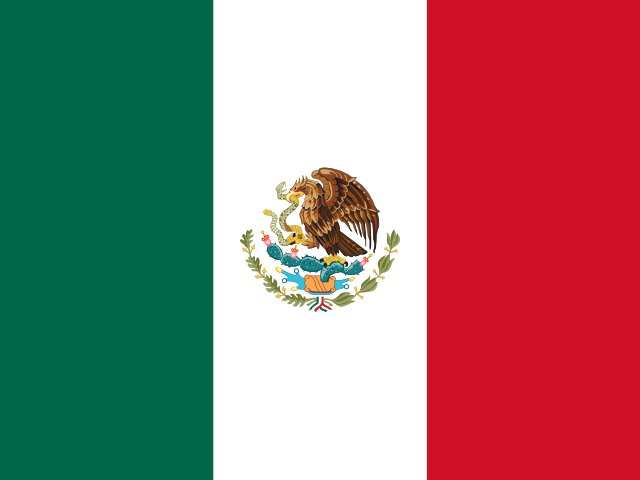
Mexico and France are two national teams whose football encounters have produced notable results in international competitions.
Mexico represents the Mexican national football federation in global tournaments, while France represents the French national football federation and is a traditional power in world football.
The two sides have met in competitive matches, including a 2010 FIFA World Cup group-stage game and a 2021 Olympic men's football tournament match.
These meetings have resulted in outcomes that affect each team's standing in the respective competitions, creating a competitive rivalry on the pitch.
Beyond the scorelines, matches between Mexico and France carry significance for tournament progression and national pride, with each encounter adding to the history between the two football nations.
*AI-generated summary of publicly available data. This is not an official statement of any party.
*AI-generated summary of publicly available statements and reporting. This is not an official statement of this party.
Supporters of France argue that the manuscript's two-century residence in French institutions makes it part of a shared world heritage, and that loaning it preserves both cultural continuity and international trust.
Supporters of France contend that the manuscript's two centuries in French collections made it part of France's cultural heritage too, and that loan terms preserve both nations' access rather than severing that shared history.
Supporters of France counter that the manuscript has been conserved and displayed in French institutions for centuries, making it part of France's own cultural continuity rather than a mere possession.
Supporters of France maintain the manuscript's loan, not transfer, reflects lawful title under French law, and that repatriation claims must be resolved through binding legal agreements, not unilateral demands.
Supporters of France argue the manuscript's loan, not transfer, reflects lawful title under French law and standard museum practice; they maintain that loan terms honor cultural access without prejudging ownership.
Supporters of France counter that under the 1982 Malraux law and standard bailment doctrine, Mexico's voluntary loan vested lawful custody in France, and no court has ever ruled title reverted.
Supporters of France argue that loaning the Aztec manuscript preserves leverage: France keeps legal title, gains goodwill, and retains a bargaining chip, since permanent return would surrender both the artifact and future influence.
Supporters of France argue that loans, not transfers, preserve leverage: Mexico gains symbolic access while France retains legal title, ensuring future cultural negotiations still run through Paris.
Supporters of France counter that possession without enforcement is hollow: Mexico's leverage erodes the moment France's creditors or allies price in the risk, since a hold no outside power recognizes yields nothing but a paper claim.
Supporters of France argue that loaning the manuscript, rather than permanently returning it, reflects legitimate legal ownership and responsible stewardship, since France has preserved the artifact for two centuries.
Supporters of France argue that loaning the Aztec manuscript honors Mexico's cultural ties while preserving France's legal custody; they maintain that ownership claims must rest on verifiable legal title, not sentiment alone.
Supporters of France counter that moral justice also weighs public access: the manuscript has been conserved in Paris for centuries, and they argue that return would risk its preservation for future generations.
Supporters of France argue that the manuscript's long safekeeping in French institutions reflects a providential trust, and that its loan to Mexico honors both nations without severing the custodial bond they see as ordained.
Supporters of France argue the manuscript's long custodianship in French institutions reflects a providential trust, and that loaning it honors both Mexico's heritage and the stability of lawful possession.
Supporters of France counter that a nation’s cultural patrimony is held in trust under its own laws and sacred traditions, not surrendered to foreign spiritual claims.
*AI-generated summary of publicly available statements and reporting. This is not an official statement of this party.
Supporters of Mexico argue the manuscript is a cultural inheritance, not French property, and that a loan cannot substitute for permanent repatriation of heritage taken during colonial rule.
Supporters of Mexico argue the manuscript is cultural heritage, not French property, so a loan cannot undo two centuries of dispossession. In their view, only permanent repatriation honors the Aztec past.
Supporters of Mexico counter that the codex was produced by Mexica scribes within Mexico's own cultural tradition, making it a founding document of Mexican identity, not a French artifact, and that its return honors that origin.
Supporters of Mexico argue that legal ownership of the Aztec manuscript remains unsettled, since a loan merely transfers possession, not title, and they maintain that cultural heritage claims should be resolved under law rather than by France's continued retention.
Supporters of Mexico argue that legal ownership of the Aztec manuscript never legitimately transferred, so France holds stolen cultural property and must repatriate it permanently rather than by loan.
Supporters of Mexico counter that under Mexican law, the manuscript is national patrimony whose export required state authorization, so any loan agreement cannot cure defective title.
Supporters of Mexico see the loan as leverage, not resolution: possession now sits with Mexico, and they argue France's hold weakens each year it stays.
Supporters of Mexico read the loan as leverage, not concession: possession sets precedent, and time in Mexican hands strengthens their claim while France’s incentive to keep the manuscript weakens.
Supporters of Mexico counter that leverage only matters if the holder can bear the cost of refusal; a title no one recognizes as legitimate converts goodwill into resentment and hands rivals a permanent grievance to trade on.
Supporters of Mexico argue that moral justice requires permanent repatriation, not a loan, since the Aztec manuscript was taken from its homeland and belongs to the people whose ancestors created it.
Supporters of Mexico argue that moral justice requires France to permanently return the Aztec manuscript, since a loan merely perpetuates a colonial-era wrong rather than repairing it.
Supporters of Mexico counter that stewardship cannot launder title: preserving a manuscript taken from a conquered people does not make its retention moral, and divine law commands restitution of stolen goods.
Supporters of Mexico argue the manuscript carries sacred ancestral memory, so its return is a spiritual duty owed to the dead, not merely a legal loan to be negotiated by France.
Supporters of Mexico argue the manuscript carries sacred ancestral memory, and returning it only on loan denies the spiritual restitution owed to the people whose faith it embodies.
Supporters of Mexico counter that stewardship belongs to the nation whose sacred history the manuscript records, and that providence, not possession, orders its return.
AI-generated summary of publicly available statements and reporting. This is not an official statement of this party.
Supporters of France argue that the manuscript's two-century residence in French institutions makes it part of a shared world heritage, and that loaning it preserves both cultural continuity and international trust.
Supporters of France contend that the manuscript's two centuries in French collections made it part of France's cultural heritage too, and that loan terms preserve both nations' access rather than severing that shared history.
Supporters of France counter that the manuscript has been conserved and displayed in French institutions for centuries, making it part of France's own cultural continuity rather than a mere possession.
Supporters of France maintain the manuscript's loan, not transfer, reflects lawful title under French law, and that repatriation claims must be resolved through binding legal agreements, not unilateral demands.
Supporters of France argue the manuscript's loan, not transfer, reflects lawful title under French law and standard museum practice; they maintain that loan terms honor cultural access without prejudging ownership.
Supporters of France counter that under the 1982 Malraux law and standard bailment doctrine, Mexico's voluntary loan vested lawful custody in France, and no court has ever ruled title reverted.
Supporters of France argue that loaning the Aztec manuscript preserves leverage: France keeps legal title, gains goodwill, and retains a bargaining chip, since permanent return would surrender both the artifact and future influence.
Supporters of France argue that loans, not transfers, preserve leverage: Mexico gains symbolic access while France retains legal title, ensuring future cultural negotiations still run through Paris.
Supporters of France counter that possession without enforcement is hollow: Mexico's leverage erodes the moment France's creditors or allies price in the risk, since a hold no outside power recognizes yields nothing but a paper claim.
Supporters of France argue that loaning the manuscript, rather than permanently returning it, reflects legitimate legal ownership and responsible stewardship, since France has preserved the artifact for two centuries.
Supporters of France argue that loaning the Aztec manuscript honors Mexico's cultural ties while preserving France's legal custody; they maintain that ownership claims must rest on verifiable legal title, not sentiment alone.
Supporters of France counter that moral justice also weighs public access: the manuscript has been conserved in Paris for centuries, and they argue that return would risk its preservation for future generations.
Supporters of France argue that the manuscript's long safekeeping in French institutions reflects a providential trust, and that its loan to Mexico honors both nations without severing the custodial bond they see as ordained.
Supporters of France argue the manuscript's long custodianship in French institutions reflects a providential trust, and that loaning it honors both Mexico's heritage and the stability of lawful possession.
Supporters of France counter that a nation’s cultural patrimony is held in trust under its own laws and sacred traditions, not surrendered to foreign spiritual claims.
Supporters of Mexico argue the manuscript is a cultural inheritance, not French property, and that a loan cannot substitute for permanent repatriation of heritage taken during colonial rule.
Supporters of Mexico argue the manuscript is cultural heritage, not French property, so a loan cannot undo two centuries of dispossession. In their view, only permanent repatriation honors the Aztec past.
Supporters of Mexico counter that the codex was produced by Mexica scribes within Mexico's own cultural tradition, making it a founding document of Mexican identity, not a French artifact, and that its return honors that origin.
Supporters of Mexico argue that legal ownership of the Aztec manuscript remains unsettled, since a loan merely transfers possession, not title, and they maintain that cultural heritage claims should be resolved under law rather than by France's continued retention.
Supporters of Mexico argue that legal ownership of the Aztec manuscript never legitimately transferred, so France holds stolen cultural property and must repatriate it permanently rather than by loan.
Supporters of Mexico counter that under Mexican law, the manuscript is national patrimony whose export required state authorization, so any loan agreement cannot cure defective title.
Supporters of Mexico see the loan as leverage, not resolution: possession now sits with Mexico, and they argue France's hold weakens each year it stays.
Supporters of Mexico read the loan as leverage, not concession: possession sets precedent, and time in Mexican hands strengthens their claim while France’s incentive to keep the manuscript weakens.
Supporters of Mexico counter that leverage only matters if the holder can bear the cost of refusal; a title no one recognizes as legitimate converts goodwill into resentment and hands rivals a permanent grievance to trade on.
Supporters of Mexico argue that moral justice requires permanent repatriation, not a loan, since the Aztec manuscript was taken from its homeland and belongs to the people whose ancestors created it.
Supporters of Mexico argue that moral justice requires France to permanently return the Aztec manuscript, since a loan merely perpetuates a colonial-era wrong rather than repairing it.
Supporters of Mexico counter that stewardship cannot launder title: preserving a manuscript taken from a conquered people does not make its retention moral, and divine law commands restitution of stolen goods.
Supporters of Mexico argue the manuscript carries sacred ancestral memory, so its return is a spiritual duty owed to the dead, not merely a legal loan to be negotiated by France.
Supporters of Mexico argue the manuscript carries sacred ancestral memory, and returning it only on loan denies the spiritual restitution owed to the people whose faith it embodies.
Supporters of Mexico counter that stewardship belongs to the nation whose sacred history the manuscript records, and that providence, not possession, orders its return.
The Aztec manuscript returns to Mexico from France after two centuries, but only on loan.
In the men's Olympic football tournament, Mexico's under-23 team defeated France's under-23 team by a score of 4-1.
In a group-stage match of the 2010 FIFA World Cup, Mexico beat France 2-0, with goals from Javier 'Chicharito' Hernandez and Cuauhtemoc Blanco. This was Mexico's first-ever win against France.