Miguel Maduro

VS
Gianni Infantino
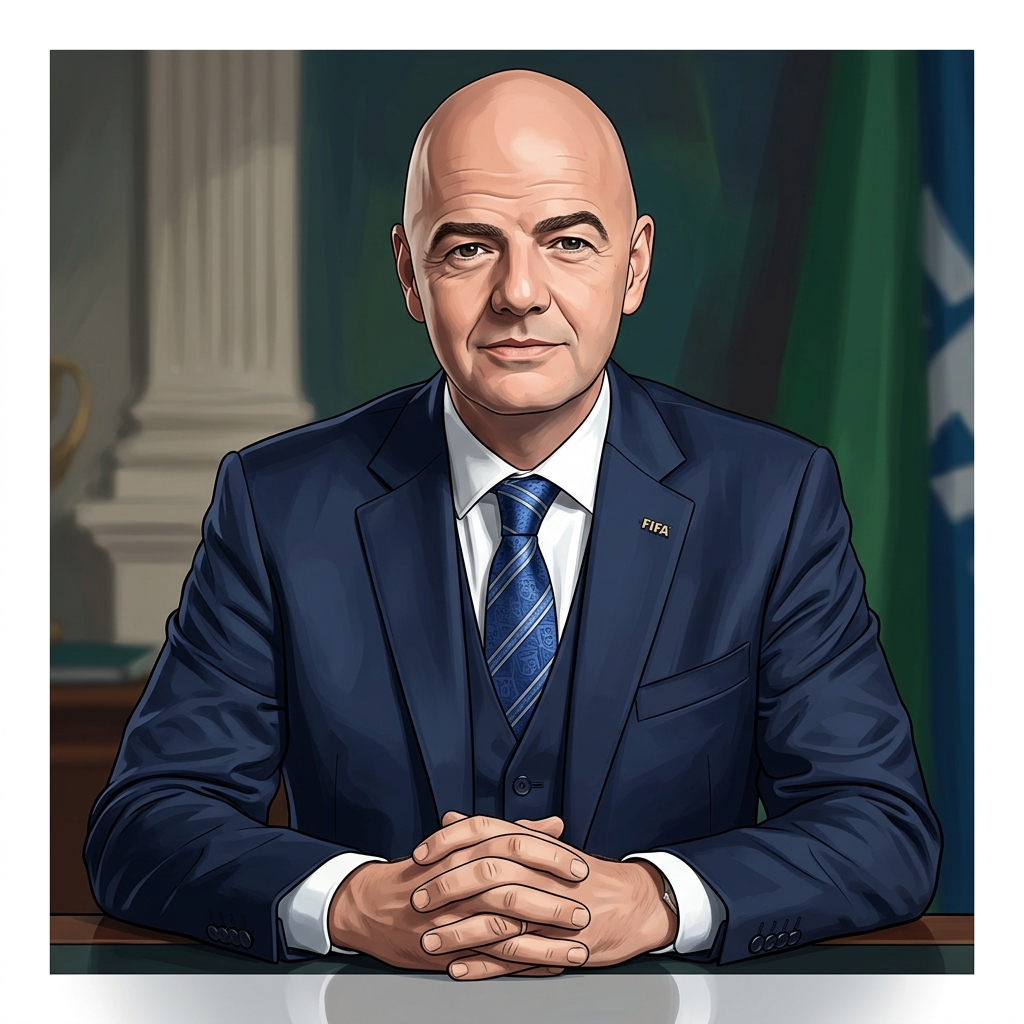
Former FIFA governance chief Miguel Maduro argues that Gianni Infantino is ineligible for re-election because FIFA's statutes limit the president to three terms.
Infantino is seeking another term, creating a dispute over the interpretation of the rules.
*AI-generated summary of publicly available data. This is not an official statement of any party.
*AI-generated summary of publicly available statements and reporting. This is not an official statement of this party.
Supporters of Miguel Maduro argue that FIFA’s term limits reflect a cultural commitment to accountability, and they maintain that honoring the statutes’ three-term cap matters more than any single leader’s continuity.
Supporters of Miguel Maduro argue that FIFA’s term limits embody a cultural commitment to accountability, and that bending the statutes for Infantino would erode the governance norms the organization claims to uphold.
Supporters of Miguel Maduro counter that FIFA's governance culture long treated statutes as instruments of leadership convenience, so deferring to "established practice" risks canonizing the very culture the reforms were meant to change.
Supporters of Miguel Maduro argue that FIFA's own statutes cap the presidency at three terms, so Gianni Infantino's bid for re-election is legally ineligible regardless of internal support.
Supporters of Miguel Maduro argue that FIFA’s statutes plainly cap the presidency at three terms, making Gianni Infantino legally ineligible for re-election regardless of how the rules are interpreted.
Supporters of Miguel Maduro counter that a legal text's meaning cannot be settled by the very body whose conduct it constrains, so FIFA cannot be sole judge of its own statutes' application.
Supporters of Miguel Maduro argue that FIFA’s statutes, not Infantino’s incumbency, must govern re-election, framing strict term limits as the only check on entrenched power.
Supporters of Miguel Maduro argue that FIFA’s term limits are only credible if enforced against the most powerful figure in the room, and they maintain that letting Infantino reinterpret the rules would confirm that authority, not statute, decides who leads.
Supporters of Miguel Maduro counter that statutory interpretation is itself the lever of control: whoever defines the text controls the outcome, so Infantino's machinery advantage, not neutral reading, decides the dispute.
Supporters of Miguel Maduro argue that term limits are a moral commitment, not a technicality, and that FIFA's rules exist to prevent any leader from entrenching power beyond three terms.
Supporters of Miguel Maduro argue that term limits are a moral commitment, not a technicality, and that holding FIFA's president to the three-term rule protects fairness and accountability for the whole football community.
Supporters of Miguel Maduro counter that rules honored only through self-serving interpretation by the body they constrain are not fairly honored at all, and that fairness demands the same limits apply to those who wrote them.
Supporters of Miguel Maduro argue that FIFA’s statutory term limits carry a quasi-covenantal authority, and that honoring the three-term cap preserves the institutional order and trust on which football’s governance depends.
Supporters of Miguel Maduro argue that FIFA's term limits function as a covenant that must be honored, and they maintain that upholding the statutes' plain text preserves the institutional order and trust on which the organization depends.
Supporters of Miguel Maduro counter that stewardship detached from the letter of the statutes invites arbitrary rule, arguing that inherited law binds the institution precisely because it outranks any officeholder's judgment.
*AI-generated summary of publicly available statements and reporting. This is not an official statement of this party.
Supporters of Gianni Infantino argue that FIFA’s institutional stability and continuity depend on respecting established leadership, and they contend that the statutes should be read consistently with FIFA’s own longstanding governance practice.
Supporters of Gianni Infantino argue that FIFA’s statutes are ambiguous about term limits, so continuity of leadership preserves institutional order and tradition.
Supporters of Gianni Infantino counter that football’s culture prizes stability and stewardship, arguing that a leader’s continuity can itself preserve the institution’s traditions better than rigid adherence to a term cap.
Supporters of Gianni Infantino argue that FIFA's statutes, as the governing legal text, must be interpreted by the competent FIFA bodies, not by a former official, and that any eligibility question should be resolved through those institutional procedures.
Supporters of Gianni Infantino argue that FIFA's statutes are ambiguous on term limits, so the legal reading favors his eligibility; they maintain that the rules must be interpreted as written, not by a former official's opinion.
Supporters of Gianni Infantino counter that the relevant FIFA statute counts only terms begun after the 2016 reforms, so the pre-2016 partial term does not count toward the cap, leaving the bid legally eligible.
Supporters of Gianni Infantino argue the term limit dispute is a question of statutory interpretation, not fact, and that control over FIFA's own governance machinery—not Maduro's reading—will decide whether the re-election proceeds.
Supporters of Gianni Infantino argue that term-limit readings are contested, so the pragmatic play is to let FIFA’s own governance bodies interpret the statutes rather than concede to a former official’s unilateral verdict.
Supporters of Gianni Infantino counter that term limits are themselves a statutory artifact, and that whoever controls the congress and the votes controls how those statutes get read—so the paper rule never binds unless the majority lets it.
Supporters of Gianni Infantino argue that FIFA's own statutes and member associations, not a former official's reading, should settle term eligibility, and that an organization honoring its rules fairly matters more than one critic's interpretation.
Supporters of Gianni Infantino argue that fairness demands respecting the statutes as written and any ambiguity resolved through FIFA's own governance channels, not unilateral declarations by a former official.
Supporters of Gianni Infantino counter that the moral duty is to honor the membership's democratic will, and that a rule invoked to override member associations' choices serves procedure over the people the game exists to serve.
Supporters of Gianni Infantino argue his re-election bid honors the statutes' spirit, contending that faithful stewardship of FIFA's rules, not a literal reading, should guide governance.
Supporters of Gianni Infantino maintain that the statutes must be read in good faith and in light of their purpose, arguing that a legalistic reading by Miguel Maduro ignores the intent behind the term limits.
Supporters of Gianni Infantino counter that a covenant's authority rests on the consent of the parties bound by it, and they argue that the member associations, as football's sovereign legislators, retain the standing to amend statutes through lawful procedures.
AI-generated summary of publicly available statements and reporting. This is not an official statement of this party.
Supporters of Miguel Maduro argue that FIFA’s term limits reflect a cultural commitment to accountability, and they maintain that honoring the statutes’ three-term cap matters more than any single leader’s continuity.
Supporters of Miguel Maduro argue that FIFA’s term limits embody a cultural commitment to accountability, and that bending the statutes for Infantino would erode the governance norms the organization claims to uphold.
Supporters of Miguel Maduro counter that FIFA's governance culture long treated statutes as instruments of leadership convenience, so deferring to "established practice" risks canonizing the very culture the reforms were meant to change.
Supporters of Miguel Maduro argue that FIFA's own statutes cap the presidency at three terms, so Gianni Infantino's bid for re-election is legally ineligible regardless of internal support.
Supporters of Miguel Maduro argue that FIFA’s statutes plainly cap the presidency at three terms, making Gianni Infantino legally ineligible for re-election regardless of how the rules are interpreted.
Supporters of Miguel Maduro counter that a legal text's meaning cannot be settled by the very body whose conduct it constrains, so FIFA cannot be sole judge of its own statutes' application.
Supporters of Miguel Maduro argue that FIFA’s statutes, not Infantino’s incumbency, must govern re-election, framing strict term limits as the only check on entrenched power.
Supporters of Miguel Maduro argue that FIFA’s term limits are only credible if enforced against the most powerful figure in the room, and they maintain that letting Infantino reinterpret the rules would confirm that authority, not statute, decides who leads.
Supporters of Miguel Maduro counter that statutory interpretation is itself the lever of control: whoever defines the text controls the outcome, so Infantino's machinery advantage, not neutral reading, decides the dispute.
Supporters of Miguel Maduro argue that term limits are a moral commitment, not a technicality, and that FIFA's rules exist to prevent any leader from entrenching power beyond three terms.
Supporters of Miguel Maduro argue that term limits are a moral commitment, not a technicality, and that holding FIFA's president to the three-term rule protects fairness and accountability for the whole football community.
Supporters of Miguel Maduro counter that rules honored only through self-serving interpretation by the body they constrain are not fairly honored at all, and that fairness demands the same limits apply to those who wrote them.
Supporters of Miguel Maduro argue that FIFA’s statutory term limits carry a quasi-covenantal authority, and that honoring the three-term cap preserves the institutional order and trust on which football’s governance depends.
Supporters of Miguel Maduro argue that FIFA's term limits function as a covenant that must be honored, and they maintain that upholding the statutes' plain text preserves the institutional order and trust on which the organization depends.
Supporters of Miguel Maduro counter that stewardship detached from the letter of the statutes invites arbitrary rule, arguing that inherited law binds the institution precisely because it outranks any officeholder's judgment.
Supporters of Gianni Infantino argue that FIFA’s institutional stability and continuity depend on respecting established leadership, and they contend that the statutes should be read consistently with FIFA’s own longstanding governance practice.
Supporters of Gianni Infantino argue that FIFA’s statutes are ambiguous about term limits, so continuity of leadership preserves institutional order and tradition.
Supporters of Gianni Infantino counter that football’s culture prizes stability and stewardship, arguing that a leader’s continuity can itself preserve the institution’s traditions better than rigid adherence to a term cap.
Supporters of Gianni Infantino argue that FIFA's statutes, as the governing legal text, must be interpreted by the competent FIFA bodies, not by a former official, and that any eligibility question should be resolved through those institutional procedures.
Supporters of Gianni Infantino argue that FIFA's statutes are ambiguous on term limits, so the legal reading favors his eligibility; they maintain that the rules must be interpreted as written, not by a former official's opinion.
Supporters of Gianni Infantino counter that the relevant FIFA statute counts only terms begun after the 2016 reforms, so the pre-2016 partial term does not count toward the cap, leaving the bid legally eligible.
Supporters of Gianni Infantino argue the term limit dispute is a question of statutory interpretation, not fact, and that control over FIFA's own governance machinery—not Maduro's reading—will decide whether the re-election proceeds.
Supporters of Gianni Infantino argue that term-limit readings are contested, so the pragmatic play is to let FIFA’s own governance bodies interpret the statutes rather than concede to a former official’s unilateral verdict.
Supporters of Gianni Infantino counter that term limits are themselves a statutory artifact, and that whoever controls the congress and the votes controls how those statutes get read—so the paper rule never binds unless the majority lets it.
Supporters of Gianni Infantino argue that FIFA's own statutes and member associations, not a former official's reading, should settle term eligibility, and that an organization honoring its rules fairly matters more than one critic's interpretation.
Supporters of Gianni Infantino argue that fairness demands respecting the statutes as written and any ambiguity resolved through FIFA's own governance channels, not unilateral declarations by a former official.
Supporters of Gianni Infantino counter that the moral duty is to honor the membership's democratic will, and that a rule invoked to override member associations' choices serves procedure over the people the game exists to serve.
Supporters of Gianni Infantino argue his re-election bid honors the statutes' spirit, contending that faithful stewardship of FIFA's rules, not a literal reading, should guide governance.
Supporters of Gianni Infantino maintain that the statutes must be read in good faith and in light of their purpose, arguing that a legalistic reading by Miguel Maduro ignores the intent behind the term limits.
Supporters of Gianni Infantino counter that a covenant's authority rests on the consent of the parties bound by it, and they argue that the member associations, as football's sovereign legislators, retain the standing to amend statutes through lawful procedures.
Miguel Maduro insists Gianni Infantino cannot serve more than three terms, pointing to FIFA's statutes.