Milei government

VS
Protesters
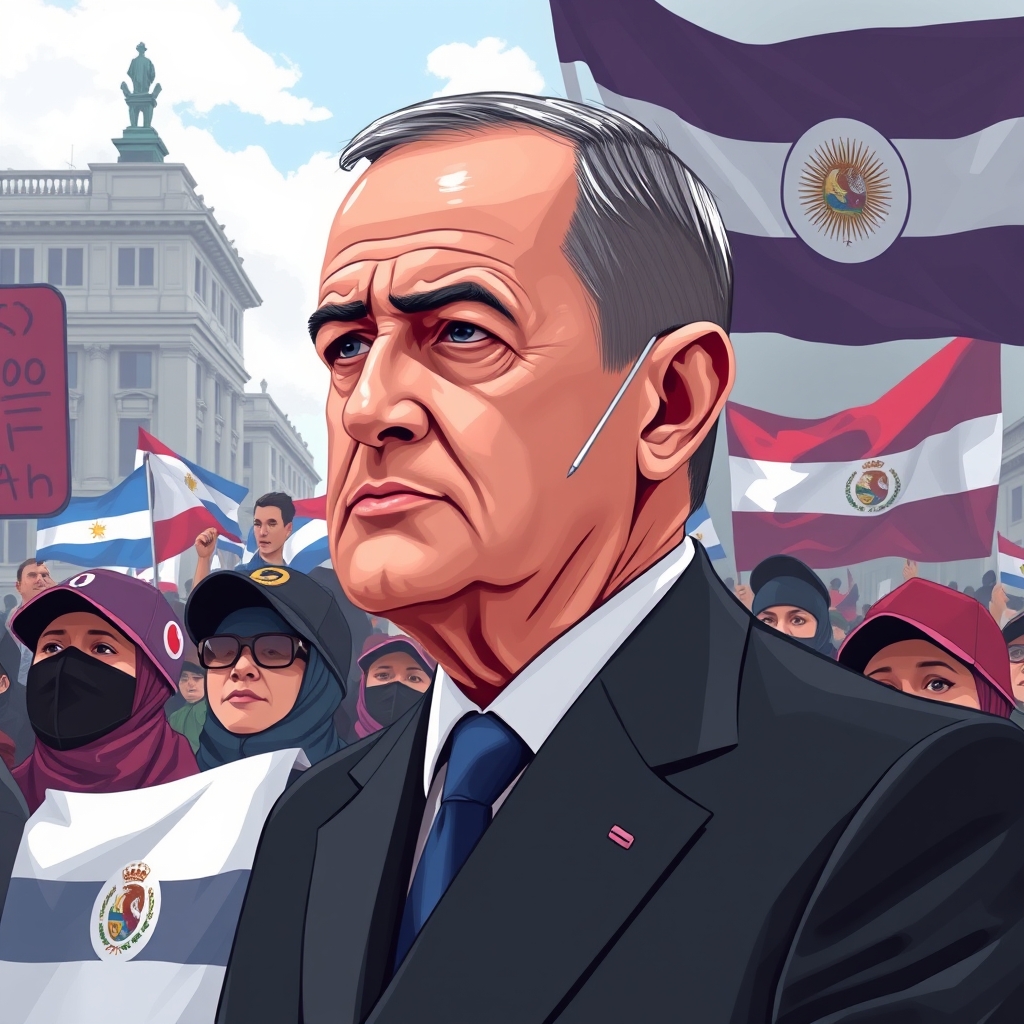
The Milei government, led by libertarian President Javier Milei, has pursued a series of economic and social reforms since taking office in December 2023.
These include austerity measures, cuts to public university funding, and proposed changes to labour and property laws.
Protesters, including university students, teachers, unions, and other citizens, have opposed these reforms, accusing the government of contributing to rising inflation and poverty and of weakening Argentina's democratic institutions.
The conflict arises from the government's reform agenda, which protesters argue threatens public services, workers' rights, and national sovereignty.
Specific disputes include the university funding law, labour reform, and a private property bill that was partially amended after protests.
The government, in turn, has signaled a hard line on protests, threatening to cut off public aid to those who block thoroughfares and using facial recognition to bill protesters for security costs.
These tensions have led to repeated large-scale demonstrations, some of which have turned violent, with police using tear gas against protesters in Buenos Aires.
The stakes are high, as the reforms touch on fundamental aspects of Argentina's social contract and economic direction.
*AI-generated summary of publicly available data. This is not an official statement of any party.
*AI-generated summary of publicly available statements and reporting. This is not an official statement of this party.
Supporters of Milei government argue that the private property bill upholds Argentina's cultural tradition of legal order, where peaceful protest must yield to lawful institutions and national stability.
Supporters of Milei government argue that the private property bill upholds Argentina’s cultural tradition of lawful ownership, viewing protests as a disruption of social order rather than a defense of national sovereignty.
Supporters of the Milei government counter that Argentina's cultural bond to the land is preserved through private stewardship, not state control, and that foreign investment renews, rather than erases, national sovereignty.
Supporters of the Milei government argue that the private property bill's legal framework strengthens rule of law and contract rights, making police enforcement a lawful response to obstructing legislative process.
Supporters of Milei government argue the amended bill’s removal of foreign land purchase restrictions still legally upholds national sovereignty, as property rights remain constitutionally protected, framing protests as opposition to lawful reform.
Supporters of Milei government counter that the amended bill remains within constitutional bounds, as Congress retained legislative authority over public land, and tear gas was a lawful measure under protest regulations to prevent property damage.
Supporters of the Milei government argue the protests are a predictable backlash from vested interests defending the old status quo, noting the bill’s amendment on foreign land purchases proves the state’s flexibility, not weakness. They maintain that tear gas is a calculated.
Supporters of the Milei government argue the protests are a predictable power play by vested interests defending state control, and the property bill's amendment on foreign land is a tactical concession to isolate hardliners while securing the core reform.
Supporters of Milei government counter that the retreat on land sales was a tactical concession, not a confession, and tear gas signals deterrence, not desperation; pragmatism here serves state stability, not elite interests.
Supporters of Milei government argue that private property rights are a moral foundation of human dignity, making the bill a just step toward progress despite protest disruption.
Supporters of the Milei government argue that peaceful protest is a moral right, but blocking streets and clashing with police endangers public safety, undermining the democratic order the bill aims to strengthen.
Supporters of the Milei government counter that defending national sovereignty means securing property rights, not preserving unproductive land; they argue the moral failure lies in blocking investment that lifts millions out of poverty, while tear gas protects lawful order from.
Supporters of the Milei government argue that private property rights uphold a divine moral order, where lawful ownership preserves social stability and national sovereignty against disorderly protest.
Supporters of the Milei government argue that the property bill upholds the natural right of ownership, a divine mandate for order and stewardship that safeguards national stability.
Supporters of Milei government counter that scripture also commands respect for lawful authority and the fruits of honest labor, arguing that private property rights reflect divine order and human responsibility, not defiance of stewardship.
*AI-generated summary of publicly available statements and reporting. This is not an official statement of this party.
Supporters of Protesters argue that Milei's bill erases Argentina's cultural bond to the land, turning a shared national inheritance into foreign-owned commodities. They maintain this threatens the country's identity as a sovereign people.
Supporters of Protesters argue that the bill erodes Argentina's cultural identity by treating ancestral land as a commodity, and they view the police response as silencing their defense of national heritage.
Supporters of Protesters counter that Argentina’s cultural tradition is rooted in collective memory of resistance, not legal order, and that the bill erases the nation’s identity of street-level solidarity, which has long defined its social fabric.
Supporters of Protesters argue that the bill, even amended, violates constitutional protections of public land and national sovereignty, and they point to police tear gas as evidence of disproportionate legal enforcement against lawful assembly.
Supporters of Protesters argue that the private property bill, as amended, still violates constitutional guarantees of public land stewardship, and they maintain that legal recourse against police dispersal with tear gas underscores the state's failure to uphold due process for.
Supporters of the Protesters counter that the bill's legal framework, while formal, bypasses constitutional guarantees of assembly and due process, rendering police enforcement an unlawful overreach under international law.
Supporters of Protesters argue the bill is a power grab dressed as reform, and the government’s retreat on foreign land sales exposes its real intent: concentrating control while testing resistance. They see tear gas as proof that Milei’s pragmatism favors elite interests over.
Supporters of Protesters argue Milei’s bill is a power grab disguised as reform, using police force to signal that dissent will be crushed.
Protesters counter that the foreign land amendment is a tactical concession, not flexibility, exposing Milei’s core weakness: dependence on opposition votes to pass any reform. They argue tear gas signals panic, not calculation, since repression invites martyrdom and unites.
Supporters of Protesters argue that the bill trades national sovereignty for private gain, and that police tear gas against citizens defending common land is a moral failure.
Supporters of Protesters argue that the bill prioritizes private profit over public sovereignty, and they see tear gas on citizens as a moral failure to treat their concerns as legitimate.
Supporters of Protesters counter that human dignity is rooted in communal survival, not abstract property titles, and that Milei's bill sacrifices housing, land, and livelihoods for profit, which they see as a moral betrayal of the people's basic needs.
Supporters of Protesters argue that land is a divine gift for the common good, not a commodity for private hoarding, citing scripture as evidence that Milei's bill defies moral stewardship.
Supporters of Protesters argue that land is a divine trust for the common good, not a commodity for private hoarding, and they cite scripture as evidence that Milei’s bill violates moral law.
Supporters of the protesters counter that divine law mandates stewardship, not hoarding, and that sacred scripture defends the poor against the concentration of wealth, challenging the claim that property rights alone reflect God's order.
AI-generated summary of publicly available statements and reporting. This is not an official statement of this party.
Supporters of Milei government argue that the private property bill upholds Argentina's cultural tradition of legal order, where peaceful protest must yield to lawful institutions and national stability.
Supporters of Milei government argue that the private property bill upholds Argentina’s cultural tradition of lawful ownership, viewing protests as a disruption of social order rather than a defense of national sovereignty.
Supporters of the Milei government counter that Argentina's cultural bond to the land is preserved through private stewardship, not state control, and that foreign investment renews, rather than erases, national sovereignty.
Supporters of the Milei government argue that the private property bill's legal framework strengthens rule of law and contract rights, making police enforcement a lawful response to obstructing legislative process.
Supporters of Milei government argue the amended bill’s removal of foreign land purchase restrictions still legally upholds national sovereignty, as property rights remain constitutionally protected, framing protests as opposition to lawful reform.
Supporters of Milei government counter that the amended bill remains within constitutional bounds, as Congress retained legislative authority over public land, and tear gas was a lawful measure under protest regulations to prevent property damage.
Supporters of the Milei government argue the protests are a predictable backlash from vested interests defending the old status quo, noting the bill’s amendment on foreign land purchases proves the state’s flexibility, not weakness. They maintain that tear gas is a calculated.
Supporters of the Milei government argue the protests are a predictable power play by vested interests defending state control, and the property bill's amendment on foreign land is a tactical concession to isolate hardliners while securing the core reform.
Supporters of Milei government counter that the retreat on land sales was a tactical concession, not a confession, and tear gas signals deterrence, not desperation; pragmatism here serves state stability, not elite interests.
Supporters of Milei government argue that private property rights are a moral foundation of human dignity, making the bill a just step toward progress despite protest disruption.
Supporters of the Milei government argue that peaceful protest is a moral right, but blocking streets and clashing with police endangers public safety, undermining the democratic order the bill aims to strengthen.
Supporters of the Milei government counter that defending national sovereignty means securing property rights, not preserving unproductive land; they argue the moral failure lies in blocking investment that lifts millions out of poverty, while tear gas protects lawful order from.
Supporters of the Milei government argue that private property rights uphold a divine moral order, where lawful ownership preserves social stability and national sovereignty against disorderly protest.
Supporters of the Milei government argue that the property bill upholds the natural right of ownership, a divine mandate for order and stewardship that safeguards national stability.
Supporters of Milei government counter that scripture also commands respect for lawful authority and the fruits of honest labor, arguing that private property rights reflect divine order and human responsibility, not defiance of stewardship.
Supporters of Protesters argue that Milei's bill erases Argentina's cultural bond to the land, turning a shared national inheritance into foreign-owned commodities. They maintain this threatens the country's identity as a sovereign people.
Supporters of Protesters argue that the bill erodes Argentina's cultural identity by treating ancestral land as a commodity, and they view the police response as silencing their defense of national heritage.
Supporters of Protesters counter that Argentina’s cultural tradition is rooted in collective memory of resistance, not legal order, and that the bill erases the nation’s identity of street-level solidarity, which has long defined its social fabric.
Supporters of Protesters argue that the bill, even amended, violates constitutional protections of public land and national sovereignty, and they point to police tear gas as evidence of disproportionate legal enforcement against lawful assembly.
Supporters of Protesters argue that the private property bill, as amended, still violates constitutional guarantees of public land stewardship, and they maintain that legal recourse against police dispersal with tear gas underscores the state's failure to uphold due process for.
Supporters of the Protesters counter that the bill's legal framework, while formal, bypasses constitutional guarantees of assembly and due process, rendering police enforcement an unlawful overreach under international law.
Supporters of Protesters argue the bill is a power grab dressed as reform, and the government’s retreat on foreign land sales exposes its real intent: concentrating control while testing resistance. They see tear gas as proof that Milei’s pragmatism favors elite interests over.
Supporters of Protesters argue Milei’s bill is a power grab disguised as reform, using police force to signal that dissent will be crushed.
Protesters counter that the foreign land amendment is a tactical concession, not flexibility, exposing Milei’s core weakness: dependence on opposition votes to pass any reform. They argue tear gas signals panic, not calculation, since repression invites martyrdom and unites.
Supporters of Protesters argue that the bill trades national sovereignty for private gain, and that police tear gas against citizens defending common land is a moral failure.
Supporters of Protesters argue that the bill prioritizes private profit over public sovereignty, and they see tear gas on citizens as a moral failure to treat their concerns as legitimate.
Supporters of Protesters counter that human dignity is rooted in communal survival, not abstract property titles, and that Milei's bill sacrifices housing, land, and livelihoods for profit, which they see as a moral betrayal of the people's basic needs.
Supporters of Protesters argue that land is a divine gift for the common good, not a commodity for private hoarding, citing scripture as evidence that Milei's bill defies moral stewardship.
Supporters of Protesters argue that land is a divine trust for the common good, not a commodity for private hoarding, and they cite scripture as evidence that Milei’s bill violates moral law.
Supporters of the protesters counter that divine law mandates stewardship, not hoarding, and that sacred scripture defends the poor against the concentration of wealth, challenging the claim that property rights alone reflect God's order.
Thousands of protesters took to the streets of Buenos Aires for the 'March of Anger' against Milei's austerity measures.
Al Jazeera’s Teresa Bo reports from Buenos Aires, where police fired tear gas as thousands protested.
Thousands rallied against the private property bill, leading to clashes with police.
Tens of thousands of university students and teachers protested against government funding cuts to the public university system, calling for implementation of a university funding law.
DW reported on the vast protests against Milei's university cuts, highlighting the protesters' call for the government to implement a university funding law.
Protests turned violent in Buenos Aires as thousands, including unions, gathered outside Congress against a labour reform bill championed by President Milei.
Thousands took to the streets to protest the austerity measures of Argentina's new president, amid threats from the administration to cut off public aid to protesters who block roads.
The new government announced plans to use facial recognition to identify protesters and bill them for security services, and threatened to cut off public aid to those who block thoroughfares.