Milorad Dodik
?
VS
Bosnia and Herzegovina
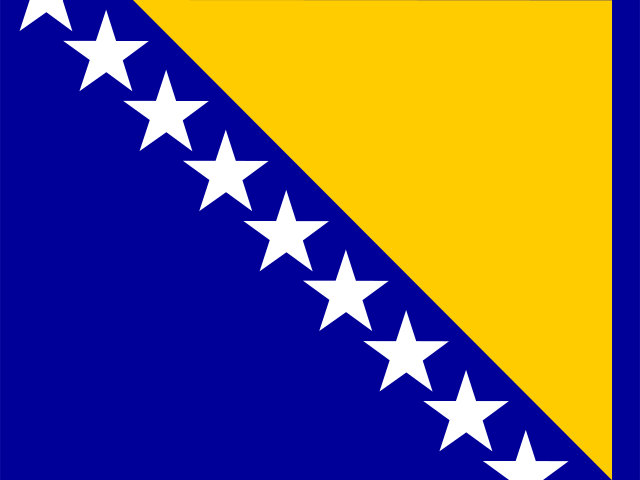
Ahead of Bosnia's elections, Bosnian Serb leader Milorad Dodik declared that Bosnia and Herzegovina is 'dead' at a final campaign rally.
The statement raises the question of whether the country is a failed state or remains a viable, functioning state.
*AI-generated summary of publicly available data. This is not an official statement of any party.
*AI-generated summary of publicly available statements and reporting. This is not an official statement of this party.
Supporters of Milorad Dodik argue Bosnia is an unworkable construct imposed by outside powers, and they point to its contested wartime history as proof that Serbs' cultural identity and autonomy cannot survive inside it.
Supporters of Milorad Dodik argue that Bosnia survives only as a foreign-imposed framework, and that Serb cultural identity and self-rule matter more than the state's formal continuity.
Supporters of Milorad Dodik counter that Bosnia's cultural bond was never organic but imposed, and that Dayton's constitutional order already treats entities as the primary keepers of heritage.
Supporters of Milorad Dodik argue that his "dead" remark reflects a legal reality: Bosnia's constitution vests sovereignty in its entities, so the state functions only by consent, not coercion.
Supporters of Milorad Dodik argue that his claim Bosnia is "dead" reflects a legal reality: the Dayton framework's dysfunction, and they maintain that constitutional arrangements, not secession, are the proper remedy.
Supporters of Milorad Dodik counter that the constitution itself, via the Dayton framework, reserves entity-level competencies and veto powers, so Republika Srpska's legal autonomy—not central institutions—remains the binding reality.
Supporters of Milorad Dodik argue his "dead" remark is strategic positioning: by asserting BiH is dysfunctional, he pressures the international community and rivals into conceding Serb autonomy, since leverage, not loyalty, decides outcomes.
Supporters of Milorad Dodik argue that his "dead" remark is tactical, not literal: by declaring Bosnia unworkable, he pressures rivals to concede Serb autonomy and strengthens his leverage before votes are counted.
Supporters of Milorad Dodik counter that formal elections and tax collection mean little when the state's authority rests on external imposition rather than consent. In their view, an entity that survives only because outsiders will it is not functioning—it is maintained.
Supporters of Milorad Dodik argue that a state built on imposed international decisions rather than genuine consent cannot claim moral legitimacy, so Bosnia and Herzegovina has forfeited any right to Bosnian Serb loyalty.
Supporters of Milorad Dodik argue that Bosnia and Herzegovina is "dead" because the international community's imposed constitutional order denies Bosnian Serbs the self-determination and equal rights that global norms promise all peoples.
Supporters of Milorad Dodik counter that moral appeals to shared institutions ring hollow when those same structures were imposed by international overseers rather than built through genuine local consent.
Supporters of Milorad Dodik argue that Bosnia's imposed constitutional order lacks the organic, covenant-like legitimacy that binds a people, so they defend the Serb entity's inherited institutions and Orthodox identity as the truer guarantor of order.
Supporters of Milorad Dodik argue that Bosnia and Herzegovina has failed to protect the Serb people's religious and cultural inheritance, and that only Serb self-rule can preserve their Orthodox faith and identity.
Supporters of Milorad Dodik counter that Dayton itself enshrined religious and ethnic sovereignty in two entities, and that defending Serb Orthodox communal autonomy honors that inherited compact rather than defying it.
*AI-generated summary of publicly available statements and reporting. This is not an official statement of this party.
Supporters of Bosnia and Herzegovina argue that Dodik’s “dead” remark attacks the country’s shared cultural heritage and constitutional order, and they maintain that its diverse traditions remain a living, unifying bond worth preserving.
Supporters of Bosnia and Herzegovina argue the country's shared cultural heritage and multiethnic civic tradition prove it endures, rejecting claims of its demise as a rejection of that inherited coexistence.
Supporters of Bosnia and Herzegovina counter that the country's cultural fabric—shared language, interwoven traditions, and centuries of coexistence—predates outside intervention and remains a living inheritance that no political narrative can dissolve.
Supporters of Bosnia and Herzegovina cite its constitution, central institutions, and armed forces as proof the state remains legally viable, arguing Dodik's "dead" claim is campaign rhetoric aimed at secession, not a legal reality.
Supporters of Bosnia and Herzegovina argue that Dodik's "dead" claim is a political stunt, and the state remains legally binding under the Dayton constitution, which no single leader can unilaterally dissolve.
Supporters of Bosnia and Herzegovina counter that the Dayton Constitution vests sovereignty in the state, not the entities, and that entity powers are delegated, not original, so no entity may lawfully dissolve the shared institutions.
Supporters of Bosnia and Herzegovina argue that Dodik's "dead" claim is a campaign tactic, not fact: the state still holds elections, collects taxes, and commands international recognition.
Supporters of Bosnia and Herzegovina argue that Dodik's "dead" claim is a bid for votes, not fact: institutions still function, so power lies with those who keep them standing.
Supporters of Bosnia and Herzegovina counter that Dodik's "dead" remark is not leverage but legal self-incrimination, since the High Representative's Bonn Powers allow imposed sanctions and removal, making such rhetoric costly rather than strategic.
Supporters of Bosnia and Herzegovina argue that Dodik's "dead" claim is a morally corrosive rhetorical move that undermines the very institutions the country still functions through.
Supporters of Bosnia and Herzegovina argue that Dodik's "dead" claim is a cynical campaign maneuver, not a moral verdict, and that the country's citizens still deserve a functioning, unified state.
Supporters of Bosnia and Herzegovina counter that legitimacy flows from the Dayton Accords, internationally recognized and ratified, and that no entity may unilaterally dissolve a sovereign state's territorial integrity on moral grounds.
Supporters of Bosnia and Herzegovina invoke the Dayton Agreement's guarantee of territorial integrity as a sacred trust, arguing that Dodik's "dead" claim defies the constitutional order and the moral duty to preserve a multi-faith nation.
Supporters of Bosnia and Herzegovina argue the country remains a living, sovereign state whose territorial integrity and multi-faith coexistence they hold as a moral and constitutional good.
Supporters of Bosnia and Herzegovina counter that the 1995 Dayton Constitution was internationally witnessed and affirmed by all three peoples, giving its covenant legitimacy that no entity can dissolve unilaterally.
AI-generated summary of publicly available statements and reporting. This is not an official statement of this party.
Supporters of Milorad Dodik argue Bosnia is an unworkable construct imposed by outside powers, and they point to its contested wartime history as proof that Serbs' cultural identity and autonomy cannot survive inside it.
Supporters of Milorad Dodik argue that Bosnia survives only as a foreign-imposed framework, and that Serb cultural identity and self-rule matter more than the state's formal continuity.
Supporters of Milorad Dodik counter that Bosnia's cultural bond was never organic but imposed, and that Dayton's constitutional order already treats entities as the primary keepers of heritage.
Supporters of Milorad Dodik argue that his "dead" remark reflects a legal reality: Bosnia's constitution vests sovereignty in its entities, so the state functions only by consent, not coercion.
Supporters of Milorad Dodik argue that his claim Bosnia is "dead" reflects a legal reality: the Dayton framework's dysfunction, and they maintain that constitutional arrangements, not secession, are the proper remedy.
Supporters of Milorad Dodik counter that the constitution itself, via the Dayton framework, reserves entity-level competencies and veto powers, so Republika Srpska's legal autonomy—not central institutions—remains the binding reality.
Supporters of Milorad Dodik argue his "dead" remark is strategic positioning: by asserting BiH is dysfunctional, he pressures the international community and rivals into conceding Serb autonomy, since leverage, not loyalty, decides outcomes.
Supporters of Milorad Dodik argue that his "dead" remark is tactical, not literal: by declaring Bosnia unworkable, he pressures rivals to concede Serb autonomy and strengthens his leverage before votes are counted.
Supporters of Milorad Dodik counter that formal elections and tax collection mean little when the state's authority rests on external imposition rather than consent. In their view, an entity that survives only because outsiders will it is not functioning—it is maintained.
Supporters of Milorad Dodik argue that a state built on imposed international decisions rather than genuine consent cannot claim moral legitimacy, so Bosnia and Herzegovina has forfeited any right to Bosnian Serb loyalty.
Supporters of Milorad Dodik argue that Bosnia and Herzegovina is "dead" because the international community's imposed constitutional order denies Bosnian Serbs the self-determination and equal rights that global norms promise all peoples.
Supporters of Milorad Dodik counter that moral appeals to shared institutions ring hollow when those same structures were imposed by international overseers rather than built through genuine local consent.
Supporters of Milorad Dodik argue that Bosnia's imposed constitutional order lacks the organic, covenant-like legitimacy that binds a people, so they defend the Serb entity's inherited institutions and Orthodox identity as the truer guarantor of order.
Supporters of Milorad Dodik argue that Bosnia and Herzegovina has failed to protect the Serb people's religious and cultural inheritance, and that only Serb self-rule can preserve their Orthodox faith and identity.
Supporters of Milorad Dodik counter that Dayton itself enshrined religious and ethnic sovereignty in two entities, and that defending Serb Orthodox communal autonomy honors that inherited compact rather than defying it.
Supporters of Bosnia and Herzegovina argue that Dodik’s “dead” remark attacks the country’s shared cultural heritage and constitutional order, and they maintain that its diverse traditions remain a living, unifying bond worth preserving.
Supporters of Bosnia and Herzegovina argue the country's shared cultural heritage and multiethnic civic tradition prove it endures, rejecting claims of its demise as a rejection of that inherited coexistence.
Supporters of Bosnia and Herzegovina counter that the country's cultural fabric—shared language, interwoven traditions, and centuries of coexistence—predates outside intervention and remains a living inheritance that no political narrative can dissolve.
Supporters of Bosnia and Herzegovina cite its constitution, central institutions, and armed forces as proof the state remains legally viable, arguing Dodik's "dead" claim is campaign rhetoric aimed at secession, not a legal reality.
Supporters of Bosnia and Herzegovina argue that Dodik's "dead" claim is a political stunt, and the state remains legally binding under the Dayton constitution, which no single leader can unilaterally dissolve.
Supporters of Bosnia and Herzegovina counter that the Dayton Constitution vests sovereignty in the state, not the entities, and that entity powers are delegated, not original, so no entity may lawfully dissolve the shared institutions.
Supporters of Bosnia and Herzegovina argue that Dodik's "dead" claim is a campaign tactic, not fact: the state still holds elections, collects taxes, and commands international recognition.
Supporters of Bosnia and Herzegovina argue that Dodik's "dead" claim is a bid for votes, not fact: institutions still function, so power lies with those who keep them standing.
Supporters of Bosnia and Herzegovina counter that Dodik's "dead" remark is not leverage but legal self-incrimination, since the High Representative's Bonn Powers allow imposed sanctions and removal, making such rhetoric costly rather than strategic.
Supporters of Bosnia and Herzegovina argue that Dodik's "dead" claim is a morally corrosive rhetorical move that undermines the very institutions the country still functions through.
Supporters of Bosnia and Herzegovina argue that Dodik's "dead" claim is a cynical campaign maneuver, not a moral verdict, and that the country's citizens still deserve a functioning, unified state.
Supporters of Bosnia and Herzegovina counter that legitimacy flows from the Dayton Accords, internationally recognized and ratified, and that no entity may unilaterally dissolve a sovereign state's territorial integrity on moral grounds.
Supporters of Bosnia and Herzegovina invoke the Dayton Agreement's guarantee of territorial integrity as a sacred trust, arguing that Dodik's "dead" claim defies the constitutional order and the moral duty to preserve a multi-faith nation.
Supporters of Bosnia and Herzegovina argue the country remains a living, sovereign state whose territorial integrity and multi-faith coexistence they hold as a moral and constitutional good.
Supporters of Bosnia and Herzegovina counter that the 1995 Dayton Constitution was internationally witnessed and affirmed by all three peoples, giving its covenant legitimacy that no entity can dissolve unilaterally.
Milorad Dodik speaks at a final campaign rally ahead of elections and says Bosnia and Herzegovina is 'dead'.