Morocco's ruling coalition factions
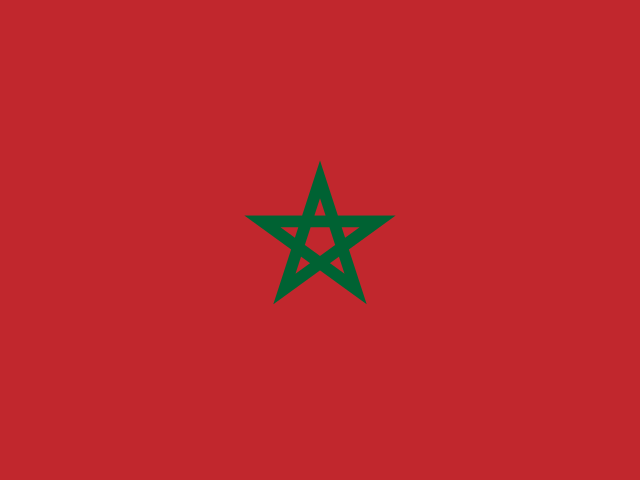
VS
Morocco's opposition parties
Morocco's ruling coalition factions are the political parties that currently form the government, including the National Rally of Independents (RNI), which is loyal to the king, and other coalition partners.
Morocco's opposition parties include the Justice and Development Party (PJD), the only Islamist party that has been in government but is now in opposition, as well as various left-wing parties that have been divided for years.
The country operates under a multi-party system, with the PJD polling strongly in urban areas and the Authenticity and Modernity Party (PAM) dominating rural areas, while smaller parties tend to be unstable.
The conflict between the ruling coalition factions and the opposition parties stems from their competing interests ahead of the 2026 parliamentary elections.
The ruling coalition partners are turning on each other as the election approaches, highlighting internal divisions within the ruling bloc, while opposition parties seek to challenge the government's dominance.
Left-wing parties are moving toward an electoral alliance after years of division, aiming to present a united front against the ruling coalition.
The opposition's effectiveness has historically been limited by lower voter turnout and regime interference, which has kept parliament and opposition parties weak.
The stakes are high as the elections approach, with the political landscape shaped by a hybrid system where the monarchy plays a central role.
The Brookings article notes that empowering the king's loyalist party, RNI, could potentially empower more radical elements, indicating the delicate balance of power.
The upcoming elections will determine the composition of parliament and the direction of Morocco's political future, making the internal conflicts and opposition alliances particularly significant.
*AI-generated summary of publicly available data. This is not an official statement of any party.
*AI-generated summary of publicly available statements and reporting. This is not an official statement of this party.
Supporters of Morocco's ruling coalition factions argue that internal debate before elections reflects a healthy cultural tradition of negotiated consensus, not division.
Supporters of Morocco's ruling coalition factions argue that internal debate reflects a healthy cultural tradition of consensus-building, not division; they maintain that diverse tribal and regional identities within the bloc strengthen national unity ahead of elections.
Supporters of Morocco's ruling coalition factions counter that coalition unity mirrors the nation's cultural tradition of negotiated consensus, not fractious power struggles, and that such internal dialogue strengthens, rather than erodes, public trust in shared governance.
Supporters of Morocco's ruling coalition factions argue that pre-election internal disputes remain lawful under the constitution, as coalition realignment is permitted political conduct until the campaign officially begins.
Supporters of Morocco's ruling coalition factions argue that electoral law binds partners to present a unified legal front during the campaign, regardless of internal disputes, as premature fragmentation would violate procedural fairness guarantees.
Supporters of Morocco's ruling coalition factions counter that existing electoral laws already provide robust judicial oversight, and any alleged gaps stem from procedural delays, not legal deficiencies.
Supporters of Morocco’s ruling coalition factions argue the public infighting is a calculated pre-election repositioning, not a rupture, as each partner jockeys for leverage before the official campaign begins.
Supporters of Morocco’s ruling coalition factions argue the public infighting is a calculated pre-election purge, not weakness — each ally jockeys for leverage before the polls to secure better post-vote bargaining positions.
Supporters of Morocco’s ruling coalition factions counter that visible infighting is a deliberate pressure valve, channeling rivalry away from policy paralysis and toward a managed pre-election rebalancing of power.
Supporters of Morocco's ruling coalition factions argue that internal dissent before elections reflects a healthy moral commitment to accountability, not weakness, as public debate among allies strengthens democratic legitimacy.
Supporters of Morocco's ruling coalition factions argue that internal dissent before elections reflects a healthy, transparent democratic process, morally preferable to hidden backroom deals.
Supporters of Morocco's ruling coalition factions counter that public trust is best served by transparent, internal policy debates that refine governance, not by performative unity masking unresolved differences.
Supporters of Morocco's ruling coalition factions argue that internal discord, while human, must yield to divine command for unity among believers, citing scripture that forbids fracturing faith.
Supporters of Morocco's ruling coalition factions argue that internal discord tests faith, for scripture teaches unity among believers; they maintain that Allah's guidance will steer the bloc through this trial.
Supporters of Morocco's ruling coalition factions counter that divine law honors righteous governance over mere electoral unity, citing scripture that values justice and faithful stewardship above political harmony.
*AI-generated summary of publicly available statements and reporting. This is not an official statement of this party.
Supporters of Morocco's opposition parties argue that coalition infighting reflects a historical cycle of ruling elites prioritizing power over public trust, echoing past pre-election fractures that eroded civic faith.
Supporters of Morocco's opposition parties argue that the ruling coalition's infighting mirrors past cycles where fractured elites prioritize personal gain over national unity, a recurring pattern in Moroccan political history.
Supporters of Morocco's opposition parties counter that this “consensus” masks a culture of elite pact-making, where public debate is ritualized, not substantive.
Supporters of Morocco's opposition parties argue the ruling coalition's infighting exposes legal gaps in electoral oversight, urging impartial judicial enforcement of campaign rules to ensure fair competition.
Supporters of Morocco's opposition parties argue that the ruling coalition's infighting exposes a governance failure, warranting legal scrutiny of electoral integrity under existing campaign laws.
Supporters of Morocco's opposition parties counter that the coalition's realignment exploits a legal loophole, violating the spirit of Article 101's mandate for pre-election integrity. They argue lawful conduct ends where public trust in electoral fairness begins.
Supporters of Morocco's opposition parties argue the ruling coalition's infighting is a calculated pre-election scramble for spoils, exposing that each faction prioritizes survival over governance; they maintain this disarray hands the opposition a pragmatic opening to position i.
Supporters of Morocco's opposition parties argue the ruling coalition's infighting is a calculated prelude to the elections, exposing each faction's desperate bid for power over national interest.
Supporters of Morocco’s opposition parties counter that the coalition’s infighting is less calculated choreography and more a survival reflex, exposing each faction’s raw need to outbid rivals before voters punish the incumbent record.
Supporters of Morocco's opposition parties argue that the ruling coalition's infighting exposes a moral failure to prioritize public trust over partisan self-interest ahead of the elections.
Supporters of Morocco's opposition parties argue that the ruling coalition’s infighting reveals a fractured elite prioritizing power over public accountability, and they maintain that this discord underscores the moral need for transparent, reform-driven alternatives that place c.
Supporters of Morocco's opposition parties counter that the coalition’s pre-election infighting masks a deeper moral failure: prioritizing elite power-sharing over public trust.
Supporters of Morocco's opposition parties argue that the ruling coalition's infighting dishonors the nation's religious duty to preserve unity, pointing to the elections as a sacred test of communal trust rather than factional gain.
Supporters of Morocco's opposition parties argue that the ruling coalition's infidelity to its own alliances mirrors a neglect of divine order, which thrives on fidelity and covenant.
Supporters of Morocco's opposition parties counter that divine command forbids blind obedience to unjust rulers, citing scripture urging faithful to enjoin good and forbid evil, even within a fractured polity.
AI-generated summary of publicly available statements and reporting. This is not an official statement of this party.
Supporters of Morocco's ruling coalition factions argue that internal debate before elections reflects a healthy cultural tradition of negotiated consensus, not division.
Supporters of Morocco's ruling coalition factions argue that internal debate reflects a healthy cultural tradition of consensus-building, not division; they maintain that diverse tribal and regional identities within the bloc strengthen national unity ahead of elections.
Supporters of Morocco's ruling coalition factions counter that coalition unity mirrors the nation's cultural tradition of negotiated consensus, not fractious power struggles, and that such internal dialogue strengthens, rather than erodes, public trust in shared governance.
Supporters of Morocco's ruling coalition factions argue that pre-election internal disputes remain lawful under the constitution, as coalition realignment is permitted political conduct until the campaign officially begins.
Supporters of Morocco's ruling coalition factions argue that electoral law binds partners to present a unified legal front during the campaign, regardless of internal disputes, as premature fragmentation would violate procedural fairness guarantees.
Supporters of Morocco's ruling coalition factions counter that existing electoral laws already provide robust judicial oversight, and any alleged gaps stem from procedural delays, not legal deficiencies.
Supporters of Morocco’s ruling coalition factions argue the public infighting is a calculated pre-election repositioning, not a rupture, as each partner jockeys for leverage before the official campaign begins.
Supporters of Morocco’s ruling coalition factions argue the public infighting is a calculated pre-election purge, not weakness — each ally jockeys for leverage before the polls to secure better post-vote bargaining positions.
Supporters of Morocco’s ruling coalition factions counter that visible infighting is a deliberate pressure valve, channeling rivalry away from policy paralysis and toward a managed pre-election rebalancing of power.
Supporters of Morocco's ruling coalition factions argue that internal dissent before elections reflects a healthy moral commitment to accountability, not weakness, as public debate among allies strengthens democratic legitimacy.
Supporters of Morocco's ruling coalition factions argue that internal dissent before elections reflects a healthy, transparent democratic process, morally preferable to hidden backroom deals.
Supporters of Morocco's ruling coalition factions counter that public trust is best served by transparent, internal policy debates that refine governance, not by performative unity masking unresolved differences.
Supporters of Morocco's ruling coalition factions argue that internal discord, while human, must yield to divine command for unity among believers, citing scripture that forbids fracturing faith.
Supporters of Morocco's ruling coalition factions argue that internal discord tests faith, for scripture teaches unity among believers; they maintain that Allah's guidance will steer the bloc through this trial.
Supporters of Morocco's ruling coalition factions counter that divine law honors righteous governance over mere electoral unity, citing scripture that values justice and faithful stewardship above political harmony.
Supporters of Morocco's opposition parties argue that coalition infighting reflects a historical cycle of ruling elites prioritizing power over public trust, echoing past pre-election fractures that eroded civic faith.
Supporters of Morocco's opposition parties argue that the ruling coalition's infighting mirrors past cycles where fractured elites prioritize personal gain over national unity, a recurring pattern in Moroccan political history.
Supporters of Morocco's opposition parties counter that this “consensus” masks a culture of elite pact-making, where public debate is ritualized, not substantive.
Supporters of Morocco's opposition parties argue the ruling coalition's infighting exposes legal gaps in electoral oversight, urging impartial judicial enforcement of campaign rules to ensure fair competition.
Supporters of Morocco's opposition parties argue that the ruling coalition's infighting exposes a governance failure, warranting legal scrutiny of electoral integrity under existing campaign laws.
Supporters of Morocco's opposition parties counter that the coalition's realignment exploits a legal loophole, violating the spirit of Article 101's mandate for pre-election integrity. They argue lawful conduct ends where public trust in electoral fairness begins.
Supporters of Morocco's opposition parties argue the ruling coalition's infighting is a calculated pre-election scramble for spoils, exposing that each faction prioritizes survival over governance; they maintain this disarray hands the opposition a pragmatic opening to position i.
Supporters of Morocco's opposition parties argue the ruling coalition's infighting is a calculated prelude to the elections, exposing each faction's desperate bid for power over national interest.
Supporters of Morocco’s opposition parties counter that the coalition’s infighting is less calculated choreography and more a survival reflex, exposing each faction’s raw need to outbid rivals before voters punish the incumbent record.
Supporters of Morocco's opposition parties argue that the ruling coalition's infighting exposes a moral failure to prioritize public trust over partisan self-interest ahead of the elections.
Supporters of Morocco's opposition parties argue that the ruling coalition’s infighting reveals a fractured elite prioritizing power over public accountability, and they maintain that this discord underscores the moral need for transparent, reform-driven alternatives that place c.
Supporters of Morocco's opposition parties counter that the coalition’s pre-election infighting masks a deeper moral failure: prioritizing elite power-sharing over public trust.
Supporters of Morocco's opposition parties argue that the ruling coalition's infighting dishonors the nation's religious duty to preserve unity, pointing to the elections as a sacred test of communal trust rather than factional gain.
Supporters of Morocco's opposition parties argue that the ruling coalition's infidelity to its own alliances mirrors a neglect of divine order, which thrives on fidelity and covenant.
Supporters of Morocco's opposition parties counter that divine command forbids blind obedience to unjust rulers, citing scripture urging faithful to enjoin good and forbid evil, even within a fractured polity.
Moroccans prepare for the polls, with the official campaign start still days away.
The Konrad-Adenauer-Stiftung published an analysis of Morocco's political centre in a hybrid system, discussing parties, electoral rules, and the monarchy in the context of the 2026 elections.
Moroccan left-wing parties began moving toward an electoral alliance ahead of the parliamentary elections, after years of division.
Freedom House's 2020 report noted that the PJD polls strongly in urban areas while the PAM dominates rural areas, and that smaller parties tend to be unstable.
Jadaliyya published an analysis arguing that lower voter turnout and regime interference keep Morocco's parliament and opposition parties weak.