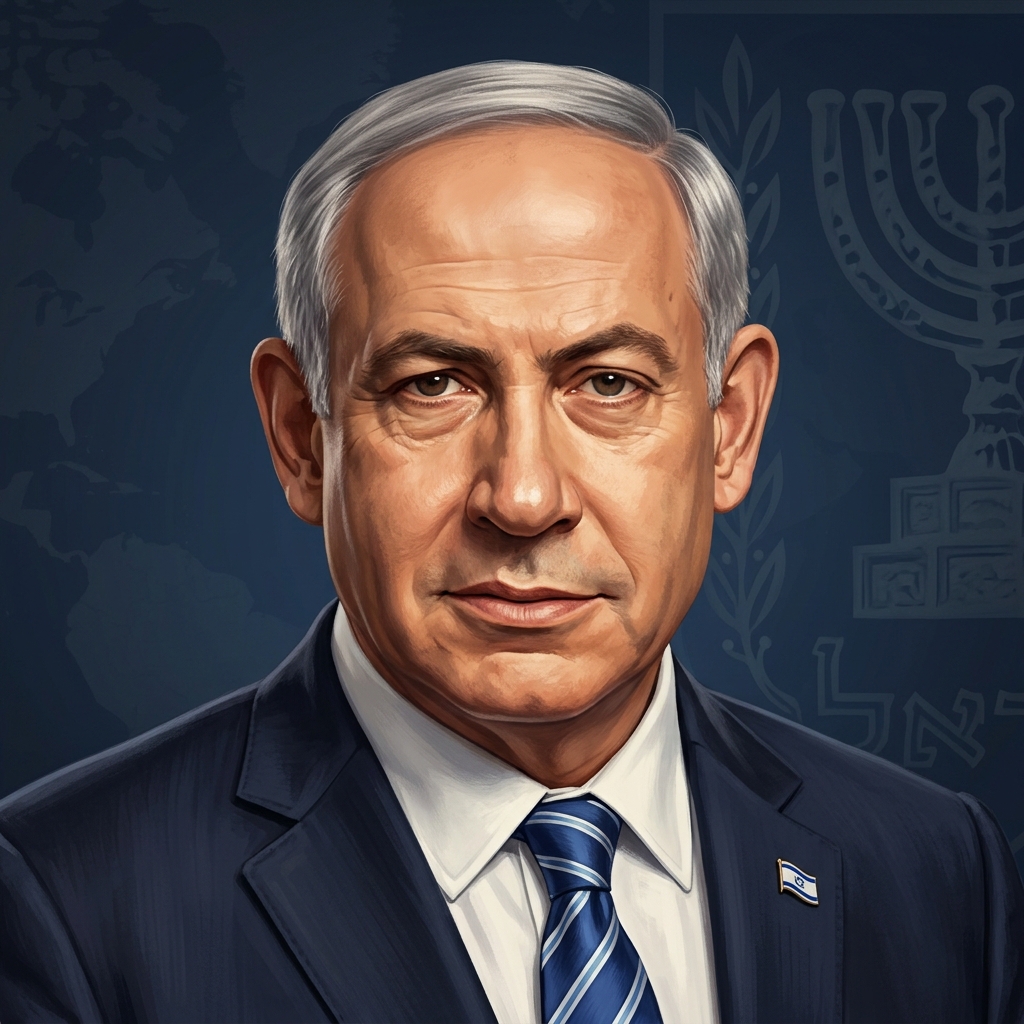
Netanyahu
VS
Israeli media

Benjamin Netanyahu is the Prime Minister of Israel, leading a government that has taken measures against news organizations whose reporting it deems unfavorable or a threat to national security.
The Israeli media encompasses outlets that, despite being subject to Israeli policies, sometimes critically report on the government's actions.
The dispute between Netanyahu and the Israeli media centers on claims that the UAE warned Netanyahu of an impending Hamas attack before October 7, 2023, a warning Netanyahu denies receiving.
The conflict highlights broader tensions over press freedom and the government's efforts to control or influence media coverage, especially during the Gaza war.
*AI-generated summary of publicly available data. This is not an official statement of any party.
*AI-generated summary of publicly available statements and reporting. This is not an official statement of this party.
Supporters of Netanyahu argue Israeli media’s UAE warning claim ignores security agencies’ own failures, framing a cultural narrative where a prime minister is scapegoated for systemic intelligence gaps.
Supporters of Netanyahu argue Israeli media’s UAE-warning narrative ignores Israel’s cultural ethos of self-reliance, framing the prime minister as a scapegoat for systemic intelligence failures.
Supporters of Netanyahu counter that Israeli media’s cultural duty to question power has historically fueled wartime hysteria, citing past security crises where sensational reporting eroded public trust in state decisions.
Supporters of Netanyahu argue that legal accountability requires verifiable evidence, not unconfirmed media reports, and they note no official UAE warning was documented or delivered to the prime minister.
Supporters of Netanyahu argue that legal scrutiny requires documented evidence, not media assertions, to establish any warning was formally conveyed and received before October 7.
Supporters of Netanyahu counter that legal scrutiny must respect the chain of command, where the Prime Minister’s security assessments are privileged under national security law, and that judicial second-guessing of such warnings undermines the executive’s lawful authority.
Supporters of Netanyahu argue the media's claim serves one purpose: delegitimizing him by implying he ignored a warning that, per his office, never arrived in actionable form.
Supporters of Netanyahu argue the media's UAE claim is a convenient post-hoc narrative, shifting blame from intelligence failures onto the Prime Minister.
Supporters of Netanyahu counter that the media's framing ignores the strategic reality: the UAE warning was a window to act, not a failure to explain. Accountability, in their view, is a luxury of hindsight; survival demands prioritizing national security over narrative purity.
Supporters of Netanyahu argue that holding him morally accountable for an unverified warning misplaces blame, insisting that Israel’s leaders acted on credible intelligence at the time, not speculation.
Supporters of Netanyahu argue that holding a leader morally accountable for every unverified report, rather than the attackers who planned the massacre, inverts justice and shields Hamas from its own culpability.
Supporters of Netanyahu counter that unchecked media disclosure itself carries moral weight, arguing that exposing sensitive intelligence during wartime endangers lives and undermines national security, making selective transparency a necessary ethical safeguard rather than a fai.
Supporters of Netanyahu argue that divine providence, not media leaks, guides Israel's security, and maintain the prime minister acted on verified intelligence, not unconfirmed foreign whispers.
Supporters of Netanyahu argue that Israel’s leaders, guided by divine providence, rely on verified intelligence, not unconfirmed foreign whispers, to protect the nation; they maintain that faith in God’s covenant, not media speculation, sustains Israel’s security.
Supporters of Netanyahu counter that unchecked media claims, like the UAE warning story, risk undermining national security and public trust, citing Proverbs for measured speech and the duty to protect Israel’s unity in times of threat.
*AI-generated summary of publicly available statements and reporting. This is not an official statement of this party.
Supporters of Israeli media argue that a free press upholding account-ability preserves the nation’s civic order, as reporting on the UAE warning reflects a cultural duty to question power, not undermine it.
Supporters of Israeli media argue that a free press upholds the nation’s cultural duty to question power, citing the UAE warning as evidence that institutions must preserve accountability over political narratives.
Supporters of Israeli media counter that the UAE warning saga reflects a cultural duty to hold leadership accountable, not scapegoating; they argue Netanyahu’s dismissal of intelligence reports undermines the very institutional checks that safeguard public trust.
Supporters of Israeli media argue that legal scrutiny of the warning’s chain of custody is essential, as accountability hinges on documented evidence, not denials, and they maintain that transparency under law serves public trust in governance.
Supporters of Israeli media argue that legal accountability requires releasing the full warning records, as transparency under Israeli law would clarify whether Netanyahu’s denial conflicts with documented evidence.
Supporters of Israeli media counter that legal accountability also requires transparency, and they note the absence of a documented UAE warning does not erase the prime minister’s duty to seek credible intelligence on threats independently.
Supporters of Israeli media argue that Netanyahu’s denial serves his political survival, framing the UAE warning as a scapegoat for an intelligence failure that accountability would otherwise pin on him.
Supporters of Israeli media argue the UAE warning exposes Netanyahu’s incentive to bury inconvenient facts, since admitting a prior alert would indict his own security doctrine and shift blame from his office.
Supporters of Israeli media counter that Netanyahu’s own office controls the flow of intelligence, so any claim of “no actionable warning” conveniently shifts blame while preserving his political survival—a classic power play, not a factual defense.
Supporters of Israeli media argue that transparency about the UAE warning serves a moral duty to uncover truth, ensuring public accountability for decisions that cost lives on October 7th.
Supporters of Israeli media argue that the nation’s moral duty to truth demands accountability, as reporting the UAE warning serves the public’s right to know over any leader’s denial.
Supporters of Israeli media counter that moral accountability rests on foresight, not hindsight, arguing that credible warnings of Hamas’s intent existed and went unheeded, making inaction a failure of duty, not a matter of unverified speculation.
Supporters of Israeli media argue that truth-telling is a moral duty before God, citing scripture on bearing witness, as their reports on the UAE warning aim to hold leaders accountable.
Supporters of Israeli media argue that truth-telling is a sacred duty, citing scripture that justice requires uncovering hidden faults, and they see the UAE warning report as evidence that accountability before God and nation demands scrutiny of leaders' claims.
Supporters of Israeli media counter that divine providence is not a substitute for accountable governance, and they challenge the claim that intelligence was verified, arguing that faith cannot sanctify secrecy over public scrutiny.
AI-generated summary of publicly available statements and reporting. This is not an official statement of this party.
Supporters of Netanyahu argue Israeli media’s UAE warning claim ignores security agencies’ own failures, framing a cultural narrative where a prime minister is scapegoated for systemic intelligence gaps.
Supporters of Netanyahu argue Israeli media’s UAE-warning narrative ignores Israel’s cultural ethos of self-reliance, framing the prime minister as a scapegoat for systemic intelligence failures.
Supporters of Netanyahu counter that Israeli media’s cultural duty to question power has historically fueled wartime hysteria, citing past security crises where sensational reporting eroded public trust in state decisions.
Supporters of Netanyahu argue that legal accountability requires verifiable evidence, not unconfirmed media reports, and they note no official UAE warning was documented or delivered to the prime minister.
Supporters of Netanyahu argue that legal scrutiny requires documented evidence, not media assertions, to establish any warning was formally conveyed and received before October 7.
Supporters of Netanyahu counter that legal scrutiny must respect the chain of command, where the Prime Minister’s security assessments are privileged under national security law, and that judicial second-guessing of such warnings undermines the executive’s lawful authority.
Supporters of Netanyahu argue the media's claim serves one purpose: delegitimizing him by implying he ignored a warning that, per his office, never arrived in actionable form.
Supporters of Netanyahu argue the media's UAE claim is a convenient post-hoc narrative, shifting blame from intelligence failures onto the Prime Minister.
Supporters of Netanyahu counter that the media's framing ignores the strategic reality: the UAE warning was a window to act, not a failure to explain. Accountability, in their view, is a luxury of hindsight; survival demands prioritizing national security over narrative purity.
Supporters of Netanyahu argue that holding him morally accountable for an unverified warning misplaces blame, insisting that Israel’s leaders acted on credible intelligence at the time, not speculation.
Supporters of Netanyahu argue that holding a leader morally accountable for every unverified report, rather than the attackers who planned the massacre, inverts justice and shields Hamas from its own culpability.
Supporters of Netanyahu counter that unchecked media disclosure itself carries moral weight, arguing that exposing sensitive intelligence during wartime endangers lives and undermines national security, making selective transparency a necessary ethical safeguard rather than a fai.
Supporters of Netanyahu argue that divine providence, not media leaks, guides Israel's security, and maintain the prime minister acted on verified intelligence, not unconfirmed foreign whispers.
Supporters of Netanyahu argue that Israel’s leaders, guided by divine providence, rely on verified intelligence, not unconfirmed foreign whispers, to protect the nation; they maintain that faith in God’s covenant, not media speculation, sustains Israel’s security.
Supporters of Netanyahu counter that unchecked media claims, like the UAE warning story, risk undermining national security and public trust, citing Proverbs for measured speech and the duty to protect Israel’s unity in times of threat.
Supporters of Israeli media argue that a free press upholding account-ability preserves the nation’s civic order, as reporting on the UAE warning reflects a cultural duty to question power, not undermine it.
Supporters of Israeli media argue that a free press upholds the nation’s cultural duty to question power, citing the UAE warning as evidence that institutions must preserve accountability over political narratives.
Supporters of Israeli media counter that the UAE warning saga reflects a cultural duty to hold leadership accountable, not scapegoating; they argue Netanyahu’s dismissal of intelligence reports undermines the very institutional checks that safeguard public trust.
Supporters of Israeli media argue that legal scrutiny of the warning’s chain of custody is essential, as accountability hinges on documented evidence, not denials, and they maintain that transparency under law serves public trust in governance.
Supporters of Israeli media argue that legal accountability requires releasing the full warning records, as transparency under Israeli law would clarify whether Netanyahu’s denial conflicts with documented evidence.
Supporters of Israeli media counter that legal accountability also requires transparency, and they note the absence of a documented UAE warning does not erase the prime minister’s duty to seek credible intelligence on threats independently.
Supporters of Israeli media argue that Netanyahu’s denial serves his political survival, framing the UAE warning as a scapegoat for an intelligence failure that accountability would otherwise pin on him.
Supporters of Israeli media argue the UAE warning exposes Netanyahu’s incentive to bury inconvenient facts, since admitting a prior alert would indict his own security doctrine and shift blame from his office.
Supporters of Israeli media counter that Netanyahu’s own office controls the flow of intelligence, so any claim of “no actionable warning” conveniently shifts blame while preserving his political survival—a classic power play, not a factual defense.
Supporters of Israeli media argue that transparency about the UAE warning serves a moral duty to uncover truth, ensuring public accountability for decisions that cost lives on October 7th.
Supporters of Israeli media argue that the nation’s moral duty to truth demands accountability, as reporting the UAE warning serves the public’s right to know over any leader’s denial.
Supporters of Israeli media counter that moral accountability rests on foresight, not hindsight, arguing that credible warnings of Hamas’s intent existed and went unheeded, making inaction a failure of duty, not a matter of unverified speculation.
Supporters of Israeli media argue that truth-telling is a moral duty before God, citing scripture on bearing witness, as their reports on the UAE warning aim to hold leaders accountable.
Supporters of Israeli media argue that truth-telling is a sacred duty, citing scripture that justice requires uncovering hidden faults, and they see the UAE warning report as evidence that accountability before God and nation demands scrutiny of leaders' claims.
Supporters of Israeli media counter that divine providence is not a substitute for accountable governance, and they challenge the claim that intelligence was verified, arguing that faith cannot sanctify secrecy over public scrutiny.
An article published by Nieman Reports describes how Netanyahu's government has banned or boycotted news organizations whose reporting he dislikes or denounces as a threat to national security.
An analysis from the Al Jazeera Center for Studies notes that despite being directly governed by Israeli policies, some Israeli media outlets critically report on their government's actions.
Haaretz published a deep dive covering the Israeli government's closure of Al Jazeera, the economic boycott of Haaretz, and laws restricting freedom of speech.
Hamas launched a major operation against Israel, prompting the reported UAE warning to Netanyahu.
The Prime Minister's Office stated that press reports claiming the UAE warned Netanyahu of an impending Hamas attack before October 7 are false, asserting no such warning was given.