Netanyahu
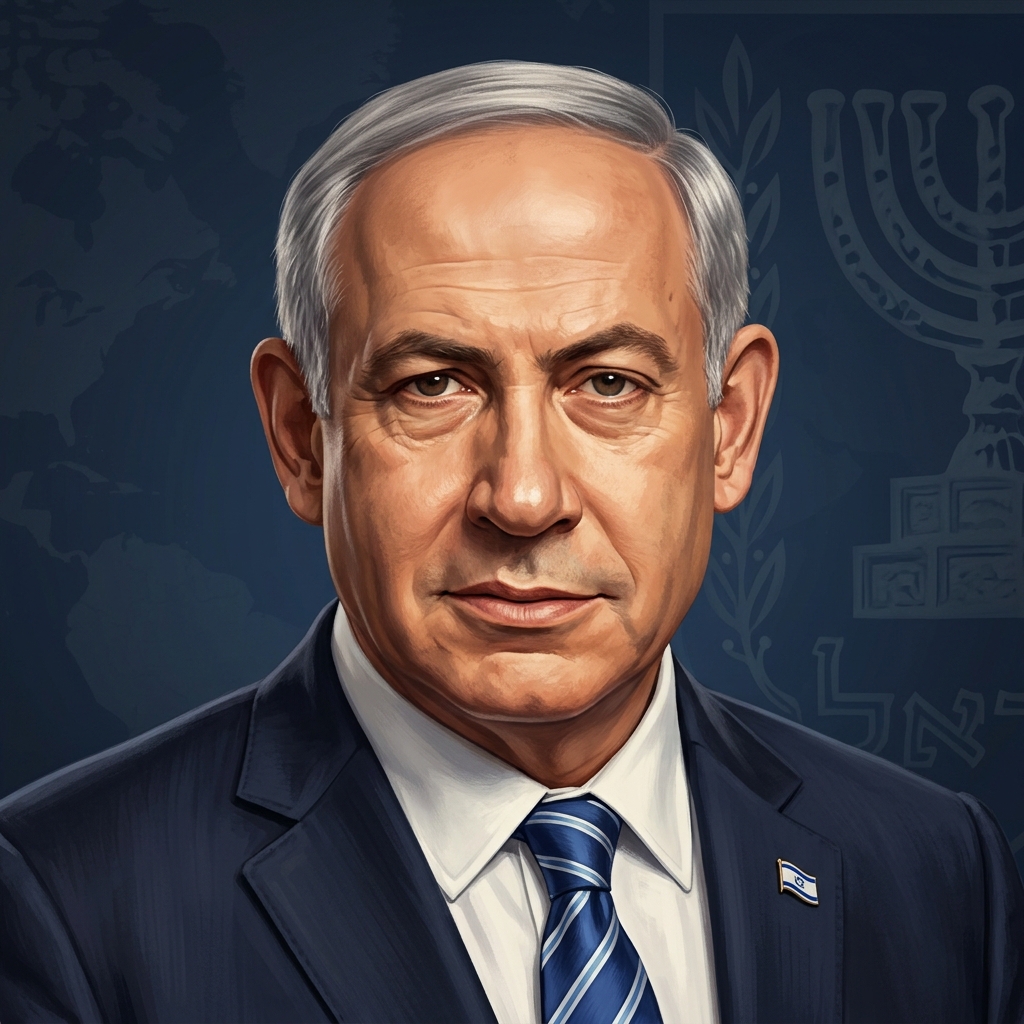
VS
Mamdani

The political clash between Israeli Prime Minister Benjamin Netanyahu and New York City Mayor Zohran Mamdani centers on Mamdani's statements about potentially arresting Netanyahu during his visit to New York, based on an International Criminal Court warrant.
Netanyahu has publicly accused Mamdani of fomenting hate and supporting Iran, Hamas, and Hezbollah, while Mamdani has said he is not interested in a back-and-forth and is exploring legal options.
The dispute highlights tensions over the Gaza war and the role of local officials in international justice.
*AI-generated summary of publicly available data. This is not an official statement of any party.
*AI-generated summary of publicly available statements and reporting. This is not an official statement of this party.
Supporters of Netanyahu argue that Mamdani's arrest threat degrades the diplomatic tradition of hosting allied leaders, treating a head of government as a political target rather than a guest.
Supporters of Netanyahu argue that Mamdani’s arrest threat politicizes law and demeans the office of mayor, undermining the cultural norm of diplomatic respect for elected leaders.
Supporters of Netanyahu counter that local officials lack the cultural mandate to redefine national security, which rests with sovereign states and their inherited diplomatic traditions, not municipal moralizing.
Supporters of Netanyahu argue that Mamdani’s arrest threat misreads legal jurisdiction, as local officials cannot enforce an ICC warrant over a sitting foreign leader’s diplomatic immunity and national sovereignty.
Supporters of Netanyahu argue that Mayor Mamdani’s arrest threat exceeds New York’s legal authority, as the ICC warrant is not domestically enforceable and municipal officials lack jurisdiction over foreign heads of state.
Supporters of Netanyahu argue that the ICC warrant is procedurally void, as Israel’s judicial system has independently reviewed such cases, satisfying complementarity under the Rome Statute. They counter that Mamdani’s retreat underscores the warrant’s political nature, not.
Supporters of Netanyahu argue Mamdani’s stunt is pure political theater, exploiting a symbolic warrant to court a left-wing base while ignoring the legal reality he himself admitted; for them, the mayor’s walk-back proves the threat was never about justice, but about scoring.
Supporters of Netanyahu argue that Mamdani’s arrest threat is a cynical stunt for domestic political gain, exploiting an ICC warrant to score points with a radical base while ignoring legal reality. They note Mamdani’s own walk-back proves the move was theater, not justice, and.
Supporters of Netanyahu counter that Mamdani’s framing ignores the ICC’s structural bias, where legal weight is itself a political weapon; for Netanyahu, the mayor’s stance is a test of sovereign immunity, not a mere procedural formality.
Supporters of Netanyahu argue that Mamdani's arrest threat substitutes political theater for legal duty, since New York lacks authority over ICC warrants, and they view such grandstanding as morally reckless.
Supporters of Netanyahu argue that Mamdani’s arrest threat is a moral breach of hospitality, using a foreign court to punish a democratic leader for defending Israel’s citizens, rather than respecting voluntary political association.
Supporters of Netanyahu counter that Mamdani's framing ignores Israel's sovereign right to self-defense, arguing that international bodies like the ICC lack moral legitimacy when applied selectively to a democratic state facing existential threats.
Supporters of Netanyahu argue that his visit to New York embodies a divine mandate to protect Israel, viewing Mamdani’s arrest threat as a sinful defiance of God’s chosen leadership and a moral failing that aligns with hostile forces.
Supporters of Netanyahu argue that scripture calls for defending Israel against those who seek its destruction, viewing Mamdani’s arrest threat as a moral affront to divine law.
Supporters of Netanyahu counter that divine law entrusts a nation with the duty to defend its citizens against existential threats, and that the ICC warrant misreads self-defense as aggression, ignoring scripture's mandate for righteous protection of the innocent.
*AI-generated summary of publicly available statements and reporting. This is not an official statement of this party.
Supporters of Mamdani argue that his stance reflects a cultural shift among diaspora communities, who see local officials as moral actors bound by international law, not merely national protocol, citing historical precedents where cities challenged state impunity.
Supporters of Mamdani argue his stance reflects a cultural commitment to international law over political pressure, viewing the ICC warrant as a moral precedent that local leaders must honor.
Supporters of Mamdani counter that diplomatic tradition has historically shielded tyrants, from Chamberlain's Munich pact to Cold War realpolitik, and that treating leaders as untouchable guests ignores the moral weight of precedent.
Supporters of Mamdani argue that his arrest threat, though retracted, highlighted legal inconsistency: U.S. law bars ICC jurisdiction, so his retreat was legally sound, not weakness. They maintain that Netanyahu's accusations are political deflection, as the ICC warrant is a.
Supporters of Mamdani argue his arrest stance rested on the ICC warrant’s legal legitimacy, not personal animus; they note he conceded the mayor lacks authority to enforce it, framing the dispute as a jurisdictional question for courts, not a political feud.
Supporters of Mamdani counter that diplomatic immunity does not shield heads of state from ICC jurisdiction for atrocity crimes, as treaty obligations and customary law override sovereign claims. They argue local officials retain a legal duty to execute warrants under the Rome.
Supporters of Mamdani argue Netanyahu weaponizes accusations of hate to deflect from the ICC warrant's legal weight, treating a mayor's procedural stance as a geopolitical threat.
Supporters of Mamdani argue Netanyahu’s accusations are a calculated distraction, weaponizing outrage to deflect from ICC scrutiny and domestic weakness. They see the mayor’s arrest talk as symbolic leverage, not legal reality, exposing how local power can force a global leader.
Supporters of Mamdani counter that Netanyahu’s dismissal of the warrant as theater ignores the leverage it grants: even a symbolic legal threat forces the premier to spend political capital defending his status, exposing his dependence on allies’ goodwill rather than inherent.
Supporters of Mamdani argue his stance reflects a moral duty to uphold international law, viewing the ICC warrant as binding evidence of accountability that local officials should honor, not evade.
Supporters of Mamdani argue that local officials hold a moral duty to uphold international law, viewing the ICC warrant as binding evidence of alleged crimes that outweigh political pressure.
Supporters of Mamdani counter that legal duty extends beyond jurisdiction, framing the arrest threat as a moral imperative to uphold international accountability over political convenience, not theater.
Supporters of Mamdani argue that his stance reflects a higher moral duty, grounded in religious calls for justice over political convenience, viewing the ICC warrant as a sacred obligation to protect innocent life.
Supporters of Mamdani argue that his stance reflects a higher moral duty, rooted in religious teachings on justice, that compels local leaders to uphold international law against alleged war crimes.
Supporters of Mamdani counter that divine mandate cannot sanctify state violence, arguing that Netanyahu’s claim to heavenly authority distorts sacred law, which demands justice for all peoples, not unilateral dominion over others.
AI-generated summary of publicly available statements and reporting. This is not an official statement of this party.
Supporters of Netanyahu argue that Mamdani's arrest threat degrades the diplomatic tradition of hosting allied leaders, treating a head of government as a political target rather than a guest.
Supporters of Netanyahu argue that Mamdani’s arrest threat politicizes law and demeans the office of mayor, undermining the cultural norm of diplomatic respect for elected leaders.
Supporters of Netanyahu counter that local officials lack the cultural mandate to redefine national security, which rests with sovereign states and their inherited diplomatic traditions, not municipal moralizing.
Supporters of Netanyahu argue that Mamdani’s arrest threat misreads legal jurisdiction, as local officials cannot enforce an ICC warrant over a sitting foreign leader’s diplomatic immunity and national sovereignty.
Supporters of Netanyahu argue that Mayor Mamdani’s arrest threat exceeds New York’s legal authority, as the ICC warrant is not domestically enforceable and municipal officials lack jurisdiction over foreign heads of state.
Supporters of Netanyahu argue that the ICC warrant is procedurally void, as Israel’s judicial system has independently reviewed such cases, satisfying complementarity under the Rome Statute. They counter that Mamdani’s retreat underscores the warrant’s political nature, not.
Supporters of Netanyahu argue Mamdani’s stunt is pure political theater, exploiting a symbolic warrant to court a left-wing base while ignoring the legal reality he himself admitted; for them, the mayor’s walk-back proves the threat was never about justice, but about scoring.
Supporters of Netanyahu argue that Mamdani’s arrest threat is a cynical stunt for domestic political gain, exploiting an ICC warrant to score points with a radical base while ignoring legal reality. They note Mamdani’s own walk-back proves the move was theater, not justice, and.
Supporters of Netanyahu counter that Mamdani’s framing ignores the ICC’s structural bias, where legal weight is itself a political weapon; for Netanyahu, the mayor’s stance is a test of sovereign immunity, not a mere procedural formality.
Supporters of Netanyahu argue that Mamdani's arrest threat substitutes political theater for legal duty, since New York lacks authority over ICC warrants, and they view such grandstanding as morally reckless.
Supporters of Netanyahu argue that Mamdani’s arrest threat is a moral breach of hospitality, using a foreign court to punish a democratic leader for defending Israel’s citizens, rather than respecting voluntary political association.
Supporters of Netanyahu counter that Mamdani's framing ignores Israel's sovereign right to self-defense, arguing that international bodies like the ICC lack moral legitimacy when applied selectively to a democratic state facing existential threats.
Supporters of Netanyahu argue that his visit to New York embodies a divine mandate to protect Israel, viewing Mamdani’s arrest threat as a sinful defiance of God’s chosen leadership and a moral failing that aligns with hostile forces.
Supporters of Netanyahu argue that scripture calls for defending Israel against those who seek its destruction, viewing Mamdani’s arrest threat as a moral affront to divine law.
Supporters of Netanyahu counter that divine law entrusts a nation with the duty to defend its citizens against existential threats, and that the ICC warrant misreads self-defense as aggression, ignoring scripture's mandate for righteous protection of the innocent.
Supporters of Mamdani argue that his stance reflects a cultural shift among diaspora communities, who see local officials as moral actors bound by international law, not merely national protocol, citing historical precedents where cities challenged state impunity.
Supporters of Mamdani argue his stance reflects a cultural commitment to international law over political pressure, viewing the ICC warrant as a moral precedent that local leaders must honor.
Supporters of Mamdani counter that diplomatic tradition has historically shielded tyrants, from Chamberlain's Munich pact to Cold War realpolitik, and that treating leaders as untouchable guests ignores the moral weight of precedent.
Supporters of Mamdani argue that his arrest threat, though retracted, highlighted legal inconsistency: U.S. law bars ICC jurisdiction, so his retreat was legally sound, not weakness. They maintain that Netanyahu's accusations are political deflection, as the ICC warrant is a.
Supporters of Mamdani argue his arrest stance rested on the ICC warrant’s legal legitimacy, not personal animus; they note he conceded the mayor lacks authority to enforce it, framing the dispute as a jurisdictional question for courts, not a political feud.
Supporters of Mamdani counter that diplomatic immunity does not shield heads of state from ICC jurisdiction for atrocity crimes, as treaty obligations and customary law override sovereign claims. They argue local officials retain a legal duty to execute warrants under the Rome.
Supporters of Mamdani argue Netanyahu weaponizes accusations of hate to deflect from the ICC warrant's legal weight, treating a mayor's procedural stance as a geopolitical threat.
Supporters of Mamdani argue Netanyahu’s accusations are a calculated distraction, weaponizing outrage to deflect from ICC scrutiny and domestic weakness. They see the mayor’s arrest talk as symbolic leverage, not legal reality, exposing how local power can force a global leader.
Supporters of Mamdani counter that Netanyahu’s dismissal of the warrant as theater ignores the leverage it grants: even a symbolic legal threat forces the premier to spend political capital defending his status, exposing his dependence on allies’ goodwill rather than inherent.
Supporters of Mamdani argue his stance reflects a moral duty to uphold international law, viewing the ICC warrant as binding evidence of accountability that local officials should honor, not evade.
Supporters of Mamdani argue that local officials hold a moral duty to uphold international law, viewing the ICC warrant as binding evidence of alleged crimes that outweigh political pressure.
Supporters of Mamdani counter that legal duty extends beyond jurisdiction, framing the arrest threat as a moral imperative to uphold international accountability over political convenience, not theater.
Supporters of Mamdani argue that his stance reflects a higher moral duty, grounded in religious calls for justice over political convenience, viewing the ICC warrant as a sacred obligation to protect innocent life.
Supporters of Mamdani argue that his stance reflects a higher moral duty, rooted in religious teachings on justice, that compels local leaders to uphold international law against alleged war crimes.
Supporters of Mamdani counter that divine mandate cannot sanctify state violence, arguing that Netanyahu’s claim to heavenly authority distorts sacred law, which demands justice for all peoples, not unilateral dominion over others.
Israeli Prime Minister Benjamin Netanyahu has accused New York Mayor Zohran Mamdani of supporting Iran, Hamas, and Hezbollah Read Full Article at RT.com
Israeli Prime Minister Benjamin Netanyahu has accused New York City Mayor Zohran Mamdani of “fomenting hate” over the war in Gaza Read Full Article at RT.com
In a New York Times interview, Mayor Mamdani said he would order the Police Department to arrest Netanyahu, who is pursuing re-election, if he visits the city.
Mamdani acknowledged he lacked the legal power to arrest Netanyahu on a warrant issued by the International Criminal Court, walking back his earlier threat.
Mamdani delivered a sharp message saying he is 'not interested in a back and forth' with Netanyahu, intensifying the public dispute.