Nicaragua
VS
Central American Parliament
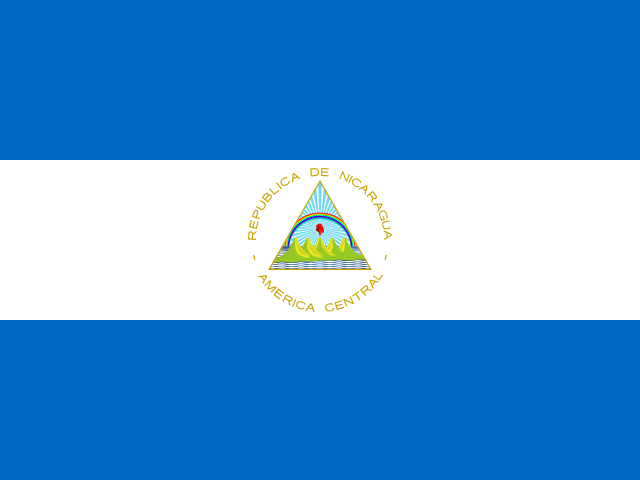
Nicaragua has announced it will withdraw from the Central American Parliament (Parlacen), a regional body.
The move comes amid international criticism of Nicaragua's human rights record and its growing isolation in Latin America.
*AI-generated summary of publicly available data. This is not an official statement of any party.
*AI-generated summary of publicly available statements and reporting. This is not an official statement of this party.
Supporters of Nicaragua argue that Parlacen embodies a foreign cultural imposition, and that withdrawing restores sovereign traditions rather than isolating the nation.
Supporters of Nicaragua argue that Parlacen fails to represent Central American cultural diversity, so withdrawal reclaims national sovereignty over the country's own political traditions and identity.
Supporters of Nicaragua counter that the isthmus never shared one identity; the region's cultural fault lines predate any parliament, and a single voice was always Managua's to withhold, not theirs to assume.
Supporters of Nicaragua argue that withdrawal from Parlacen is a lawful exercise of national sovereignty, since no treaty obligates a state to remain in a regional body it deems contrary to its interests.
Supporters of Nicaragua argue that withdrawal from Parlacen is a lawful exercise of national sovereignty, since no treaty binds a state to remain in a regional body against its interests.
Supporters of Nicaragua counter that the Parliament's founding treaty expressly permits withdrawal, so the exit is a lawful exercise of sovereignty rather than a breach of the regional legal framework.
Supporters of Nicaragua argue withdrawal from Parlacen is pragmatic: the body offers no leverage, only a stage for critics, so exiting denies rivals a forum while consolidating control at home.
Supporters of Nicaragua argue withdrawal from Parlacen is a rational move: the body offered no material benefit, only a platform for rivals to amplify criticism, so exit denies adversaries leverage.
Supporters of Nicaragua counter that sovereignty, not scrutiny, is the prize: a state facing peer review gains nothing and yields leverage, so withdrawal is a rational defense of autonomy, not a confession.
Supporters of Nicaragua argue that withdrawing from Parlacen is a sovereign right, maintaining that no nation should fund a regional body that criticizes its internal affairs.
Supporters of Nicaragua argue that withdrawing from Parlacen upholds national sovereignty, rejecting a regional body they see as a vehicle for foreign pressure rather than legitimate moral authority.
Supporters of Nicaragua counter that the parliament's moral authority was already forfeited when it failed to condemn regional abuses, so withdrawal upholds sovereignty and dignity rather than betraying solidarity.
Supporters of Nicaragua's withdrawal argue the Parlacen undermines national sovereignty and traditional Catholic values, maintaining that regional bodies should not impose secular norms on a nation rooted in faith and family.
Supporters of Nicaragua argue that withdrawing from Parlacen protects national sovereignty and traditional Catholic values against a secular regional body that has criticized the government's authority.
Supporters of Nicaragua counter that the Parliament's charter imposes secular governance that undermines the Church's role in public life, so they argue that true reconciliation requires respecting Nicaragua's Catholic institutions rather than ceding authority to a regional body.
*AI-generated summary of publicly available statements and reporting. This is not an official statement of this party.
Supporters of the Central American Parliament argue that regional integration is a cultural project binding nations through shared history and identity, and that Nicaragua's withdrawal weakens the collective voice Central Americans built together.
Supporters of the Central American Parliament argue that regional integration is a cultural identity project rooted in shared history, and Nicaragua's withdrawal weakens that common heritage rather than protecting it.
Supporters of Parlacen counter that Central American integration is itself a shared cultural tradition, not a foreign imposition, citing the region's common history and identity.
Supporters of the Central American Parliament argue that Nicaragua’s withdrawal undermines the regional legal framework for cooperation and human rights, which they maintain is essential to multilateral governance.
Supporters of the Central American Parliament argue that Nicaragua's withdrawal lacks legal grounding under Parlacen's founding treaty, which sets binding procedures for exit.
Supporters of Central American Parliament counter that Parlacen's founding treaty sets binding withdrawal procedures, so Nicaragua's exit is lawful only if those agreed terms are followed.
Supporters of the Central American Parliament argue Nicaragua's exit is a calculated bid to escape regional scrutiny, since staying would expose its rights record to peer review.
Supporters of the Central American Parliament argue that Nicaragua's withdrawal is a calculated bid to escape regional scrutiny, trading institutional leverage for unchecked control.
Supporters of Central American Parliament counter that Nicaragua's exit hands rivals exactly what they want: proof that Managua fears scrutiny, while ceding the forum to opponents who now frame absence as guilt.
Supporters of Central American Parliament argue that Nicaragua's withdrawal abandons a moral commitment to regional solidarity and human rights, which they see as the body's founding purpose.
Supporters of the Central American Parliament argue that the body exists to bind the region together through dialogue, so Nicaragua's withdrawal sacrifices a moral forum for accountability to avoid scrutiny.
Supporters of Central American Parliament counter that sovereignty carries moral obligations: a nation that helped found the body cannot abandon it when scrutiny arrives, since shared democracy demands accountability over convenience.
Supporters of the Central American Parliament argue that regional unity reflects a moral duty to pursue peace and reconciliation, and they maintain that withdrawal weakens a God-given call for neighbors to seek justice together.
Supporters of the Central American Parliament argue that regional unity reflects a moral duty to pursue peace and reconciliation, invoking scripture's call to be peacemakers among nations.
Supporters of Central American Parliament counter that Catholic social teaching itself upholds subsidiarity alongside solidarity, so regional communion among nations does not contradict the faith rooted in family and church.
AI-generated summary of publicly available statements and reporting. This is not an official statement of this party.
Supporters of Nicaragua argue that Parlacen embodies a foreign cultural imposition, and that withdrawing restores sovereign traditions rather than isolating the nation.
Supporters of Nicaragua argue that Parlacen fails to represent Central American cultural diversity, so withdrawal reclaims national sovereignty over the country's own political traditions and identity.
Supporters of Nicaragua counter that the isthmus never shared one identity; the region's cultural fault lines predate any parliament, and a single voice was always Managua's to withhold, not theirs to assume.
Supporters of Nicaragua argue that withdrawal from Parlacen is a lawful exercise of national sovereignty, since no treaty obligates a state to remain in a regional body it deems contrary to its interests.
Supporters of Nicaragua argue that withdrawal from Parlacen is a lawful exercise of national sovereignty, since no treaty binds a state to remain in a regional body against its interests.
Supporters of Nicaragua counter that the Parliament's founding treaty expressly permits withdrawal, so the exit is a lawful exercise of sovereignty rather than a breach of the regional legal framework.
Supporters of Nicaragua argue withdrawal from Parlacen is pragmatic: the body offers no leverage, only a stage for critics, so exiting denies rivals a forum while consolidating control at home.
Supporters of Nicaragua argue withdrawal from Parlacen is a rational move: the body offered no material benefit, only a platform for rivals to amplify criticism, so exit denies adversaries leverage.
Supporters of Nicaragua counter that sovereignty, not scrutiny, is the prize: a state facing peer review gains nothing and yields leverage, so withdrawal is a rational defense of autonomy, not a confession.
Supporters of Nicaragua argue that withdrawing from Parlacen is a sovereign right, maintaining that no nation should fund a regional body that criticizes its internal affairs.
Supporters of Nicaragua argue that withdrawing from Parlacen upholds national sovereignty, rejecting a regional body they see as a vehicle for foreign pressure rather than legitimate moral authority.
Supporters of Nicaragua counter that the parliament's moral authority was already forfeited when it failed to condemn regional abuses, so withdrawal upholds sovereignty and dignity rather than betraying solidarity.
Supporters of Nicaragua's withdrawal argue the Parlacen undermines national sovereignty and traditional Catholic values, maintaining that regional bodies should not impose secular norms on a nation rooted in faith and family.
Supporters of Nicaragua argue that withdrawing from Parlacen protects national sovereignty and traditional Catholic values against a secular regional body that has criticized the government's authority.
Supporters of Nicaragua counter that the Parliament's charter imposes secular governance that undermines the Church's role in public life, so they argue that true reconciliation requires respecting Nicaragua's Catholic institutions rather than ceding authority to a regional body.
Supporters of the Central American Parliament argue that regional integration is a cultural project binding nations through shared history and identity, and that Nicaragua's withdrawal weakens the collective voice Central Americans built together.
Supporters of the Central American Parliament argue that regional integration is a cultural identity project rooted in shared history, and Nicaragua's withdrawal weakens that common heritage rather than protecting it.
Supporters of Parlacen counter that Central American integration is itself a shared cultural tradition, not a foreign imposition, citing the region's common history and identity.
Supporters of the Central American Parliament argue that Nicaragua’s withdrawal undermines the regional legal framework for cooperation and human rights, which they maintain is essential to multilateral governance.
Supporters of the Central American Parliament argue that Nicaragua's withdrawal lacks legal grounding under Parlacen's founding treaty, which sets binding procedures for exit.
Supporters of Central American Parliament counter that Parlacen's founding treaty sets binding withdrawal procedures, so Nicaragua's exit is lawful only if those agreed terms are followed.
Supporters of the Central American Parliament argue Nicaragua's exit is a calculated bid to escape regional scrutiny, since staying would expose its rights record to peer review.
Supporters of the Central American Parliament argue that Nicaragua's withdrawal is a calculated bid to escape regional scrutiny, trading institutional leverage for unchecked control.
Supporters of Central American Parliament counter that Nicaragua's exit hands rivals exactly what they want: proof that Managua fears scrutiny, while ceding the forum to opponents who now frame absence as guilt.
Supporters of Central American Parliament argue that Nicaragua's withdrawal abandons a moral commitment to regional solidarity and human rights, which they see as the body's founding purpose.
Supporters of the Central American Parliament argue that the body exists to bind the region together through dialogue, so Nicaragua's withdrawal sacrifices a moral forum for accountability to avoid scrutiny.
Supporters of Central American Parliament counter that sovereignty carries moral obligations: a nation that helped found the body cannot abandon it when scrutiny arrives, since shared democracy demands accountability over convenience.
Supporters of the Central American Parliament argue that regional unity reflects a moral duty to pursue peace and reconciliation, and they maintain that withdrawal weakens a God-given call for neighbors to seek justice together.
Supporters of the Central American Parliament argue that regional unity reflects a moral duty to pursue peace and reconciliation, invoking scripture's call to be peacemakers among nations.
Supporters of Central American Parliament counter that Catholic social teaching itself upholds subsidiarity alongside solidarity, so regional communion among nations does not contradict the faith rooted in family and church.
The country's crackdown on human rights has left it increasingly isolated in Latin America.