smart_toy AI-Generated Content This conflict is an AI-generated summary of perspectives found across multiple news reports. It does not determine factual truth or a winning side.

Nordic football associations vs FIFA leadership

Listen

Nordic football associations
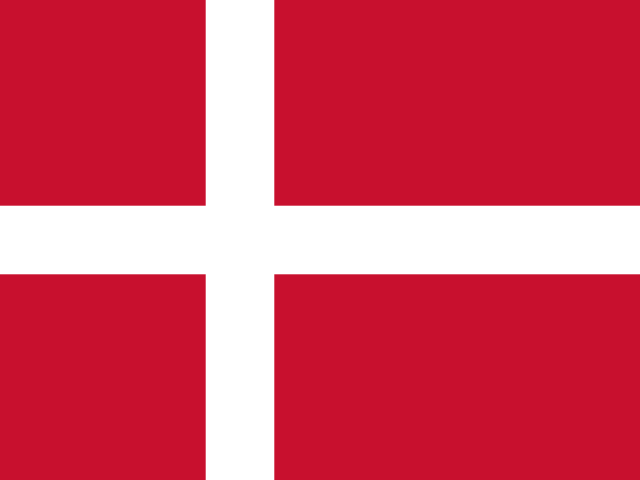
Denmark
Denmark
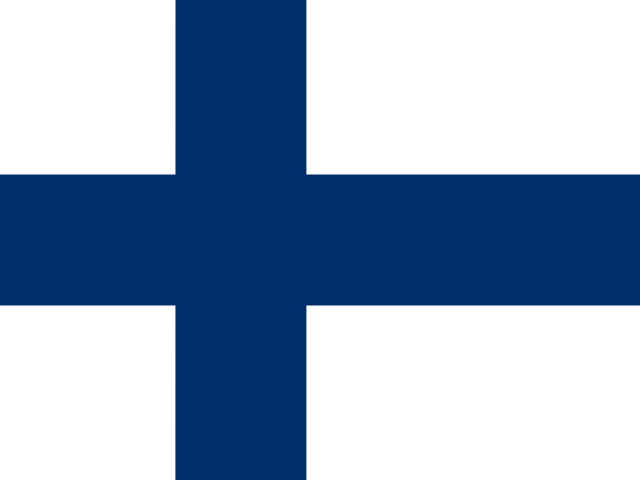
Finland
Finland
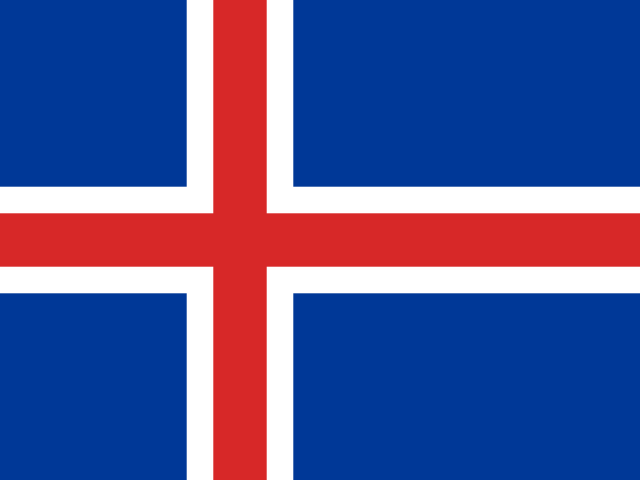
Iceland
Iceland
Norway
Norway
Sweden
Sweden
Faroe Islands
Faroe Islands
VS

FIFA leadership

Gianni Infantino

The Nordic football associations—comprising Denmark, Finland, Iceland, Norway, Sweden, and the Faroe Islands—are the national governing bodies for football in their respective countries.

They have jointly expressed a loss of confidence in FIFA President Gianni Infantino and raised serious concerns about the organization's governance and high-level leadership.

The conflict centers on the Nordic associations' demand for FIFA reforms and their call for Infantino's resignation, citing a breakdown of trust.

Their stance puts them in direct opposition to FIFA's current leadership under Infantino, with the Nordic bodies threatening to consider leaving FIFA if a proposal for a World Cup every two years is approved.

*AI-generated summary of publicly available data. This is not an official statement of any party.

AI-Generated Nordic football associations Narrative
*AI-generated summary of publicly available statements and reporting. This is not an official statement of this party.

Supporters of Nordic football associations argue that their call for FIFA leadership change upholds the cultural integrity of the sport, rooted in consensus and institutional accountability.

Supporters of Nordic football associations argue that FIFA statutes empower member associations to demand accountability, and that national federations legally retain the right to challenge leadership they no longer trust.
Supporters of Nordic football associations counter that statutory authority does not immunize FIFA’s leadership from accountability under its own governance code, which mandates adherence to rule of law and ethical conduct.
Supporters of Nordic football associations argue their revolt is pure realpolitik: six small federations know FIFA's patronage machine rewards loyalty, so their public break with Infantino signals a calculated bid to rally disaffected blocs and position themselves as reformers be.

Supporters of Nordic football associations counter that influence flows from coalition-building, not raw votes; their bloc’s leverage lies in convening smaller federations into a swing vote that FIFA leadership cannot ignore.

Supporters of Nordic football associations argue that holding FIFA’s leadership to moral accountability is a voluntary duty, not coercion, as their call for Infantino’s resignation reflects an ethical stand against unchecked power in sport.

Supporters of Nordic football associations hold that stewardship demands accountability, citing FIFA's crisis as a breach of sacred trust; they argue resignation honors the moral law over institutional pride.

AI-Generated FIFA leadership Narrative

*AI-generated summary of publicly available statements and reporting. This is not an official statement of this party.

Supporters of FIFA leadership argue that the Nordic associations' protest reflects a cultural disconnect, as global football governance must respect diverse national traditions rather than impose a single regional standard.

Supporters of FIFA leadership argue that Infantino's mandate stems from proper electoral procedure, making resignation demands legally unfounded. They maintain that Nordic nations bypass established governance channels, undermining FIFA's statutory authority.

Supporters of FIFA leadership counter that the governing body’s statutes vest exclusive authority in its own congress and council to address leadership disputes, leaving member associations no unilateral legal standing to demand accountability outside that framework.

Supporters of FIFA leadership argue the Nordic bloc's protest is a play for influence, not principle, given their small voting weight in global football.

Supporters of FIFA leadership counter that Nordic revolt is a bluff, not realpolitik: their leverage rests on moral prestige, not votes or money, which Infantino's bloc politics easily outlasts.

Supporters of FIFA leadership argue that Infantino’s tenure has expanded global football access, and they see the Nordics’ resignation call as a breach of institutional loyalty over procedural disputes, not a moral failing.

Supporters of FIFA leadership counter that moral accountability must be exercised through established governance channels, not public resignations, as Infantino’s mandate stems from democratic member votes, making the Nordic call an overreach that undermines institutional legitim.

Supporters of FIFA leadership argue its authority, like that of a governing institution, must remain stable and undivided for football’s global order to endure.

AI-Generated Nordic football associations Narrative

AI-generated summary of publicly available statements and reporting. This is not an official statement of this party.

Supporters of Nordic football associations argue that their call for FIFA leadership change upholds the cultural integrity of the sport, rooted in consensus and institutional accountability.

Supporters of Nordic football associations argue that FIFA statutes empower member associations to demand accountability, and that national federations legally retain the right to challenge leadership they no longer trust.

Supporters of Nordic football associations counter that statutory authority does not immunize FIFA’s leadership from accountability under its own governance code, which mandates adherence to rule of law and ethical conduct.

Supporters of Nordic football associations argue their revolt is pure realpolitik: six small federations know FIFA's patronage machine rewards loyalty, so their public break with Infantino signals a calculated bid to rally disaffected blocs and position themselves as reformers be.

Supporters of Nordic football associations counter that influence flows from coalition-building, not raw votes; their bloc’s leverage lies in convening smaller federations into a swing vote that FIFA leadership cannot ignore.

Supporters of Nordic football associations argue that holding FIFA’s leadership to moral accountability is a voluntary duty, not coercion, as their call for Infantino’s resignation reflects an ethical stand against unchecked power in sport.

Supporters of Nordic football associations hold that stewardship demands accountability, citing FIFA's crisis as a breach of sacred trust; they argue resignation honors the moral law over institutional pride.

AI-Generated FIFA leadership Narrative

Supporters of FIFA leadership argue that the Nordic associations' protest reflects a cultural disconnect, as global football governance must respect diverse national traditions rather than impose a single regional standard.

Supporters of FIFA leadership argue that Infantino's mandate stems from proper electoral procedure, making resignation demands legally unfounded. They maintain that Nordic nations bypass established governance channels, undermining FIFA's statutory authority.

Supporters of FIFA leadership counter that the governing body’s statutes vest exclusive authority in its own congress and council to address leadership disputes, leaving member associations no unilateral legal standing to demand accountability outside that framework.

Supporters of FIFA leadership argue the Nordic bloc's protest is a play for influence, not principle, given their small voting weight in global football.

Supporters of FIFA leadership counter that Nordic revolt is a bluff, not realpolitik: their leverage rests on moral prestige, not votes or money, which Infantino's bloc politics easily outlasts.

Supporters of FIFA leadership argue that Infantino’s tenure has expanded global football access, and they see the Nordics’ resignation call as a breach of institutional loyalty over procedural disputes, not a moral failing.

Supporters of FIFA leadership counter that moral accountability must be exercised through established governance channels, not public resignations, as Infantino’s mandate stems from democratic member votes, making the Nordic call an overreach that undermines institutional legitim.

Supporters of FIFA leadership argue its authority, like that of a governing institution, must remain stable and undivided for football’s global order to endure.


Aug 23, 2026
Nordic nations ‘have lost confidence in Infantino’, demand FIFA reforms

Denmark, Finland, Iceland, Norway, Sweden and the Faroe Islands back calls for Infantino's resignation amid FIFA crisis.

Aug 23, 2026
Nordic associations threaten to leave FIFA over biennial World Cup

In their joint statement, the six Nordic football associations said they would consider leaving FIFA if a World Cup every two years is agreed.


Why Should You Care?
This conflict is mostly internal to football's governing bodies and does not directly change your daily routine, bills, or shopping. Unless you follow football governance closely, its practical effects on your life are minimal.
Local Impact
For most people, this is a behind-the-scenes power struggle that won't change your local club, league, or ability to watch matches.
Employment
No direct effect on jobs or wages, as this dispute involves football administrators, not the broader labor market.
Investments
No direct effect on your savings or investments, since this is a governance issue within a sports body, not a market event.
The bottom line: Unless you are deeply involved in football politics, this conflict has no tangible impact on your everyday life.
AI-generated plain-language analysis · 2026-08-23 17:01
arrow_back Back to Conflicts Next arrow_forward
graphic_eq

This tour has sound.

Tap to play the voiceover narration (with background music).