Oceania Football Confederation

VS
New Zealand Football
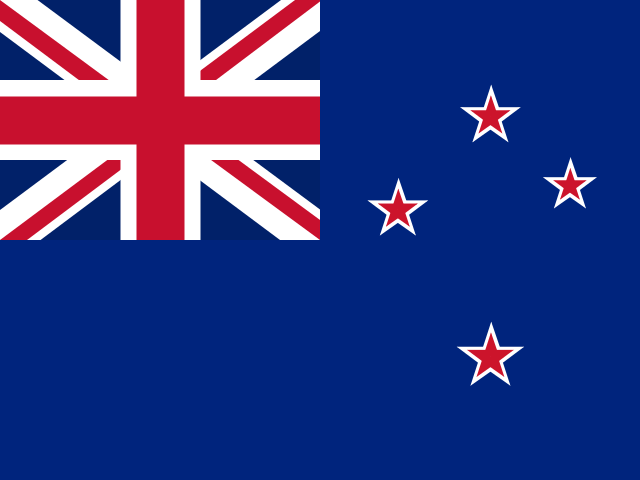
Oceania Football Confederation (OFC) is the smallest FIFA confederation, representing football associations from Oceania, with New Zealand historically serving as its dominant force, winning every FIFA World Cup qualification tournament and all but one OFC competition.
New Zealand Football is the governing body for football in New Zealand, which has secured a spot in the 2026 FIFA World Cup after defeating New Caledonia 3-0 in the Oceania qualifying final.
The rift between the two sides centers on their differing stances regarding FIFA president Gianni Infantino.
While the OFC has publicly supported Infantino, New Zealand Football has diverged from its own confederation's stance, creating a divide within the region over Infantino's leadership.
This disagreement highlights the tension between the confederation's collective position and the independent stance of its most successful member.
*AI-generated summary of publicly available data. This is not an official statement of any party.
*AI-generated summary of publicly available statements and reporting. This is not an official statement of this party.
Supporters of Oceania Football Confederation argue that New Zealand Football’s dissent fractures the region’s shared cultural voice on the global stage.
Supporters of Oceania Football Confederation argue that New Zealand Football’s defiance breaks the region’s collective cultural voice, undermining the shared Pacific identity that binds its members in FIFA’s global politics.
Supporters of Oceania Football Confederation counter that New Zealand’s departure severs shared Pacific cultural ties, where collective identity and mutual obligation outweigh individual governance claims.
Supporters of Oceania Football Confederation argue that its public backing of FIFA president Gianni Infantino is legally consistent with FIFA’s statutes, which require confederations to align with the global body’s governance.
Supporters of Oceania Football Confederation argue that its public backing of Gianni Infantino reflects lawful adherence to FIFA’s governance framework, where confederation autonomy permits such endorsement.
Supporters of Oceania Football Confederation counter that FIFA’s own statutes require confederations to remain politically neutral, and a member’s vote against its regional body’s unified stance violates the confederation’s internal legal framework, which New Zealand Football vol.
Supporters of Oceania Football Confederation argue that New Zealand’s rebellion is a costly miscalculation, as the confederation’s loyalty to Infantino secures FIFA funding and influence that outweigh any moral posturing.
Supporters of Oceania Football Confederation argue that New Zealand’s break is a costly illusion of independence, since the confederation’s leverage with FIFA flows through Infantino’s patronage, and loyalty buys more funding than principled defiance.
Supporters of Oceania Football Confederation counter that New Zealand’s break is a bluff, not leverage—without the confederation’s voting bloc, Wellington loses FIFA’s ear, while OFC’s loyalty to Infantino buys direct access to resources that independence never will.
Supporters of Oceania Football Confederation argue that loyalty to FIFA leadership reflects a moral duty to regional unity, as New Zealand Football’s dissent fractures collective stewardship.
Supporters of Oceania Football Confederation argue that loyalty to FIFA leadership reflects a moral duty to regional unity, as institutional solidarity preserves the confederation's collective voice and stewardship of Pacific football.
Supporters of Oceania Football Confederation counter that moral integrity is rooted in uplifting Pacific island nations, not severing ties that fund their survival.
Supporters of Oceania Football Confederation argue that unity and loyalty are sacred duties, citing scripture that a house divided cannot stand, so backing FIFA’s leadership reflects faith in ordained authority.
Supporters of Oceania Football Confederation argue that unity and loyalty to leadership reflect scriptural order, as New Zealand Football's break with the confederation undermines the harmony commanded in faith.
Supporters of Oceania Football Confederation counter that divine order binds the faithful through covenant, not convenience; abandoning the confederation’s shared fellowship for a self-styled moral path echoes the sin of pride, as scripture warns against forsaking one’s own flock.
*AI-generated summary of publicly available statements and reporting. This is not an official statement of this party.
Supporters of New Zealand Football argue their break with Oceania reflects a cultural commitment to independent judgment over confederation loyalty, citing precedent where national bodies historically diverged from regional blocs to uphold governance standards.
Supporters of New Zealand Football argue that their federation’s break with Oceania reflects a cultural commitment to institutional integrity over regional conformity, citing historical precedent where principled dissent strengthened governance.
Supporters of New Zealand Football counter that shared regional culture is not monolithic, and dissent preserves the distinct Māori and Pasifika identities that enrich Oceania’s voice rather than fracturing it.
Supporters of New Zealand Football argue that their break from the Oceania confederation reflects a legal right to independent judgment, not disloyalty, as FIFA statutes permit member associations to vote their own conscience on leadership matters.
Supporters of New Zealand Football argue that its divergence from the Oceania confederation is a lawful exercise of independent judgment, not disloyalty; as a separate legal entity, it is bound by FIFA statutes, not by bloc voting.
Supporters of New Zealand Football counter that FIFA’s statutes also mandate confederation neutrality in presidential elections, and that OFC’s public endorsement breaches that impartiality, undermining legal governance.
Supporters of New Zealand Football argue the confederation’s backing of Infantino is a loyalty play for influence, while Wellington’s break signals a calculated bet on institutional independence over regional favors, prioritizing long-term leverage.
Supporters of New Zealand Football argue the federation’s break with Oceania is strategic pragmatism, not rebellion; backing Infantino yields nothing, while visible dissent signals independence to FIFA’s real power brokers.
Supporters of New Zealand Football counter that Infantino’s patronage is a poisoned chalice, as OFC’s subservience buys only scraps while binding the confederation to a volatile power center; New Zealand’s leverage, they argue, lies in threatening exit to secure better terms, not.
Supporters of New Zealand Football argue that moral integrity demands independent judgment over confederation loyalty, as blind regional alignment with Infantino risks endorsing leadership without ethical scrutiny.
Supporters of New Zealand Football argue that moral integrity requires breaking with Oceania’s bloc loyalty when leadership accountability is at stake.
Supporters of New Zealand Football counter that moral duty runs to clean governance, not blind regional loyalty, and that dissent protects Oceania’s integrity. They argue unity built on silence harms every member.
Supporters of New Zealand Football argue that institutional loyalty should follow moral order, not merely regional alignment; they maintain that their federation’s divergence reflects a higher duty to principled governance over the Oceania confederation’s uncritical backing of In.
Supporters of New Zealand Football argue that their break with Oceania reflects a stewardship duty to uphold moral order over institutional loyalty, seeing Infantino's leadership as undermining the sport's sacred integrity.
Supporters of New Zealand Football counter that scripture also commands testing all things and holding fast to what is good, so blind loyalty to FIFA’s leadership defies the call for discernment.
AI-generated summary of publicly available statements and reporting. This is not an official statement of this party.
Supporters of Oceania Football Confederation argue that New Zealand Football’s dissent fractures the region’s shared cultural voice on the global stage.
Supporters of Oceania Football Confederation argue that New Zealand Football’s defiance breaks the region’s collective cultural voice, undermining the shared Pacific identity that binds its members in FIFA’s global politics.
Supporters of Oceania Football Confederation counter that New Zealand’s departure severs shared Pacific cultural ties, where collective identity and mutual obligation outweigh individual governance claims.
Supporters of Oceania Football Confederation argue that its public backing of FIFA president Gianni Infantino is legally consistent with FIFA’s statutes, which require confederations to align with the global body’s governance.
Supporters of Oceania Football Confederation argue that its public backing of Gianni Infantino reflects lawful adherence to FIFA’s governance framework, where confederation autonomy permits such endorsement.
Supporters of Oceania Football Confederation counter that FIFA’s own statutes require confederations to remain politically neutral, and a member’s vote against its regional body’s unified stance violates the confederation’s internal legal framework, which New Zealand Football vol.
Supporters of Oceania Football Confederation argue that New Zealand’s rebellion is a costly miscalculation, as the confederation’s loyalty to Infantino secures FIFA funding and influence that outweigh any moral posturing.
Supporters of Oceania Football Confederation argue that New Zealand’s break is a costly illusion of independence, since the confederation’s leverage with FIFA flows through Infantino’s patronage, and loyalty buys more funding than principled defiance.
Supporters of Oceania Football Confederation counter that New Zealand’s break is a bluff, not leverage—without the confederation’s voting bloc, Wellington loses FIFA’s ear, while OFC’s loyalty to Infantino buys direct access to resources that independence never will.
Supporters of Oceania Football Confederation argue that loyalty to FIFA leadership reflects a moral duty to regional unity, as New Zealand Football’s dissent fractures collective stewardship.
Supporters of Oceania Football Confederation argue that loyalty to FIFA leadership reflects a moral duty to regional unity, as institutional solidarity preserves the confederation's collective voice and stewardship of Pacific football.
Supporters of Oceania Football Confederation counter that moral integrity is rooted in uplifting Pacific island nations, not severing ties that fund their survival.
Supporters of Oceania Football Confederation argue that unity and loyalty are sacred duties, citing scripture that a house divided cannot stand, so backing FIFA’s leadership reflects faith in ordained authority.
Supporters of Oceania Football Confederation argue that unity and loyalty to leadership reflect scriptural order, as New Zealand Football's break with the confederation undermines the harmony commanded in faith.
Supporters of Oceania Football Confederation counter that divine order binds the faithful through covenant, not convenience; abandoning the confederation’s shared fellowship for a self-styled moral path echoes the sin of pride, as scripture warns against forsaking one’s own flock.
Supporters of New Zealand Football argue their break with Oceania reflects a cultural commitment to independent judgment over confederation loyalty, citing precedent where national bodies historically diverged from regional blocs to uphold governance standards.
Supporters of New Zealand Football argue that their federation’s break with Oceania reflects a cultural commitment to institutional integrity over regional conformity, citing historical precedent where principled dissent strengthened governance.
Supporters of New Zealand Football counter that shared regional culture is not monolithic, and dissent preserves the distinct Māori and Pasifika identities that enrich Oceania’s voice rather than fracturing it.
Supporters of New Zealand Football argue that their break from the Oceania confederation reflects a legal right to independent judgment, not disloyalty, as FIFA statutes permit member associations to vote their own conscience on leadership matters.
Supporters of New Zealand Football argue that its divergence from the Oceania confederation is a lawful exercise of independent judgment, not disloyalty; as a separate legal entity, it is bound by FIFA statutes, not by bloc voting.
Supporters of New Zealand Football counter that FIFA’s statutes also mandate confederation neutrality in presidential elections, and that OFC’s public endorsement breaches that impartiality, undermining legal governance.
Supporters of New Zealand Football argue the confederation’s backing of Infantino is a loyalty play for influence, while Wellington’s break signals a calculated bet on institutional independence over regional favors, prioritizing long-term leverage.
Supporters of New Zealand Football argue the federation’s break with Oceania is strategic pragmatism, not rebellion; backing Infantino yields nothing, while visible dissent signals independence to FIFA’s real power brokers.
Supporters of New Zealand Football counter that Infantino’s patronage is a poisoned chalice, as OFC’s subservience buys only scraps while binding the confederation to a volatile power center; New Zealand’s leverage, they argue, lies in threatening exit to secure better terms, not.
Supporters of New Zealand Football argue that moral integrity demands independent judgment over confederation loyalty, as blind regional alignment with Infantino risks endorsing leadership without ethical scrutiny.
Supporters of New Zealand Football argue that moral integrity requires breaking with Oceania’s bloc loyalty when leadership accountability is at stake.
Supporters of New Zealand Football counter that moral duty runs to clean governance, not blind regional loyalty, and that dissent protects Oceania’s integrity. They argue unity built on silence harms every member.
Supporters of New Zealand Football argue that institutional loyalty should follow moral order, not merely regional alignment; they maintain that their federation’s divergence reflects a higher duty to principled governance over the Oceania confederation’s uncritical backing of In.
Supporters of New Zealand Football argue that their break with Oceania reflects a stewardship duty to uphold moral order over institutional loyalty, seeing Infantino's leadership as undermining the sport's sacred integrity.
Supporters of New Zealand Football counter that scripture also commands testing all things and holding fast to what is good, so blind loyalty to FIFA’s leadership defies the call for discernment.
Oceania have offered support to Gianni Infantino, but New Zealand have gone against their own confederation in FIFA row.
New Zealand Football publicly diverged from the Oceania Football Confederation's stance on FIFA president Gianni Infantino, deepening the rift within the region.