Pakistan

VS
India
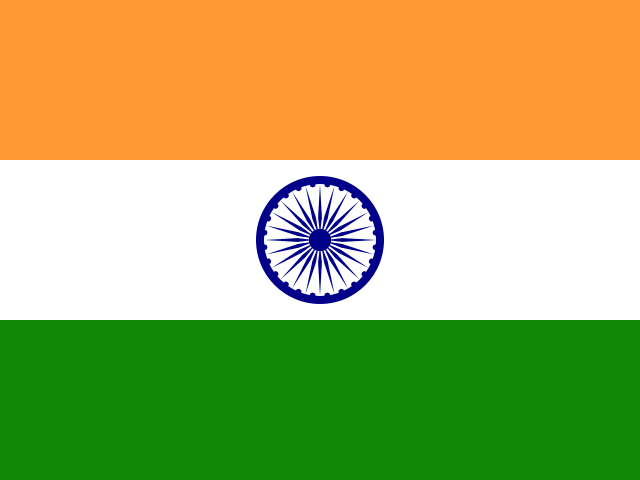
Pakistan and India are neighboring South Asian nations with a long history of political and military tensions.
Pakistan, officially the Islamic Republic of Pakistan, is a parliamentary democracy, while India, officially the Republic of India, is the world's largest democracy.
Both countries have fought multiple wars and conflicts since their independence in 1947, primarily over the region of Kashmir, and have also engaged in a fierce cricketing rivalry that is considered one of the greatest in the sport.
The current dispute centers on the Indus Waters Treaty, a water-sharing agreement brokered by the World Bank in 1960.
Pakistan Prime Minister Shehbaz Sharif has accused India of illegally suspending the treaty, while India has not publicly acknowledged such a suspension.
The disagreement revolves around whether India's actions violate the treaty's terms and what the consequences should be, with Pakistan warning of a 'red line' over the issue.
The stakes are high, as the Indus Waters Treaty is a cornerstone of water security for both nations, and any unilateral suspension could escalate tensions in an already volatile region.
The conflict is further complicated by ongoing military confrontations, such as the brief armed conflict in May 2025, and a deep-seated sporting rivalry that reflects broader political animosities.
*AI-generated summary of publicly available data. This is not an official statement of any party.
*AI-generated summary of publicly available statements and reporting. This is not an official statement of this party.
Supporters of Pakistan argue that the Indus Waters Treaty is a sacred cultural lifeline, binding the nation’s rivers to its agrarian heritage, and they view India’s suspension as an assault on that identity.
Supporters of Pakistan argue that the Indus Waters Treaty is more than a legal accord—it is a cultural lifeline binding the nation's agrarian heritage to its rivers, and India's suspension threatens that sacred identity.
Supporters of Pakistan counter that the treaty’s suspension disregards the shared cultural and historical identity of the Indus basin, where both nations’ agricultural and spiritual traditions are interwoven.
Supporters of Pakistan argue that India’s unilateral suspension of the Indus Waters Treaty breaches binding international legal obligations, demanding third-party arbitration as the treaty’s dispute mechanism requires.
Supporters of Pakistan argue that India’s suspension of the Indus Waters Treaty breaches its binding dispute-resolution clauses, making the action a clear legal violation under international water law.
Supporters of Pakistan counter that the treaty’s dispute-resolution mechanism was never triggered by India’s unilateral abrogation, which itself breaches the pact’s foundational terms.
Supporters of Pakistan argue India’s suspension is a coercive power play, not a legal one; they assert that New Delhi exploits treaty ambiguity to weaponize water as leverage, knowing Islamabad’s reliance makes compliance a survival imperative.
Supporters of Pakistan argue that India’s treaty suspension is a calculated power play, using water leverage to coerce Islamabad while feigning legalism.
Supporters of Pakistan counter that legal treaties exist precisely to restrain security-driven pragmatism; abandoning the pact rewards coercive leverage and invites chronic instability.
Supporters of Pakistan argue that breaking a treaty is a moral breach of trust, as the Indus Waters pact binds both nations to shared stewardship for generations.
Supporters of Pakistan argue that breaking a treaty is a moral breach of trust, where India’s unilateral action violates the pact’s spirit of mutual cooperation.
Supporters of Pakistan counter that India’s treaty claims ignore the moral weight of self-determination for Kashmiris, arguing that legal formalism cannot justify suppressing a people’s will through force.
Supporters of Pakistan argue that the Indus Waters Treaty is a sacred covenant of shared order, and its violation by India threatens the divine balance of life-giving waters.
Supporters of Pakistan view the Indus Waters Treaty as a sacred covenant, rooted in inherited trust and divine order, which India’s suspension dishonors.
Supporters of Pakistan counter that the divine trust of the Indus waters obliges both nations to honor the treaty’s spirit, not merely its letter, and they challenge the claim that India’s lawful compliance absolves it of ecological and ethical stewardship over shared rivers.
*AI-generated summary of publicly available statements and reporting. This is not an official statement of this party.
Supporters of India argue that the treaty’s suspension reflects India’s right to safeguard its sovereign resources, a stance rooted in cultural pride over river heritage.
Supporters of India argue the Indus Waters Treaty remains a cornerstone of regional stability, and they maintain that India has upheld its terms while Pakistan mischaracterizes routine infrastructure work as treaty violations.
Supporters of India counter that the Indus Waters Treaty’s cultural framing ignores how the rivers also nourish India’s own sacred traditions, with the Ganges and Indus basin shared as a common civilizational heritage, not a Pakistani monopoly.
Supporters of India argue the treaty’s dispute-resolution mechanism remains intact, and any alleged suspension is a domestic legal matter, not a violation, until a neutral expert rules otherwise.
Supporters of India argue that treaty compliance is a legal question of fact, and they point to India's consistent record under the Indus Waters Treaty as evidence that no illegal suspension has occurred.
Supporters of India counter that the Indus Waters Treaty’s dispute mechanism permits bilateral resolution first, and India’s suspension stems from Pakistan’s persistent non-compliance with the treaty’s notification and data-sharing clauses, not a unilateral breach.
Supporters of India argue that Islamabad’s treaty claims are a political weapon, not a legal grievance, noting that New Delhi’s water management decisions stem from security imperatives and territorial disputes, making the pact’s suspension a pragmatic lever.
Supporters of India argue that water treaties are leverage, not charity, and that Pakistan’s repeated treaty violations forfeit any moral claim to its terms.
Supporters of India counter that treaty compliance is a strategic choice, not coercion; Islamabad’s reliance is a self-imposed vulnerability, and New Delhi’s suspension signals that leverage flows to those who honor obligations, not those who cry survival.
Supporters of India argue that treaty obligations bind both parties equally, and India’s actions reflect a lawful response to persistent cross-border hostility, not unilateral breach.
Supporters of India argue that treaty compliance is a moral duty, and India's actions remain within legal bounds, prioritizing regional stability and shared human welfare over unilateral accusations.
Supporters of India counter that the treaty itself was a product of imposed arbitration, not mutual trust, and that Pakistan’s persistent cross-border terrorism violates the pact’s spirit of peaceful coexistence, thereby releasing India from a moral obligation to a partner that h.
Supporters of India argue that stewardship of the Indus waters, as a sacred trust from the divine, permits rightful use within treaty bounds, and they maintain that Pakistan's accusations ignore India's lawful compliance and regional responsibility.
Supporters of India argue the Indus Waters Treaty is a secular pact, not divine writ, and that India’s actions reflect national sovereignty, not sacred breach.
Supporters of India counter that the treaty’s own arbitration clauses are the true covenant, and that India’s use of its eastern rivers respects the divine gift of water to all, without breaching the sacred trust.
AI-generated summary of publicly available statements and reporting. This is not an official statement of this party.
Supporters of Pakistan argue that the Indus Waters Treaty is a sacred cultural lifeline, binding the nation’s rivers to its agrarian heritage, and they view India’s suspension as an assault on that identity.
Supporters of Pakistan argue that the Indus Waters Treaty is more than a legal accord—it is a cultural lifeline binding the nation's agrarian heritage to its rivers, and India's suspension threatens that sacred identity.
Supporters of Pakistan counter that the treaty’s suspension disregards the shared cultural and historical identity of the Indus basin, where both nations’ agricultural and spiritual traditions are interwoven.
Supporters of Pakistan argue that India’s unilateral suspension of the Indus Waters Treaty breaches binding international legal obligations, demanding third-party arbitration as the treaty’s dispute mechanism requires.
Supporters of Pakistan argue that India’s suspension of the Indus Waters Treaty breaches its binding dispute-resolution clauses, making the action a clear legal violation under international water law.
Supporters of Pakistan counter that the treaty’s dispute-resolution mechanism was never triggered by India’s unilateral abrogation, which itself breaches the pact’s foundational terms.
Supporters of Pakistan argue India’s suspension is a coercive power play, not a legal one; they assert that New Delhi exploits treaty ambiguity to weaponize water as leverage, knowing Islamabad’s reliance makes compliance a survival imperative.
Supporters of Pakistan argue that India’s treaty suspension is a calculated power play, using water leverage to coerce Islamabad while feigning legalism.
Supporters of Pakistan counter that legal treaties exist precisely to restrain security-driven pragmatism; abandoning the pact rewards coercive leverage and invites chronic instability.
Supporters of Pakistan argue that breaking a treaty is a moral breach of trust, as the Indus Waters pact binds both nations to shared stewardship for generations.
Supporters of Pakistan argue that breaking a treaty is a moral breach of trust, where India’s unilateral action violates the pact’s spirit of mutual cooperation.
Supporters of Pakistan counter that India’s treaty claims ignore the moral weight of self-determination for Kashmiris, arguing that legal formalism cannot justify suppressing a people’s will through force.
Supporters of Pakistan argue that the Indus Waters Treaty is a sacred covenant of shared order, and its violation by India threatens the divine balance of life-giving waters.
Supporters of Pakistan view the Indus Waters Treaty as a sacred covenant, rooted in inherited trust and divine order, which India’s suspension dishonors.
Supporters of Pakistan counter that the divine trust of the Indus waters obliges both nations to honor the treaty’s spirit, not merely its letter, and they challenge the claim that India’s lawful compliance absolves it of ecological and ethical stewardship over shared rivers.
Supporters of India argue that the treaty’s suspension reflects India’s right to safeguard its sovereign resources, a stance rooted in cultural pride over river heritage.
Supporters of India argue the Indus Waters Treaty remains a cornerstone of regional stability, and they maintain that India has upheld its terms while Pakistan mischaracterizes routine infrastructure work as treaty violations.
Supporters of India counter that the Indus Waters Treaty’s cultural framing ignores how the rivers also nourish India’s own sacred traditions, with the Ganges and Indus basin shared as a common civilizational heritage, not a Pakistani monopoly.
Supporters of India argue the treaty’s dispute-resolution mechanism remains intact, and any alleged suspension is a domestic legal matter, not a violation, until a neutral expert rules otherwise.
Supporters of India argue that treaty compliance is a legal question of fact, and they point to India's consistent record under the Indus Waters Treaty as evidence that no illegal suspension has occurred.
Supporters of India counter that the Indus Waters Treaty’s dispute mechanism permits bilateral resolution first, and India’s suspension stems from Pakistan’s persistent non-compliance with the treaty’s notification and data-sharing clauses, not a unilateral breach.
Supporters of India argue that Islamabad’s treaty claims are a political weapon, not a legal grievance, noting that New Delhi’s water management decisions stem from security imperatives and territorial disputes, making the pact’s suspension a pragmatic lever.
Supporters of India argue that water treaties are leverage, not charity, and that Pakistan’s repeated treaty violations forfeit any moral claim to its terms.
Supporters of India counter that treaty compliance is a strategic choice, not coercion; Islamabad’s reliance is a self-imposed vulnerability, and New Delhi’s suspension signals that leverage flows to those who honor obligations, not those who cry survival.
Supporters of India argue that treaty obligations bind both parties equally, and India’s actions reflect a lawful response to persistent cross-border hostility, not unilateral breach.
Supporters of India argue that treaty compliance is a moral duty, and India's actions remain within legal bounds, prioritizing regional stability and shared human welfare over unilateral accusations.
Supporters of India counter that the treaty itself was a product of imposed arbitration, not mutual trust, and that Pakistan’s persistent cross-border terrorism violates the pact’s spirit of peaceful coexistence, thereby releasing India from a moral obligation to a partner that h.
Supporters of India argue that stewardship of the Indus waters, as a sacred trust from the divine, permits rightful use within treaty bounds, and they maintain that Pakistan's accusations ignore India's lawful compliance and regional responsibility.
Supporters of India argue the Indus Waters Treaty is a secular pact, not divine writ, and that India’s actions reflect national sovereignty, not sacred breach.
Supporters of India counter that the treaty’s own arbitration clauses are the true covenant, and that India’s use of its eastern rivers respects the divine gift of water to all, without breaching the sacred trust.
Pakistan says an Indian warship entered its EEZ, while India says the collision occurred in international waters.
An international tribunal ordered India to observe its obligations under the Indus Waters Treaty with Pakistan.
Pakistan Prime Minister Shehbaz Sharif accused India of illegally suspending the Indus Waters Treaty.
India beat Pakistan by 61 runs in the 27th match of Group A at the ICC Men's T20 World Cup 2026, with Ishan Kishan scoring 77 runs.
India launched missile strikes on Pakistan, marking the start of a brief armed conflict between the two nations.
US envoy Sergio Gor called Jammu and Kashmir an 'important part of India', triggering a diplomatic spat between Pakistan and India.
Permanent Court of Arbitration ruled that the treaty remains binding, a decision India rejected.
The Indus Waters Treaty was signed between India and Pakistan in 1960.