Pakistan

VS
US and Iran

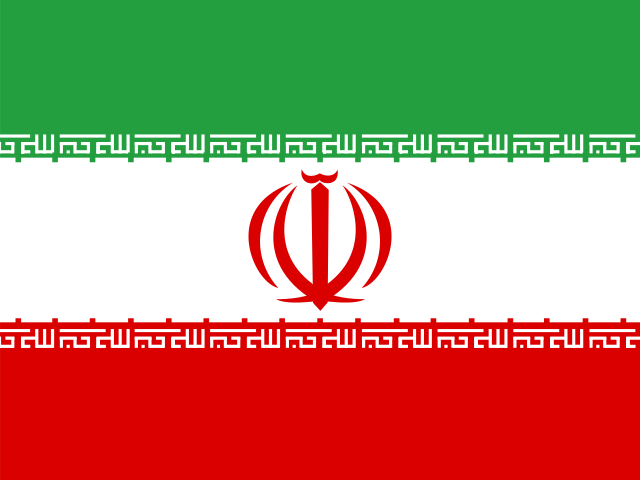
Pakistan has acted as an intermediary between the United States and Iran during the 2026 Iran war, facilitating talks and helping secure a ceasefire.
However, repeated failures to reach a final deal, such as the marathon talks in April 2026, have exposed the limits of Pakistan's mediation.
The United States has publicly credited Gulf nations rather than Pakistan for diplomatic progress, and Pakistan's role appears to be shrinking.
Meanwhile, Pakistan has also launched strikes in Afghanistan, complicating its position as a neutral mediator.
*AI-generated summary of publicly available data. This is not an official statement of any party.
*AI-generated summary of publicly available statements and reporting. This is not an official statement of this party.
Supporters of Pakistan argue that its mediation reflects a historical role as a cultural bridge, where centuries of shared Islamic and regional ties grant it unique credibility with both Iran and the US, making its persistence a moral duty despite repeated setbacks.
Supporters of Pakistan argue that its mediation reflects a historic cultural role as a bridge between civilizations, drawing on centuries of Islamic and regional diplomacy. They maintain that persistent effort, not immediate success, defines Pakistan's credibility, citing its.
Supporters of Pakistan counter that cultural continuity without material redress is hollow, recalling how past diplomatic gestures ignored the trauma of partition and repeated betrayals. They argue that trust is built on consistent action—like honoring trade pacts—not on.
Supporters of Pakistan argue its legal standing as a sovereign mediator is legitimate, grounded in UN Charter principles of peaceful dispute resolution, and that ceasefire failures do not nullify its lawful role.
Supporters of Pakistan argue its mediation rests on legal legitimacy under international law, as a neutral state exercising good offices. They maintain that repeated ceasefire breakdowns do not invalidate Pakistan’s role, but instead underscore the need for a legally binding.
Supporters of Pakistan counter that its mediation relies on customary international practice, where informal ceasefires carry moral and diplomatic weight, not just treaty ratification, and that legal enforceability is secondary to on-ground conflict prevention.
Supporters of Pakistan argue the diplomatic push is a calculated play for leverage, not idealism; each ceasefire failure still lets Islamabad broker access and credibility with both Washington and Tehran.
Supporters of Pakistan argue the mediation push serves Islamabad's own leverage, not idealism; each failed ceasefire still buys Pakistan a seat at the table where US and Iranian incentives converge on keeping it engaged.
Supporters of Pakistan counter that mediation is leverage, not charity; each ceasefire failure still forces Washington and Tehran to engage Islamabad, making it the indispensable channel. They argue the pressure valve itself is the prize, as it keeps both capitals dependent on.
Supporters of Pakistan argue that its mediation embodies a moral duty to bridge divides, echoing its history of brokering peace amid regional strife. They maintain that persistence, despite ceasefire failures, reflects a principled commitment to dialogue over conflict, a legacy.
Supporters of Pakistan argue that its mediation is a moral duty, rooted in a history of bridging divides, not a sign of weakness; they maintain that persistent effort, despite repeated failures, reflects an ethical commitment to peace that rivals must honor.
Supporters of Pakistan counter that moral equivalence is not a presumption but a prerequisite, citing the 1972 Simla Agreement where bilateral dialogue, not external arbitration, forged lasting peace between rivals.
Supporters of Pakistan argue that its mediation reflects a divine calling to be a peacemaker, citing scripture that blesses those who reconcile, and they maintain that faith compels persistence even when ceasefires fail.
Supporters of Pakistan argue that its mediation reflects a divine mandate for peacemaking, as scripture calls believers to reconcile divided parties, and they maintain this duty endures despite repeated ceasefire failures.
Advocates for Pakistan counter that divine justice, not broken promises, governs true peace, and that faith compels persistent mediation even when human vows falter, as the Quran itself urges reconciliation over condemnation.
*AI-generated summary of publicly available statements and reporting. This is not an official statement of this party.
Supporters of US and Iran argue that diplomacy endures through patient respect for each nation’s sovereign traditions, not fleeting ceasefires. They maintain that cultural continuity—rooted in mutual recognition of historical grievances—is the only stable foundation for trust.
Supporters of US and Iran argue that diplomacy must rest on shared cultural respect and historical continuity, not fleeting ceasefires, as Pakistan's mediation falters.
Supporters of the US and Iran counter that cultural ties alone cannot override entrenched geopolitical rivalries, arguing that Pakistan's historical mediation has repeatedly ignored the deep ideological and strategic chasms that define Tehran-Washington relations, making such.
Supporters of the US and Iran argue that Pakistan’s mediation lacks legal enforceability, as ceasefire failures stem from unratified agreements lacking binding dispute-resolution mechanisms under international law.
Supporters of US and Iran argue that Pakistan’s mediation lacks legal standing, as no binding treaty or enforcement mechanism underpins its ceasefire efforts, making repeated failures a predictable outcome of non-justiciable agreements.
Supporters of the US and Iran counter that Pakistan’s mediator role lacks legal binding force, as UN Charter principles do not grant it enforcement authority over ceasefire violations, which remain the Security Council’s exclusive mandate.
Supporters of US and Iran argue that Pakistan's mediation is a convenient pressure valve, not a solution; both sides use it to signal resolve while avoiding costly concessions. They maintain the ceasefire failures prove each capital values leverage over peace, and Islamabad's.
Supporters of US and Iran argue that Pakistan’s mediation is a useful tool, not a solution, as both sides only engage when it serves their strategic interests, and ceasefires fail because neither Washington nor Tehran sees lasting peace as aligned with their core incentives.
Supporters of the US and Iran counter that Pakistan’s leverage is merely borrowed, not owned; Washington and Tehran each exploit Islamabad’s access to test the other’s red lines, while Pakistan’s credibility erodes with every failed ceasefire, leaving it a disposable broker, not.
Supporters of US and Iran argue that Pakistan's mediation presumes a false moral equivalence, as durable peace requires each nation to uphold its own sovereign commitments rather than rely on external arbiters.
Supporters of US and Iran argue that third-party mediation cannot substitute for direct, voluntary agreement between sovereign states, since lasting peace must rest on mutual consent rather than external pressure.
Supporters of the US and Iran counter that Pakistan’s mediation masks a moral hazard: rewarding ceasefire violators with endless dialogue undermines accountability. They argue that principled commitment requires enforcing consequences, not enabling perpetual negotiation that.
Supporters of US and Iran argue that Pakistan’s mediation, however well-intentioned, cannot substitute for the sacred duty of honoring binding commitments, as repeated ceasefire failures reflect a deeper moral fracture that no diplomatic effort can mend.
Supporters of US and Iran argue that Pakistan's mediation honors a sacred duty of peace-making, yet they maintain that divine justice demands both nations uphold their covenants, as broken ceasefires erode the moral foundation any lasting accord requires.
Supporters of the US and Iran counter that divine peacemaking must respect sovereign order, and they argue that scripture’s blessing on reconciliation does not override the duty to uphold justice and established authority in international affairs.
AI-generated summary of publicly available statements and reporting. This is not an official statement of this party.
Supporters of Pakistan argue that its mediation reflects a historical role as a cultural bridge, where centuries of shared Islamic and regional ties grant it unique credibility with both Iran and the US, making its persistence a moral duty despite repeated setbacks.
Supporters of Pakistan argue that its mediation reflects a historic cultural role as a bridge between civilizations, drawing on centuries of Islamic and regional diplomacy. They maintain that persistent effort, not immediate success, defines Pakistan's credibility, citing its.
Supporters of Pakistan counter that cultural continuity without material redress is hollow, recalling how past diplomatic gestures ignored the trauma of partition and repeated betrayals. They argue that trust is built on consistent action—like honoring trade pacts—not on.
Supporters of Pakistan argue its legal standing as a sovereign mediator is legitimate, grounded in UN Charter principles of peaceful dispute resolution, and that ceasefire failures do not nullify its lawful role.
Supporters of Pakistan argue its mediation rests on legal legitimacy under international law, as a neutral state exercising good offices. They maintain that repeated ceasefire breakdowns do not invalidate Pakistan’s role, but instead underscore the need for a legally binding.
Supporters of Pakistan counter that its mediation relies on customary international practice, where informal ceasefires carry moral and diplomatic weight, not just treaty ratification, and that legal enforceability is secondary to on-ground conflict prevention.
Supporters of Pakistan argue the diplomatic push is a calculated play for leverage, not idealism; each ceasefire failure still lets Islamabad broker access and credibility with both Washington and Tehran.
Supporters of Pakistan argue the mediation push serves Islamabad's own leverage, not idealism; each failed ceasefire still buys Pakistan a seat at the table where US and Iranian incentives converge on keeping it engaged.
Supporters of Pakistan counter that mediation is leverage, not charity; each ceasefire failure still forces Washington and Tehran to engage Islamabad, making it the indispensable channel. They argue the pressure valve itself is the prize, as it keeps both capitals dependent on.
Supporters of Pakistan argue that its mediation embodies a moral duty to bridge divides, echoing its history of brokering peace amid regional strife. They maintain that persistence, despite ceasefire failures, reflects a principled commitment to dialogue over conflict, a legacy.
Supporters of Pakistan argue that its mediation is a moral duty, rooted in a history of bridging divides, not a sign of weakness; they maintain that persistent effort, despite repeated failures, reflects an ethical commitment to peace that rivals must honor.
Supporters of Pakistan counter that moral equivalence is not a presumption but a prerequisite, citing the 1972 Simla Agreement where bilateral dialogue, not external arbitration, forged lasting peace between rivals.
Supporters of Pakistan argue that its mediation reflects a divine calling to be a peacemaker, citing scripture that blesses those who reconcile, and they maintain that faith compels persistence even when ceasefires fail.
Supporters of Pakistan argue that its mediation reflects a divine mandate for peacemaking, as scripture calls believers to reconcile divided parties, and they maintain this duty endures despite repeated ceasefire failures.
Advocates for Pakistan counter that divine justice, not broken promises, governs true peace, and that faith compels persistent mediation even when human vows falter, as the Quran itself urges reconciliation over condemnation.
Supporters of US and Iran argue that diplomacy endures through patient respect for each nation’s sovereign traditions, not fleeting ceasefires. They maintain that cultural continuity—rooted in mutual recognition of historical grievances—is the only stable foundation for trust.
Supporters of US and Iran argue that diplomacy must rest on shared cultural respect and historical continuity, not fleeting ceasefires, as Pakistan's mediation falters.
Supporters of the US and Iran counter that cultural ties alone cannot override entrenched geopolitical rivalries, arguing that Pakistan's historical mediation has repeatedly ignored the deep ideological and strategic chasms that define Tehran-Washington relations, making such.
Supporters of the US and Iran argue that Pakistan’s mediation lacks legal enforceability, as ceasefire failures stem from unratified agreements lacking binding dispute-resolution mechanisms under international law.
Supporters of US and Iran argue that Pakistan’s mediation lacks legal standing, as no binding treaty or enforcement mechanism underpins its ceasefire efforts, making repeated failures a predictable outcome of non-justiciable agreements.
Supporters of the US and Iran counter that Pakistan’s mediator role lacks legal binding force, as UN Charter principles do not grant it enforcement authority over ceasefire violations, which remain the Security Council’s exclusive mandate.
Supporters of US and Iran argue that Pakistan's mediation is a convenient pressure valve, not a solution; both sides use it to signal resolve while avoiding costly concessions. They maintain the ceasefire failures prove each capital values leverage over peace, and Islamabad's.
Supporters of US and Iran argue that Pakistan’s mediation is a useful tool, not a solution, as both sides only engage when it serves their strategic interests, and ceasefires fail because neither Washington nor Tehran sees lasting peace as aligned with their core incentives.
Supporters of the US and Iran counter that Pakistan’s leverage is merely borrowed, not owned; Washington and Tehran each exploit Islamabad’s access to test the other’s red lines, while Pakistan’s credibility erodes with every failed ceasefire, leaving it a disposable broker, not.
Supporters of US and Iran argue that Pakistan's mediation presumes a false moral equivalence, as durable peace requires each nation to uphold its own sovereign commitments rather than rely on external arbiters.
Supporters of US and Iran argue that third-party mediation cannot substitute for direct, voluntary agreement between sovereign states, since lasting peace must rest on mutual consent rather than external pressure.
Supporters of the US and Iran counter that Pakistan’s mediation masks a moral hazard: rewarding ceasefire violators with endless dialogue undermines accountability. They argue that principled commitment requires enforcing consequences, not enabling perpetual negotiation that.
Supporters of US and Iran argue that Pakistan’s mediation, however well-intentioned, cannot substitute for the sacred duty of honoring binding commitments, as repeated ceasefire failures reflect a deeper moral fracture that no diplomatic effort can mend.
Supporters of US and Iran argue that Pakistan's mediation honors a sacred duty of peace-making, yet they maintain that divine justice demands both nations uphold their covenants, as broken ceasefires erode the moral foundation any lasting accord requires.
Supporters of the US and Iran counter that divine peacemaking must respect sovereign order, and they argue that scripture’s blessing on reconciliation does not override the duty to uphold justice and established authority in international affairs.
New diplomatic push undertaken as repeated ceasefire failures expose limits of mediation.
Pakistan, while serving as a mediator in the US-Iran war, launched strikes in Afghanistan, raising questions about its neutrality and focus.
After marathon talks in Pakistan, the US and Iran failed to reach a peace deal. US VP Vance said Iran was not accepting US terms, while Iran said it did not expect a deal at the first meeting.
Donald Trump publicly credited Gulf nations for progress in US-Iran diplomacy, omitting Pakistan, leading to scrutiny of Pakistan's role.