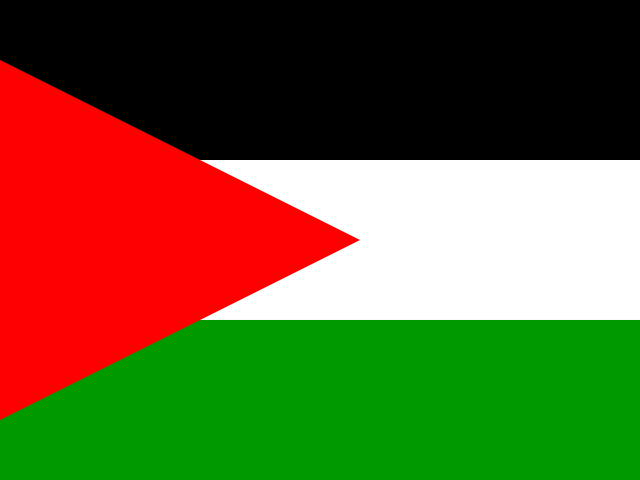
Palestinian exhibition organizers
VS
Israeli authorities

A Palestinian exhibition opening simultaneously in Bethlehem and Gaza is challenging Israeli restrictions.
The event highlights the use of art to connect Gaza and the West Bank despite movement and access limitations.
*AI-generated summary of publicly available data. This is not an official statement of any party.
*AI-generated summary of publicly available statements and reporting. This is not an official statement of this party.
Supporters of the Palestinian exhibition organizers argue that art has long served as cultural memory under occupation, pointing to the twin Bethlehem-Gaza opening as proof that shared heritage outlasts movement restrictions.
Supporters of the Palestinian exhibition organizers argue that linking Bethlehem and Gaza through simultaneous art openings sustains a shared cultural identity across divided territories, echoing a long history of cultural continuity under restriction.
Supporters of Palestinian exhibition organizers counter that Gazan culture has long survived siege through smuggled books and tunnels, so security review looks less like protection than another chapter in a recurring pattern of erasure.
Supporters of Palestinian exhibition organizers argue that Israel's movement and access restrictions unlawfully impede cultural rights, and that simultaneous openings in Bethlehem and Gaza legally assert freedom of expression.
Supporters of the Palestinian exhibition organizers argue that freedom of expression and cultural rights are legally protected, so art connecting Gaza and the West Bank should not be restricted.
Supporters of Palestinian exhibition organizers counter that blanket permit denials function as prior restraint, since the security justification is applied categorically rather than to specific artworks or individuals.
Supporters of the Palestinian exhibition organizers argue that twinning Bethlehem and Gaza openings turns art into leverage, forcing Israel to either permit movement or visibly expose the restrictions it imposes.
Supporters of the Palestinian exhibition organizers argue the twin openings are leverage: by staging art in both Bethlehem and Gaza, they force Israel's restrictions into public view and turn access limits into a legitimacy cost.
Supporters of Palestinian exhibition organizers counter that denying permits to art simply cedes the narrative fight abroad, where shuttered exhibits generate more legitimacy than any wall text ever could.
Supporters of the Palestinian exhibition organizers argue that art is a voluntary, peaceful expression of identity, and that restrictions on movement and access violate the moral principle of individual liberty and free association.
Supporters of the Palestinian exhibition organizers argue that art connecting Gaza and the West Bank affirms a moral right to free expression and voluntary cultural association, which they say Israeli restrictions unjustly deny.
Supporters of Palestinian exhibition organizers counter that shielding civilians cannot morally require collective punishment of an entire population, since freedom of movement and expression are rights, not privileges granted at a checkpoint.
Supporters of the Palestinian exhibition organizers argue the simultaneous Bethlehem–Gaza opening affirms a shared religious and cultural inheritance, treating art as a way to preserve communal continuity across separation.
Supporters of the Palestinian exhibition organizers argue that art bridging Gaza and the West Bank affirms a shared heritage and communal religious identity under restriction, a continuity they hold as legitimate.
Supporters of Palestinian exhibition organizers counter that scripture's covenant promises are conditional and contested, and that religious texts cannot override the rights of those already living on the land.
*AI-generated summary of publicly available statements and reporting. This is not an official statement of this party.
Supporters of Israeli authorities argue that cultural events crossing into Gaza require security review, maintaining that unchecked movement risks smuggling and that sovereignty means controlling access to borders.
Supporters of Israeli authorities argue that cultural events linking Gaza and the West Bank can reinforce a shared Palestinian national identity that challenges Israel's security-based separation of the two areas.
Supporters of Israeli authorities counter that state cultural funding and security screening are legitimate tools of self-determination, arguing shared heritage cannot override the border controls that protect national identity.
Supporters of Israeli authorities argue that restrictions on movement between Gaza and the West Bank are lawful security measures, not censorship, and that permit denials reflect documented threat assessments rather than targeting artistic expression.
Supporters of Israeli authorities argue that security-based movement restrictions are lawful measures, not censorship, and note no evidence the exhibition itself was banned rather than subject to standard permit review.
Supporters of Israeli authorities counter that movement restrictions are lawful security measures, not cultural suppression, and that no legal right licenses bypassing permit and border-control regulations.
Supporters of Israeli authorities argue the exhibit is a political staging ground, not art; they see permitting it as conceding legitimacy to a unified Palestinian narrative that bypasses negotiations.
Supporters of Israeli authorities argue that permitting parallel exhibitions across Gaza and the West Bank would legitimize Palestinian political unity, so restrictions on movement serve as leverage to prevent that outcome.
Supporters of Israeli authorities counter that linking the openings mainly hands organizers a staged grievance; restrictions follow security assessments, not art, so the twinning yields publicity for them rather than any real easing of movement.
Supporters of Israeli authorities argue that security restrictions on movement exist to prevent weapons and militants from reaching Israeli civilians, and that art exhibitions are not exempt from measures deemed necessary to protect lives.
Supporters of Israeli authorities argue that security restrictions on movement exist to prevent weapons and militant funding from reaching Gaza, and they maintain that art exhibitions, however peaceful in intent, cannot be exempted from measures meant to protect Israeli civilians.
Supporters of Israeli authorities counter that art cannot claim moral immunity when it serves as a platform for incitement, arguing that the liberty principle also obligates authorities to protect citizens from harm before it protects expression.
Supporters of Israeli authorities argue that scripture assigns Judea and Samaria to the Jewish people, so restrictions on Palestinian movement reflect a religious claim to the land rather than mere policy.
Supporters of Israeli authorities argue that security restrictions on movement between Gaza and the West Bank are necessary to prevent militant infiltration, citing scripture's mandate to protect innocent life.
Supporters of Israeli authorities counter that shared religious inheritance cannot be affirmed through an event they view as bypassing the covenant's territorial and security claims.
AI-generated summary of publicly available statements and reporting. This is not an official statement of this party.
Supporters of the Palestinian exhibition organizers argue that art has long served as cultural memory under occupation, pointing to the twin Bethlehem-Gaza opening as proof that shared heritage outlasts movement restrictions.
Supporters of the Palestinian exhibition organizers argue that linking Bethlehem and Gaza through simultaneous art openings sustains a shared cultural identity across divided territories, echoing a long history of cultural continuity under restriction.
Supporters of Palestinian exhibition organizers counter that Gazan culture has long survived siege through smuggled books and tunnels, so security review looks less like protection than another chapter in a recurring pattern of erasure.
Supporters of Palestinian exhibition organizers argue that Israel's movement and access restrictions unlawfully impede cultural rights, and that simultaneous openings in Bethlehem and Gaza legally assert freedom of expression.
Supporters of the Palestinian exhibition organizers argue that freedom of expression and cultural rights are legally protected, so art connecting Gaza and the West Bank should not be restricted.
Supporters of Palestinian exhibition organizers counter that blanket permit denials function as prior restraint, since the security justification is applied categorically rather than to specific artworks or individuals.
Supporters of the Palestinian exhibition organizers argue that twinning Bethlehem and Gaza openings turns art into leverage, forcing Israel to either permit movement or visibly expose the restrictions it imposes.
Supporters of the Palestinian exhibition organizers argue the twin openings are leverage: by staging art in both Bethlehem and Gaza, they force Israel's restrictions into public view and turn access limits into a legitimacy cost.
Supporters of Palestinian exhibition organizers counter that denying permits to art simply cedes the narrative fight abroad, where shuttered exhibits generate more legitimacy than any wall text ever could.
Supporters of the Palestinian exhibition organizers argue that art is a voluntary, peaceful expression of identity, and that restrictions on movement and access violate the moral principle of individual liberty and free association.
Supporters of the Palestinian exhibition organizers argue that art connecting Gaza and the West Bank affirms a moral right to free expression and voluntary cultural association, which they say Israeli restrictions unjustly deny.
Supporters of Palestinian exhibition organizers counter that shielding civilians cannot morally require collective punishment of an entire population, since freedom of movement and expression are rights, not privileges granted at a checkpoint.
Supporters of the Palestinian exhibition organizers argue the simultaneous Bethlehem–Gaza opening affirms a shared religious and cultural inheritance, treating art as a way to preserve communal continuity across separation.
Supporters of the Palestinian exhibition organizers argue that art bridging Gaza and the West Bank affirms a shared heritage and communal religious identity under restriction, a continuity they hold as legitimate.
Supporters of Palestinian exhibition organizers counter that scripture's covenant promises are conditional and contested, and that religious texts cannot override the rights of those already living on the land.
Supporters of Israeli authorities argue that cultural events crossing into Gaza require security review, maintaining that unchecked movement risks smuggling and that sovereignty means controlling access to borders.
Supporters of Israeli authorities argue that cultural events linking Gaza and the West Bank can reinforce a shared Palestinian national identity that challenges Israel's security-based separation of the two areas.
Supporters of Israeli authorities counter that state cultural funding and security screening are legitimate tools of self-determination, arguing shared heritage cannot override the border controls that protect national identity.
Supporters of Israeli authorities argue that restrictions on movement between Gaza and the West Bank are lawful security measures, not censorship, and that permit denials reflect documented threat assessments rather than targeting artistic expression.
Supporters of Israeli authorities argue that security-based movement restrictions are lawful measures, not censorship, and note no evidence the exhibition itself was banned rather than subject to standard permit review.
Supporters of Israeli authorities counter that movement restrictions are lawful security measures, not cultural suppression, and that no legal right licenses bypassing permit and border-control regulations.
Supporters of Israeli authorities argue the exhibit is a political staging ground, not art; they see permitting it as conceding legitimacy to a unified Palestinian narrative that bypasses negotiations.
Supporters of Israeli authorities argue that permitting parallel exhibitions across Gaza and the West Bank would legitimize Palestinian political unity, so restrictions on movement serve as leverage to prevent that outcome.
Supporters of Israeli authorities counter that linking the openings mainly hands organizers a staged grievance; restrictions follow security assessments, not art, so the twinning yields publicity for them rather than any real easing of movement.
Supporters of Israeli authorities argue that security restrictions on movement exist to prevent weapons and militants from reaching Israeli civilians, and that art exhibitions are not exempt from measures deemed necessary to protect lives.
Supporters of Israeli authorities argue that security restrictions on movement exist to prevent weapons and militant funding from reaching Gaza, and they maintain that art exhibitions, however peaceful in intent, cannot be exempted from measures meant to protect Israeli civilians.
Supporters of Israeli authorities counter that art cannot claim moral immunity when it serves as a platform for incitement, arguing that the liberty principle also obligates authorities to protect citizens from harm before it protects expression.
Supporters of Israeli authorities argue that scripture assigns Judea and Samaria to the Jewish people, so restrictions on Palestinian movement reflect a religious claim to the land rather than mere policy.
Supporters of Israeli authorities argue that security restrictions on movement between Gaza and the West Bank are necessary to prevent militant infiltration, citing scripture's mandate to protect innocent life.
Supporters of Israeli authorities counter that shared religious inheritance cannot be affirmed through an event they view as bypassing the covenant's territorial and security claims.
A Palestinian exhibition opening simultaneously in Bethlehem and Gaza is challenging Israeli restrictions.