PiS leadership

VS
Morawiecki faction
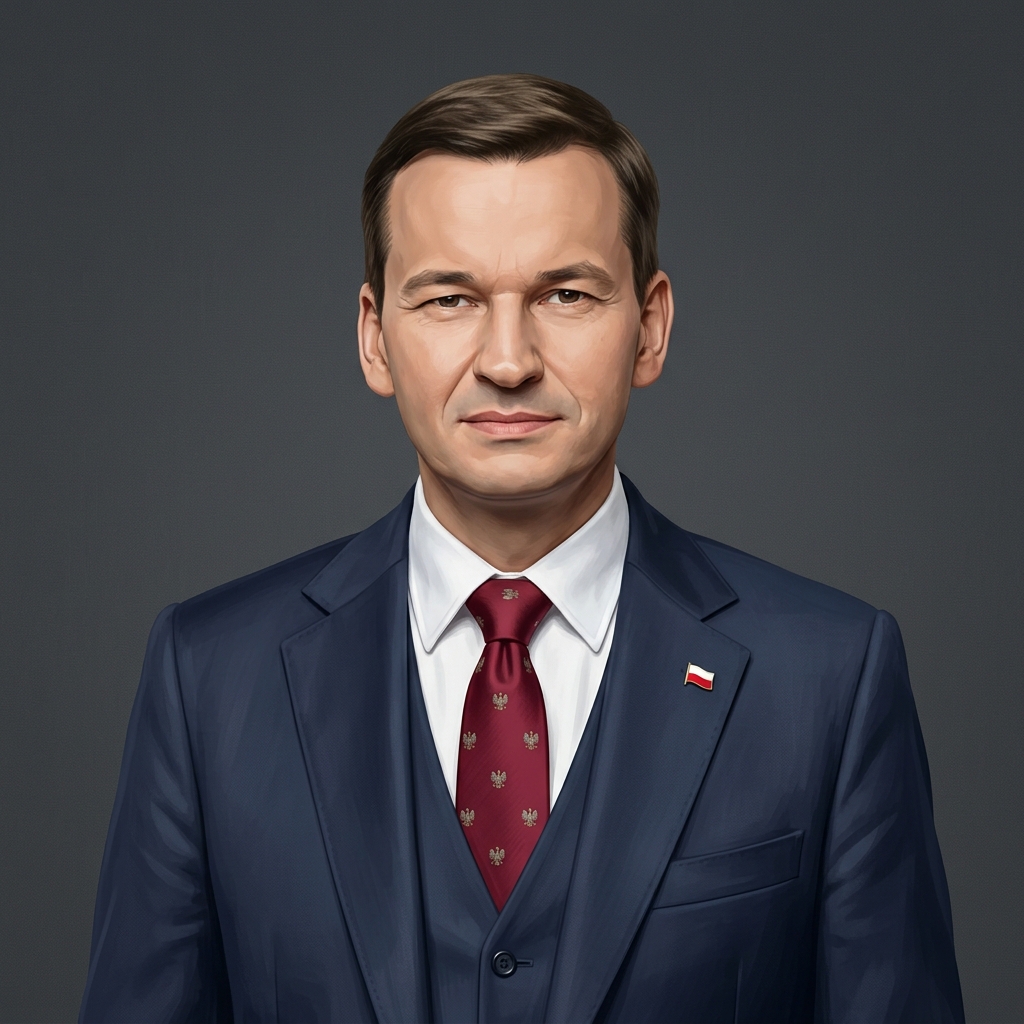
Poland's main opposition party, Law and Justice (PiS), is undergoing a split as a more moderate faction loyal to former Prime Minister Mateusz Morawiecki breaks away, citing factional disagreements and an ultimatum over loyalty.
The leadership, under Jarosław Kaczyński, has adopted a more rigid, increasingly far-right stance, while Morawiecki's group, comprising over 30 MPs, has formed a rival parliamentary caucus.
Polls suggest significant support for Morawiecki's new group, which could enter parliament, and the split is expected to reshape Poland's political landscape.
*AI-generated summary of publicly available data. This is not an official statement of any party.
*AI-generated summary of publicly available statements and reporting. This is not an official statement of this party.
Supporters of PiS leadership argue that Kaczyński’s rigid stance preserves the party’s traditional Catholic and national identity, viewing Morawiecki’s moderate faction as a threat to cultural continuity and inherited political values.
Supporters of PiS leadership argue that Kaczyński’s firm line preserves the party’s ideological continuity, viewing Morawiecki’s breakaway as a threat to the rooted values that define Poland’s conservative tradition.
Supporters of PiS leadership counter that Poland’s civic identity rests on Catholic continuity and national sovereignty, not on modern moderation, which they see as a break from inherited tradition.
Supporters of PiS leadership argue that Morawiecki’s faction breached party statutes by forming a rival caucus, a legal act of disloyalty that justifies expulsion under internal rules.
Supporters of PiS leadership argue that Morawiecki's faction breached party statutes by forming a rival caucus, a legal violation that justifies expulsion under internal rules.
Supporters of PiS leadership counter that the ultimatum reflects lawful party discipline, as Article 11 of Poland’s constitution guarantees free association, not unfettered parliamentary independence from internal organizational rules.
Supporters of PiS leadership argue the ultimatum was a necessary loyalty test, exposing Morawiecki’s faction as a power grab that would dilute the party’s core identity for electoral gain. They maintain Kaczyński’s rigidity preserves ideological purity, and the split, while.
Supporters of PiS leadership argue Kaczyński's purge is a calculated move to shed disloyal moderates and consolidate power, betting that Morawiecki's bloc will cannibalize itself without the party's machinery. They dismiss the 45% poll as idle speculation, insisting real voters.
Supporters of PiS leadership counter that Kaczyński’s ultimatum is a necessary consolidation of command, not rigidity—factional loyalty outweighs voter sentiment, as 45% support without institutional discipline yields no electoral victory.
Supporters of PiS leadership argue that loyalty to Jarosław Kaczyński is a moral duty, not a factional choice, and that Morawiecki’s breakaway prioritizes personal ambition over party unity and national stability.
Supporters of PiS leadership argue that loyalty to Jarosław Kaczyński’s uncompromising vision is a moral duty, not a factional choice, and they view Morawiecki’s breakaway as a betrayal of party unity that weakens the right’s electoral integrity.
Supporters of PiS leadership counter that democratic norms are hollow without electoral strength, and that the ultimatum upheld the party’s mandate, not conformity, but collective responsibility to voters who entrusted them with power.
Supporters of PiS leadership argue that preserving the party’s traditional Catholic and national values requires unity, and they view Morawiecki’s faction as a threat to that inherited moral order.
Supporters of PiS leadership argue that Kaczyński’s firm line preserves the party’s moral and cultural roots, treating Morawiecki’s faction as a threat to that inherited unity.
Supporters of PiS leadership counter that scripture also commands obedience to rightful authority, for God’s order mirrors a party’s hierarchy, and unity without fidelity to Kaczyński’s mandate is a hollow peace.
*AI-generated summary of publicly available statements and reporting. This is not an official statement of this party.
Supporters of the Morawiecki faction argue the split preserves Poland's traditional civic identity, rejecting the leadership's narrow, hardline turn as a deviation from the nation's moderate, inclusive values.
Supporters of Morawiecki faction argue that the leadership's rigid far-right shift betrays Poland's civic-conservative tradition, alienating mainstream voters who value stability over ideological purity.
Supporters of the Morawiecki faction counter that cultural continuity demands adaptation, not stagnation, arguing that Kaczyński’s rigidity risks isolating Poland’s youth and urban voters from their own heritage.
Supporters of the Morawiecki faction argue the loyalty ultimatum unlawfully coerced MPs, violating their free mandate and parliamentary independence under Polish constitutional norms.
Supporters of the Morawiecki faction argue the loyalty ultimatum and expulsion breached internal party rules and due process, framing the split as a legal challenge to arbitrary leadership power.
Supporters of Morawiecki faction counter that party statutes require due process and a fair hearing before any expulsion, and that forming a caucus is a protected expression of internal dissent, not a statutory breach. They argue the leadership’s interpretation conflates.
Supporters of the Morawiecki faction argue the split is a calculated power play, not ideology, noting Kaczyński’s loyalty ultimatum exposed a leadership clinging to control while ignoring 45% of PiS voters’ willingness to follow Morawiecki. They maintain that Kaczyński’s rigid.
Supporters of Morawiecki's faction argue Kaczyński's loyalty ultimatum was a power grab that miscalculated, handing Morawiecki a stronger hand—over 30 MPs and 45% of PiS voters—by forcing a split that exposes the leadership's weakness.
Supporters of the Morawiecki faction counter that Kaczyński’s purity is a luxury afforded only by those who never face the electorate; they argue the ultimatum was a loyalty test to protect internal control, not party survival, and that a pragmatic coalition with centrist voters.
Supporters of the Morawiecki faction argue that loyalty to democratic norms and public trust outweighs rigid party discipline, citing the split as a moral stand against an ultimatum that demanded conformity over conscience.
Supporters of the Morawiecki faction argue that loyalty demands principle, not ultimatums, and that a party’s moral duty is to uphold democratic norms over ideological rigidity. They maintain that breaking away was an ethical stand against a far-right shift, prioritizing shared.
Supporters of the Morawiecki faction counter that loyalty to a single leader, not the nation, elevates personal rule above democratic principle. They argue that refusing to challenge Kaczyński’s dominance is itself a moral failure, as true duty lies in serving Poland’s citizens.
Supporters of the Morawiecki faction argue that their breakaway reflects a moral duty to unity over rigid doctrine, citing scripture on humility and reconciliation as evidence that Kaczyński’s loyalty ultimatum violates faithful stewardship of the party’s broader civic mission.
Supporters of the Morawiecki faction argue that their breakaway upholds the scriptural duty to seek unity through truth, not rigid loyalty, citing Proverbs for guidance.
Supporters of the Morawiecki faction counter that faithfulness to Catholic social teaching demands practical mercy, not rigid uniformity, and that unity without justice for the vulnerable betrays the Gospel’s call.
AI-generated summary of publicly available statements and reporting. This is not an official statement of this party.
Supporters of PiS leadership argue that Kaczyński’s rigid stance preserves the party’s traditional Catholic and national identity, viewing Morawiecki’s moderate faction as a threat to cultural continuity and inherited political values.
Supporters of PiS leadership argue that Kaczyński’s firm line preserves the party’s ideological continuity, viewing Morawiecki’s breakaway as a threat to the rooted values that define Poland’s conservative tradition.
Supporters of PiS leadership counter that Poland’s civic identity rests on Catholic continuity and national sovereignty, not on modern moderation, which they see as a break from inherited tradition.
Supporters of PiS leadership argue that Morawiecki’s faction breached party statutes by forming a rival caucus, a legal act of disloyalty that justifies expulsion under internal rules.
Supporters of PiS leadership argue that Morawiecki's faction breached party statutes by forming a rival caucus, a legal violation that justifies expulsion under internal rules.
Supporters of PiS leadership counter that the ultimatum reflects lawful party discipline, as Article 11 of Poland’s constitution guarantees free association, not unfettered parliamentary independence from internal organizational rules.
Supporters of PiS leadership argue the ultimatum was a necessary loyalty test, exposing Morawiecki’s faction as a power grab that would dilute the party’s core identity for electoral gain. They maintain Kaczyński’s rigidity preserves ideological purity, and the split, while.
Supporters of PiS leadership argue Kaczyński's purge is a calculated move to shed disloyal moderates and consolidate power, betting that Morawiecki's bloc will cannibalize itself without the party's machinery. They dismiss the 45% poll as idle speculation, insisting real voters.
Supporters of PiS leadership counter that Kaczyński’s ultimatum is a necessary consolidation of command, not rigidity—factional loyalty outweighs voter sentiment, as 45% support without institutional discipline yields no electoral victory.
Supporters of PiS leadership argue that loyalty to Jarosław Kaczyński is a moral duty, not a factional choice, and that Morawiecki’s breakaway prioritizes personal ambition over party unity and national stability.
Supporters of PiS leadership argue that loyalty to Jarosław Kaczyński’s uncompromising vision is a moral duty, not a factional choice, and they view Morawiecki’s breakaway as a betrayal of party unity that weakens the right’s electoral integrity.
Supporters of PiS leadership counter that democratic norms are hollow without electoral strength, and that the ultimatum upheld the party’s mandate, not conformity, but collective responsibility to voters who entrusted them with power.
Supporters of PiS leadership argue that preserving the party’s traditional Catholic and national values requires unity, and they view Morawiecki’s faction as a threat to that inherited moral order.
Supporters of PiS leadership argue that Kaczyński’s firm line preserves the party’s moral and cultural roots, treating Morawiecki’s faction as a threat to that inherited unity.
Supporters of PiS leadership counter that scripture also commands obedience to rightful authority, for God’s order mirrors a party’s hierarchy, and unity without fidelity to Kaczyński’s mandate is a hollow peace.
Supporters of the Morawiecki faction argue the split preserves Poland's traditional civic identity, rejecting the leadership's narrow, hardline turn as a deviation from the nation's moderate, inclusive values.
Supporters of Morawiecki faction argue that the leadership's rigid far-right shift betrays Poland's civic-conservative tradition, alienating mainstream voters who value stability over ideological purity.
Supporters of the Morawiecki faction counter that cultural continuity demands adaptation, not stagnation, arguing that Kaczyński’s rigidity risks isolating Poland’s youth and urban voters from their own heritage.
Supporters of the Morawiecki faction argue the loyalty ultimatum unlawfully coerced MPs, violating their free mandate and parliamentary independence under Polish constitutional norms.
Supporters of the Morawiecki faction argue the loyalty ultimatum and expulsion breached internal party rules and due process, framing the split as a legal challenge to arbitrary leadership power.
Supporters of Morawiecki faction counter that party statutes require due process and a fair hearing before any expulsion, and that forming a caucus is a protected expression of internal dissent, not a statutory breach. They argue the leadership’s interpretation conflates.
Supporters of the Morawiecki faction argue the split is a calculated power play, not ideology, noting Kaczyński’s loyalty ultimatum exposed a leadership clinging to control while ignoring 45% of PiS voters’ willingness to follow Morawiecki. They maintain that Kaczyński’s rigid.
Supporters of Morawiecki's faction argue Kaczyński's loyalty ultimatum was a power grab that miscalculated, handing Morawiecki a stronger hand—over 30 MPs and 45% of PiS voters—by forcing a split that exposes the leadership's weakness.
Supporters of the Morawiecki faction counter that Kaczyński’s purity is a luxury afforded only by those who never face the electorate; they argue the ultimatum was a loyalty test to protect internal control, not party survival, and that a pragmatic coalition with centrist voters.
Supporters of the Morawiecki faction argue that loyalty to democratic norms and public trust outweighs rigid party discipline, citing the split as a moral stand against an ultimatum that demanded conformity over conscience.
Supporters of the Morawiecki faction argue that loyalty demands principle, not ultimatums, and that a party’s moral duty is to uphold democratic norms over ideological rigidity. They maintain that breaking away was an ethical stand against a far-right shift, prioritizing shared.
Supporters of the Morawiecki faction counter that loyalty to a single leader, not the nation, elevates personal rule above democratic principle. They argue that refusing to challenge Kaczyński’s dominance is itself a moral failure, as true duty lies in serving Poland’s citizens.
Supporters of the Morawiecki faction argue that their breakaway reflects a moral duty to unity over rigid doctrine, citing scripture on humility and reconciliation as evidence that Kaczyński’s loyalty ultimatum violates faithful stewardship of the party’s broader civic mission.
Supporters of the Morawiecki faction argue that their breakaway upholds the scriptural duty to seek unity through truth, not rigid loyalty, citing Proverbs for guidance.
Supporters of the Morawiecki faction counter that faithfulness to Catholic social teaching demands practical mercy, not rigid uniformity, and that unity without justice for the vulnerable betrays the Gospel’s call.
A more moderate faction of over 30 MPs loyal to Morawiecki forms a rival parliamentary caucus, deepening the opposition split.
A power struggle within Poland's main opposition force has come to a head. But a move to expel former Prime Minister Mateusz Morawiecki may greatly weaken the right-wing party's popularity.
Morawiecki and his allies say they were forced out of PiS over factional disagreements following a loyalty pledge ultimatum, leading to the party's split.
A poll indicates Morawiecki's new group, Development Plus, is strong enough to enter parliament, with 45% of PiS voters saying they would consider supporting a party led by him.