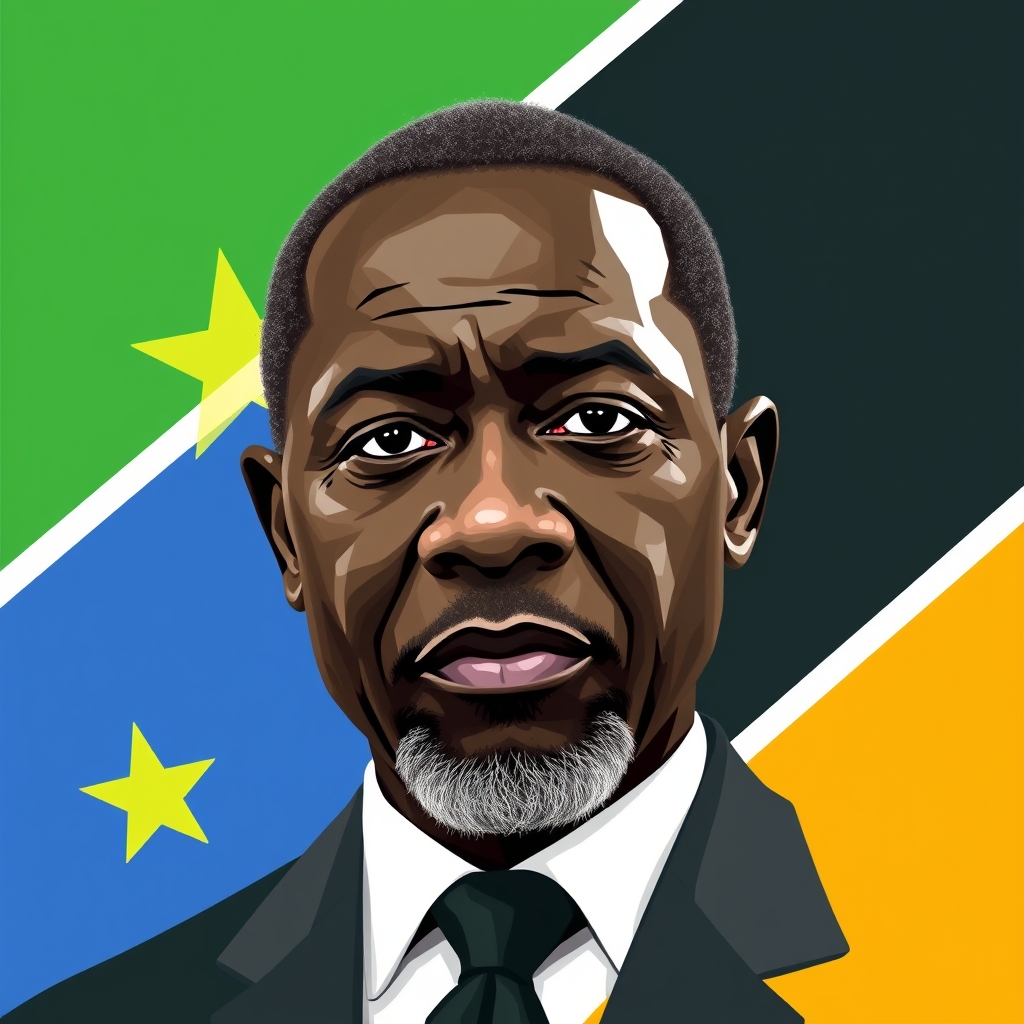
President Salva Kiir
VS
Critics of unchecked power
?
No actors in this side.
No actors in this side.
President Salva Kiir Mayardit is a South Sudanese politician who has served as the President of South Sudan since the country's independence on 9 July 2011.
He is also the Commander-in-Chief of the South Sudan People's Defence Forces and the Supreme Commander, and his office maintains official communications through channels such as the State House Twitter account.
Critics of unchecked power are those who express concern that the presidency may accumulate excessive authority, particularly in the absence of legislative or judicial constraints.
The dissolution of South Sudan's government ahead of its first national elections has intensified this debate, as the move removes existing governmental structures and concentrates decision-making in the presidency during the transition period.
The disagreement centers on whether dissolving the government is a necessary step to clear hurdles to the long-delayed vote or whether it enables the president to wield unchecked power.
The timing and manner of the dissolution have raised questions about the balance of power and the prospects for free and fair elections.
*AI-generated summary of publicly available data. This is not an official statement of any party.
*AI-generated summary of publicly available statements and reporting. This is not an official statement of this party.
Supporters of President Salva Kiir argue that dissolving the government upholds South Sudan's inherited customs of centralized leadership, preserving national unity and order ahead of the long-delayed vote.
Supporters of President Salva Kiir argue that dissolving the government honors South Sudan's inherited custom of strong central leadership, preserving order and continuity until elections can secure the nation's fragile stability.
Supporters of President Salva Kiir counter that dissolving the government restores the cultural authority of traditional leaders and communities, which predate modern parties and remain the true check on power.
Supporters of President Salva Kiir argue the dissolution is legally sound under the peace agreement, clearing a constitutional hurdle so the long-delayed national election can finally proceed.
Supporters of President Salva Kiir argue the dissolution is legally sound: the constitution empowers the president to restructure government, clearing the path to long-delayed elections.
Supporters of President Salva Kiir counter that the 2018 revitalized agreement was itself ratified into the transitional constitution, so decree powers exercised under it carry legal force rather than exceeding constitutional limits.
Supporters of President Salva Kiir argue the dissolution is pragmatic statecraft: clearing a paralyzed government lets him control the timeline and machinery of the first elections, since in their view holding power until the vote is what keeps the transition intact.
Supporters of President Salva Kiir argue the dissolution is a pragmatic move to clear institutional deadlock before elections, and that concentrating power now is the surest way to deliver a vote on schedule.
Supporters of President Salva Kiir counter that dissolving a fractured government restores the executive's leverage to enforce the 2018 peace deal, since rivals had stalled its provisions; in their view, paralysis, not dissolution, is the real threat to polls.
Supporters of President Salva Kiir argue that dissolving the government is a moral necessity to clear the path for South Sudan's first national elections, turning a paralyzed transitional system into one capable of delivering the vote citizens have long been denied.
Supporters of President Salva Kiir argue that dissolving the government is a moral necessity to clear the path to South Sudan's first national elections, and that delaying the vote would betray citizens' right to choose their leaders.
Supporters of President Salva Kiir counter that stability and order are moral duties too; they argue dissolving a deadlocked government prevents bloodshed, and that Kiir alone can hold the nation together until elections.
Supporters of President Salva Kiir argue that dissolving the government honors South Sudan's founding covenant and the religious duty to preserve national unity, trusting his stewardship to guide the long-delayed vote toward order and peace.
Supporters of President Salva Kiir argue that dissolving the government honors South Sudan's inherited order, ensuring a peaceful path to the nation's first elections under God's providence.
Supporters of President Salva Kiir counter that scripture also calls for order and submission to authority, and that dissolving parliament was a legal step to preserve stability.
*AI-generated summary of publicly available statements and reporting. This is not an official statement of this party.
Supporters of Critics of unchecked power argue that dissolving South Sudan's government erases the last institution able to check President Salva Kiir, leaving the nation's cultural and civic future under one person's control.
Supporters of Critics of unchecked power contend that dissolving South Sudan's government to ease election hurdles risks concentrating authority in one office, arguing that a vote held under such conditions cannot reflect the nation's diverse will.
Supporters of Critics of unchecked power counter that South Sudan's centralized rule under Kiir has not preserved order but entrenched ethnic favoritism, and that true national unity requires cultural pluralism rather than one-man dominance.
Supporters of Critics of unchecked power argue that dissolving the government without legal safeguards lets President Salva Kiir rule by decree, exceeding constitutional limits.
Supporters of Critics of unchecked power argue that dissolving South Sudan's government leaves no legal check on President Salva Kiir before the vote, concentrating power in one office with no oversight.
Critics of unchecked power counter that a peace agreement cannot override South Sudan's constitution, so the dissolution lacks domestic legal basis regardless of election timing.
Supporters of Critics of unchecked power argue that Kiir dissolved the government to consolidate personal control, since dissolving institutions before elections leaves no rival body able to check him.
Supporters of Critics of unchecked power argue Kiir dissolved the government to sideline rivals and monopolize power before elections, since whoever controls the state machinery writes the rules.
Critics of unchecked power counter that letting Kiir control the election timeline and machinery means the vote's outcome is decided before ballots are cast, so "keeping the transition intact" preserves his rule, not the transition.
Supporters of Critics of unchecked power argue that dissolving South Sudan's government before elections, with no independent checks left in place, risks enabling President Salva Kiir to wield power without accountability, violating the moral duty owed to citizens.
Supporters of Critics of unchecked power argue that dissolving South Sudan's government without binding checks risks leaving one man above accountability, and that free elections require independent institutions to restrain any leader.
Critics of unchecked power counter that dissolving the government grants one leader the very authority to dictate election terms, and that moral necessity cannot rest on power concentrated without the checks citizens were promised.
Supporters of Critics of unchecked power argue that concentrating authority in one leader after dissolving South Sudan's government defies the scriptural warning against rulers who exalt themselves, since faithful stewardship requires accountable, shared governance.
Supporters of Critics of unchecked power argue that no earthly ruler stands above God's moral law, and that dissolving South Sudan's government without checks risks the tyranny scripture warns against.
Critics of unchecked power counter that scripture warns against placing ultimate trust in any ruler, since the covenant belongs to God, not a steward; dissolving government delays the vote rather than honoring it.
AI-generated summary of publicly available statements and reporting. This is not an official statement of this party.
Supporters of President Salva Kiir argue that dissolving the government upholds South Sudan's inherited customs of centralized leadership, preserving national unity and order ahead of the long-delayed vote.
Supporters of President Salva Kiir argue that dissolving the government honors South Sudan's inherited custom of strong central leadership, preserving order and continuity until elections can secure the nation's fragile stability.
Supporters of President Salva Kiir counter that dissolving the government restores the cultural authority of traditional leaders and communities, which predate modern parties and remain the true check on power.
Supporters of President Salva Kiir argue the dissolution is legally sound under the peace agreement, clearing a constitutional hurdle so the long-delayed national election can finally proceed.
Supporters of President Salva Kiir argue the dissolution is legally sound: the constitution empowers the president to restructure government, clearing the path to long-delayed elections.
Supporters of President Salva Kiir counter that the 2018 revitalized agreement was itself ratified into the transitional constitution, so decree powers exercised under it carry legal force rather than exceeding constitutional limits.
Supporters of President Salva Kiir argue the dissolution is pragmatic statecraft: clearing a paralyzed government lets him control the timeline and machinery of the first elections, since in their view holding power until the vote is what keeps the transition intact.
Supporters of President Salva Kiir argue the dissolution is a pragmatic move to clear institutional deadlock before elections, and that concentrating power now is the surest way to deliver a vote on schedule.
Supporters of President Salva Kiir counter that dissolving a fractured government restores the executive's leverage to enforce the 2018 peace deal, since rivals had stalled its provisions; in their view, paralysis, not dissolution, is the real threat to polls.
Supporters of President Salva Kiir argue that dissolving the government is a moral necessity to clear the path for South Sudan's first national elections, turning a paralyzed transitional system into one capable of delivering the vote citizens have long been denied.
Supporters of President Salva Kiir argue that dissolving the government is a moral necessity to clear the path to South Sudan's first national elections, and that delaying the vote would betray citizens' right to choose their leaders.
Supporters of President Salva Kiir counter that stability and order are moral duties too; they argue dissolving a deadlocked government prevents bloodshed, and that Kiir alone can hold the nation together until elections.
Supporters of President Salva Kiir argue that dissolving the government honors South Sudan's founding covenant and the religious duty to preserve national unity, trusting his stewardship to guide the long-delayed vote toward order and peace.
Supporters of President Salva Kiir argue that dissolving the government honors South Sudan's inherited order, ensuring a peaceful path to the nation's first elections under God's providence.
Supporters of President Salva Kiir counter that scripture also calls for order and submission to authority, and that dissolving parliament was a legal step to preserve stability.
Supporters of Critics of unchecked power argue that dissolving South Sudan's government erases the last institution able to check President Salva Kiir, leaving the nation's cultural and civic future under one person's control.
Supporters of Critics of unchecked power contend that dissolving South Sudan's government to ease election hurdles risks concentrating authority in one office, arguing that a vote held under such conditions cannot reflect the nation's diverse will.
Supporters of Critics of unchecked power counter that South Sudan's centralized rule under Kiir has not preserved order but entrenched ethnic favoritism, and that true national unity requires cultural pluralism rather than one-man dominance.
Supporters of Critics of unchecked power argue that dissolving the government without legal safeguards lets President Salva Kiir rule by decree, exceeding constitutional limits.
Supporters of Critics of unchecked power argue that dissolving South Sudan's government leaves no legal check on President Salva Kiir before the vote, concentrating power in one office with no oversight.
Critics of unchecked power counter that a peace agreement cannot override South Sudan's constitution, so the dissolution lacks domestic legal basis regardless of election timing.
Supporters of Critics of unchecked power argue that Kiir dissolved the government to consolidate personal control, since dissolving institutions before elections leaves no rival body able to check him.
Supporters of Critics of unchecked power argue Kiir dissolved the government to sideline rivals and monopolize power before elections, since whoever controls the state machinery writes the rules.
Critics of unchecked power counter that letting Kiir control the election timeline and machinery means the vote's outcome is decided before ballots are cast, so "keeping the transition intact" preserves his rule, not the transition.
Supporters of Critics of unchecked power argue that dissolving South Sudan's government before elections, with no independent checks left in place, risks enabling President Salva Kiir to wield power without accountability, violating the moral duty owed to citizens.
Supporters of Critics of unchecked power argue that dissolving South Sudan's government without binding checks risks leaving one man above accountability, and that free elections require independent institutions to restrain any leader.
Critics of unchecked power counter that dissolving the government grants one leader the very authority to dictate election terms, and that moral necessity cannot rest on power concentrated without the checks citizens were promised.
Supporters of Critics of unchecked power argue that concentrating authority in one leader after dissolving South Sudan's government defies the scriptural warning against rulers who exalt themselves, since faithful stewardship requires accountable, shared governance.
Supporters of Critics of unchecked power argue that no earthly ruler stands above God's moral law, and that dissolving South Sudan's government without checks risks the tyranny scripture warns against.
Critics of unchecked power counter that scripture warns against placing ultimate trust in any ruler, since the covenant belongs to God, not a steward; dissolving government delays the vote rather than honoring it.
President Salva Kiir dissolved the government ahead of the first national elections.
As South Sudan prepared for its first national elections, President Salva Kiir hinted at scrapping the country's governance structure of five vice-presidents.
South Sudan became an independent nation on 9 July 2011, and Salva Kiir Mayardit, who had been a key figure in the independence movement, became its first President.