Israel

VS
Protesters in Beirut
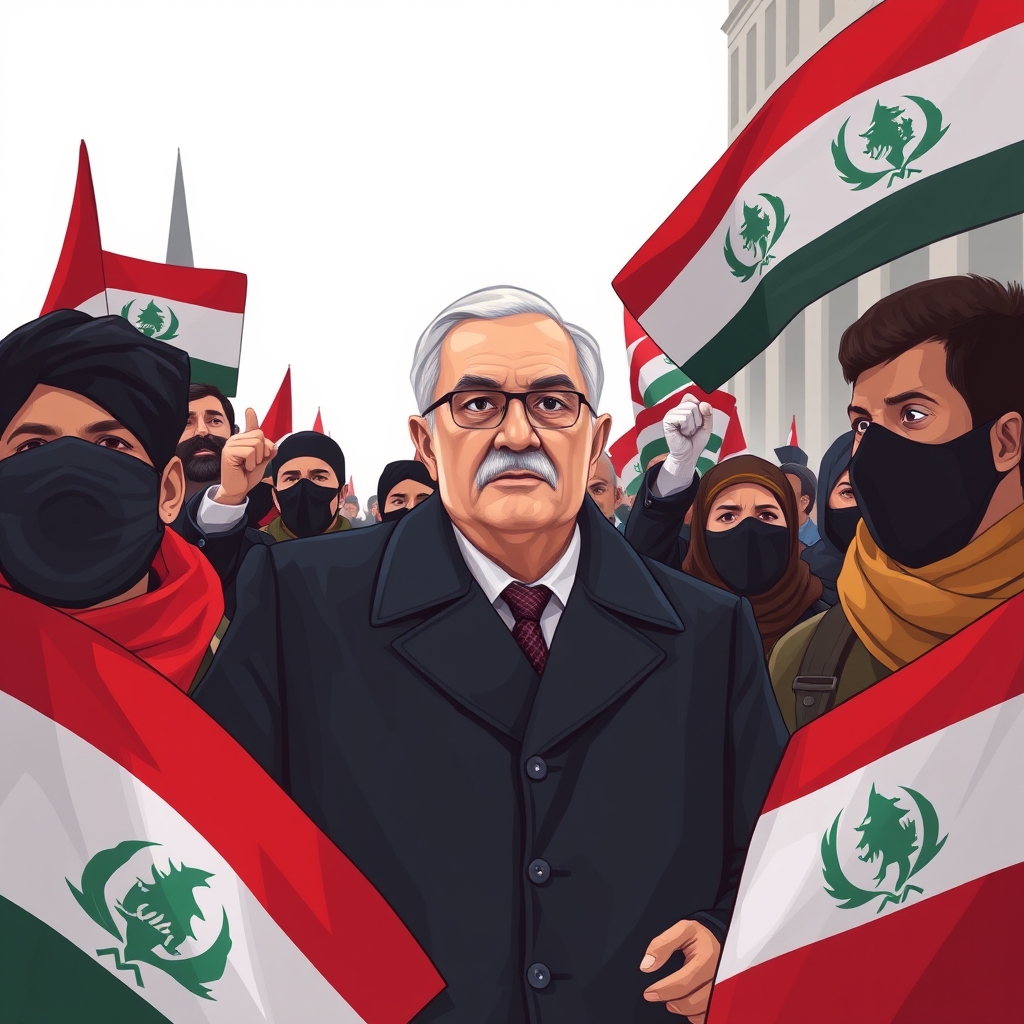
Protesters in Beirut refers to demonstrators, many of them aligned with Hezbollah, who have taken to the streets of the Lebanese capital to oppose a framework agreement between Lebanon and Israel.
Israel is the other party to that agreement, which was reached between the two governments and announced on June 27, 2026.
The two sides have conflicting interests because the protesters reject the Lebanon-Israel framework agreement and view it as unacceptable, while Israel is a party to the deal that the protesters are demonstrating against.
The protests have included the carrying of Lebanese and Hezbollah flags, the burning of tyres, the blocking of major roads, and clashes with Lebanese security forces, reflecting deep divisions within Lebanon over the agreement.
*AI-generated summary of publicly available data. This is not an official statement of any party.
*AI-generated summary of publicly available statements and reporting. This is not an official statement of this party.
Supporters of Israel argue that Hezbollah's entrenchment in southern Lebanese communities forces defensive operations, and they maintain that Israel's cultural and national survival depends on securing its border against an armed group sworn to its destruction.
Supporters of Israel argue the Beirut protest reflects a deeper cultural refusal to accept Israel's right to exist, framing calls for aid as a narrative that erases Hezbollah's role in provoking the conflict.
Supporters of Israel counter that southern Lebanon's destruction stems from Hezbollah's use of civilian areas, and that no cultural continuity claim outweighs Israel's right to secure its border against armed attacks.
Supporters of Israel argue that international law recognizes its right to self-defense against Hezbollah, and that responsibility for displacement in southern Lebanon rests with Hezbollah's use of civilian areas.
Supporters of Israel argue international law permits military action against Hezbollah in southern Lebanon, and that Israel targets militant infrastructure, not civilians.
Supporters of Israel counter that the Geneva Conventions bind all parties equally, and Hezbollah's embedding of forces among Lebanese civilians violates those same duties, making enforcement one-sided.
Supporters of Israel argue that Hezbollah's embedded positions in southern Lebanon make civilian displacement unavoidable, and that international aid demands serve as leverage to constrain Israel's military options.
Supporters of Israel argue the Beirut protest is theater: Hezbollah embedded in southern Lebanon, so Israel's strikes target threats, not civilians, and outside aid should not reward that shield.
Supporters of Israel counter that UN appeals signal weakness, inviting leverage rather than restraint; they argue outside powers respond to facts on the ground and security interests, not moral framing, so the lever cuts both ways.
Supporters of Israel argue that Israel's actions in southern Lebanon are a justified exercise of self-defense against Hezbollah, and that the moral responsibility for civilian displacement lies with Hezbollah for embedding its forces among civilians.
Supporters of Israel argue that moral responsibility rests with Hezbollah for embedding in southern Lebanon, making civilian displacement a consequence of its own aggression, not Israel's.
Supporters of Israel counter that the moral duty runs both ways: a state whose citizens face rocket fire from southern Lebanon has a prior obligation to defend its own people, and no ecological stewardship argument can require a nation to leave its civilians undefended.
Supporters of Israel invoke scripture, arguing that the land was given to the Jewish people by divine covenant, and that military action in southern Lebanon is a biblically grounded defense of that inheritance.
Supporters of Israel invoke scripture, arguing that God's covenant grants the Jewish people the land, and that military action in southern Lebanon is a defensive necessity to protect that inheritance.
Supporters of Israel counter that scripture also sanctions defensive war against Hezbollah, citing Deuteronomy 20's rules for battle, so faith does not obligate sheltering those who harbor militants.
*AI-generated summary of publicly available statements and reporting. This is not an official statement of this party.
Supporters of the Beirut protesters argue that Lebanon's inherited communal institutions and long-standing ties to the land are what shelter displaced families, so they call on the UN to uphold that continuity rather than let southern Lebanon's destruction erase it.
Supporters of the Beirut protesters argue that Lebanon's inherited communal institutions and long-standing ties to the land in southern Lebanon are being erased, and that protecting displaced families preserves a cultural continuity that predates the current conflict.
Supporters of Protesters in Beirut counter that southern Lebanon's cultural fabric predates Hezbollah, so treating whole communities as extensions of one armed group erases the civilians whose heritage and daily life Israel's operations disrupt.
Supporters of the Beirut protesters argue that international law, notably the Geneva Conventions, obligates parties to protect civilians and allow humanitarian access, so they demand the UN enforce these duties for displaced Lebanese.
Supporters of the Beirut protesters argue that international law, including UN resolutions and the Geneva Conventions, obligates outside powers to aid displaced Lebanese civilians affected by Israeli strikes.
Supporters of Protesters in Beirut counter that under IHL, Israel's self-defense claim doesn't suspend its obligation to distinguish civilians from combatants, so displacement from strikes may still breach proportionality rules.
Supporters of the Beirut protesters argue that appealing to the UN is a pragmatic lever: by framing displacement as a humanitarian crisis, they pressure outside powers to restrain Israel, since moral outrage moves donors where sympathy alone does not.
Supporters of the Beirut protesters argue the UN stage is leverage: with Israel unlikely to yield, they see international pressure and visible suffering as the only currency displaced Lebanese have to extract aid and constrain Israeli operations.
Supporters of Protesters in Beirut counter that aid leverage is illusory: Israel's backers supply the weapons regardless, so displacement pressure, not aid, is the only currency that shifts Israeli calculations.
Supporters of the Beirut protesters argue that displacing civilians and destroying southern Lebanon violates moral duties of ecological stewardship, since wrecked land and uprooted communities deepen environmental and human suffering.
Supporters of the Beirut protesters argue that displacing communities and destroying southern Lebanon’s ecosystems violate a moral duty of environmental stewardship owed to civilians and the land alike.
Supporters of the Beirut protesters counter that displacing civilians is itself the harm, not a side effect to be blamed on Hezbollah, and that a self-defense claim cannot license the uprooting of families from their homes.
Supporters of the Beirut protesters, invoking religious duty to shelter the displaced, argue that Lebanon's faith traditions compel nations to answer the call for aid amid Israel's destruction in the south.
Supporters of the Beirut protesters invoke religious duty to shelter the displaced, arguing that faith commands protection of the vulnerable and that Israel's destruction of southern Lebanon violates that sacred obligation.
Supporters of Protesters in Beirut counter that scripture also commands justice and care for the dispossessed, so a divine covenant cannot justify displacing Lebanon's people or seizing land by force.
AI-generated summary of publicly available statements and reporting. This is not an official statement of this party.
Supporters of Israel argue that Hezbollah's entrenchment in southern Lebanese communities forces defensive operations, and they maintain that Israel's cultural and national survival depends on securing its border against an armed group sworn to its destruction.
Supporters of Israel argue the Beirut protest reflects a deeper cultural refusal to accept Israel's right to exist, framing calls for aid as a narrative that erases Hezbollah's role in provoking the conflict.
Supporters of Israel counter that southern Lebanon's destruction stems from Hezbollah's use of civilian areas, and that no cultural continuity claim outweighs Israel's right to secure its border against armed attacks.
Supporters of Israel argue that international law recognizes its right to self-defense against Hezbollah, and that responsibility for displacement in southern Lebanon rests with Hezbollah's use of civilian areas.
Supporters of Israel argue international law permits military action against Hezbollah in southern Lebanon, and that Israel targets militant infrastructure, not civilians.
Supporters of Israel counter that the Geneva Conventions bind all parties equally, and Hezbollah's embedding of forces among Lebanese civilians violates those same duties, making enforcement one-sided.
Supporters of Israel argue that Hezbollah's embedded positions in southern Lebanon make civilian displacement unavoidable, and that international aid demands serve as leverage to constrain Israel's military options.
Supporters of Israel argue the Beirut protest is theater: Hezbollah embedded in southern Lebanon, so Israel's strikes target threats, not civilians, and outside aid should not reward that shield.
Supporters of Israel counter that UN appeals signal weakness, inviting leverage rather than restraint; they argue outside powers respond to facts on the ground and security interests, not moral framing, so the lever cuts both ways.
Supporters of Israel argue that Israel's actions in southern Lebanon are a justified exercise of self-defense against Hezbollah, and that the moral responsibility for civilian displacement lies with Hezbollah for embedding its forces among civilians.
Supporters of Israel argue that moral responsibility rests with Hezbollah for embedding in southern Lebanon, making civilian displacement a consequence of its own aggression, not Israel's.
Supporters of Israel counter that the moral duty runs both ways: a state whose citizens face rocket fire from southern Lebanon has a prior obligation to defend its own people, and no ecological stewardship argument can require a nation to leave its civilians undefended.
Supporters of Israel invoke scripture, arguing that the land was given to the Jewish people by divine covenant, and that military action in southern Lebanon is a biblically grounded defense of that inheritance.
Supporters of Israel invoke scripture, arguing that God's covenant grants the Jewish people the land, and that military action in southern Lebanon is a defensive necessity to protect that inheritance.
Supporters of Israel counter that scripture also sanctions defensive war against Hezbollah, citing Deuteronomy 20's rules for battle, so faith does not obligate sheltering those who harbor militants.
Supporters of the Beirut protesters argue that Lebanon's inherited communal institutions and long-standing ties to the land are what shelter displaced families, so they call on the UN to uphold that continuity rather than let southern Lebanon's destruction erase it.
Supporters of the Beirut protesters argue that Lebanon's inherited communal institutions and long-standing ties to the land in southern Lebanon are being erased, and that protecting displaced families preserves a cultural continuity that predates the current conflict.
Supporters of Protesters in Beirut counter that southern Lebanon's cultural fabric predates Hezbollah, so treating whole communities as extensions of one armed group erases the civilians whose heritage and daily life Israel's operations disrupt.
Supporters of the Beirut protesters argue that international law, notably the Geneva Conventions, obligates parties to protect civilians and allow humanitarian access, so they demand the UN enforce these duties for displaced Lebanese.
Supporters of the Beirut protesters argue that international law, including UN resolutions and the Geneva Conventions, obligates outside powers to aid displaced Lebanese civilians affected by Israeli strikes.
Supporters of Protesters in Beirut counter that under IHL, Israel's self-defense claim doesn't suspend its obligation to distinguish civilians from combatants, so displacement from strikes may still breach proportionality rules.
Supporters of the Beirut protesters argue that appealing to the UN is a pragmatic lever: by framing displacement as a humanitarian crisis, they pressure outside powers to restrain Israel, since moral outrage moves donors where sympathy alone does not.
Supporters of the Beirut protesters argue the UN stage is leverage: with Israel unlikely to yield, they see international pressure and visible suffering as the only currency displaced Lebanese have to extract aid and constrain Israeli operations.
Supporters of Protesters in Beirut counter that aid leverage is illusory: Israel's backers supply the weapons regardless, so displacement pressure, not aid, is the only currency that shifts Israeli calculations.
Supporters of the Beirut protesters argue that displacing civilians and destroying southern Lebanon violates moral duties of ecological stewardship, since wrecked land and uprooted communities deepen environmental and human suffering.
Supporters of the Beirut protesters argue that displacing communities and destroying southern Lebanon’s ecosystems violate a moral duty of environmental stewardship owed to civilians and the land alike.
Supporters of the Beirut protesters counter that displacing civilians is itself the harm, not a side effect to be blamed on Hezbollah, and that a self-defense claim cannot license the uprooting of families from their homes.
Supporters of the Beirut protesters, invoking religious duty to shelter the displaced, argue that Lebanon's faith traditions compel nations to answer the call for aid amid Israel's destruction in the south.
Supporters of the Beirut protesters invoke religious duty to shelter the displaced, arguing that faith commands protection of the vulnerable and that Israel's destruction of southern Lebanon violates that sacred obligation.
Supporters of Protesters in Beirut counter that scripture also commands justice and care for the dispossessed, so a divine covenant cannot justify displacing Lebanon's people or seizing land by force.
Protesters outside the UN office in Beirut demand support for displaced Lebanese amid Israeli attacks and destruction in southern Lebanon Read Full Article at RT.com
A framework agreement between Lebanon and Israel was reached and announced, prompting protests in Beirut hours later.
Hundreds of Hezbollah supporters took to the streets of Beirut from late Friday into Saturday to protest against the framework agreement reached with Israel.
Protesters took to the streets in Beirut to rally against the Israel-Lebanon framework agreement that was signed hours earlier.
A news-style report documented protests in Beirut on June 27, 2026, directed against a government agreement with Israel.
Protesters took to the streets in Beirut to rally against the Israel-Lebanon framework agreement that was signed hours earlier.
Videos showed protesters carrying Lebanese and Hezbollah flags, burning tyres, blocking major roads, and clashing with Lebanese security forces.
