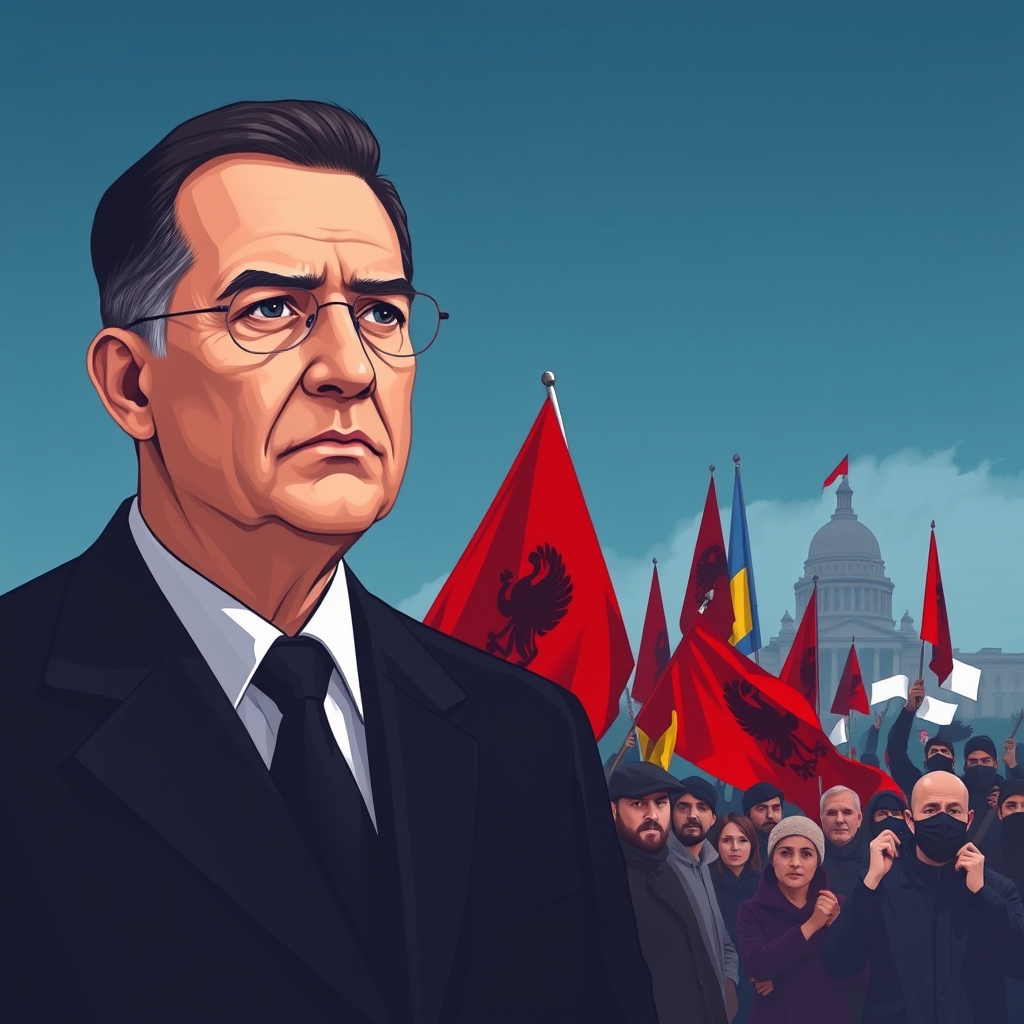
Protesters in Tirana
VS
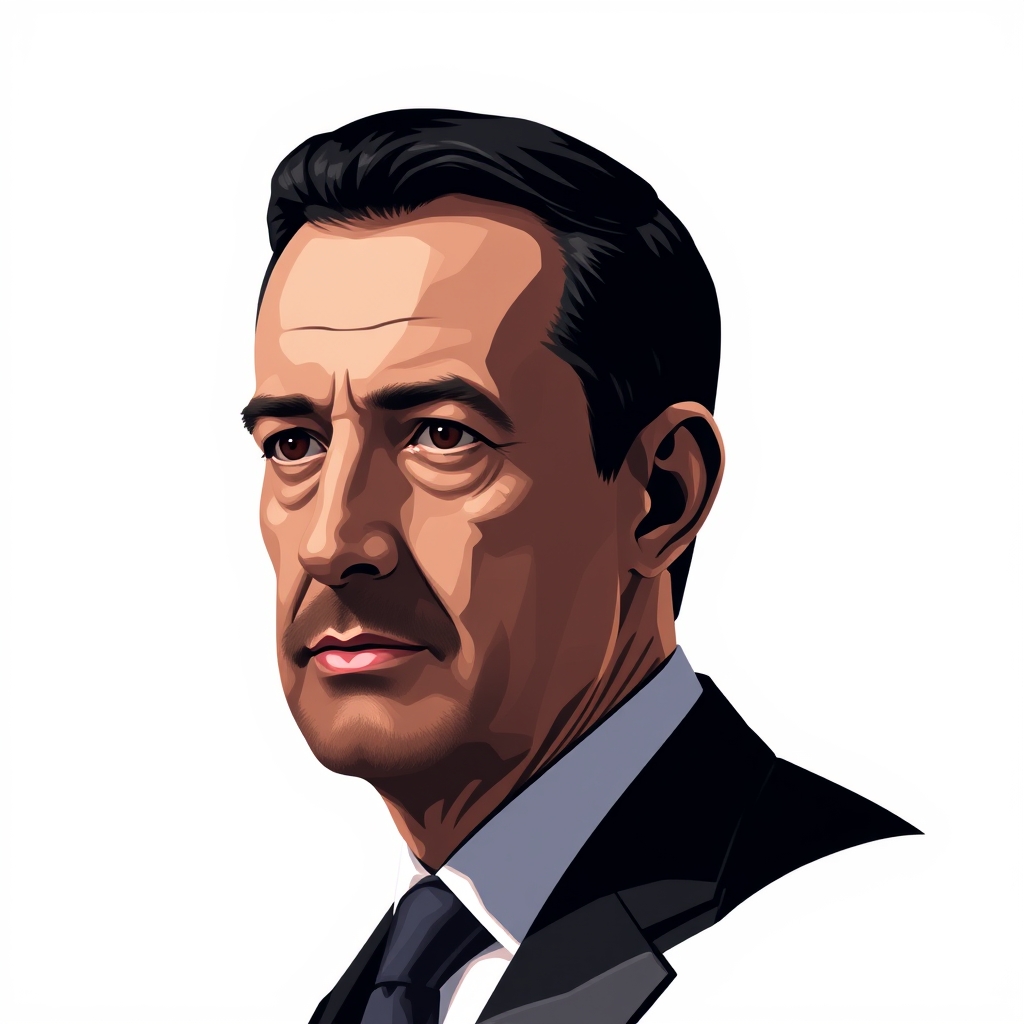
PM Edi Rama
Albania's capital Tirana has seen six days of violent protests, with police using rubber bullets, water cannons and tear gas against hundreds of demonstrators.
The protesters are demanding the resignation of Prime Minister Edi Rama, who has refused to step down.
*AI-generated summary of publicly available data. This is not an official statement of any party.
*AI-generated summary of publicly available statements and reporting. This is not an official statement of this party.
Supporters of the Tirana protesters argue that defending citizens' right to public dissent protects Albania's cultural continuity and civic order against a government that has refused accountability.
Supporters of the Tirana protesters argue that defending inherited civic institutions against a leader who refuses to step down is a matter of preserving Albania's cultural continuity and social order.
Supporters of Protesters in Tirana counter that Albania's national identity rests on older civic traditions of collective resistance, not on deference to any single government, and they argue that unelected street pressure has historically defended the nation when institutions fa.
Supporters of the Tirana protesters argue that a government deploying rubber bullets, water cannons and tear gas against its own citizens forfeits legal legitimacy, and they maintain that Rama's refusal to resign ignores the demonstrators' lawful demand for accountability.
Supporters of the Tirana protesters argue that a government deploying rubber bullets, water cannons and tear gas against its own citizens forfeits the legal legitimacy to rule.
Supporters of the Tirana protesters counter that the constitution also guarantees assembly and free expression, so citizens invoking those rights in the street are exercising lawful pressure, not force, and legality cannot be reduced to election calendars alone.
Supporters of the Tirana protesters argue that Rama's refusal to resign exposes his real priority—holding power—and that sustained unrest is their only leverage to force concessions from a leader who answers only to pressure.
Supporters of the Tirana protesters argue that six days of unrest is leverage: Rama’s refusal to resign signals weakness, and sustained pressure—not appeals—is what forces concessions from a leader who only responds to cost.
Supporters of the Tirana protesters counter that incumbency itself is leverage—holding office lets Rama shape institutions and timelines—so the ballot-box claim protects an advantage, not stability.
Supporters of the Tirana protesters argue that a government deploying rubber bullets and tear gas against its own citizens forfeits moral legitimacy, and that Rama's refusal to resign shows accountability is owed to the people, not held by force.
Supporters of the Tirana protesters argue that a government meting out rubber bullets and tear gas against its own citizens forfeits the moral authority to keep ruling, making resignation the only legitimate answer.
Supporters of the Protesters in Tirana counter that moral authority also demands accountability when citizens are harmed, arguing that a ballot box cannot absolve a government of responsibility for tear gas and rubber bullets used against its own people.
Supporters of the Tirana protesters, framing the unrest in religious terms, argue that the demonstrations uphold moral duty and the defense of communal conscience against a government they see as having lost legitimacy.
Supporters of the Tirana protesters argue that a leader's authority must rest on moral legitimacy, and they invoke religious conviction that power is answerable to a higher moral order, making Rama's refusal to resign a defiance of that accountability.
Supporters of the Protesters in Tirana counter that scripture also commands the faithful to resist unjust rulers who betray the common good, arguing that preserving order cannot justify silencing a people's moral witness.
*AI-generated summary of publicly available statements and reporting. This is not an official statement of this party.
Supporters of PM Edi Rama frame the unrest as an assault on Albania's democratic order, arguing that a legitimately elected government must not be overturned by street pressure, and that defending institutions is itself a matter of national identity.
Supporters of PM Edi Rama frame the unrest as an assault on Albania's stability and democratic mandate, arguing that a leader chosen through the ballot should not be removed by street pressure.
Supporters of PM Edi Rama counter that Albania's cultural continuity is best protected by the government's stewardship of national institutions, and they argue that unelected street pressure, not the ballot box, would undermine the civic order the protesters claim to defend.
Supporters of PM Edi Rama argue that under Albania's constitution the executive holds a fixed mandate, so resignation cannot be compelled by street pressure; they maintain that grievances must proceed through courts and elections, not force.
Supporters of PM Edi Rama argue that his refusal to resign rests on constitutional legitimacy, not protest pressure, since only a parliamentary vote, not street demonstrations, can remove a sitting prime minister.
Supporters of PM Edi Rama counter that police force was deployed under statutory public-order powers, not against citizens per se, and that resignation is a political outcome no legal provision obliges a sitting premier to grant.
Supporters of PM Edi Rama argue that holding office until the ballot box decides is the only legitimate course, casting his refusal to resign as stability against a street pressure campaign they say cannot be allowed to override electoral mandates.
Supporters of PM Edi Rama argue that refusing to resign is the stabilizing move: ceding office to street pressure would reward disruption and set a precedent that coercion, not elections, decides who governs Albania.
Supporters of PM Edi Rama counter that resignation would reward street pressure over the ballot, and that a leader who yields to unrest invites more of it—so holding office is the responsible defense of electoral legitimacy, not mere self-interest.
Supporters of PM Edi Rama argue that a government elected by the people must not be removed by street violence, maintaining that moral authority flows from the ballot box, not from rubber bullets and tear gas.
Supporters of PM Edi Rama argue that a government's moral duty is to uphold the law and public order, so they frame the police response as a necessary restraint against violence.
Supporters of PM Edi Rama counter that moral legitimacy rests on the elected mandate, not the loudest street, and that a leader who resigns under pressure would hand accountability to whoever mobilizes hardest rather than to voters.
Supporters of PM Edi Rama invoke the duty to preserve public order, arguing that scripture calls authorities to restrain violence and that the government's lawful response protects citizens.
Supporters of PM Edi Rama invoke the duty to preserve public order, arguing that scripture charges governing authorities with keeping the peace and that violent protest endangers the innocent.
Supporters of PM Edi Rama counter that Albania's constitutional secularism and religious coexistence mean no single faith's conscience can claim sole moral authority over a democratically elected government.
AI-generated summary of publicly available statements and reporting. This is not an official statement of this party.
Supporters of the Tirana protesters argue that defending citizens' right to public dissent protects Albania's cultural continuity and civic order against a government that has refused accountability.
Supporters of the Tirana protesters argue that defending inherited civic institutions against a leader who refuses to step down is a matter of preserving Albania's cultural continuity and social order.
Supporters of Protesters in Tirana counter that Albania's national identity rests on older civic traditions of collective resistance, not on deference to any single government, and they argue that unelected street pressure has historically defended the nation when institutions fa.
Supporters of the Tirana protesters argue that a government deploying rubber bullets, water cannons and tear gas against its own citizens forfeits legal legitimacy, and they maintain that Rama's refusal to resign ignores the demonstrators' lawful demand for accountability.
Supporters of the Tirana protesters argue that a government deploying rubber bullets, water cannons and tear gas against its own citizens forfeits the legal legitimacy to rule.
Supporters of the Tirana protesters counter that the constitution also guarantees assembly and free expression, so citizens invoking those rights in the street are exercising lawful pressure, not force, and legality cannot be reduced to election calendars alone.
Supporters of the Tirana protesters argue that Rama's refusal to resign exposes his real priority—holding power—and that sustained unrest is their only leverage to force concessions from a leader who answers only to pressure.
Supporters of the Tirana protesters argue that six days of unrest is leverage: Rama’s refusal to resign signals weakness, and sustained pressure—not appeals—is what forces concessions from a leader who only responds to cost.
Supporters of the Tirana protesters counter that incumbency itself is leverage—holding office lets Rama shape institutions and timelines—so the ballot-box claim protects an advantage, not stability.
Supporters of the Tirana protesters argue that a government deploying rubber bullets and tear gas against its own citizens forfeits moral legitimacy, and that Rama's refusal to resign shows accountability is owed to the people, not held by force.
Supporters of the Tirana protesters argue that a government meting out rubber bullets and tear gas against its own citizens forfeits the moral authority to keep ruling, making resignation the only legitimate answer.
Supporters of the Protesters in Tirana counter that moral authority also demands accountability when citizens are harmed, arguing that a ballot box cannot absolve a government of responsibility for tear gas and rubber bullets used against its own people.
Supporters of the Tirana protesters, framing the unrest in religious terms, argue that the demonstrations uphold moral duty and the defense of communal conscience against a government they see as having lost legitimacy.
Supporters of the Tirana protesters argue that a leader's authority must rest on moral legitimacy, and they invoke religious conviction that power is answerable to a higher moral order, making Rama's refusal to resign a defiance of that accountability.
Supporters of the Protesters in Tirana counter that scripture also commands the faithful to resist unjust rulers who betray the common good, arguing that preserving order cannot justify silencing a people's moral witness.
Supporters of PM Edi Rama frame the unrest as an assault on Albania's democratic order, arguing that a legitimately elected government must not be overturned by street pressure, and that defending institutions is itself a matter of national identity.
Supporters of PM Edi Rama frame the unrest as an assault on Albania's stability and democratic mandate, arguing that a leader chosen through the ballot should not be removed by street pressure.
Supporters of PM Edi Rama counter that Albania's cultural continuity is best protected by the government's stewardship of national institutions, and they argue that unelected street pressure, not the ballot box, would undermine the civic order the protesters claim to defend.
Supporters of PM Edi Rama argue that under Albania's constitution the executive holds a fixed mandate, so resignation cannot be compelled by street pressure; they maintain that grievances must proceed through courts and elections, not force.
Supporters of PM Edi Rama argue that his refusal to resign rests on constitutional legitimacy, not protest pressure, since only a parliamentary vote, not street demonstrations, can remove a sitting prime minister.
Supporters of PM Edi Rama counter that police force was deployed under statutory public-order powers, not against citizens per se, and that resignation is a political outcome no legal provision obliges a sitting premier to grant.
Supporters of PM Edi Rama argue that holding office until the ballot box decides is the only legitimate course, casting his refusal to resign as stability against a street pressure campaign they say cannot be allowed to override electoral mandates.
Supporters of PM Edi Rama argue that refusing to resign is the stabilizing move: ceding office to street pressure would reward disruption and set a precedent that coercion, not elections, decides who governs Albania.
Supporters of PM Edi Rama counter that resignation would reward street pressure over the ballot, and that a leader who yields to unrest invites more of it—so holding office is the responsible defense of electoral legitimacy, not mere self-interest.
Supporters of PM Edi Rama argue that a government elected by the people must not be removed by street violence, maintaining that moral authority flows from the ballot box, not from rubber bullets and tear gas.
Supporters of PM Edi Rama argue that a government's moral duty is to uphold the law and public order, so they frame the police response as a necessary restraint against violence.
Supporters of PM Edi Rama counter that moral legitimacy rests on the elected mandate, not the loudest street, and that a leader who resigns under pressure would hand accountability to whoever mobilizes hardest rather than to voters.
Supporters of PM Edi Rama invoke the duty to preserve public order, arguing that scripture calls authorities to restrain violence and that the government's lawful response protects citizens.
Supporters of PM Edi Rama invoke the duty to preserve public order, arguing that scripture charges governing authorities with keeping the peace and that violent protest endangers the innocent.
Supporters of PM Edi Rama counter that Albania's constitutional secularism and religious coexistence mean no single faith's conscience can claim sole moral authority over a democratically elected government.
Police crack down on hundreds of protesters in Albania's capital, using rubber bullets, water cannons and tear gas.