Qatar mediators

VS
Iran
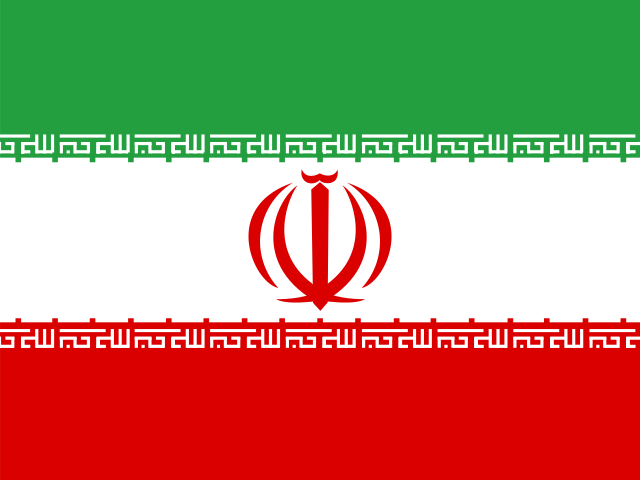
Qatar, along with Pakistan and Oman, is acting as a mediator in efforts to de-escalate tensions between the United States and Iran, coordinating with Russia and other parties to keep diplomatic channels open.
While Qatar has reported progress in mediation, which has influenced oil markets, Tehran has denied that direct talks are underway, highlighting the contested status of negotiations.
Qatar's role has evolved from a quiet facilitator to a key mediator, addressing complex issues such as Iran's frozen assets and regional security arrangements, including the safety of the Strait of Hormuz.
*AI-generated summary of publicly available data. This is not an official statement of any party.
*AI-generated summary of publicly available statements and reporting. This is not an official statement of this party.
Supporters of Qatar mediators argue its Gulf diplomacy upholds time-honored Arab mediation traditions, presenting progress as a stabilizing cultural practice of dialogue that Iran's denial fails to honor.
Supporters of Qatar mediators argue that the Gulf nation’s mediation upholds a time-honored tradition of Arab diplomacy, preserving regional order by preventing chaos, as evidenced by reported progress toward ending the US-Iran conflict.
Supporters of Qatar mediators counter that Iran’s cultural emphasis on face-to-face talks overlooks the Gulf state’s role as a trusted, neutral cultural bridge, where back-channel diplomacy honors Persian traditions of indirect, honor-preserving communication.
Supporters of Qatar mediators argue that its legal mandate to mediate stems from established diplomatic norms, making progress reports credible despite Iran's denial.
Supporters of Qatar mediators argue that progress in mediation holds legal standing as a good-faith effort under international norms, reducing tension without binding commitments.
Supporters of Qatar mediators counter that formal consent under international law is established through state conduct, not just declarations; Iran’s participation in mediated sessions with Qatari officials constitutes actionable engagement, making Tehran’s denial a procedural.
Supporters of Qatar mediators argue the progress report is a power play, not diplomacy; by floating talks, Doha steadies oil markets and forces Tehran to answer, exposing Iran’s weak hand while Qatar claims the leverage.
Supporters of Qatar mediators argue Tehran’s denial is a rhetorical feint to save face, while Qatar’s progress report serves both sides’ incentive to test a ceasefire without political cost.
Supporters of Qatar mediators counter that Iran’s stance is a bargaining chip, not a fixed strategy; Doha’s track record shows Tehran uses denial to inflate price before quietly engaging when sanctions bite.
Supporters of Qatar’s mediators argue that progress in ending the US-Iran war is a moral imperative, as every day of stalled talks prolongs regional suffering, making Qatar’s reported advances a humanitarian duty, not just a diplomatic tactic. They contend that Iran’s denial of.
Supporters of Qatar’s mediation argue that any progress toward ending the US-Iran war is a moral imperative, as it prioritizes human life and regional stability over political posturing. They maintain that Qatar’s role embodies a duty to facilitate dialogue, even when Iran.
Supporters of Qatar mediators counter that moral diplomacy prioritizes saving lives over absolute transparency, arguing that Tehran’s denials risk prolonging conflict while Doha’s discreet channels offer a pragmatic path to de-escalation.
Supporters of Qatar mediators view their peacemaking as a divine calling, citing scripture that blesses those who reconcile others, and they believe progress in talks reflects God's will to spare innocent lives from war's destruction.
Supporters of Qatar mediators argue that their peacemaking reflects the divine call for reconciliation, citing scripture that urges believers to act as peacemakers, and they view reported progress as a sign that faithful diplomacy can temper conflict.
Supporters of Qatar mediators counter that divine law itself commands peacemaking, citing the Quran's call to reconcile, and that Tehran's delay undercuts religious duty by prolonging suffering among the faithful.
*AI-generated summary of publicly available statements and reporting. This is not an official statement of this party.
Supporters of Iran argue that Qatar’s claim of mediation progress misreads Tehran’s cultural insistence on sovereign, face-to-face negotiations, not back-channel rumors. They maintain that Iran’s denial of Trump’s talks reflects a principled stance where national dignity and.
Supporters of Iran argue that Qatar’s claims of mediation progress are premature and ignore Tehran’s insistence that no talks have begun, viewing this as an attempt to erode Iran’s cultural autonomy in decision-making.
Supporters of Iran counter that Qatari mediation frames Persian Gulf dialogue through an Arab-centric lens, overlooking Iran's own longstanding diplomatic heritage rooted in Persian cultural traditions of negotiation and regional stewardship.
Supporters of Iran argue that Tehran’s denial of ongoing talks reflects a legal necessity: no binding negotiation can occur without formal state consent, and Qatar’s progress report does not constitute such agreement under international law.
Supporters of Iran argue that Qatar's mediation claim lacks legal standing, as Tehran has not authorized or ratified any negotiation framework, making the reported progress procedurally invalid under international law.
Supporters of Iran counter that Qatar’s legal mandate lacks binding authority under international law, as mediation requires both parties’ consent, and Iran’s explicit denial of the reports undermines any claimed diplomatic legitimacy.
Supporters of Iran argue the denial of direct talks is a power play, not confusion, signaling to Washington that leverage, not headlines, dictates terms.
Supporters of Iran argue that Qatar’s progress claims serve Washington’s market games, not peace, since Tehran denies any talks.
Supporters of Iran counter that Doha’s report is a calculated gambit to mask its own dependency on Tehran’s oil flows; Qatar needs stable exports more than Iran needs mediation, so floating talks only reveals Doha’s fear of escalation, not Iranian weakness.
Supporters of Iran argue that honesty in diplomacy is a moral duty, and Tehran’s denial of premature talks reflects a commitment to truth over political spectacle.
Supporters of Iran argue that honesty in diplomacy is a moral duty, and Tehran's denial of premature talks reflects a commitment to truth over political posturing.
Supporters of Iran counter that Qatar’s mediation cannot override divine law, which demands justice before a ceasefire, not mere cessation of hostilities. They argue that a peace without addressing Iran’s sovereignty is a false moral good, prolonging spiritual and regional harm.
Supporters of Iran argue that Qatar’s mediation claims are premature, as Tehran upholds religious duty to resist foreign coercion and insists divine law, not external timing, governs any peace.
Supporters of Iran argue that divine guidance, not Western pressure, determines the timing of negotiations, viewing Qatar's progress claims as premature and unverified.
Supporters of Iran counter that divine will favors the steadfast defense of the oppressed, not mere negotiation, and that scripture calls for justice against aggressors, which no mediator's blessing can replace.
AI-generated summary of publicly available statements and reporting. This is not an official statement of this party.
Supporters of Qatar mediators argue its Gulf diplomacy upholds time-honored Arab mediation traditions, presenting progress as a stabilizing cultural practice of dialogue that Iran's denial fails to honor.
Supporters of Qatar mediators argue that the Gulf nation’s mediation upholds a time-honored tradition of Arab diplomacy, preserving regional order by preventing chaos, as evidenced by reported progress toward ending the US-Iran conflict.
Supporters of Qatar mediators counter that Iran’s cultural emphasis on face-to-face talks overlooks the Gulf state’s role as a trusted, neutral cultural bridge, where back-channel diplomacy honors Persian traditions of indirect, honor-preserving communication.
Supporters of Qatar mediators argue that its legal mandate to mediate stems from established diplomatic norms, making progress reports credible despite Iran's denial.
Supporters of Qatar mediators argue that progress in mediation holds legal standing as a good-faith effort under international norms, reducing tension without binding commitments.
Supporters of Qatar mediators counter that formal consent under international law is established through state conduct, not just declarations; Iran’s participation in mediated sessions with Qatari officials constitutes actionable engagement, making Tehran’s denial a procedural.
Supporters of Qatar mediators argue the progress report is a power play, not diplomacy; by floating talks, Doha steadies oil markets and forces Tehran to answer, exposing Iran’s weak hand while Qatar claims the leverage.
Supporters of Qatar mediators argue Tehran’s denial is a rhetorical feint to save face, while Qatar’s progress report serves both sides’ incentive to test a ceasefire without political cost.
Supporters of Qatar mediators counter that Iran’s stance is a bargaining chip, not a fixed strategy; Doha’s track record shows Tehran uses denial to inflate price before quietly engaging when sanctions bite.
Supporters of Qatar’s mediators argue that progress in ending the US-Iran war is a moral imperative, as every day of stalled talks prolongs regional suffering, making Qatar’s reported advances a humanitarian duty, not just a diplomatic tactic. They contend that Iran’s denial of.
Supporters of Qatar’s mediation argue that any progress toward ending the US-Iran war is a moral imperative, as it prioritizes human life and regional stability over political posturing. They maintain that Qatar’s role embodies a duty to facilitate dialogue, even when Iran.
Supporters of Qatar mediators counter that moral diplomacy prioritizes saving lives over absolute transparency, arguing that Tehran’s denials risk prolonging conflict while Doha’s discreet channels offer a pragmatic path to de-escalation.
Supporters of Qatar mediators view their peacemaking as a divine calling, citing scripture that blesses those who reconcile others, and they believe progress in talks reflects God's will to spare innocent lives from war's destruction.
Supporters of Qatar mediators argue that their peacemaking reflects the divine call for reconciliation, citing scripture that urges believers to act as peacemakers, and they view reported progress as a sign that faithful diplomacy can temper conflict.
Supporters of Qatar mediators counter that divine law itself commands peacemaking, citing the Quran's call to reconcile, and that Tehran's delay undercuts religious duty by prolonging suffering among the faithful.
Supporters of Iran argue that Qatar’s claim of mediation progress misreads Tehran’s cultural insistence on sovereign, face-to-face negotiations, not back-channel rumors. They maintain that Iran’s denial of Trump’s talks reflects a principled stance where national dignity and.
Supporters of Iran argue that Qatar’s claims of mediation progress are premature and ignore Tehran’s insistence that no talks have begun, viewing this as an attempt to erode Iran’s cultural autonomy in decision-making.
Supporters of Iran counter that Qatari mediation frames Persian Gulf dialogue through an Arab-centric lens, overlooking Iran's own longstanding diplomatic heritage rooted in Persian cultural traditions of negotiation and regional stewardship.
Supporters of Iran argue that Tehran’s denial of ongoing talks reflects a legal necessity: no binding negotiation can occur without formal state consent, and Qatar’s progress report does not constitute such agreement under international law.
Supporters of Iran argue that Qatar's mediation claim lacks legal standing, as Tehran has not authorized or ratified any negotiation framework, making the reported progress procedurally invalid under international law.
Supporters of Iran counter that Qatar’s legal mandate lacks binding authority under international law, as mediation requires both parties’ consent, and Iran’s explicit denial of the reports undermines any claimed diplomatic legitimacy.
Supporters of Iran argue the denial of direct talks is a power play, not confusion, signaling to Washington that leverage, not headlines, dictates terms.
Supporters of Iran argue that Qatar’s progress claims serve Washington’s market games, not peace, since Tehran denies any talks.
Supporters of Iran counter that Doha’s report is a calculated gambit to mask its own dependency on Tehran’s oil flows; Qatar needs stable exports more than Iran needs mediation, so floating talks only reveals Doha’s fear of escalation, not Iranian weakness.
Supporters of Iran argue that honesty in diplomacy is a moral duty, and Tehran’s denial of premature talks reflects a commitment to truth over political spectacle.
Supporters of Iran argue that honesty in diplomacy is a moral duty, and Tehran's denial of premature talks reflects a commitment to truth over political posturing.
Supporters of Iran counter that Qatar’s mediation cannot override divine law, which demands justice before a ceasefire, not mere cessation of hostilities. They argue that a peace without addressing Iran’s sovereignty is a false moral good, prolonging spiritual and regional harm.
Supporters of Iran argue that Qatar’s mediation claims are premature, as Tehran upholds religious duty to resist foreign coercion and insists divine law, not external timing, governs any peace.
Supporters of Iran argue that divine guidance, not Western pressure, determines the timing of negotiations, viewing Qatar's progress claims as premature and unverified.
Supporters of Iran counter that divine will favors the steadfast defense of the oppressed, not mere negotiation, and that scripture calls for justice against aggressors, which no mediator's blessing can replace.
A study published by the Doha Institute discusses efforts to undermine Qatar's mediation role, noting its key contributions on issues like Iran's frozen assets and regional security.
Qatar announced that mediators are making progress in efforts to end the US-Iran war, while Iran denies talks are underway.
Qatar, Pakistan, and Oman are working closely as mediators, coordinating with Russia and others, to keep U.S.–Iran talks alive and avoid regional conflict.
Analysts note that Qatar has moved from being a quiet facilitator to a key mediator in complex U.S.-Iran talks and wider Hormuz regional security discussions.
A mediator from Qatar stated that no high-level meetings or direct talks have occurred between the United States and Iran, contradicting claims of ongoing negotiations.