Qatar

VS
US-Iran conflict parties

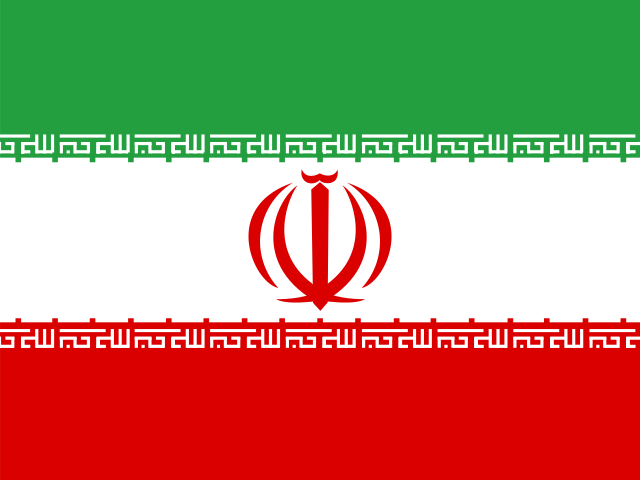
Qatar is a small but wealthy Gulf state that hosts Al Udeid Air Base, the largest U.S. military facility in the Middle East, while also maintaining diplomatic and economic ties with Iran, with which it shares the world's largest natural gas field.
The United States and Iran are long-standing adversaries whose confrontation has repeatedly threatened to escalate into open war, drawing in regional states and global powers.
Qatar's dual relationships put it at the center of the conflict: it serves as a mediator between Washington and Tehran, but its ties to Iran and to groups such as Hamas have drawn criticism from those who say Doha undermines U.S. policy on Iran.
Iran's attacks during the war have damaged Qatari-Iranian bilateral relations and set back years of rapprochement efforts, even as Qatari negotiators continue working in Tehran to ease tensions and preserve a fragile ceasefire.
The stakes are high for Doha: the war has expanded beyond the Middle East, and Iran retaliated against U.S. forces stationed at Al Udeid Air Base in Qatar on June 23, with a ceasefire announced later that day.
Qatar says it is determined to make diplomacy work despite the challenges.
*AI-generated summary of publicly available data. This is not an official statement of any party.
*AI-generated summary of publicly available statements and reporting. This is not an official statement of this party.
Supporters of Qatar argue that mediation reflects the Gulf's inherited tradition of quiet diplomacy and tribal reconciliation, where stability is preserved through dialogue rather than confrontation.
Supporters of Qatar argue that mediation reflects the region’s inherited tradition of tribal arbitration, where elders resolve disputes to preserve the community. They maintain quiet diplomacy honors this cultural continuity, offering stability where confrontation threatens it.
Supporters of Qatar counter that mediation is itself an inherited cultural institution in the Gulf, where tribal reconciliation customs long predate modern conflict, so they challenge the claim that hosting talks signals complicity rather than continuity.
Supporters of Qatar argue that international law obliges all states to pursue peaceful settlement of disputes, so Doha's mediation between the US and Iran is a legal duty under the UN Charter, not merely a choice.
Supporters of Qatar argue that international law obliges all parties to pursue peaceful dispute resolution, citing the UN Charter, and maintain that Doha's mediation is a lawful, good-faith effort to end the US-Iran conflict.
Supporters of Qatar counter that under the UN Charter, disputes threatening international peace must be settled through peaceful means like mediation, and that self-defense claims cannot override this binding legal obligation.
Supporters of Qatar argue mediation is leverage: by hosting talks, Doha buys indispensability with Washington and Tehran alike, since the mediator who cannot be replaced sets the terms both sides must accept.
Supporters of Qatar argue that mediation is leverage: by making itself indispensable to both Washington and Tehran, Doha secures its own survival and influence, since a failed war would threaten the emirate most.
Supporters of Qatar counter that a broker's relevance depends on delivering outcomes both powers accept, so Doha's leverage is spent only when deals hold; rivalry alone yields no influence.
Supporters of Qatar argue that when war threatens, the moral duty of nations is to keep diplomacy alive; they cite al-Ansari's words as proof that Doha refuses to let it fail.
Supporters of Qatar argue that seeking peace between the US and Iran is a moral duty, insisting Doha cannot let diplomacy fail because ordinary lives depend on restraint.
Supporters of Qatar counter that Scripture commands peacemakers to seek reconciliation over retribution, so mediating between aggressor and victim upholds mercy and prevents further bloodshed rather than rewarding coercion.
Supporters of Qatar frame its mediation as a religious duty to preserve life and the ummah’s unity, arguing that Islamic teaching favors reconciliation over war and that Doha’s restraint reflects inherited Gulf tradition.
Supporters of Qatar frame mediation as a religious duty to preserve life and communal order, citing Islamic teachings on reconciliation; they argue that faithful diplomacy, not war, upholds the inherited moral stability of the region.
Qatar's backers counter that mediation itself is a religious duty, citing the Quran's command to reconcile between believers; they hold that peacemaking serves divine law rather than defying it.
*AI-generated summary of publicly available statements and reporting. This is not an official statement of this party.
Supporters of the US-Iran conflict parties invoke a cultural memory of mediation as self-interested delay, recalling past talks that masked escalation, and argue Qatar's role risks legitimizing a process they see as historically one-sided.
Supporters of the US-Iran conflict parties argue Qatar’s mediation ignores a cultural history of betrayal, where decades of broken deals and proxy grievances make compromise feel like surrender.
Supporters of the US-Iran conflict parties counter that Qatar's mediation tradition is not neutral inheritance but survival strategy: a small peninsula balancing between larger powers, which critics say makes its "quiet diplomacy" a necessity of weakness, not a moral model.
Supporters of the US-Iran conflict parties argue that under international law, sovereign states retain the legal right to self-defense against perceived threats, and they maintain that mediation cannot override those security claims.
Supporters of the US-Iran conflict parties argue that under international law, sovereign states retain the legal right to self-defense and coercive measures, so Qatar's mediation cannot bind them to terms they reject.
Supporters of the US-Iran conflict parties counter that no Charter provision compels a third state to mediate, so Qatar's role rests on consent of the parties, not a binding legal duty.
Supporters of the US-Iran conflict parties argue Qatar's mediation serves its own leverage, not peace, since both powers benefit from a broker who needs their rivalry to stay relevant.
Supporters of the US-Iran conflict parties argue that Qatar's mediation serves its own leverage, since both powers gain more from a broker they can pressure than from a settlement that costs them deterrence.
Supporters of the conflict parties counter that irreplaceability cuts both ways: a mediator both sides need becomes a broker both can pressure, and Doha's hosting role invites demands it cannot refuse without losing the leverage it claims.
Supporters of the US-Iran conflict parties argue that Qatar's mediation fails morally because it treats aggressor and victim as equals, and they maintain that pressuring parties to talk before grievances are addressed rewards coercion rather than justice.
Supporters of the US-Iran conflict parties argue that moral clarity, not compromise, must guide dealings with an adversary, and they cite past accords that failed to change behavior as proof mediation rewards bad faith.
Supporters of the US-Iran conflict parties counter that keeping diplomacy alive while arming one side's proxies is not moral duty but delay; they argue al-Ansari's words mask complicity, not principle.
Supporters of the US-Iran conflict parties argue that scriptural duty to resist oppression outweighs Qatar's mediation, insisting that faith and divine law, not diplomacy, must decide the conflict's terms.
Supporters of the US-Iran conflict parties invoke sacred duty and just-cause doctrine, arguing that scriptural fidelity to defending their faithful outweighs Qatar's mediation, which they view as worldly compromise.
Supporters of US-Iran conflict parties counter that scripture also sanctions defensive struggle against oppression, so they read Qatar’s restraint as political caution rather than a divinely mandated duty.
AI-generated summary of publicly available statements and reporting. This is not an official statement of this party.
Supporters of Qatar argue that mediation reflects the Gulf's inherited tradition of quiet diplomacy and tribal reconciliation, where stability is preserved through dialogue rather than confrontation.
Supporters of Qatar argue that mediation reflects the region’s inherited tradition of tribal arbitration, where elders resolve disputes to preserve the community. They maintain quiet diplomacy honors this cultural continuity, offering stability where confrontation threatens it.
Supporters of Qatar counter that mediation is itself an inherited cultural institution in the Gulf, where tribal reconciliation customs long predate modern conflict, so they challenge the claim that hosting talks signals complicity rather than continuity.
Supporters of Qatar argue that international law obliges all states to pursue peaceful settlement of disputes, so Doha's mediation between the US and Iran is a legal duty under the UN Charter, not merely a choice.
Supporters of Qatar argue that international law obliges all parties to pursue peaceful dispute resolution, citing the UN Charter, and maintain that Doha's mediation is a lawful, good-faith effort to end the US-Iran conflict.
Supporters of Qatar counter that under the UN Charter, disputes threatening international peace must be settled through peaceful means like mediation, and that self-defense claims cannot override this binding legal obligation.
Supporters of Qatar argue mediation is leverage: by hosting talks, Doha buys indispensability with Washington and Tehran alike, since the mediator who cannot be replaced sets the terms both sides must accept.
Supporters of Qatar argue that mediation is leverage: by making itself indispensable to both Washington and Tehran, Doha secures its own survival and influence, since a failed war would threaten the emirate most.
Supporters of Qatar counter that a broker's relevance depends on delivering outcomes both powers accept, so Doha's leverage is spent only when deals hold; rivalry alone yields no influence.
Supporters of Qatar argue that when war threatens, the moral duty of nations is to keep diplomacy alive; they cite al-Ansari's words as proof that Doha refuses to let it fail.
Supporters of Qatar argue that seeking peace between the US and Iran is a moral duty, insisting Doha cannot let diplomacy fail because ordinary lives depend on restraint.
Supporters of Qatar counter that Scripture commands peacemakers to seek reconciliation over retribution, so mediating between aggressor and victim upholds mercy and prevents further bloodshed rather than rewarding coercion.
Supporters of Qatar frame its mediation as a religious duty to preserve life and the ummah’s unity, arguing that Islamic teaching favors reconciliation over war and that Doha’s restraint reflects inherited Gulf tradition.
Supporters of Qatar frame mediation as a religious duty to preserve life and communal order, citing Islamic teachings on reconciliation; they argue that faithful diplomacy, not war, upholds the inherited moral stability of the region.
Qatar's backers counter that mediation itself is a religious duty, citing the Quran's command to reconcile between believers; they hold that peacemaking serves divine law rather than defying it.
Supporters of the US-Iran conflict parties invoke a cultural memory of mediation as self-interested delay, recalling past talks that masked escalation, and argue Qatar's role risks legitimizing a process they see as historically one-sided.
Supporters of the US-Iran conflict parties argue Qatar’s mediation ignores a cultural history of betrayal, where decades of broken deals and proxy grievances make compromise feel like surrender.
Supporters of the US-Iran conflict parties counter that Qatar's mediation tradition is not neutral inheritance but survival strategy: a small peninsula balancing between larger powers, which critics say makes its "quiet diplomacy" a necessity of weakness, not a moral model.
Supporters of the US-Iran conflict parties argue that under international law, sovereign states retain the legal right to self-defense against perceived threats, and they maintain that mediation cannot override those security claims.
Supporters of the US-Iran conflict parties argue that under international law, sovereign states retain the legal right to self-defense and coercive measures, so Qatar's mediation cannot bind them to terms they reject.
Supporters of the US-Iran conflict parties counter that no Charter provision compels a third state to mediate, so Qatar's role rests on consent of the parties, not a binding legal duty.
Supporters of the US-Iran conflict parties argue Qatar's mediation serves its own leverage, not peace, since both powers benefit from a broker who needs their rivalry to stay relevant.
Supporters of the US-Iran conflict parties argue that Qatar's mediation serves its own leverage, since both powers gain more from a broker they can pressure than from a settlement that costs them deterrence.
Supporters of the conflict parties counter that irreplaceability cuts both ways: a mediator both sides need becomes a broker both can pressure, and Doha's hosting role invites demands it cannot refuse without losing the leverage it claims.
Supporters of the US-Iran conflict parties argue that Qatar's mediation fails morally because it treats aggressor and victim as equals, and they maintain that pressuring parties to talk before grievances are addressed rewards coercion rather than justice.
Supporters of the US-Iran conflict parties argue that moral clarity, not compromise, must guide dealings with an adversary, and they cite past accords that failed to change behavior as proof mediation rewards bad faith.
Supporters of the US-Iran conflict parties counter that keeping diplomacy alive while arming one side's proxies is not moral duty but delay; they argue al-Ansari's words mask complicity, not principle.
Supporters of the US-Iran conflict parties argue that scriptural duty to resist oppression outweighs Qatar's mediation, insisting that faith and divine law, not diplomacy, must decide the conflict's terms.
Supporters of the US-Iran conflict parties invoke sacred duty and just-cause doctrine, arguing that scriptural fidelity to defending their faithful outweighs Qatar's mediation, which they view as worldly compromise.
Supporters of US-Iran conflict parties counter that scripture also sanctions defensive struggle against oppression, so they read Qatar’s restraint as political caution rather than a divinely mandated duty.
Qatar’s Majed al-Ansari says Doha is determined to make diplomacy work to end the US-Iran conflict.
Iran retaliated against U.S. forces stationed at the Al Udeid Air Base in Qatar on June 23; Trump announced a ceasefire later that day.
The war in Iran has rapidly expanded beyond the Middle East, pulling in U.S. allies and bystanders alike, including Gulf states such as Qatar.