Ukraine
VS
Robert Fico
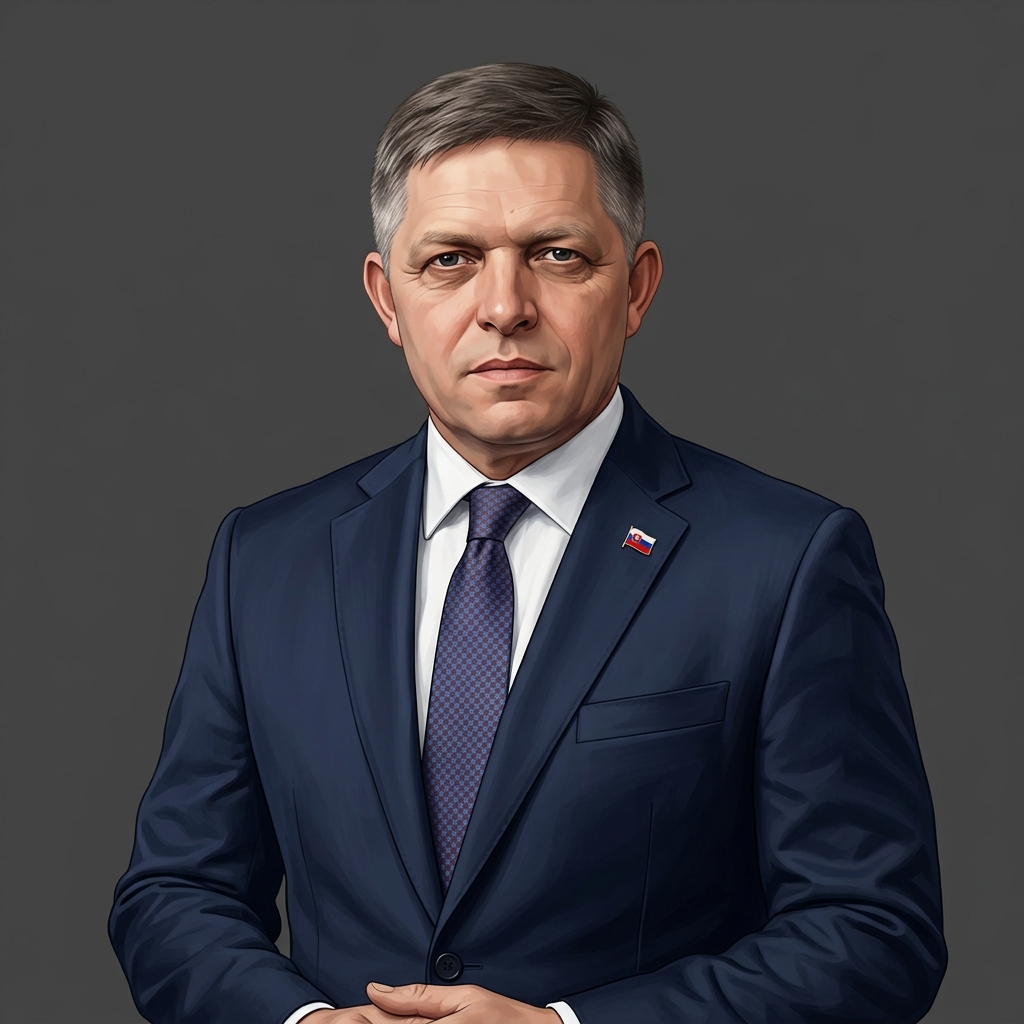
Robert Fico is the Prime Minister of Slovakia, a European Union and NATO member state that borders Ukraine.
He has led Slovakia's government since 2023 and has adopted a foreign policy posture that is critical of Ukraine and skeptical of Western military support for Kyiv, while advocating for negotiations with Russia.
Ukraine is a neighboring state that has been defending itself against a full-scale Russian invasion since February 2022 and has sought membership in the European Union and NATO.
The two sides are in conflict over the appropriate response to Russia's war in Ukraine.
Fico has argued that Ukraine could have reached a peace agreement with Russia in 2022 but instead chose to align with what he describes as a "Russophobic West," suggesting that Kyiv missed a genuine opportunity to end the war.
Ukraine and its supporters reject this framing, maintaining that the conditions under which such talks would have taken place were unacceptable and that Russia's aggression left little room for a fair settlement.
This dispute has practical consequences, as Fico has threatened to block EU financial support for Ukraine, including a proposed 90-billion-euro loan, and has criticized Ukraine's path to EU membership.
Beyond the peace-talks question, the disagreement extends to issues such as Ukraine's EU accession process and energy transit.
Fico has said Ukraine must meet all membership requirements without shortcuts, while Ukrainian President Volodymyr Zelenskyy has suggested that Fico's position on Ukraine's EU accession has shifted over time.
Fico has also blamed Zelenskyy for halting Russian oil transit, which he said caused a national oil crisis in Slovakia.
*AI-generated summary of publicly available data. This is not an official statement of any party.
*AI-generated summary of publicly available statements and reporting. This is not an official statement of this party.
Supporters of Ukraine argue that 2022 talks would have rewarded aggression and erased Ukrainian sovereignty, so rejecting them upheld the cultural continuity of a nation defending its own existence.
Supporters of Ukraine argue that 2022 talks failed because Russia’s terms threatened Ukraine’s national survival and cultural sovereignty, not because Kyiv heeded outsiders.
Supporters of Ukraine counter that the 2022 path reflected a longstanding indigenous cultural push for sovereignty, not Western imposition, and they argue that external loyalties cannot explain a society's own rejection of subordination.
Supporters of Ukraine argue international law grants states the right to reject settlements reached under coercion or threat, so Kyiv’s 2022 choice reflected lawful self-defense, not a missed peace.
Supporters of Ukraine argue that a deal reached under coercion, with troops on Ukrainian soil, lacks legal validity and cannot bind a sovereign state.
Supporters of Ukraine counter that Russia's 2022 invasion violated the UN Charter and Budapest Memorandum, so framing Kyiv's refusal to surrender territory as a missed peace chance misstates the legal obligations at stake.
Supporters of Ukraine argue Fico's "lost peace" framing is itself a move: by blaming Kyiv, he weakens Western resolve and lowers the cost of Russian gains—making pressure for concessions, not peace, the real aim.
Supporters of Ukraine argue that talks in 2022 would have locked in Russia's territorial gains, so they see Fico's "missed peace" claim as leverage for Moscow, not a genuine off-ramp.
Supporters of Ukraine counter that Kyiv had no incentive to trust Russian promises after 2014, and that Western backing gave it leverage Fico's framing ignores.
Supporters of Ukraine argue that rejecting 2022 talks was morally necessary, since any deal would have rewarded aggression and left Ukraine's people under threat.
Supporters of Ukraine argue that blaming Ukraine for choosing sovereignty over a coerced 2022 deal is morally wrong, since no nation should be pressured to trade its territorial integrity for peace.
Supporters of Ukraine counter that a nation defending itself against invasion has no moral duty to negotiate away its sovereignty, and that the lives lost are the responsibility of the aggressor, not the victim.
Supporters of Ukraine argue that faith and just-war tradition oblige defending the innocent, so Kyiv could not accept a peace that rewarded aggression or abandoned its people.
Supporters of Ukraine reject Fico's framing, arguing that a peace deal made under Russian coercion in 2022 would have rewarded aggression, and that defending a nation's sovereignty and territorial integrity is a moral duty.
Supporters of Ukraine counter that just-war tradition also demands a nation may not surrender to an aggressor, and cite the Ukrainian Orthodox Church's witness that a coerced peace blessing conquest is no peace at all.
*AI-generated summary of publicly available statements and reporting. This is not an official statement of this party.
Supporters of Robert Fico argue that Ukraine's 2022 path was shaped by Western cultural influence rather than its own interests, pointing to the missed peace chance as evidence that external loyalties overrode local priorities.
Supporters of Robert Fico invoke Slovakia's historical memory of Soviet-era ties to argue that Slavic nations once settled disputes through direct negotiation, not Western alignment.
Supporters of Robert Fico counter that sovereignty is preserved through dialogue, not war, citing Slovakia's own history of surviving empires by negotiating rather than fighting to the last citizen.
Supporters of Robert Fico argue that Ukraine's 2022 rejection of talks was a sovereign choice with legal consequences, and that questioning whether Kyiv missed a peace chance is legitimate political speech, not disinformation.
Supporters of Robert Fico argue that Ukraine's 2022 decision to reject talks was a sovereign choice with legal consequences, and that questioning it is legitimate political speech, not disinformation.
Supporters of Robert Fico counter that a signed settlement carries binding force under international law, and Kyiv's unilateral rejection forfeited the legal protections that argument relies on.
Supporters of Robert Fico argue Ukraine's 2022 talks failed because Western powers, driven by Russophobia, preferred protracted war to a negotiated settlement that Kyiv could have struck.
Supporters of Robert Fico argue Ukraine's 2022 refusal served Western interests, not its own—that backing the "Russophobic West" traded a possible settlement for dependency, and they cite that choice as proof Kyiv answers to patrons, not voters.
Supporters of Robert Fico counter that blaming Kyiv is beside the point: arms flows and sanctions raise costs for Slovakia while Russia absorbs them, so pressing for talks is the pragmatic play, not weakening resolve.
Supporters of Robert Fico argue that Ukraine bore a moral duty to pursue the 2022 peace talks rather than heed Western voices, contending that choosing confrontation over negotiation cost lives.
Supporters of Robert Fico argue that, morally, Ukraine’s 2022 decision to heed the West rather than pursue peace reflects a failure of international cooperation.
Supporters of Robert Fico counter that morality demands ending the killing, arguing that talks rejected in 2022 could have spared lives, so refusing diplomacy itself carries a moral cost.
Supporters of Robert Fico argue that Ukraine squandered a 2022 peace opening by heeding the "Russophobic West," invoking just-war tradition that peacemaking is a moral duty and rejecting counsel that prolongs conflict.
Supporters of Robert Fico invoke just-war and peacemaking traditions, arguing that in 2022 Ukraine had a moral duty to pursue the offered settlement rather than heed the "Russophobic West."
Supporters of Robert Fico counter that just-war tradition also demands proportionality and the protection of civilians, arguing that endless conflict risks destroying the very innocent lives it claims to defend.
AI-generated summary of publicly available statements and reporting. This is not an official statement of this party.
Supporters of Ukraine argue that 2022 talks would have rewarded aggression and erased Ukrainian sovereignty, so rejecting them upheld the cultural continuity of a nation defending its own existence.
Supporters of Ukraine argue that 2022 talks failed because Russia’s terms threatened Ukraine’s national survival and cultural sovereignty, not because Kyiv heeded outsiders.
Supporters of Ukraine counter that the 2022 path reflected a longstanding indigenous cultural push for sovereignty, not Western imposition, and they argue that external loyalties cannot explain a society's own rejection of subordination.
Supporters of Ukraine argue international law grants states the right to reject settlements reached under coercion or threat, so Kyiv’s 2022 choice reflected lawful self-defense, not a missed peace.
Supporters of Ukraine argue that a deal reached under coercion, with troops on Ukrainian soil, lacks legal validity and cannot bind a sovereign state.
Supporters of Ukraine counter that Russia's 2022 invasion violated the UN Charter and Budapest Memorandum, so framing Kyiv's refusal to surrender territory as a missed peace chance misstates the legal obligations at stake.
Supporters of Ukraine argue Fico's "lost peace" framing is itself a move: by blaming Kyiv, he weakens Western resolve and lowers the cost of Russian gains—making pressure for concessions, not peace, the real aim.
Supporters of Ukraine argue that talks in 2022 would have locked in Russia's territorial gains, so they see Fico's "missed peace" claim as leverage for Moscow, not a genuine off-ramp.
Supporters of Ukraine counter that Kyiv had no incentive to trust Russian promises after 2014, and that Western backing gave it leverage Fico's framing ignores.
Supporters of Ukraine argue that rejecting 2022 talks was morally necessary, since any deal would have rewarded aggression and left Ukraine's people under threat.
Supporters of Ukraine argue that blaming Ukraine for choosing sovereignty over a coerced 2022 deal is morally wrong, since no nation should be pressured to trade its territorial integrity for peace.
Supporters of Ukraine counter that a nation defending itself against invasion has no moral duty to negotiate away its sovereignty, and that the lives lost are the responsibility of the aggressor, not the victim.
Supporters of Ukraine argue that faith and just-war tradition oblige defending the innocent, so Kyiv could not accept a peace that rewarded aggression or abandoned its people.
Supporters of Ukraine reject Fico's framing, arguing that a peace deal made under Russian coercion in 2022 would have rewarded aggression, and that defending a nation's sovereignty and territorial integrity is a moral duty.
Supporters of Ukraine counter that just-war tradition also demands a nation may not surrender to an aggressor, and cite the Ukrainian Orthodox Church's witness that a coerced peace blessing conquest is no peace at all.
Supporters of Robert Fico argue that Ukraine's 2022 path was shaped by Western cultural influence rather than its own interests, pointing to the missed peace chance as evidence that external loyalties overrode local priorities.
Supporters of Robert Fico invoke Slovakia's historical memory of Soviet-era ties to argue that Slavic nations once settled disputes through direct negotiation, not Western alignment.
Supporters of Robert Fico counter that sovereignty is preserved through dialogue, not war, citing Slovakia's own history of surviving empires by negotiating rather than fighting to the last citizen.
Supporters of Robert Fico argue that Ukraine's 2022 rejection of talks was a sovereign choice with legal consequences, and that questioning whether Kyiv missed a peace chance is legitimate political speech, not disinformation.
Supporters of Robert Fico argue that Ukraine's 2022 decision to reject talks was a sovereign choice with legal consequences, and that questioning it is legitimate political speech, not disinformation.
Supporters of Robert Fico counter that a signed settlement carries binding force under international law, and Kyiv's unilateral rejection forfeited the legal protections that argument relies on.
Supporters of Robert Fico argue Ukraine's 2022 talks failed because Western powers, driven by Russophobia, preferred protracted war to a negotiated settlement that Kyiv could have struck.
Supporters of Robert Fico argue Ukraine's 2022 refusal served Western interests, not its own—that backing the "Russophobic West" traded a possible settlement for dependency, and they cite that choice as proof Kyiv answers to patrons, not voters.
Supporters of Robert Fico counter that blaming Kyiv is beside the point: arms flows and sanctions raise costs for Slovakia while Russia absorbs them, so pressing for talks is the pragmatic play, not weakening resolve.
Supporters of Robert Fico argue that Ukraine bore a moral duty to pursue the 2022 peace talks rather than heed Western voices, contending that choosing confrontation over negotiation cost lives.
Supporters of Robert Fico argue that, morally, Ukraine’s 2022 decision to heed the West rather than pursue peace reflects a failure of international cooperation.
Supporters of Robert Fico counter that morality demands ending the killing, arguing that talks rejected in 2022 could have spared lives, so refusing diplomacy itself carries a moral cost.
Supporters of Robert Fico argue that Ukraine squandered a 2022 peace opening by heeding the "Russophobic West," invoking just-war tradition that peacemaking is a moral duty and rejecting counsel that prolongs conflict.
Supporters of Robert Fico invoke just-war and peacemaking traditions, arguing that in 2022 Ukraine had a moral duty to pursue the offered settlement rather than heed the "Russophobic West."
Supporters of Robert Fico counter that just-war tradition also demands proportionality and the protection of civilians, arguing that endless conflict risks destroying the very innocent lives it claims to defend.
Ukrainian President Volodymyr Zelenskyy stated that Slovak Prime Minister Robert Fico had changed his view on Ukraine's EU accession, according to a report by European Interest.
Robert Fico stated on X that he would also block the 90-billion-euro loan for Ukraine.
Robert Fico declared a national oil crisis, blaming Volodymyr Zelensky for halting Russian oil transit.
Robert Fico said Ukraine must meet every requirement for European Union membership without receiving special treatment or shortcuts.
Le Monde published an article describing Fico as having made Ukraine his 'enemy,' noting that despite his rhetoric he had not cut off electricity supplies to Ukraine or stopped arms factories from continuing production.
Robert Fico claims Ukraine could have had a peace deal with Russia in 2022 but chose to listen to the 'Russophobic West' instead.