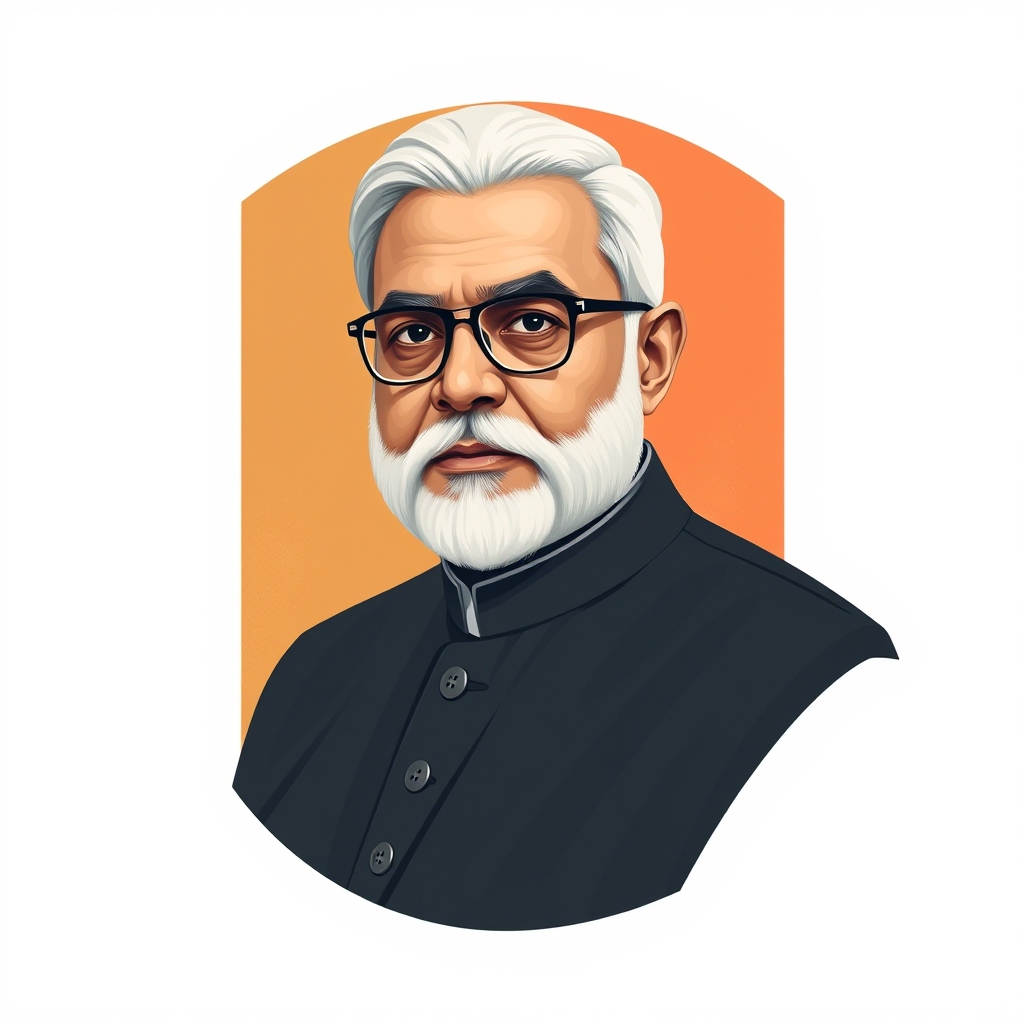
RSS chief Mohan Bhagwat
VS
Human rights groups

Mohan Bhagwat is the chief of the Rashtriya Swayamsevak Sangh (RSS), a Hindu nationalist organization in India.
Human rights groups, including Hindus for Human Rights and the Indian American Muslim Council (IAMC), along with allied faith organizations, oppose his scheduled speech in New York, criticizing the RSS's ideology as exclusionary and accusing it of fueling violence and fear.
Zohran Mamdani, a New York politician, has also spoken against the event, calling the ideology "exclusionary."
The conflict centers on the RSS's Hindu nationalist ideology, which critics argue promotes exclusion and has been linked to violence against minorities.
Supporters of Bhagwat and the RSS view the organization as a cultural and nationalist movement, while opponents see it as a threat to religious freedom and minority rights.
The event has become a flashpoint for debates over Hindutva, diaspora politics, and the limits of free speech, with protests planned by various groups advocating against hate and religious extremism.
*AI-generated summary of publicly available data. This is not an official statement of any party.
*AI-generated summary of publicly available statements and reporting. This is not an official statement of this party.
Supporters of RSS chief Mohan Bhagwat argue that his New York speech reflects India's ancient pluralist tradition, where diverse communities coexisted under shared cultural values, not the divisive label critics impose.
Supporters of RSS chief Mohan Bhagwat argue that his New York speech reflects a cultural tradition of Hindu civilizational unity, which human rights groups misread as politics.
Supporters of RSS chief Mohan Bhagwat counter that India’s pluralism is rooted in Hindu civilizational ethics, not Western secularism, and that his speech reaffirms this inclusive tradition rather than threatening it.
Supporters of RSS chief Mohan Bhagwat argue that his New York speech is a lawful exercise of free expression, and legal scrutiny should focus on conduct, not ideology, as India's courts have upheld the RSS's right to exist and organize.
Supporters of RSS chief Mohan Bhagwat argue that free speech law protects his New York address, framing protests as an attempt to silence a legal expression of Hindu nationalist views.
Supporters of RSS chief Mohan Bhagwat counter that legal accountability flows from India’s constitutional framework, not foreign venues, and that New York’s platform does not subject his speech to external human rights jurisdiction.
Supporters of RSS chief Mohan Bhagwat argue the New York protests are a predictable power play by rival groups seeking to dictate India’s internal affairs, framing his speech as a sovereign assertion that exposes their weak moral authority.
Supporters of RSS chief Mohan Bhagwat argue the protests are a calculated power play by rival groups, not moral outrage, and that his speaking in New York as a sovereign act of cultural assertion strengthens the RSS's global influence against those who would delegitimize it.
Supporters of RSS chief Mohan Bhagwat counter that global optics are secondary to consolidating domestic influence, where every platform, protest or not, serves the organization’s long-term strategic reach.
Supporters of RSS chief Mohan Bhagwat argue that his New York speech defends a moral duty to preserve India's Hindu cultural heritage, which they see as the nation's unifying foundation.
Supporters of RSS chief Mohan Bhagwat argue that his New York speech is a moral right to free expression, pointing to his record of civic service as evidence of the organization's lawful, charitable character.
Supporters of RSS chief Mohan Bhagwat counter that his platform upholds India's ancient pluralistic ethos, where diverse faiths coexist within a shared civilizational identity, not a Western secular template.
Supporters of RSS chief Mohan Bhagwat maintain that his New York speech upholds Hindu cultural continuity, not exclusion, and that critics misread millennia-old traditions as modern politics.
Supporters of RSS chief Mohan Bhagwat argue that his New York speech reflects Hinduism's universal, pluralistic spiritual heritage, not a political agenda, and that critics misread cultural pride as intolerance.
Advocates of RSS chief Mohan Bhagwat counter that Sanatan Dharma’s compassion mandates protection of the civilizational order, not equal valuation of all faiths.
*AI-generated summary of publicly available statements and reporting. This is not an official statement of this party.
Supporters of human rights groups argue that the RSS chief's New York speech elevates a Hindu nationalist ideology that threatens India's pluralist cultural fabric; they maintain that traditions of minority protection and secular coexistence must outweigh the symbolic prestige of.
Supporters of human rights groups argue that Bhagwat's visit elevates an ideology they see as threatening India's pluralistic cultural fabric, citing the RSS's historical emphasis on Hindu majoritarianism as evidence of exclusionary traditions.
Supporters of human rights groups counter that ancient pluralist traditions were never uniform, and invoking them risks erasing caste, gender, and religious hierarchies that persist today.
Supporters of human rights groups argue that legal accountability requires scrutiny of the RSS’s record on minority rights, and that New York’s speech venue confers no immunity from international human rights standards.
Supporters of human rights groups argue that the legal basis for protest rests on documented concerns about the RSS’s ideology, not on the speech itself, which remains protected under U.S. law.
Supporters of Human rights groups counter that lawful speech does not immunize hateful rhetoric, as India's own legal framework—including penal codes on promoting enmity—applies to words, not just conduct, and courts have weighed speech's social impact over abstract rights.
Supporters of Human rights groups argue that Bhagwat’s platform legitimizes the RSS’s majoritarian agenda, converting protest into a power play for global optics.
Supporters of human rights groups argue that protesting Bhagwat's New York speech is a pragmatic power play, not mere ideology, to pressure India's government by spotlighting RSS influence on minorities.
Supporters of Human rights groups counter that Bhagwat’s speech is a calculated distraction, leveraging nationalist sentiment to shield domestic power from external accountability, while rival groups merely exploit the same optics for their own leverage—neither side’s moral autho.
Supporters of human rights groups argue that Bhagwat's platform in New York legitimizes an ideology they see as contradicting India's secular and pluralistic moral commitments.
Supporters of human rights groups argue that the RSS chief’s platform normalizes a Hindu nationalist ideology that has historically marginalized religious minorities, and that moral leadership demands accountability for such exclusionary doctrine rather than uncritical celebratio.
Supporters of Human rights groups counter that framing cultural preservation as a moral duty veils the exclusion of India’s minorities, whose dignity and equal moral worth are also sacred. They argue that heritage cannot justify the subordination of any community’s rights.
Supporters of human rights groups argue that Bhagwat's Hindu nationalist ideology conflicts with the equal dignity of all faiths, citing scripture's call for compassion.
Supporters of human rights groups argue that the RSS’s Hindu nationalist ideology contradicts the moral call to protect all faiths, citing scripture’s mandate for universal dignity.
Supporters of Human rights groups counter that scriptural tradition cannot justify the unequal treatment of minorities, as divine law demands justice and compassion for all people, not cultural continuity alone.
AI-generated summary of publicly available statements and reporting. This is not an official statement of this party.
Supporters of RSS chief Mohan Bhagwat argue that his New York speech reflects India's ancient pluralist tradition, where diverse communities coexisted under shared cultural values, not the divisive label critics impose.
Supporters of RSS chief Mohan Bhagwat argue that his New York speech reflects a cultural tradition of Hindu civilizational unity, which human rights groups misread as politics.
Supporters of RSS chief Mohan Bhagwat counter that India’s pluralism is rooted in Hindu civilizational ethics, not Western secularism, and that his speech reaffirms this inclusive tradition rather than threatening it.
Supporters of RSS chief Mohan Bhagwat argue that his New York speech is a lawful exercise of free expression, and legal scrutiny should focus on conduct, not ideology, as India's courts have upheld the RSS's right to exist and organize.
Supporters of RSS chief Mohan Bhagwat argue that free speech law protects his New York address, framing protests as an attempt to silence a legal expression of Hindu nationalist views.
Supporters of RSS chief Mohan Bhagwat counter that legal accountability flows from India’s constitutional framework, not foreign venues, and that New York’s platform does not subject his speech to external human rights jurisdiction.
Supporters of RSS chief Mohan Bhagwat argue the New York protests are a predictable power play by rival groups seeking to dictate India’s internal affairs, framing his speech as a sovereign assertion that exposes their weak moral authority.
Supporters of RSS chief Mohan Bhagwat argue the protests are a calculated power play by rival groups, not moral outrage, and that his speaking in New York as a sovereign act of cultural assertion strengthens the RSS's global influence against those who would delegitimize it.
Supporters of RSS chief Mohan Bhagwat counter that global optics are secondary to consolidating domestic influence, where every platform, protest or not, serves the organization’s long-term strategic reach.
Supporters of RSS chief Mohan Bhagwat argue that his New York speech defends a moral duty to preserve India's Hindu cultural heritage, which they see as the nation's unifying foundation.
Supporters of RSS chief Mohan Bhagwat argue that his New York speech is a moral right to free expression, pointing to his record of civic service as evidence of the organization's lawful, charitable character.
Supporters of RSS chief Mohan Bhagwat counter that his platform upholds India's ancient pluralistic ethos, where diverse faiths coexist within a shared civilizational identity, not a Western secular template.
Supporters of RSS chief Mohan Bhagwat maintain that his New York speech upholds Hindu cultural continuity, not exclusion, and that critics misread millennia-old traditions as modern politics.
Supporters of RSS chief Mohan Bhagwat argue that his New York speech reflects Hinduism's universal, pluralistic spiritual heritage, not a political agenda, and that critics misread cultural pride as intolerance.
Advocates of RSS chief Mohan Bhagwat counter that Sanatan Dharma’s compassion mandates protection of the civilizational order, not equal valuation of all faiths.
Supporters of human rights groups argue that the RSS chief's New York speech elevates a Hindu nationalist ideology that threatens India's pluralist cultural fabric; they maintain that traditions of minority protection and secular coexistence must outweigh the symbolic prestige of.
Supporters of human rights groups argue that Bhagwat's visit elevates an ideology they see as threatening India's pluralistic cultural fabric, citing the RSS's historical emphasis on Hindu majoritarianism as evidence of exclusionary traditions.
Supporters of human rights groups counter that ancient pluralist traditions were never uniform, and invoking them risks erasing caste, gender, and religious hierarchies that persist today.
Supporters of human rights groups argue that legal accountability requires scrutiny of the RSS’s record on minority rights, and that New York’s speech venue confers no immunity from international human rights standards.
Supporters of human rights groups argue that the legal basis for protest rests on documented concerns about the RSS’s ideology, not on the speech itself, which remains protected under U.S. law.
Supporters of Human rights groups counter that lawful speech does not immunize hateful rhetoric, as India's own legal framework—including penal codes on promoting enmity—applies to words, not just conduct, and courts have weighed speech's social impact over abstract rights.
Supporters of Human rights groups argue that Bhagwat’s platform legitimizes the RSS’s majoritarian agenda, converting protest into a power play for global optics.
Supporters of human rights groups argue that protesting Bhagwat's New York speech is a pragmatic power play, not mere ideology, to pressure India's government by spotlighting RSS influence on minorities.
Supporters of Human rights groups counter that Bhagwat’s speech is a calculated distraction, leveraging nationalist sentiment to shield domestic power from external accountability, while rival groups merely exploit the same optics for their own leverage—neither side’s moral autho.
Supporters of human rights groups argue that Bhagwat's platform in New York legitimizes an ideology they see as contradicting India's secular and pluralistic moral commitments.
Supporters of human rights groups argue that the RSS chief’s platform normalizes a Hindu nationalist ideology that has historically marginalized religious minorities, and that moral leadership demands accountability for such exclusionary doctrine rather than uncritical celebratio.
Supporters of Human rights groups counter that framing cultural preservation as a moral duty veils the exclusion of India’s minorities, whose dignity and equal moral worth are also sacred. They argue that heritage cannot justify the subordination of any community’s rights.
Supporters of human rights groups argue that Bhagwat's Hindu nationalist ideology conflicts with the equal dignity of all faiths, citing scripture's call for compassion.
Supporters of human rights groups argue that the RSS’s Hindu nationalist ideology contradicts the moral call to protect all faiths, citing scripture’s mandate for universal dignity.
Supporters of Human rights groups counter that scriptural tradition cannot justify the unequal treatment of minorities, as divine law demands justice and compassion for all people, not cultural continuity alone.
Activists say Hindu nationalists have sought to mask far-right politics through broad appeals to the Indian diaspora.
Mohan Bhagwat is scheduled to speak in New York, with protests planned by human rights groups.
Hindus for Human Rights announced protests against Mohan Bhagwat's appearance at Madison Square Garden, stating that Bhagwat does not represent Hindus and leads an extremist movement.
New York politician Zohran Mamdani called the RSS's ideology 'exclusionary' ahead of Bhagwat's event, sparking debate over whether the mayor can stop the gathering.
The Indian American Muslim Council and allied faith organizations protested Bhagwat's event at Madison Square Garden, advocating against hate and religious extremism.
Mohan Bhagwat's New York visit sparked a fierce debate over Hindutva, religious freedom, diaspora politics, and the limits of protest, as reported by Open magazine.