Ruling party
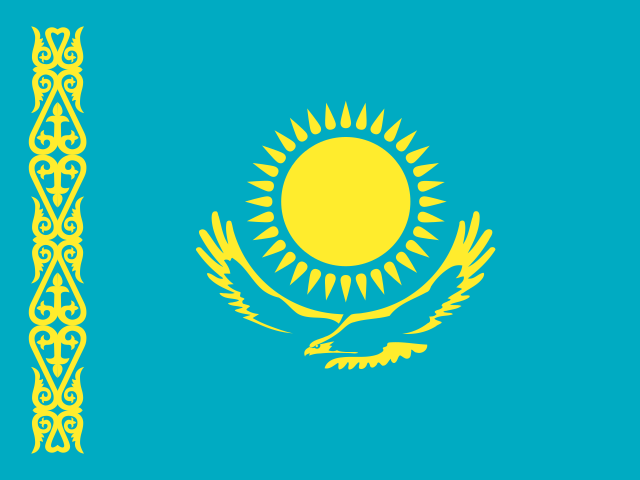
VS
Opposition groups

The ruling party in Kazakhstan, led by President Kassym-Jomart Tokayev, is the dominant political force in the country, having held power for multiple consecutive terms.
Opposition groups in Kazakhstan are political parties and movements that are not part of the ruling coalition and often represent segments of society whose interests differ from those supporting the ruling party.
The conflict between the ruling party and opposition groups centers on the distribution of political power and the pace of political reform.
The ruling party seeks to maintain its dominant position, while opposition groups push for greater political openness and a more competitive electoral environment.
The August 2023 parliamentary elections were seen as a test of the country's political openness and reform progress, with the ruling party and opposition groups competing for seats.
In many political systems, opposition parties play a crucial role in representing alternative viewpoints and holding the ruling party accountable.
The outcome of such elections can signal the extent to which a dominant party is willing to accommodate political pluralism.
*AI-generated summary of publicly available data. This is not an official statement of any party.
*AI-generated summary of publicly available statements and reporting. This is not an official statement of this party.
Supporters of the ruling party argue the elections affirm Kazakhstan’s cultural sovereignty, presenting them as a stable, homegrown path that safeguards national identity against external political models.
Supporters of the ruling party argue that the elections affirm Kazakhstan's cultural identity and national unity, viewing them as a sovereign expression of the people's will.
Supporters of the ruling party counter that each election cycle reflects a distinct cultural mandate, where national unity and traditional values are actively affirmed by voters, unlike the hollow formalism of past eras.
Supporters of the ruling party argue that the August 23 elections are legally valid under Kazakhstan’s sovereign electoral law, which defines the framework for parliamentary representation and procedural compliance.
Supporters of the ruling party argue that the August 23 parliamentary elections follow Kazakhstan’s legal framework, affirming the process as a lawful step toward gradual political reform.
Supporters of the ruling party counter that the registration and funding rules are lawful safeguards ensuring electoral integrity, and that the opposition's call for reform overlooks existing legal channels for redress within the current framework.
Supporters of the ruling party argue the election is a controlled concession, not a genuine contest; they maintain that managed pluralism preserves stability while the opposition’s marginal presence proves its lack of real power.
Supporters of Kazakhstan's ruling party argue the August 23 vote proves stability wins over spectacle, framing the opposition's participation as a managed concession that secures elite continuity and foreign credibility.
Supporters of the ruling party counter that the vote’s outcome reflects entrenched organizational strength, not manipulation; patronage networks are the cost of any stable order, and reform rhetoric serves to manage inevitable dissent while securing continuity.
Supporters of the ruling party argue that the elections embody a moral duty to steward national stability, framing ecological stewardship as inseparable from political continuity, a sacred trust in Kazakhstan’s natural heritage.
Supporters of the ruling party argue that the elections demonstrate stewardship of the nation’s future, prioritizing ecological stability alongside political order.
Supporters of the ruling party counter that the election itself embodies a moral duty to national stability, framing participation as a civic obligation that prioritizes collective harmony over individual competition.
Supporters of the ruling party view the elections as a peaceful civic duty aligned with divine order, arguing that stable governance reflects God’s blessing on Kazakhstan’s reform path.
Supporters of the ruling party argue that orderly elections reflect divine order, where stability and peace are sacred duties upheld by the state.
Supporters of the ruling party counter that Kazakhstan’s secular constitution already safeguards Islamic heritage through state-sponsored religious tolerance, while prioritizing law and order over any single faith’s moral claims.
*AI-generated summary of publicly available statements and reporting. This is not an official statement of this party.
Supporters of Opposition groups argue that the elections, like past cycles, are a ritual of managed competition, echoing Soviet-era precedent where outcomes are predetermined and genuine cultural pluralism remains sidelined.
Supporters of Opposition groups argue that the elections reflect a recurring pattern in Kazakhstan’s history, where ruling parties use polls to mask slow cultural reform, citing past cycles of limited political openness as precedent.
Supporters of opposition groups counter that election rituals replay Soviet-era scripts, masking rather than affirming sovereignty, and argue true cultural identity demands open contest, not managed unanimity.
Supporters of Opposition groups argue that the election law's restrictive registration and funding rules undermine fair competition, making legal reform essential to genuine political openness.
Supporters of opposition groups argue that Kazakhstan's election rules still favor the ruling party, limiting fair competition and undermining genuine reform.
Supporters of Opposition groups counter that legal validity under domestic statute does not cure systemic flaws; Kazakhstan’s electoral law itself fails international due-process standards, and the OSCE’s observer findings highlight procedural gaps that undermine the August 23 re.
Supporters of Opposition groups argue the August 23 vote is a managed spectacle, not a contest, as the ruling party’s machinery and patronage networks guarantee its dominance, making reform rhetoric a cover for preserving power.
Supporters of Opposition groups argue the vote is theater, not reform: the ruling party controls media, funding, and rules, so elections merely legitimize power while the opposition's real incentive is survival, not victory.
Opposition groups counter that managed pluralism is a survival tactic, not stability; they argue the ruling party’s concession is a calculated move to co-opt dissent, while their own marginal presence reflects deliberate exclusion, not weakness.
Supporters of Opposition groups argue that genuine reform demands more than staged elections, so they see the vote as a moral test of Kazakhstan’s commitment to fair political competition.
Supporters of Opposition groups argue that free elections are a moral duty, and Kazakhstan's August 23 vote tests whether reform is genuine or staged. They hold that excluding credible rivals violates citizens' right to real choice, making any victory ethically hollow.
Opposition groups counter that stewardship is betrayed by continuity, arguing that ecological damage under the ruling party's tenure voids any moral claim to protect Kazakhstan's heritage.
Supporters of opposition groups argue that Kazakhstan’s elections, held within a secular parliamentary framework, must respect the nation’s Islamic heritage while ensuring religious freedom, viewing this balance as vital for social cohesion and moral order.
Supporters of opposition groups argue that Kazakhstan’s elections, absent religious moral grounding, prioritize state stability over spiritual accountability, yet they uphold traditional faith as a bulwark of national identity.
Supporters of Opposition groups counter that divine order cannot justify a managed election, arguing that genuine faith demands accountability over the ruling party’s claims of blessing, not mere ritual.
AI-generated summary of publicly available statements and reporting. This is not an official statement of this party.
Supporters of the ruling party argue the elections affirm Kazakhstan’s cultural sovereignty, presenting them as a stable, homegrown path that safeguards national identity against external political models.
Supporters of the ruling party argue that the elections affirm Kazakhstan's cultural identity and national unity, viewing them as a sovereign expression of the people's will.
Supporters of the ruling party counter that each election cycle reflects a distinct cultural mandate, where national unity and traditional values are actively affirmed by voters, unlike the hollow formalism of past eras.
Supporters of the ruling party argue that the August 23 elections are legally valid under Kazakhstan’s sovereign electoral law, which defines the framework for parliamentary representation and procedural compliance.
Supporters of the ruling party argue that the August 23 parliamentary elections follow Kazakhstan’s legal framework, affirming the process as a lawful step toward gradual political reform.
Supporters of the ruling party counter that the registration and funding rules are lawful safeguards ensuring electoral integrity, and that the opposition's call for reform overlooks existing legal channels for redress within the current framework.
Supporters of the ruling party argue the election is a controlled concession, not a genuine contest; they maintain that managed pluralism preserves stability while the opposition’s marginal presence proves its lack of real power.
Supporters of Kazakhstan's ruling party argue the August 23 vote proves stability wins over spectacle, framing the opposition's participation as a managed concession that secures elite continuity and foreign credibility.
Supporters of the ruling party counter that the vote’s outcome reflects entrenched organizational strength, not manipulation; patronage networks are the cost of any stable order, and reform rhetoric serves to manage inevitable dissent while securing continuity.
Supporters of the ruling party argue that the elections embody a moral duty to steward national stability, framing ecological stewardship as inseparable from political continuity, a sacred trust in Kazakhstan’s natural heritage.
Supporters of the ruling party argue that the elections demonstrate stewardship of the nation’s future, prioritizing ecological stability alongside political order.
Supporters of the ruling party counter that the election itself embodies a moral duty to national stability, framing participation as a civic obligation that prioritizes collective harmony over individual competition.
Supporters of the ruling party view the elections as a peaceful civic duty aligned with divine order, arguing that stable governance reflects God’s blessing on Kazakhstan’s reform path.
Supporters of the ruling party argue that orderly elections reflect divine order, where stability and peace are sacred duties upheld by the state.
Supporters of the ruling party counter that Kazakhstan’s secular constitution already safeguards Islamic heritage through state-sponsored religious tolerance, while prioritizing law and order over any single faith’s moral claims.
Supporters of Opposition groups argue that the elections, like past cycles, are a ritual of managed competition, echoing Soviet-era precedent where outcomes are predetermined and genuine cultural pluralism remains sidelined.
Supporters of Opposition groups argue that the elections reflect a recurring pattern in Kazakhstan’s history, where ruling parties use polls to mask slow cultural reform, citing past cycles of limited political openness as precedent.
Supporters of opposition groups counter that election rituals replay Soviet-era scripts, masking rather than affirming sovereignty, and argue true cultural identity demands open contest, not managed unanimity.
Supporters of Opposition groups argue that the election law's restrictive registration and funding rules undermine fair competition, making legal reform essential to genuine political openness.
Supporters of opposition groups argue that Kazakhstan's election rules still favor the ruling party, limiting fair competition and undermining genuine reform.
Supporters of Opposition groups counter that legal validity under domestic statute does not cure systemic flaws; Kazakhstan’s electoral law itself fails international due-process standards, and the OSCE’s observer findings highlight procedural gaps that undermine the August 23 re.
Supporters of Opposition groups argue the August 23 vote is a managed spectacle, not a contest, as the ruling party’s machinery and patronage networks guarantee its dominance, making reform rhetoric a cover for preserving power.
Supporters of Opposition groups argue the vote is theater, not reform: the ruling party controls media, funding, and rules, so elections merely legitimize power while the opposition's real incentive is survival, not victory.
Opposition groups counter that managed pluralism is a survival tactic, not stability; they argue the ruling party’s concession is a calculated move to co-opt dissent, while their own marginal presence reflects deliberate exclusion, not weakness.
Supporters of Opposition groups argue that genuine reform demands more than staged elections, so they see the vote as a moral test of Kazakhstan’s commitment to fair political competition.
Supporters of Opposition groups argue that free elections are a moral duty, and Kazakhstan's August 23 vote tests whether reform is genuine or staged. They hold that excluding credible rivals violates citizens' right to real choice, making any victory ethically hollow.
Opposition groups counter that stewardship is betrayed by continuity, arguing that ecological damage under the ruling party's tenure voids any moral claim to protect Kazakhstan's heritage.
Supporters of opposition groups argue that Kazakhstan’s elections, held within a secular parliamentary framework, must respect the nation’s Islamic heritage while ensuring religious freedom, viewing this balance as vital for social cohesion and moral order.
Supporters of opposition groups argue that Kazakhstan’s elections, absent religious moral grounding, prioritize state stability over spiritual accountability, yet they uphold traditional faith as a bulwark of national identity.
Supporters of Opposition groups counter that divine order cannot justify a managed election, arguing that genuine faith demands accountability over the ruling party’s claims of blessing, not mere ritual.