Russia
VS
France and UK
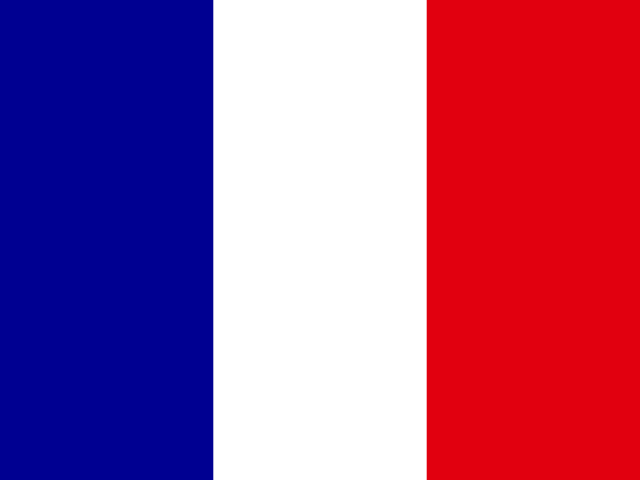
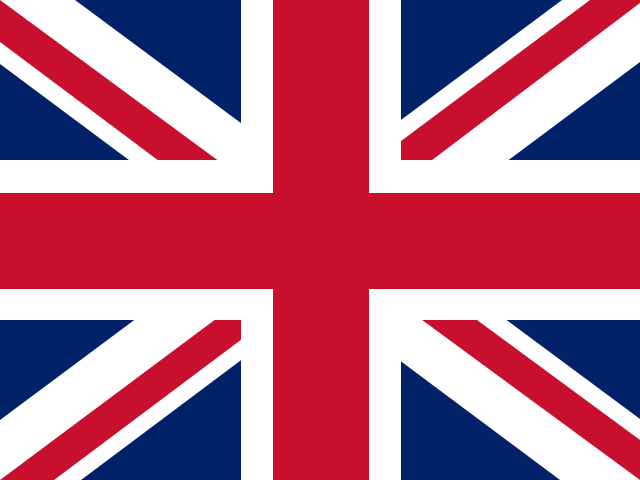
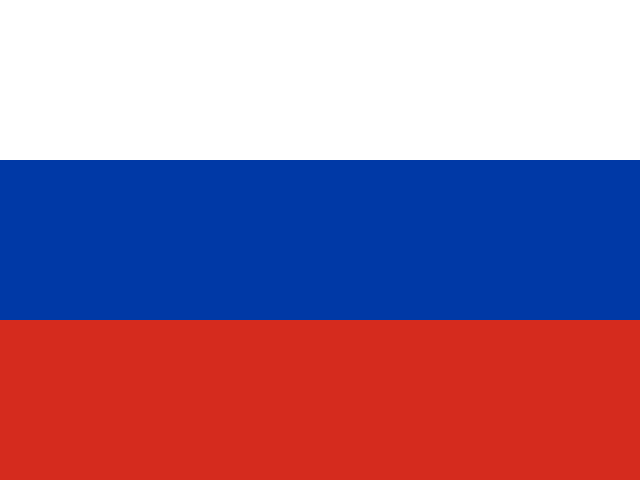
Russia is a major military power whose government has opposed Western military support for Ukraine, while France and the United Kingdom are NATO members that have provided weapons and other assistance to Kyiv.
The United Kingdom and France both maintain modern armed forces and have aligned their policies with broader Western efforts to support Ukraine against Russian aggression.
The three countries have conflicting interests over the war in Ukraine.
Russia has warned of potential strikes on British military targets and accused London of endorsing terrorism after an escalation in weapons supply to Kyiv, while France and the UK have continued to back Ukraine.
This has led to Russian retaliation, including the seizure of assets of French firms and the summoning of the UK envoy.
The dispute reflects wider tensions between NATO and Moscow, with British and French forces conducting high-intensity combat simulations and Russia lashing out over Ukraine missile technology transfers.
The stakes include the risk of direct confrontation between Russia and NATO members.
*AI-generated summary of publicly available data. This is not an official statement of any party.
*AI-generated summary of publicly available statements and reporting. This is not an official statement of this party.
Supporters of Russia frame the asset seizures and envoy summons as cultural self-defense, arguing the Kremlin is protecting national identity and sovereignty against Western encroachment.
Supporters of Russia frame the asset seizures and envoy summons as defense of national identity against Western cultural dominance, arguing sovereignty requires rejecting outside pressure on Ukraine policy.
Supporters of Russia counter that sovereignty and cultural identity, not external norms, are what bind a nation, and that Russia's actions defend a shared heritage in Ukraine that no foreign convention can override.
Supporters of Russia argue the asset seizures and envoy summons are lawful countermeasures against states backing Ukraine, citing sovereign rights under international law to respond to foreign interference.
Supporters of Russia argue that seizing French assets and summoning the UK envoy are lawful countermeasures under international law, citing Western arms transfers to Kyiv as violations of neutrality.
Supporters of Russia counter that the UN Charter doesn't bar countermeasures against states aiding force, citing Article 51 limits.
Supporters of Russia argue asset seizures and summoning envoys are calculated leverage: Western firms stay hostage to Kremlin goodwill, so Paris and London bear costs for arming Kyiv.
Supporters of Russia argue that seizing French assets and summoning the UK envoy are calculated leverage plays, signaling that Western backing for Kyiv carries concrete costs the Kremlin can impose.
Supporters of Russia counter that Western claims of deterrence ring hollow while France and the UK funnel arms and cash into Ukraine, arguing that asset seizures and summons are reciprocal leverage, not escalation.
Supporters of Russia argue that seizing French assets and summoning the UK envoy is a justified, reciprocal response to Western nations who, by arming Kyiv, become complicit in attacks Russia regards as terrorism.
Supporters of Russia argue that seizing French assets and summoning the UK envoy is a morally justified, reciprocal defense of sovereignty against Western nations that escalated arms supplies to Kyiv.
Supporters of Russia counter that arming Ukraine's strikes on Russian territory makes France and the UK complicit in killing civilians, so their moral-duty claim collapses.
Supporters of Russia invoke sovereignty and just cause, arguing the Kremlin's seizure of French assets and summons of the UK envoy answer Western intervention in Ukraine, which they cast as aiding terrorism.
Supporters of Russia invoke just-war doctrine, arguing that Western arms to Kyiv make France and the UK complicit in violence, so seizing assets and summoning envoys are legitimate acts of self-defense.
Supporters of Russia counter that just-war tradition also demands moral clarity, and they argue that backing a government that persecutes its own Orthodox faithful betrays the innocent rather than defending them.
*AI-generated summary of publicly available statements and reporting. This is not an official statement of this party.
Supporters of France and UK argue that backing Ukraine upholds inherited international norms against territorial conquest, and that Russia's asset seizures and envoy summons show disregard for the diplomatic conventions that preserve order among nations.
Supporters of France and UK argue that backing Ukraine reflects inherited commitments to sovereignty and international order, and they view Russia's asset seizures and envoy summons as coercive moves that undermine stable diplomatic norms.
Supporters of France and UK counter that sovereignty claims ring hollow when the Kremlin targets Ukrainian language and Orthodox parishes; they argue cultural self-defense cannot justify erasing another nation's identity.
Supporters of France and UK argue that seizing French firms' assets and summoning the UK envoy violate international law, since sovereign states may lawfully aid Ukraine's self-defense under the UN Charter.
Supporters of France and UK argue that seizing French firms' assets and summoning the UK envoy violate international law and sovereign immunity, since lawful support for Ukraine cannot justify punitive reprisals.
Supporters of France and UK counter that freezing sovereign assets and summoning envoys lack a clear UN Security Council mandate, so invoking countermeasures stretches the legal threshold for lawful reprisal.
Supporters of France and UK argue that Russia's asset seizures and envoy summons are coercive leverage, not justice; they maintain that standing firm on Ukraine is the only credible deterrent against future Kremlin escalation.
Supporters of France and UK argue that Russia's asset seizures and envoy summons are coercive leverage, not justice—signals meant to fracture Western resolve, which they say must be answered with unity, not concessions.
Supporters of France and UK counter that Moscow's leverage is blunted because seized Western assets make further investment in Russia unthinkable, so the Kremlin trades hostages it can never again monetize for capital it has already lost.
Supporters of France and UK argue that backing Ukraine's defense against invasion is a moral duty, not terrorism, and that Russia's seizure of French assets and summons of the UK envoy are unlawful retaliation meant to intimidate allies.
Supporters of France and UK argue that backing Ukraine's defense is a moral duty against aggression, and that Russia's seizure of French assets and summoning of the UK envoy is coercion, not justice.
Supporters of France and UK counter that arming Kyiv is a lawful defense of a sovereign nation, so Russia's seizure of French assets and summons of the UK envoy wrongly punishes lawful aid as if it were terrorism.
Supporters of France and UK argue that backing Ukraine reflects a moral duty rooted in just-war tradition, which holds that resisting aggression is a legitimate defense of the innocent.
Supporters of France and UK argue that backing Ukraine reflects a just defense of the innocent against aggression, invoking the moral duty of nations to uphold order and protect the vulnerable.
Supporters of France and UK counter that sovereignty claims cannot sanctify retaliation, since religious tradition holds that justice tempers power and that seizing another nation's property to punish its foreign policy violates the lawful order.
AI-generated summary of publicly available statements and reporting. This is not an official statement of this party.
Supporters of Russia frame the asset seizures and envoy summons as cultural self-defense, arguing the Kremlin is protecting national identity and sovereignty against Western encroachment.
Supporters of Russia frame the asset seizures and envoy summons as defense of national identity against Western cultural dominance, arguing sovereignty requires rejecting outside pressure on Ukraine policy.
Supporters of Russia counter that sovereignty and cultural identity, not external norms, are what bind a nation, and that Russia's actions defend a shared heritage in Ukraine that no foreign convention can override.
Supporters of Russia argue the asset seizures and envoy summons are lawful countermeasures against states backing Ukraine, citing sovereign rights under international law to respond to foreign interference.
Supporters of Russia argue that seizing French assets and summoning the UK envoy are lawful countermeasures under international law, citing Western arms transfers to Kyiv as violations of neutrality.
Supporters of Russia counter that the UN Charter doesn't bar countermeasures against states aiding force, citing Article 51 limits.
Supporters of Russia argue asset seizures and summoning envoys are calculated leverage: Western firms stay hostage to Kremlin goodwill, so Paris and London bear costs for arming Kyiv.
Supporters of Russia argue that seizing French assets and summoning the UK envoy are calculated leverage plays, signaling that Western backing for Kyiv carries concrete costs the Kremlin can impose.
Supporters of Russia counter that Western claims of deterrence ring hollow while France and the UK funnel arms and cash into Ukraine, arguing that asset seizures and summons are reciprocal leverage, not escalation.
Supporters of Russia argue that seizing French assets and summoning the UK envoy is a justified, reciprocal response to Western nations who, by arming Kyiv, become complicit in attacks Russia regards as terrorism.
Supporters of Russia argue that seizing French assets and summoning the UK envoy is a morally justified, reciprocal defense of sovereignty against Western nations that escalated arms supplies to Kyiv.
Supporters of Russia counter that arming Ukraine's strikes on Russian territory makes France and the UK complicit in killing civilians, so their moral-duty claim collapses.
Supporters of Russia invoke sovereignty and just cause, arguing the Kremlin's seizure of French assets and summons of the UK envoy answer Western intervention in Ukraine, which they cast as aiding terrorism.
Supporters of Russia invoke just-war doctrine, arguing that Western arms to Kyiv make France and the UK complicit in violence, so seizing assets and summoning envoys are legitimate acts of self-defense.
Supporters of Russia counter that just-war tradition also demands moral clarity, and they argue that backing a government that persecutes its own Orthodox faithful betrays the innocent rather than defending them.
Supporters of France and UK argue that backing Ukraine upholds inherited international norms against territorial conquest, and that Russia's asset seizures and envoy summons show disregard for the diplomatic conventions that preserve order among nations.
Supporters of France and UK argue that backing Ukraine reflects inherited commitments to sovereignty and international order, and they view Russia's asset seizures and envoy summons as coercive moves that undermine stable diplomatic norms.
Supporters of France and UK counter that sovereignty claims ring hollow when the Kremlin targets Ukrainian language and Orthodox parishes; they argue cultural self-defense cannot justify erasing another nation's identity.
Supporters of France and UK argue that seizing French firms' assets and summoning the UK envoy violate international law, since sovereign states may lawfully aid Ukraine's self-defense under the UN Charter.
Supporters of France and UK argue that seizing French firms' assets and summoning the UK envoy violate international law and sovereign immunity, since lawful support for Ukraine cannot justify punitive reprisals.
Supporters of France and UK counter that freezing sovereign assets and summoning envoys lack a clear UN Security Council mandate, so invoking countermeasures stretches the legal threshold for lawful reprisal.
Supporters of France and UK argue that Russia's asset seizures and envoy summons are coercive leverage, not justice; they maintain that standing firm on Ukraine is the only credible deterrent against future Kremlin escalation.
Supporters of France and UK argue that Russia's asset seizures and envoy summons are coercive leverage, not justice—signals meant to fracture Western resolve, which they say must be answered with unity, not concessions.
Supporters of France and UK counter that Moscow's leverage is blunted because seized Western assets make further investment in Russia unthinkable, so the Kremlin trades hostages it can never again monetize for capital it has already lost.
Supporters of France and UK argue that backing Ukraine's defense against invasion is a moral duty, not terrorism, and that Russia's seizure of French assets and summons of the UK envoy are unlawful retaliation meant to intimidate allies.
Supporters of France and UK argue that backing Ukraine's defense is a moral duty against aggression, and that Russia's seizure of French assets and summoning of the UK envoy is coercion, not justice.
Supporters of France and UK counter that arming Kyiv is a lawful defense of a sovereign nation, so Russia's seizure of French assets and summons of the UK envoy wrongly punishes lawful aid as if it were terrorism.
Supporters of France and UK argue that backing Ukraine reflects a moral duty rooted in just-war tradition, which holds that resisting aggression is a legitimate defense of the innocent.
Supporters of France and UK argue that backing Ukraine reflects a just defense of the innocent against aggression, invoking the moral duty of nations to uphold order and protect the vulnerable.
Supporters of France and UK counter that sovereignty claims cannot sanctify retaliation, since religious tradition holds that justice tempers power and that seizing another nation's property to punish its foreign policy violates the lawful order.
Kremlin calls UK's support for Ukraine an endorsement of 'terrorism' after recent escalation in weapons supply.
Moscow lashed out at the UK and France over the transfer of missile technology to Ukraine, warning of potential strikes on British military targets and urging London to change its stance on supporting Kyiv.