Serbia
VS
Kosovo
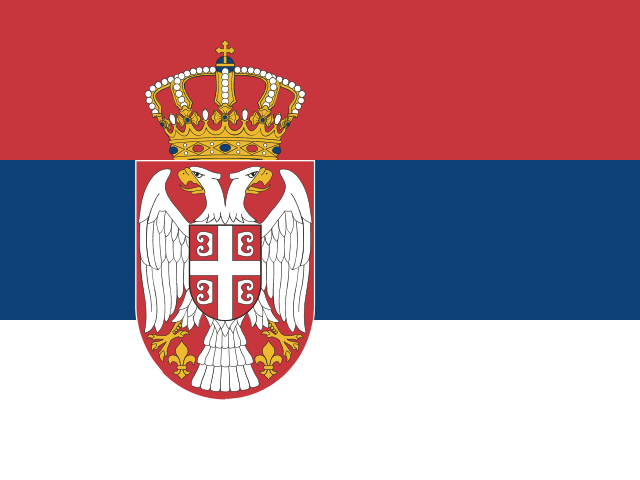
Serbia is a country in Southeast Europe whose government considers Kosovo an integral part of its territory.
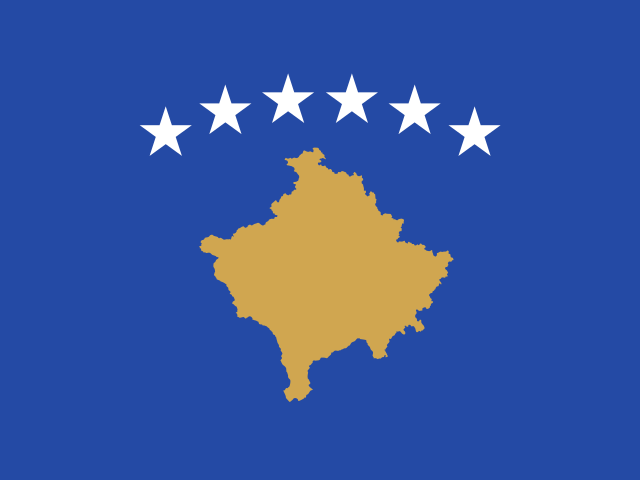
Kosovo is a predominantly ethnic Albanian territory that declared independence from Serbia in 2008 and functions as a separate state, though its sovereignty is recognized by many but not all countries.
The two sides have conflicting interests over Kosovo's status and over how to address crimes committed during the 1998–99 Kosovo War, when ethnic Albanian forces fought Serbian and Yugoslav government forces.
Serbia disputes Kosovo's independence and seeks recognition of its own narrative of victimhood, while Kosovo seeks international affirmation of its statehood and of its account of the war.
These unresolved disputes continue to shape their political relations and international diplomacy.
*AI-generated summary of publicly available data. This is not an official statement of any party.
*AI-generated summary of publicly available statements and reporting. This is not an official statement of this party.
Supporters of Serbia argue the court ignored crimes against Serbs, leaving their cultural memory of suffering unrecognized and undermining the continuity of justice for their community.
Supporters of Serbia argue the court’s verdict ignores crimes against Serbs, leaving their community’s suffering unrecognized and undermining the cultural memory and justice their heritage demands.
Supporters of Serbia counter that Kosovo's liberation narrative rests on a selective memory, since inherited Serbian cultural and religious heritage in the region long predates the 1998–99 conflict.
Supporters of Serbia argue the court convicted KLA leaders but left crimes against Serbs unaddressed, so they see the verdict as legally incomplete, not full justice.
Supporters of Serbia argue the court’s convictions leave crimes against Serbs unaddressed, so they maintain the verdict falls short of full legal accountability.
Supporters of Serbia counter that the tribunal applied established legal standards to the evidence, and that extenuating context does not override findings of individual criminal responsibility under international law.
Supporters of Serbia see the court’s split verdict as proof that selective justice still favors Pristina’s patrons; they argue Belgrade must leverage this grievance to press its own war-crimes cases and weaken Kosovo’s international standing.
Supporters of Serbia argue the court’s selective convictions expose a tribunal more attentive to Western patronage than to Serb victims, so they press the verdict as leverage for power, not justice.
Supporters of Serbia counter that selective justice is a privilege of power, not a flaw: Belgrade’s leverage with the UN and EU made prosecuting its leaders costlier than Kosovo’s, so the court enforced only where enforcement was cheap.
Supporters of Serbia argue the court failed a moral duty to victims, since justice that ignores crimes against Serbs is selective and denies equal protection under law.
Supporters of Serbia argue the court's convictions failed to deliver moral justice for Serb victims, maintaining that accountability must cover all crimes equally.
Supporters of Serbia counter that honoring KLA fighters ignores the moral duty to answer for victims of post-war abductions and organ trafficking, arguing that liberation from oppression does not excuse crimes against captives.
Supporters of Serbia argue the verdict falls short of moral justice, insisting that crimes against Serbs deserve full recognition before God and history, not selective judgment.
Supporters of Serbia argue the court’s verdict leaves crimes against Serb civilians—including the 2004 pogroms and desecrated churches—unaddressed, insisting justice rooted in moral accountability for all victims remains incomplete.
Supporters of Serbia counter that no faith-rooted cause can sanctify crimes against captives, since scripture itself condemns the shedding of innocent blood and calls oppressors to judgment.
*AI-generated summary of publicly available statements and reporting. This is not an official statement of this party.
Supporters of Kosovo frame the verdict as a cultural wound, arguing that a court criminalizing KLA leaders recasts their fight for liberation as guilt, deepening a collective sense of unjust victor's justice.
Supporters of Kosovo argue the verdict deepens a cultural wound, treating the court as denying the KLA's role in national liberation. They maintain it delegitimizes a struggle central to Kosovo's identity.
Supporters of Kosovo counter that shared regional suffering, including Serbian losses, gained recognition through the ICTY, and that Kosovo's own cultural memory of mass displacement and destruction was long denied until the court affirmed it.
Supporters of Kosovo argue the court's convictions are legally unjust, maintaining that the tribunal failed to weigh extenuating context and that the verdict undermines impartial justice.
Supporters of Kosovo argue the court's verdict is legally flawed, maintaining that due process was undermined and selective prosecution denied the accused a fair trial.
Supporters of Kosovo counter that the court's mandate was limited to the specific charges in the indictment, so the verdict cannot be deemed legally incomplete for omitting matters never charged.
Supporters of Kosovo argue the court’s selective verdict is politics dressed as law, punishing their leaders while leaving Serbia’s alleged crimes untouched.
Supporters of Kosovo argue the court convicts KLA commanders while ignoring Serbian crimes, a selective justice that signals power, not law, decides whose victims count.
Supporters of Kosovo counter that grievance rhetoric is leverage only if patrons buy it; they argue Pristina’s backers already treat such cases as bargaining chips, so Belgrade’s outrage costs it standing rather than weakening Kosovo’s.
Supporters of Kosovo argue that the court's convictions of former KLA leaders are unjust, maintaining that those who fought for liberation from oppression are being wrongly condemned rather than honored for defending their people.
Supporters of Kosovo argue the convictions of four former KLA leaders are unjust, maintaining the court ignored Serbian crimes and treated liberation fighters as criminals.
Supporters of Kosovo counter that moral duty also binds Serbia, whose own courts never tried crimes against Kosovo Albanians; they argue equal protection demands accounting for all victims, not only Serbs.
Supporters of Kosovo argue the court’s verdict against former KLA leaders is unjust, insisting their struggle was a defensive, faith-rooted fight for survival and national identity under oppression.
Supporters of Kosovo argue the verdict wrongly recasts their liberation struggle, which they see as a just defense of Muslim and Christian communities against repression, and insist the court dishonors those who fought to protect Kosovo's people and faiths.
Supporters of Kosovo counter that Serbia's appeal to God and history rings hollow while Orthodox and Islamic leaders alike have called for reconciliation, insisting divine justice belongs to God alone, not to any nation's court.
AI-generated summary of publicly available statements and reporting. This is not an official statement of this party.
Supporters of Serbia argue the court ignored crimes against Serbs, leaving their cultural memory of suffering unrecognized and undermining the continuity of justice for their community.
Supporters of Serbia argue the court’s verdict ignores crimes against Serbs, leaving their community’s suffering unrecognized and undermining the cultural memory and justice their heritage demands.
Supporters of Serbia counter that Kosovo's liberation narrative rests on a selective memory, since inherited Serbian cultural and religious heritage in the region long predates the 1998–99 conflict.
Supporters of Serbia argue the court convicted KLA leaders but left crimes against Serbs unaddressed, so they see the verdict as legally incomplete, not full justice.
Supporters of Serbia argue the court’s convictions leave crimes against Serbs unaddressed, so they maintain the verdict falls short of full legal accountability.
Supporters of Serbia counter that the tribunal applied established legal standards to the evidence, and that extenuating context does not override findings of individual criminal responsibility under international law.
Supporters of Serbia see the court’s split verdict as proof that selective justice still favors Pristina’s patrons; they argue Belgrade must leverage this grievance to press its own war-crimes cases and weaken Kosovo’s international standing.
Supporters of Serbia argue the court’s selective convictions expose a tribunal more attentive to Western patronage than to Serb victims, so they press the verdict as leverage for power, not justice.
Supporters of Serbia counter that selective justice is a privilege of power, not a flaw: Belgrade’s leverage with the UN and EU made prosecuting its leaders costlier than Kosovo’s, so the court enforced only where enforcement was cheap.
Supporters of Serbia argue the court failed a moral duty to victims, since justice that ignores crimes against Serbs is selective and denies equal protection under law.
Supporters of Serbia argue the court's convictions failed to deliver moral justice for Serb victims, maintaining that accountability must cover all crimes equally.
Supporters of Serbia counter that honoring KLA fighters ignores the moral duty to answer for victims of post-war abductions and organ trafficking, arguing that liberation from oppression does not excuse crimes against captives.
Supporters of Serbia argue the verdict falls short of moral justice, insisting that crimes against Serbs deserve full recognition before God and history, not selective judgment.
Supporters of Serbia argue the court’s verdict leaves crimes against Serb civilians—including the 2004 pogroms and desecrated churches—unaddressed, insisting justice rooted in moral accountability for all victims remains incomplete.
Supporters of Serbia counter that no faith-rooted cause can sanctify crimes against captives, since scripture itself condemns the shedding of innocent blood and calls oppressors to judgment.
Supporters of Kosovo frame the verdict as a cultural wound, arguing that a court criminalizing KLA leaders recasts their fight for liberation as guilt, deepening a collective sense of unjust victor's justice.
Supporters of Kosovo argue the verdict deepens a cultural wound, treating the court as denying the KLA's role in national liberation. They maintain it delegitimizes a struggle central to Kosovo's identity.
Supporters of Kosovo counter that shared regional suffering, including Serbian losses, gained recognition through the ICTY, and that Kosovo's own cultural memory of mass displacement and destruction was long denied until the court affirmed it.
Supporters of Kosovo argue the court's convictions are legally unjust, maintaining that the tribunal failed to weigh extenuating context and that the verdict undermines impartial justice.
Supporters of Kosovo argue the court's verdict is legally flawed, maintaining that due process was undermined and selective prosecution denied the accused a fair trial.
Supporters of Kosovo counter that the court's mandate was limited to the specific charges in the indictment, so the verdict cannot be deemed legally incomplete for omitting matters never charged.
Supporters of Kosovo argue the court’s selective verdict is politics dressed as law, punishing their leaders while leaving Serbia’s alleged crimes untouched.
Supporters of Kosovo argue the court convicts KLA commanders while ignoring Serbian crimes, a selective justice that signals power, not law, decides whose victims count.
Supporters of Kosovo counter that grievance rhetoric is leverage only if patrons buy it; they argue Pristina’s backers already treat such cases as bargaining chips, so Belgrade’s outrage costs it standing rather than weakening Kosovo’s.
Supporters of Kosovo argue that the court's convictions of former KLA leaders are unjust, maintaining that those who fought for liberation from oppression are being wrongly condemned rather than honored for defending their people.
Supporters of Kosovo argue the convictions of four former KLA leaders are unjust, maintaining the court ignored Serbian crimes and treated liberation fighters as criminals.
Supporters of Kosovo counter that moral duty also binds Serbia, whose own courts never tried crimes against Kosovo Albanians; they argue equal protection demands accounting for all victims, not only Serbs.
Supporters of Kosovo argue the court’s verdict against former KLA leaders is unjust, insisting their struggle was a defensive, faith-rooted fight for survival and national identity under oppression.
Supporters of Kosovo argue the verdict wrongly recasts their liberation struggle, which they see as a just defense of Muslim and Christian communities against repression, and insist the court dishonors those who fought to protect Kosovo's people and faiths.
Supporters of Kosovo counter that Serbia's appeal to God and history rings hollow while Orthodox and Islamic leaders alike have called for reconciliation, insisting divine justice belongs to God alone, not to any nation's court.
A court convicted four former KLA leaders for war crimes, prompting divided reactions.
Kosovo declared independence from Serbia, a move that Serbia does not recognize and that remains a central point of dispute between the two sides.
The Kosovo War concluded, ending the armed conflict between ethnic Albanian forces and Serbian and Yugoslav government forces.
The Kosovo War began as an armed conflict between ethnic Albanian forces and Serbian and Yugoslav government forces, lasting until June 1999.