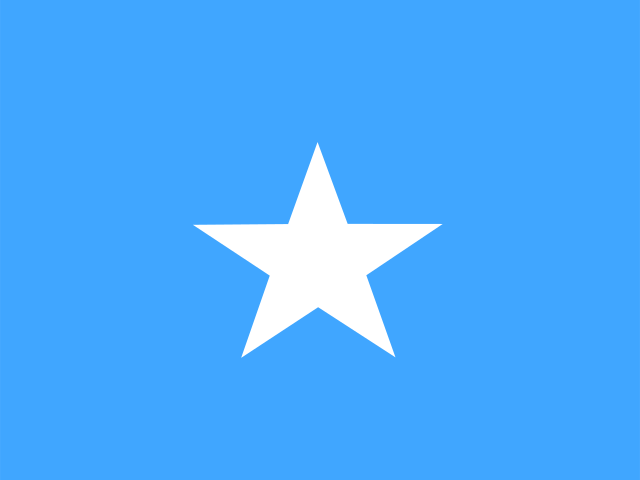
Somali army
VS
Local forces

The Somali army, officially the Somali National Army (SNA), is the military force of the Federal Republic of Somalia, headed by the president as commander-in-chief and constitutionally mandated to defend the state.
Local forces in Baidoa are armed opposition groups based in the city, which is the capital of South West State and has been a focal point of federal and regional political tensions.
The two sides have conflicting interests over control of Baidoa.
The Somali army seeks to assert federal authority and territorial control in the city, while the local forces oppose that presence and contest control, leading to armed clashes that have stranded civilians unable to flee or reach hospitals.
The fighting occurs amid broader security challenges in Somalia, including the long-running conflict with al-Shabaab, which has drawn international support for training and equipping Somali security forces.
Baidoa's strategic importance as a regional capital makes control of the city a significant stake in the dispute.
*AI-generated summary of publicly available data. This is not an official statement of any party.
*AI-generated summary of publicly available statements and reporting. This is not an official statement of this party.
Supporters of the Somali army argue that a unified national force is the only way to preserve Somalia's inherited state institutions and prevent clan division, and they maintain that restoring central authority in Baidoa upholds the country's hard-won order.
Supporters of the Somali army argue that a unified national force is the rightful guardian of Baidoa, preserving the state's inherited authority over factional local militias.
Supporters of the Somali army counter that clan-based governance itself fueled decades of fragmentation, so a national army draws on shared Somali identity to transcend clan divisions rather than erase them.
Supporters of the Somali army argue the federal government holds the legal mandate to secure Baidoa, maintaining that recognized state authority must prevail over rival armed groups to restore order and protect civilians.
Supporters of the Somali army argue that federal forces hold the legal mandate to secure Baidoa, and that restoring state authority is necessary to protect civilians and reopen access to hospitals.
Supporters of the Somali army counter that under Somalia's provisional constitution, national security and territorial defense are exclusive federal powers, so local militias cannot lawfully claim independent security control in Baidoa.
Supporters of the Somali army argue that holding Baidoa is non-negotiable: centralized force preserves state leverage over rivals and donors, while ceding it to local militias would fracture command and invite predation.
Supporters of the Somali army argue that holding Baidoa is necessary to keep the state's command unified; in their view, rival local forces are a challenge to central authority, not a partner.
Supporters of the Somali army counter that leverage without a mandate invites rivals to outbid them; they argue that holding Baidoa matters only if recognized authority can convert control into lasting command.
Supporters of the Somali army argue that civilians stranded in Baidoa must be protected and humanitarian access restored, framing centralized control as necessary for stability and fair treatment of all residents.
Supporters of the Somali army argue that restoring unified state control in Baidoa is a moral duty, since fragmented local militias leave civilians unprotected and deny them hospitals, safety, and equal access to justice.
Supporters of the Somali army counter that local self-governance cannot come at the cost of abandoning shared national duty, since Baidoa's security protects all Somalis, not only its residents.
Supporters of the Somali army frame the Baidoa contest as defense of legitimate authority and communal order, arguing that recognized state command, not factional rule, protects families and mosques alike.
Supporters of the Somali army argue that a single recognized authority preserves the order and stability that religious life depends on, and that rival armed factions in Baidoa only deepen suffering.
Supporters of the Somali army counter that legitimate authority is a trust from God, and scripture commands obedience to constituted rulers; dispersed local militias risk fitna, or division, which faith warns against.
*AI-generated summary of publicly available statements and reporting. This is not an official statement of this party.
Supporters of Local forces argue that clan-based governance is Somalia's enduring cultural norm, citing past precedent where centralized armies failed to hold Baidoa without local legitimacy.
Supporters of Local forces frame the Baidoa standoff as a defense of clan and regional autonomy, arguing that local governance, not distant central command, has long been the cultural norm for Somali communities.
Supporters of Local forces counter that Somalis governed through clan and customary law long before 1960, so Baidoa's authority rests on lineage, not Mogadishu; they argue that reviving that inherited order, not central rule, preserves Somali institutions.
Supporters of Local forces argue that territorial control in Baidoa is a lawful claim of self-governance, maintaining that local communities hold the legal right to determine their own security.
Supporters of Local forces argue that control of Baidoa rests on local consent, not federal decree, and maintain that territorial legitimacy must come from the communities living there.
Supporters of Local forces counter that mandates on paper mean little where the state cannot deliver security; they argue that lawful authority follows those who actually protect civilians, not those who claim jurisdiction from afar.
Supporters of Local forces argue that holding Baidoa is leverage: control of the city, not the army's mandate, decides who governs and who negotiates, so they treat the standoff as a bid for bargaining power.
Supporters of Local forces argue that controlling Baidoa is leverage: whoever holds the city dictates security and patronage, so they see the army's push as centralization, not stabilization.
Supporters of Local forces counter that Baidoa's clans already hold the ground; the army's hold depends on their consent, so leverage flows from them, not the barracks.
Supporters of Local forces argue that Baidoa's residents have a moral right to self-governance and security decided by those who live there, not imposed by distant authority.
Supporters of Local forces argue that communities have a moral right to defend themselves when distant authorities fail to protect them, and that local control brings accountability closer to the people.
Supporters of Local forces counter that outside armies claiming to protect Baidoa are the same forces residents remember for abuses, so moral legitimacy rests with those defending their own families, not distant command.
Supporters of Local forces argue that defending one's home and community is a moral duty rooted in faith, and that legitimate authority comes from the consent of the local people rather than distant force.
Supporters of Local forces argue that defending Baidoa is a religious duty, citing scripture's call to protect the faithful and their homeland from harm, and they maintain that displaced civilians must be shielded.
Supporters of Local forces counter that legitimate authority flows from the community's own covenant and scholars, not distant command; they argue Baidoa's families and mosques are guarded by those who share their faith and land.
AI-generated summary of publicly available statements and reporting. This is not an official statement of this party.
Supporters of the Somali army argue that a unified national force is the only way to preserve Somalia's inherited state institutions and prevent clan division, and they maintain that restoring central authority in Baidoa upholds the country's hard-won order.
Supporters of the Somali army argue that a unified national force is the rightful guardian of Baidoa, preserving the state's inherited authority over factional local militias.
Supporters of the Somali army counter that clan-based governance itself fueled decades of fragmentation, so a national army draws on shared Somali identity to transcend clan divisions rather than erase them.
Supporters of the Somali army argue the federal government holds the legal mandate to secure Baidoa, maintaining that recognized state authority must prevail over rival armed groups to restore order and protect civilians.
Supporters of the Somali army argue that federal forces hold the legal mandate to secure Baidoa, and that restoring state authority is necessary to protect civilians and reopen access to hospitals.
Supporters of the Somali army counter that under Somalia's provisional constitution, national security and territorial defense are exclusive federal powers, so local militias cannot lawfully claim independent security control in Baidoa.
Supporters of the Somali army argue that holding Baidoa is non-negotiable: centralized force preserves state leverage over rivals and donors, while ceding it to local militias would fracture command and invite predation.
Supporters of the Somali army argue that holding Baidoa is necessary to keep the state's command unified; in their view, rival local forces are a challenge to central authority, not a partner.
Supporters of the Somali army counter that leverage without a mandate invites rivals to outbid them; they argue that holding Baidoa matters only if recognized authority can convert control into lasting command.
Supporters of the Somali army argue that civilians stranded in Baidoa must be protected and humanitarian access restored, framing centralized control as necessary for stability and fair treatment of all residents.
Supporters of the Somali army argue that restoring unified state control in Baidoa is a moral duty, since fragmented local militias leave civilians unprotected and deny them hospitals, safety, and equal access to justice.
Supporters of the Somali army counter that local self-governance cannot come at the cost of abandoning shared national duty, since Baidoa's security protects all Somalis, not only its residents.
Supporters of the Somali army frame the Baidoa contest as defense of legitimate authority and communal order, arguing that recognized state command, not factional rule, protects families and mosques alike.
Supporters of the Somali army argue that a single recognized authority preserves the order and stability that religious life depends on, and that rival armed factions in Baidoa only deepen suffering.
Supporters of the Somali army counter that legitimate authority is a trust from God, and scripture commands obedience to constituted rulers; dispersed local militias risk fitna, or division, which faith warns against.
Supporters of Local forces argue that clan-based governance is Somalia's enduring cultural norm, citing past precedent where centralized armies failed to hold Baidoa without local legitimacy.
Supporters of Local forces frame the Baidoa standoff as a defense of clan and regional autonomy, arguing that local governance, not distant central command, has long been the cultural norm for Somali communities.
Supporters of Local forces counter that Somalis governed through clan and customary law long before 1960, so Baidoa's authority rests on lineage, not Mogadishu; they argue that reviving that inherited order, not central rule, preserves Somali institutions.
Supporters of Local forces argue that territorial control in Baidoa is a lawful claim of self-governance, maintaining that local communities hold the legal right to determine their own security.
Supporters of Local forces argue that control of Baidoa rests on local consent, not federal decree, and maintain that territorial legitimacy must come from the communities living there.
Supporters of Local forces counter that mandates on paper mean little where the state cannot deliver security; they argue that lawful authority follows those who actually protect civilians, not those who claim jurisdiction from afar.
Supporters of Local forces argue that holding Baidoa is leverage: control of the city, not the army's mandate, decides who governs and who negotiates, so they treat the standoff as a bid for bargaining power.
Supporters of Local forces argue that controlling Baidoa is leverage: whoever holds the city dictates security and patronage, so they see the army's push as centralization, not stabilization.
Supporters of Local forces counter that Baidoa's clans already hold the ground; the army's hold depends on their consent, so leverage flows from them, not the barracks.
Supporters of Local forces argue that Baidoa's residents have a moral right to self-governance and security decided by those who live there, not imposed by distant authority.
Supporters of Local forces argue that communities have a moral right to defend themselves when distant authorities fail to protect them, and that local control brings accountability closer to the people.
Supporters of Local forces counter that outside armies claiming to protect Baidoa are the same forces residents remember for abuses, so moral legitimacy rests with those defending their own families, not distant command.
Supporters of Local forces argue that defending one's home and community is a moral duty rooted in faith, and that legitimate authority comes from the consent of the local people rather than distant force.
Supporters of Local forces argue that defending Baidoa is a religious duty, citing scripture's call to protect the faithful and their homeland from harm, and they maintain that displaced civilians must be shielded.
Supporters of Local forces counter that legitimate authority flows from the community's own covenant and scholars, not distant command; they argue Baidoa's families and mosques are guarded by those who share their faith and land.
Somali army and local forces clashed for control of Baidoa, stranding civilians unable to flee or reach hospitals.
As of June 2023, 2,000 African Union Transition Mission in Somalia (ATMIS) forces had departed Somalia, with control of several military bases and key locations handed to Somali security forces.