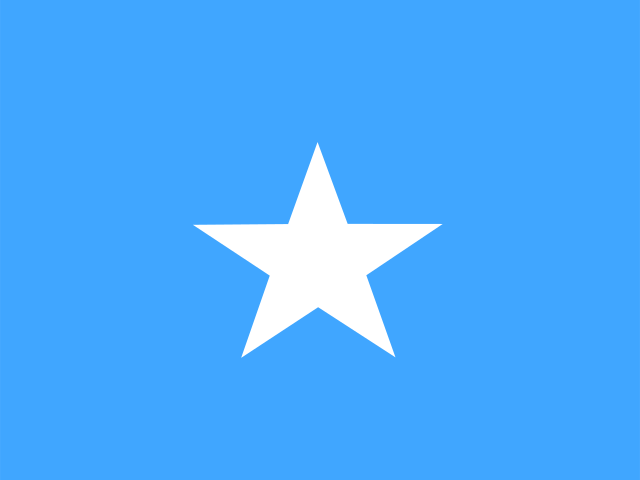
Somalia's president
VS
The Houthis

Somalia's president accuses the Houthis of destabilising the region and disrupting navigation through the Bab al-Mandeb, arguing they are not in a position to bring peace to Yemen.
The dispute centres on the Houthis' impact on regional security and maritime shipping.
*AI-generated summary of publicly available data. This is not an official statement of any party.
*AI-generated summary of publicly available statements and reporting. This is not an official statement of this party.
Supporters of Somalia's president argue the Houthis threaten Somalia's cultural and economic lifelines, since Bab al-Mandeb trade sustains coastal communities and sovereignty itself.
Supporters of Somalia's president frame the Houthis as a cultural threat to the region's stability, arguing that groups disrupting Bab al-Mandeb navigation cannot claim the legitimacy to broker Yemen's peace.
Supporters of Somalia's president counter that Yemen's instability stems from Houthi militancy, not foreign hands, and that Somalia's own cultural sovereignty and Red Sea security must not be sacrificed to that narrative.
Supporters of Somalia's president argue that the Houthis' disruption of Bab al-Mandeb navigation violates international maritime law and state sovereignty, and that such conduct disqualifies them from any peacemaking role.
Supporters of Somalia's president argue that the Houthis' attacks on Bab al-Mandeb shipping violate international maritime law and state sovereignty, so a group breaching those legal norms cannot credibly claim to bring peace to Yemen.
Supporters of Somalia's president counter that under international law, a head of state may invoke self-defense and regional security when a neighbor's conflict spills across borders, regardless of internal governance claims.
Supporters of Somalia's president argue the Houthis' Red Sea attacks raise shipping costs and invite foreign navies into the region, so Mogadishu frames them as the destabiliser to win Gulf backing and weaken a rival's leverage.
Supporters of Somalia’s president argue that the Houthis’ Red Sea disruptions serve Iran’s leverage, not Yemen’s peace, and that only a government controlling its own waters can bargain for stability.
Supporters of Somalia's president counter that Gulf funding follows demonstrated control of Somali territory and ports, not Houthi pressure; they argue the strikes signal sovereignty to paymasters, since aid flows to those who hold ground, not those who react.
Supporters of Somalia's president argue that disrupting Bab al-Mandeb shipping violates a moral duty to keep trade routes safe, and that the Houthis, having destabilised the region, cannot credibly claim to bring Yemen peace.
Supporters of Somalia's president argue that disrupting Bab al-Mandeb shipping violates a moral duty to keep seas safe for all, and that the Houthis cannot claim to bring Yemen peace.
Supporters of Somalia's president counter that a sovereign government bears the moral duty to shield its people from armed groups, and that outside grievances cannot excuse attacks on Somali soil.
Supporters of Somalia's president argue the Houthis' disruption of Bab al-Mandeb shipping violates the Quranic command to preserve safe passage and peace among nations.
Supporters of Somalia's president argue that groups claiming religious authority to wage war on shipping forsake the Quran's call to peace, and that the Houthis' disruption of Bab al-Mandeb violates the Islamic duty to protect safe passage for all.
Supporters of Somalia's president counter that a head of state bears a divine trust to guard his nation's sovereignty, and that no religious duty justifies violating a neighbor's borders or attacking its people.
*AI-generated summary of publicly available statements and reporting. This is not an official statement of this party.
Supporters of the Houthis frame their Red Sea campaign as resistance rooted in Yemen's long history of outside intervention, arguing that regional powers blaming them for instability overlook the foreign forces that shaped the conflict.
Supporters of the Houthis argue their campaign reflects a long tradition of resistance to foreign interference in Yemen, and they frame Red Sea actions as leverage against outside powers, not as a threat to regional culture.
Supporters of the Houthis counter that Red Sea trade historically bound both shores long before modern borders, so Bab al-Mandeb is a shared cultural corridor, not one state's lifeline.
Supporters of the Houthis argue that Somalia's president lacks legal standing to judge Yemen's internal affairs, insisting only Yemenis can decide their own governance.
Supporters of the Houthis argue that Somalia's president lacks legal standing to judge Yemen's internal governance, pointing to sovereignty and self-determination as the applicable principles.
Supporters of The Houthis counter that Somalia's own government lacks standing to invoke maritime law, since its sovereignty over Somaliland's coast is contested and its territorial waters are disputed.
Supporters of the Houthis argue Somalia's president attacks them to court Gulf funding, since the Houthis' Red Sea pressure is leverage that forces rivals to pay attention.
Supporters of the Houthis argue Somalia's president deflects from his own weak control, noting the Houthis hold territory and leverage the Bab al-Mandeb to force concessions—proof of power, not instability.
Supporters of The Houthis counter that the shipping-cost claim ignores who benefits: Gulf states funding Mogadishu gain leverage while foreign navies entrench themselves, and the attacks buy the Houthis bargaining power no rival can match.
Supporters of the Houthis argue that Somalia's president ignores the moral weight of outside intervention, framing Houthi actions as a response to foreign powers, not the cause of regional harm.
Supporters of the Houthis argue that Yemen's sovereignty and the region's ecological stability are theirs to defend, contending that foreign interference, not their movement, endangers the Bab al-Mandeb.
Supporters of the Houthis counter that sovereignty over Yemeni waters is a moral right, and that foreign fleets profiting from blockades while Yemenis starve cannot lecture the region on safe trade.
Supporters of the Houthis argue their cause is a religious duty to defend Muslim lands against foreign influence, and that Somalia's president, aligned with outside powers, lacks religious authority to judge Yemen's internal affairs.
Supporters of the Houthis argue their struggle is a religious duty against foreign interference, and that accusations from Somalia's president ignore Yemen's sovereignty and the sanctity of its cause.
Supporters of the Houthis counter that their Red Sea campaign is a religious duty to blockade Israel, citing Quranic verses on fighting oppressors, and argue that Somalia's president lacks standing to invoke Islamic law while hosting foreign forces.
AI-generated summary of publicly available statements and reporting. This is not an official statement of this party.
Supporters of Somalia's president argue the Houthis threaten Somalia's cultural and economic lifelines, since Bab al-Mandeb trade sustains coastal communities and sovereignty itself.
Supporters of Somalia's president frame the Houthis as a cultural threat to the region's stability, arguing that groups disrupting Bab al-Mandeb navigation cannot claim the legitimacy to broker Yemen's peace.
Supporters of Somalia's president counter that Yemen's instability stems from Houthi militancy, not foreign hands, and that Somalia's own cultural sovereignty and Red Sea security must not be sacrificed to that narrative.
Supporters of Somalia's president argue that the Houthis' disruption of Bab al-Mandeb navigation violates international maritime law and state sovereignty, and that such conduct disqualifies them from any peacemaking role.
Supporters of Somalia's president argue that the Houthis' attacks on Bab al-Mandeb shipping violate international maritime law and state sovereignty, so a group breaching those legal norms cannot credibly claim to bring peace to Yemen.
Supporters of Somalia's president counter that under international law, a head of state may invoke self-defense and regional security when a neighbor's conflict spills across borders, regardless of internal governance claims.
Supporters of Somalia's president argue the Houthis' Red Sea attacks raise shipping costs and invite foreign navies into the region, so Mogadishu frames them as the destabiliser to win Gulf backing and weaken a rival's leverage.
Supporters of Somalia’s president argue that the Houthis’ Red Sea disruptions serve Iran’s leverage, not Yemen’s peace, and that only a government controlling its own waters can bargain for stability.
Supporters of Somalia's president counter that Gulf funding follows demonstrated control of Somali territory and ports, not Houthi pressure; they argue the strikes signal sovereignty to paymasters, since aid flows to those who hold ground, not those who react.
Supporters of Somalia's president argue that disrupting Bab al-Mandeb shipping violates a moral duty to keep trade routes safe, and that the Houthis, having destabilised the region, cannot credibly claim to bring Yemen peace.
Supporters of Somalia's president argue that disrupting Bab al-Mandeb shipping violates a moral duty to keep seas safe for all, and that the Houthis cannot claim to bring Yemen peace.
Supporters of Somalia's president counter that a sovereign government bears the moral duty to shield its people from armed groups, and that outside grievances cannot excuse attacks on Somali soil.
Supporters of Somalia's president argue the Houthis' disruption of Bab al-Mandeb shipping violates the Quranic command to preserve safe passage and peace among nations.
Supporters of Somalia's president argue that groups claiming religious authority to wage war on shipping forsake the Quran's call to peace, and that the Houthis' disruption of Bab al-Mandeb violates the Islamic duty to protect safe passage for all.
Supporters of Somalia's president counter that a head of state bears a divine trust to guard his nation's sovereignty, and that no religious duty justifies violating a neighbor's borders or attacking its people.
Supporters of the Houthis frame their Red Sea campaign as resistance rooted in Yemen's long history of outside intervention, arguing that regional powers blaming them for instability overlook the foreign forces that shaped the conflict.
Supporters of the Houthis argue their campaign reflects a long tradition of resistance to foreign interference in Yemen, and they frame Red Sea actions as leverage against outside powers, not as a threat to regional culture.
Supporters of the Houthis counter that Red Sea trade historically bound both shores long before modern borders, so Bab al-Mandeb is a shared cultural corridor, not one state's lifeline.
Supporters of the Houthis argue that Somalia's president lacks legal standing to judge Yemen's internal affairs, insisting only Yemenis can decide their own governance.
Supporters of the Houthis argue that Somalia's president lacks legal standing to judge Yemen's internal governance, pointing to sovereignty and self-determination as the applicable principles.
Supporters of The Houthis counter that Somalia's own government lacks standing to invoke maritime law, since its sovereignty over Somaliland's coast is contested and its territorial waters are disputed.
Supporters of the Houthis argue Somalia's president attacks them to court Gulf funding, since the Houthis' Red Sea pressure is leverage that forces rivals to pay attention.
Supporters of the Houthis argue Somalia's president deflects from his own weak control, noting the Houthis hold territory and leverage the Bab al-Mandeb to force concessions—proof of power, not instability.
Supporters of The Houthis counter that the shipping-cost claim ignores who benefits: Gulf states funding Mogadishu gain leverage while foreign navies entrench themselves, and the attacks buy the Houthis bargaining power no rival can match.
Supporters of the Houthis argue that Somalia's president ignores the moral weight of outside intervention, framing Houthi actions as a response to foreign powers, not the cause of regional harm.
Supporters of the Houthis argue that Yemen's sovereignty and the region's ecological stability are theirs to defend, contending that foreign interference, not their movement, endangers the Bab al-Mandeb.
Supporters of the Houthis counter that sovereignty over Yemeni waters is a moral right, and that foreign fleets profiting from blockades while Yemenis starve cannot lecture the region on safe trade.
Supporters of the Houthis argue their cause is a religious duty to defend Muslim lands against foreign influence, and that Somalia's president, aligned with outside powers, lacks religious authority to judge Yemen's internal affairs.
Supporters of the Houthis argue their struggle is a religious duty against foreign interference, and that accusations from Somalia's president ignore Yemen's sovereignty and the sanctity of its cause.
Supporters of the Houthis counter that their Red Sea campaign is a religious duty to blockade Israel, citing Quranic verses on fighting oppressors, and argue that Somalia's president lacks standing to invoke Islamic law while hosting foreign forces.
Somalia’s president accuses the Houthis of destabilising the region and disrupting navigation through the Bab al-Mandeb