South African government
VS
Jacob Zuma
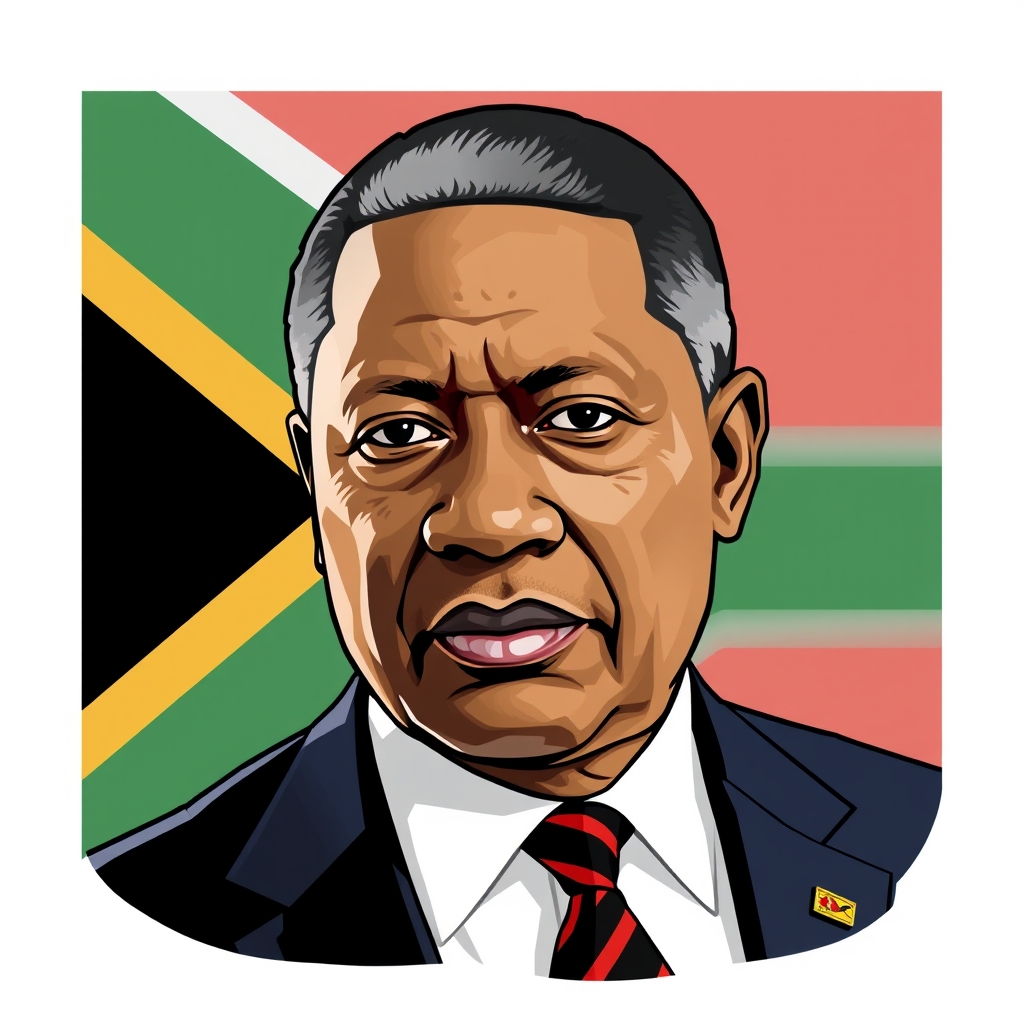
Jacob Zuma is a former president of South Africa who served from 2009 until his resignation in 2018.
Before that, he was deputy president from 1999 to 2005 under Thabo Mbeki, and he has been a prominent figure in the African National Congress (ANC).
Zuma has faced numerous corruption allegations and was sentenced to 15 months in prison in 2021 for contempt of court.
The South African government, led by the ANC, is the current administration that has proposed new rules to restrict foreign trips by former leaders.
The conflict between the South African government and Jacob Zuma centers on the government's proposal to limit foreign travel by former presidents, a move that came after Zuma's visit to India, where he was pictured with a businessman allegedly involved in a corruption scandal.
The government argues that such restrictions are necessary for accountability, while Zuma and his supporters view them as an infringement on his freedom and a politically motivated attack.
This dispute highlights broader tensions over the balance between former leaders' rights and the need for transparency.
Zuma's legal troubles and political fallout have been extensive.
He was expelled from the ANC for backing a rival party in the May 2024 election, and in May 2024, the Constitutional Court disqualified him from running in that election.
These events underscore the deep divisions between Zuma and the current government, making the proposed travel restrictions a flashpoint in their ongoing conflict.
*AI-generated summary of publicly available data. This is not an official statement of any party.
*AI-generated summary of publicly available statements and reporting. This is not an official statement of this party.
Supporters of the South African government argue that restricting ex-leaders' travel upholds the cultural duty of protecting national integrity over personal privilege, viewing Zuma's India visit as a breach of inherited trust.
Supporters of South African government argue that guarding the nation’s moral order requires former leaders to honor the cultural weight of their office, not diminish it abroad.
Supporters of the South African government counter that cultural tradition must yield to constitutional order, as elder statesmen hold no automatic right to travel without legal scrutiny, and precedent upholds accountability over privilege.
Supporters of the South African government argue that new travel rules for ex-leaders are a lawful accountability measure, not a rights restriction, citing Zuma’s India visit as evidence that legal oversight must follow former officials.
Supporters of the South African government argue the proposed rules are a lawful accountability measure, not a curb on freedom, citing Zuma's India visit as evidence that ex-leaders' travel requires legal oversight to prevent corruption scandals.
Supporters of the South African government counter that the travel restriction is a lawful administrative measure under the State Capture inquiry, not a criminal sanction, and that freedom of movement remains subject to reasonable, legally prescribed limitations in the public.
Supporters of South African government argue the travel curbs are pragmatic leverage, not petty vengeance; Zuma's India photo handed rivals a weapon, so limiting ex-leaders' mobility protects the state's credibility and ruling party's grip.
Supporters of the South African government argue the travel curbs are pure realpolitik, targeting Zuma to strip his freedom as a political weapon while framing it as accountability. They maintain that restricting ex-leaders’ mobility serves the ruling party’s incentive to.
Supporters of South African government counter that the curbs are a legal instrument, not a grudge; they note the parole conditions were set by correctional authorities, not the presidency, and that Zuma’s own lawyers accepted them in 2023—so the India trip’s denial merely.
Supporters of the South African government argue that restricting ex-leaders' travel is a moral duty to uphold public accountability, as Zuma's India visit with a scandal-linked businessman undermines anti-corruption norms.
Supporters of the South African government argue that restricting ex-leaders’ foreign trips is a moral duty, as Zuma’s India visit with a scandal-linked businessman undermines public trust and accountability.
Supporters of the South African government counter that the moral duty to uphold the rule of law and public accountability outweighs any presumption of innocence, as travel restrictions are a precautionary legal measure, not a verdict.
Supporters of the South African government argue that restricting former leaders' foreign travel upholds moral order, reflecting biblical stewardship where accountability tempers freedom, as Zuma's India visit with a scandal-linked businessman undermines national trust.
Supporters of the South African government argue that restricting former leaders' travel upholds moral order and public trust, seeing accountability as a sacred duty over personal freedom.
Supporters of the South African government counter that scripture also commands obedience to lawful authority, and that Romans 13 affirms rulers act as God’s servants for order, not as judges of a man’s soul, but as guardians of due process.
*AI-generated summary of publicly available statements and reporting. This is not an official statement of this party.
Supporters of Jacob Zuma argue that restricting former leaders' travel ignores South Africa's cultural tradition of elder statesmen freely engaging abroad, viewing the proposed rules as selective punishment rather than principled accountability.
Supporters of Jacob Zuma argue that restricting former leaders' travel sets a precedent that punishes personal dignity, recalling how past presidents moved freely as cultural elders. They maintain that a single photo with an accused businessman does not erase Zuma's historical.
Supporters of Jacob Zuma counter that cultural duty runs both ways, as elders like Zuma embody ancestral authority that no state decree can override, and restricting his travel dishonors the traditional respect owed to a former leader.
Supporters of Jacob Zuma argue that restricting former leaders' travel without a judicial finding violates their legal right to freedom of movement, as no court has proven wrongdoing in the India visit.
Supporters of Jacob Zuma argue that restricting ex-leaders' travel is legally dubious, as no law or court order bars such trips, and the proposal retroactively penalizes conduct that was lawful at the time, violating due process and the presumption of innocence.
Supporters of Jacob Zuma counter that the travel rules target him retroactively, violating legal precedent that laws cannot punish past conduct, and that the India visit fell within existing constitutional rights to movement.
Supporters of Jacob Zuma argue the travel curbs are a political weapon, not a principle, aimed at isolating him after embarrassing the ruling elite; they see the India trip as a pretext to strip a former leader of leverage and freedom under the guise of accountability.
Supporters of Jacob Zuma argue the travel curbs are a political tool to isolate him, punishing a former president for exercising freedom while rivals exploit a photo to rewrite history.
Supporters of Jacob Zuma counter that the travel curbs are raw political survival, not state credibility; the India photo merely exposed the ruling party’s fear of a rival’s symbolic reach. They argue that restricting Zuma’s mobility is a tactical move to sever his external.
Supporters of Jacob Zuma argue that restricting former leaders' travel punishes a man without trial, violating the moral presumption of innocence that South Africa's history demands be upheld.
Supporters of Jacob Zuma argue that restricting former leaders' travel punishes a president before any legal finding, violating the moral presumption of innocence and dignity owed to all citizens.
Supporters of Jacob Zuma counter that moral duty cannot retroactively punish a citizen without due process, as precedent shows travel bans on ex-leaders are a tool of political vendettas, not accountability. They argue that Zuma's visit, like past trips by other leaders, remains.
Supporters of Jacob Zuma argue that restricting former leaders' travel punishes a man without trial, and they see scripture as affirming that judgment belongs to God, not to politicians crafting rules after the fact.
Supporters of Jacob Zuma argue that restricting former leaders' travel punishes a man before any court verdict, and they cite scripture reminding that judgment belongs to a higher authority, not to politicians seeking to silence him.
Supporters of Jacob Zuma counter that divine forgiveness, not perpetual punishment, defines moral order, citing scripture where grace restores the fallen, and they challenge the claim that his travel breaches stewardship, arguing that accountability belongs to God’s judgment,.
AI-generated summary of publicly available statements and reporting. This is not an official statement of this party.
Supporters of the South African government argue that restricting ex-leaders' travel upholds the cultural duty of protecting national integrity over personal privilege, viewing Zuma's India visit as a breach of inherited trust.
Supporters of South African government argue that guarding the nation’s moral order requires former leaders to honor the cultural weight of their office, not diminish it abroad.
Supporters of the South African government counter that cultural tradition must yield to constitutional order, as elder statesmen hold no automatic right to travel without legal scrutiny, and precedent upholds accountability over privilege.
Supporters of the South African government argue that new travel rules for ex-leaders are a lawful accountability measure, not a rights restriction, citing Zuma’s India visit as evidence that legal oversight must follow former officials.
Supporters of the South African government argue the proposed rules are a lawful accountability measure, not a curb on freedom, citing Zuma's India visit as evidence that ex-leaders' travel requires legal oversight to prevent corruption scandals.
Supporters of the South African government counter that the travel restriction is a lawful administrative measure under the State Capture inquiry, not a criminal sanction, and that freedom of movement remains subject to reasonable, legally prescribed limitations in the public.
Supporters of South African government argue the travel curbs are pragmatic leverage, not petty vengeance; Zuma's India photo handed rivals a weapon, so limiting ex-leaders' mobility protects the state's credibility and ruling party's grip.
Supporters of the South African government argue the travel curbs are pure realpolitik, targeting Zuma to strip his freedom as a political weapon while framing it as accountability. They maintain that restricting ex-leaders’ mobility serves the ruling party’s incentive to.
Supporters of South African government counter that the curbs are a legal instrument, not a grudge; they note the parole conditions were set by correctional authorities, not the presidency, and that Zuma’s own lawyers accepted them in 2023—so the India trip’s denial merely.
Supporters of the South African government argue that restricting ex-leaders' travel is a moral duty to uphold public accountability, as Zuma's India visit with a scandal-linked businessman undermines anti-corruption norms.
Supporters of the South African government argue that restricting ex-leaders’ foreign trips is a moral duty, as Zuma’s India visit with a scandal-linked businessman undermines public trust and accountability.
Supporters of the South African government counter that the moral duty to uphold the rule of law and public accountability outweighs any presumption of innocence, as travel restrictions are a precautionary legal measure, not a verdict.
Supporters of the South African government argue that restricting former leaders' foreign travel upholds moral order, reflecting biblical stewardship where accountability tempers freedom, as Zuma's India visit with a scandal-linked businessman undermines national trust.
Supporters of the South African government argue that restricting former leaders' travel upholds moral order and public trust, seeing accountability as a sacred duty over personal freedom.
Supporters of the South African government counter that scripture also commands obedience to lawful authority, and that Romans 13 affirms rulers act as God’s servants for order, not as judges of a man’s soul, but as guardians of due process.
Supporters of Jacob Zuma argue that restricting former leaders' travel ignores South Africa's cultural tradition of elder statesmen freely engaging abroad, viewing the proposed rules as selective punishment rather than principled accountability.
Supporters of Jacob Zuma argue that restricting former leaders' travel sets a precedent that punishes personal dignity, recalling how past presidents moved freely as cultural elders. They maintain that a single photo with an accused businessman does not erase Zuma's historical.
Supporters of Jacob Zuma counter that cultural duty runs both ways, as elders like Zuma embody ancestral authority that no state decree can override, and restricting his travel dishonors the traditional respect owed to a former leader.
Supporters of Jacob Zuma argue that restricting former leaders' travel without a judicial finding violates their legal right to freedom of movement, as no court has proven wrongdoing in the India visit.
Supporters of Jacob Zuma argue that restricting ex-leaders' travel is legally dubious, as no law or court order bars such trips, and the proposal retroactively penalizes conduct that was lawful at the time, violating due process and the presumption of innocence.
Supporters of Jacob Zuma counter that the travel rules target him retroactively, violating legal precedent that laws cannot punish past conduct, and that the India visit fell within existing constitutional rights to movement.
Supporters of Jacob Zuma argue the travel curbs are a political weapon, not a principle, aimed at isolating him after embarrassing the ruling elite; they see the India trip as a pretext to strip a former leader of leverage and freedom under the guise of accountability.
Supporters of Jacob Zuma argue the travel curbs are a political tool to isolate him, punishing a former president for exercising freedom while rivals exploit a photo to rewrite history.
Supporters of Jacob Zuma counter that the travel curbs are raw political survival, not state credibility; the India photo merely exposed the ruling party’s fear of a rival’s symbolic reach. They argue that restricting Zuma’s mobility is a tactical move to sever his external.
Supporters of Jacob Zuma argue that restricting former leaders' travel punishes a man without trial, violating the moral presumption of innocence that South Africa's history demands be upheld.
Supporters of Jacob Zuma argue that restricting former leaders' travel punishes a president before any legal finding, violating the moral presumption of innocence and dignity owed to all citizens.
Supporters of Jacob Zuma counter that moral duty cannot retroactively punish a citizen without due process, as precedent shows travel bans on ex-leaders are a tool of political vendettas, not accountability. They argue that Zuma's visit, like past trips by other leaders, remains.
Supporters of Jacob Zuma argue that restricting former leaders' travel punishes a man without trial, and they see scripture as affirming that judgment belongs to God, not to politicians crafting rules after the fact.
Supporters of Jacob Zuma argue that restricting former leaders' travel punishes a man before any court verdict, and they cite scripture reminding that judgment belongs to a higher authority, not to politicians seeking to silence him.
Supporters of Jacob Zuma counter that divine forgiveness, not perpetual punishment, defines moral order, citing scripture where grace restores the fallen, and they challenge the claim that his travel breaches stewardship, arguing that accountability belongs to God’s judgment,.
Jacob Zuma was pictured with a businessmen allegedly at the heart of a corruption scandal in South Africa
BBC coverage highlighted the political impact of Zuma's supporters, referred to as the 'Zuma tsunami', and his history of no-confidence motions while president.
The South African Constitutional Court disqualified former President Zuma from running in the upcoming election.
The African National Congress expelled Jacob Zuma for backing a rival party in the May election.
The Constitutional Court sentenced Zuma to 15 months in prison for contempt of court after he refused to testify at a judicial inquiry into corruption.
In October 2017, the Supreme Court ruled against Zuma, and he faced 16 charges relating to corruption.
President Thabo Mbeki dismissed Jacob Zuma as deputy president on 14 June 2005, amid corruption allegations.