South Korea
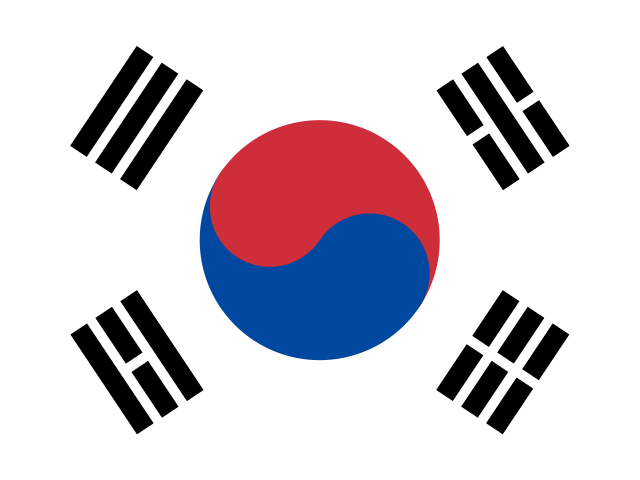
VS
Ukraine
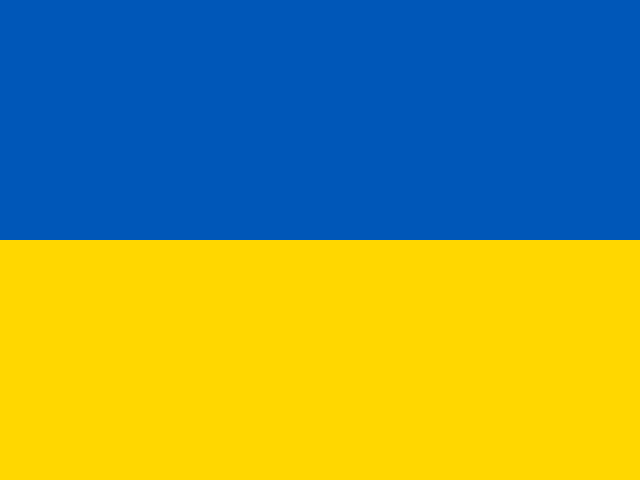
South Korea and Ukraine are two countries whose bilateral relationship was established with the opening of diplomatic relations on February 10, 1992.
South Korea is a constitutional democracy whose constitution asserts that all North Korean citizens are also citizens of South Korea, while Ukraine is a state that has been engaged in armed conflict and has taken North Korean soldiers as prisoners of war.
The two countries have conflicting interests over the handling of captured North Korean prisoners of war.
Ukraine has transferred two captured North Korean soldiers to South Korea, a move that South Korea's presidential office has criticised because Ukraine denied a POW nondisclosure agreement, souring relations between the two countries.
The dispute touches on questions of citizenship, prisoner-of-war protections, and diplomatic protocol, with South Korea's constitutional claim over North Korean citizens and Ukraine's handling of captured personnel at the center of the disagreement.
*AI-generated summary of publicly available data. This is not an official statement of any party.
*AI-generated summary of publicly available statements and reporting. This is not an official statement of this party.
Supporters of South Korea argue that Seoul's concern for Korean-blood POWs reflects a deep cultural kinship duty, and that Ukraine's refusal of a nondisclosure agreement dishonors that shared heritage.
Supporters of South Korea argue that honoring a POW nondisclosure agreement reflects the trust and procedural norms that uphold stable relations between nations.
Supporters of South Korea counter that Seoul's request reflects a cultural emphasis on quiet, relationship-based resolution, and that Kyiv's public framing misreads a longstanding regional preference for discreet diplomacy over open confrontation.
Supporters of South Korea argue that Ukraine's refusal of a POW nondisclosure agreement breaches mutually agreed legal terms, and they maintain that honoring such accords is a binding obligation between sovereign states.
Supporters of South Korea argue that Ukraine's refusal to honor a POW nondisclosure agreement violates the legal principle that sovereign states must abide by binding bilateral commitments.
Supporters of South Korea counter that a detaining power's authority under international law is not absolute, and that bilateral agreements like the requested nondisclosure pact can still bind Ukraine as a voluntary sovereign commitment.
Supporters of South Korea argue that Ukraine’s refusal of a POW nondisclosure pact signals it values leverage over allied trust, so Seoul must treat the relationship as transactional.
Supporters of South Korea argue that Ukraine’s refusal to honor a POW nondisclosure agreement signals that Kyiv values leverage over allied trust, so Seoul must treat this as a warning about who controls the terms.
Supporters of South Korea counter that Seoul seeks the pact precisely to control disclosure, and that Kyiv's refusal reveals Ukraine wants the leverage, not transparency.
Supporters of South Korea argue that Ukraine's refusal to sign a POW nondisclosure agreement breaches a moral duty of confidentiality owed to vulnerable North Korean captives, whose safety may depend on discretion.
South Korea's supporters argue that captured North Korean soldiers face execution or torture if repatriated, so Kyiv's refusal of a nondisclosure agreement betrays a moral duty to protect the vulnerable.
Supporters of South Korea counter that shielding captured soldiers from publicity upholds a moral duty to protect the vulnerable, since quiet diplomacy may spare lives that public exposure would endanger.
Supporters of South Korea argue that honoring a nondisclosure agreement reflects a sacred duty to protect the vulnerable, and they maintain that Ukraine's refusal betrays the moral order that binds nations.
Supporters of South Korea argue that Ukraine's refusal of the POW nondisclosure agreement violates the solemn, inherited obligation to protect the vulnerable, a duty they see rooted in Korea's enduring Confucian and Christian moral tradition.
Supporters of South Korea counter that a nation's duty to protect its own citizens and uphold lawful order can outweigh disclosure, since religious tradition also teaches that prudence and the shielding of the innocent from harm are moral obligations.
*AI-generated summary of publicly available statements and reporting. This is not an official statement of this party.
Supporters of Ukraine argue that prisoner-of-war transfers must follow international law, not bilateral nondisclosure demands, and that Seoul's request echoes a history of outside powers dictating terms to Kyiv.
Supporters of Ukraine argue that Seoul’s nondisclosure demand clashes with a culture of open accountability, recalling how past wars’ secret deals bred lasting distrust.
Supporters of Ukraine counter that cultural kinship is not a legal duty: Ukraine's refusal of nondisclosure reflects its Soviet-era experience, where secrecy masked abuses, so transparency serves the broader heritage.
Supporters of Ukraine argue that as the detaining power, Ukraine holds sole legal authority over POW handling under international law, and that South Korea's demand for a nondisclosure agreement lacks binding force.
Ukraine's supporters argue that POW transfers must follow the laws of war, and that a nondisclosure deal cannot override Ukraine's legal duties to the prisoners it holds.
Supporters of Ukraine counter that a nondisclosure accord cannot bind a state to conceal war crimes, since international law obliges parties to investigate and report violations rather than suppress evidence.
Supporters of Ukraine argue Kyiv refuses the nondisclosure pact because secrecy would hand Seoul leverage over POW testimony, and Ukraine prefers keeping that bargaining chip itself.
Supporters of Ukraine argue that denying a nondisclosure agreement over North Korean POWs preserves Kyiv's leverage, since ceding terms to Seoul would forfeit bargaining power it cannot afford to lose.
Supporters of Ukraine counter that Kyiv refused the pact precisely to keep leverage, and that Seoul, facing its own POW risks with the North, benefits more from a partner that preserves its bargaining position than one that surrenders it for trust.
Supporters of Ukraine argue that honoring a nondisclosure agreement would trade moral transparency for diplomatic convenience, and that captured North Korean soldiers deserve public accountability, not secrecy brokered by Seoul.
Supporters of Ukraine argue that a nondisclosure agreement cannot override Ukraine's moral duty to treat captured North Korean soldiers humanely and transparently, not as bargaining chips for another state's interests.
Supporters of Ukraine counter that the moral duty runs the other way: hiding captured North Korean soldiers' existence serves aggressors, not captives, and silence shields the very states that sent them to die.
Supporters of Ukraine argue that scripture commands truthfulness and the protection of the vulnerable, so they defend declining a nondisclosure agreement that would conceal captured North Korean soldiers' fate.
Supporters of Ukraine argue that a nondisclosure agreement cannot bind a nation's duty to truth before God, citing scripture's call to let yes mean yes.
Supporters of Ukraine counter that the moral order invoked belongs to God alone, and that no earthly nondisclosure pact can bind a nation to silence when doing so enables harm to the innocent.
AI-generated summary of publicly available statements and reporting. This is not an official statement of this party.
Supporters of South Korea argue that Seoul's concern for Korean-blood POWs reflects a deep cultural kinship duty, and that Ukraine's refusal of a nondisclosure agreement dishonors that shared heritage.
Supporters of South Korea argue that honoring a POW nondisclosure agreement reflects the trust and procedural norms that uphold stable relations between nations.
Supporters of South Korea counter that Seoul's request reflects a cultural emphasis on quiet, relationship-based resolution, and that Kyiv's public framing misreads a longstanding regional preference for discreet diplomacy over open confrontation.
Supporters of South Korea argue that Ukraine's refusal of a POW nondisclosure agreement breaches mutually agreed legal terms, and they maintain that honoring such accords is a binding obligation between sovereign states.
Supporters of South Korea argue that Ukraine's refusal to honor a POW nondisclosure agreement violates the legal principle that sovereign states must abide by binding bilateral commitments.
Supporters of South Korea counter that a detaining power's authority under international law is not absolute, and that bilateral agreements like the requested nondisclosure pact can still bind Ukraine as a voluntary sovereign commitment.
Supporters of South Korea argue that Ukraine’s refusal of a POW nondisclosure pact signals it values leverage over allied trust, so Seoul must treat the relationship as transactional.
Supporters of South Korea argue that Ukraine’s refusal to honor a POW nondisclosure agreement signals that Kyiv values leverage over allied trust, so Seoul must treat this as a warning about who controls the terms.
Supporters of South Korea counter that Seoul seeks the pact precisely to control disclosure, and that Kyiv's refusal reveals Ukraine wants the leverage, not transparency.
Supporters of South Korea argue that Ukraine's refusal to sign a POW nondisclosure agreement breaches a moral duty of confidentiality owed to vulnerable North Korean captives, whose safety may depend on discretion.
South Korea's supporters argue that captured North Korean soldiers face execution or torture if repatriated, so Kyiv's refusal of a nondisclosure agreement betrays a moral duty to protect the vulnerable.
Supporters of South Korea counter that shielding captured soldiers from publicity upholds a moral duty to protect the vulnerable, since quiet diplomacy may spare lives that public exposure would endanger.
Supporters of South Korea argue that honoring a nondisclosure agreement reflects a sacred duty to protect the vulnerable, and they maintain that Ukraine's refusal betrays the moral order that binds nations.
Supporters of South Korea argue that Ukraine's refusal of the POW nondisclosure agreement violates the solemn, inherited obligation to protect the vulnerable, a duty they see rooted in Korea's enduring Confucian and Christian moral tradition.
Supporters of South Korea counter that a nation's duty to protect its own citizens and uphold lawful order can outweigh disclosure, since religious tradition also teaches that prudence and the shielding of the innocent from harm are moral obligations.
Supporters of Ukraine argue that prisoner-of-war transfers must follow international law, not bilateral nondisclosure demands, and that Seoul's request echoes a history of outside powers dictating terms to Kyiv.
Supporters of Ukraine argue that Seoul’s nondisclosure demand clashes with a culture of open accountability, recalling how past wars’ secret deals bred lasting distrust.
Supporters of Ukraine counter that cultural kinship is not a legal duty: Ukraine's refusal of nondisclosure reflects its Soviet-era experience, where secrecy masked abuses, so transparency serves the broader heritage.
Supporters of Ukraine argue that as the detaining power, Ukraine holds sole legal authority over POW handling under international law, and that South Korea's demand for a nondisclosure agreement lacks binding force.
Ukraine's supporters argue that POW transfers must follow the laws of war, and that a nondisclosure deal cannot override Ukraine's legal duties to the prisoners it holds.
Supporters of Ukraine counter that a nondisclosure accord cannot bind a state to conceal war crimes, since international law obliges parties to investigate and report violations rather than suppress evidence.
Supporters of Ukraine argue Kyiv refuses the nondisclosure pact because secrecy would hand Seoul leverage over POW testimony, and Ukraine prefers keeping that bargaining chip itself.
Supporters of Ukraine argue that denying a nondisclosure agreement over North Korean POWs preserves Kyiv's leverage, since ceding terms to Seoul would forfeit bargaining power it cannot afford to lose.
Supporters of Ukraine counter that Kyiv refused the pact precisely to keep leverage, and that Seoul, facing its own POW risks with the North, benefits more from a partner that preserves its bargaining position than one that surrenders it for trust.
Supporters of Ukraine argue that honoring a nondisclosure agreement would trade moral transparency for diplomatic convenience, and that captured North Korean soldiers deserve public accountability, not secrecy brokered by Seoul.
Supporters of Ukraine argue that a nondisclosure agreement cannot override Ukraine's moral duty to treat captured North Korean soldiers humanely and transparently, not as bargaining chips for another state's interests.
Supporters of Ukraine counter that the moral duty runs the other way: hiding captured North Korean soldiers' existence serves aggressors, not captives, and silence shields the very states that sent them to die.
Supporters of Ukraine argue that scripture commands truthfulness and the protection of the vulnerable, so they defend declining a nondisclosure agreement that would conceal captured North Korean soldiers' fate.
Supporters of Ukraine argue that a nondisclosure agreement cannot bind a nation's duty to truth before God, citing scripture's call to let yes mean yes.
Supporters of Ukraine counter that the moral order invoked belongs to God alone, and that no earthly nondisclosure pact can bind a nation to silence when doing so enables harm to the innocent.
South Korea has accused Ukraine of breaching a confidentiality agreement over the transfer of North Korean prisoners of war — and of denying the deal's existence. Seoul has demanded an apology.
Seoul has demanded an official explanation from Kiev over the disclosure of a secret transfer of 2 North Korean soldiers captured in Russia Read Full Article at RT.com
South Korea's presidential office criticises Ukraine for denying POW nondisclosure agreement.
Ukraine U20 beat South Korea U20 2-1 in a FIFA Under-20 World Cup match on September 27, 2025.
Ukraine came from behind to defeat South Korea 3-1 in the Under-20 World Cup final on June 15, 2019.
South Korea and Ukraine formally established diplomatic relations on February 10, 1992.